Fernando Soler Toscano – författare
Visar alla böcker från författaren Fernando Soler Toscano. Handla med fri frakt och snabb leverans.
5 produkter
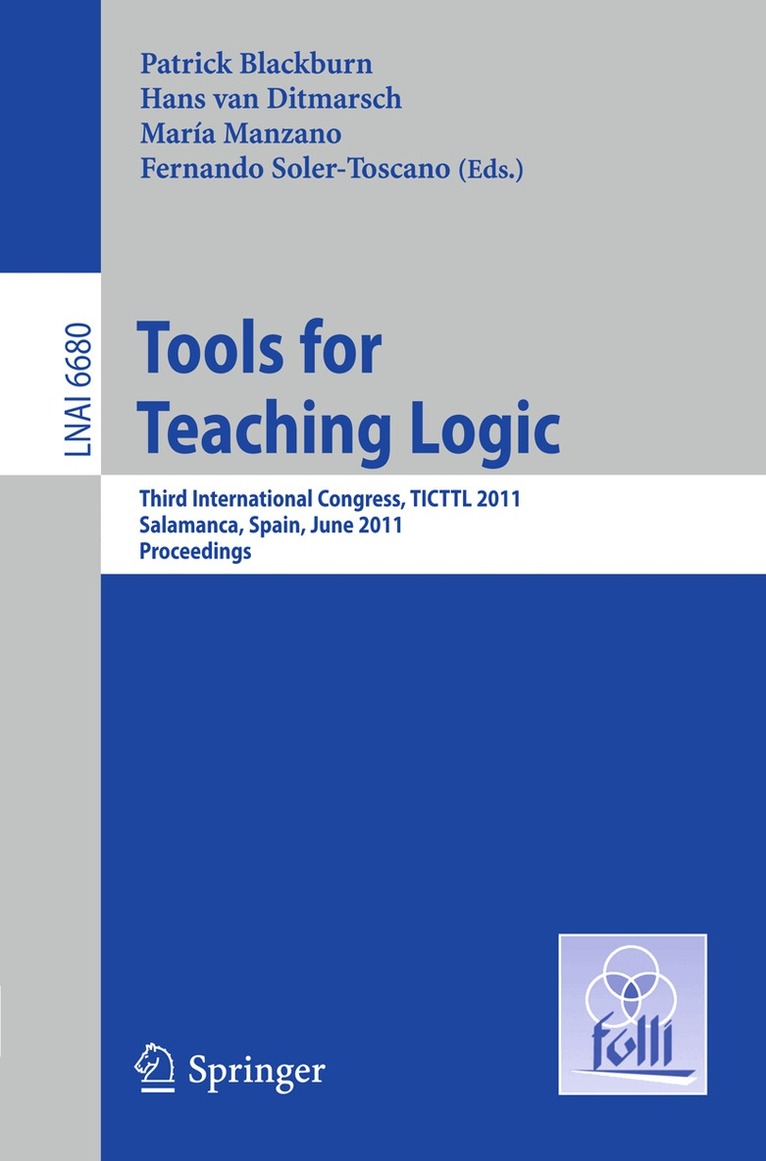
Tools for Teaching Logic
Third International Congress, TICTTL 2011, Salamanca, Spain, June 1-4, 2011, Proceedings
Av Patrick Blackburn, Hans van Ditmarsch m. fl.
Häftad, 2011
552 kr
Lägg i varukorg
This book constitutes the proceedings of the Third International Congress on Tools for Teaching Logic, TICTTL 2011, held in Salamanca, Spain, in June 2011. The 30 papers presented were carefully reviewed and selected from 62 submissions. The congress focusses on a variety of topics including: logic …
Tools for Teaching Logic
Third International Congress, TICTTL 2011, Salamanca, Spain, June 1-4, 2011, Proceedings
Av Fernando Soler-Toscano, Maria Manzano m. fl.
E-bok, 2011
718 kr
Lägg i varukorg
This book constitutes the proceedings of the Third International Congress on Tools for Teaching Logic, TICTTL 2011, held in Salamanca, Spain, in June 2011. The 30 papers presented were carefully reviewed and selected from 62 submissions. The congress focusses on a variety of topics including: logic …
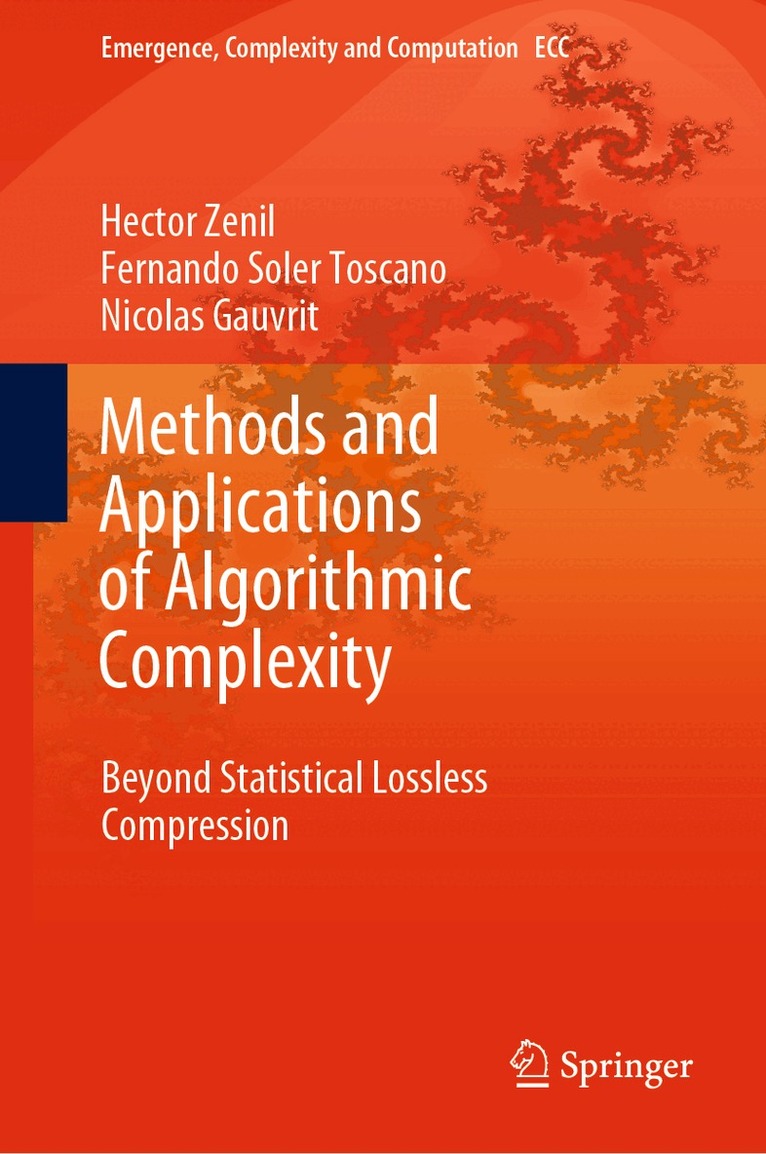
Methods and Applications of Algorithmic Complexity
Beyond Statistical Lossless Compression
Av Hector Zenil, Fernando Soler Toscano m. fl.
Inbunden, 2022
1858 kr
Lägg i varukorg
This book explores a different pragmatic approach to algorithmic complexity rooted or motivated by the theoretical foundations of algorithmic probability and explores the relaxation of necessary and sufficient conditions in the pursuit of numerical applicability, with some of these approaches …
Methods and Applications of Algorithmic Complexity
Beyond Statistical Lossless Compression
Av Nicolas Gauvrit, Fernando Soler Toscano m. fl.
E-bok, 2022
2437 kr
Lägg i varukorg
This book explores a different pragmatic approach to algorithmic complexity rooted or motivated by the theoretical foundations of algorithmic probability and explores the relaxation of necessary and sufficient conditions in the pursuit of numerical applicability, with some of these approaches …