Fernando Zuniga – författare
Visar alla böcker från författaren Fernando Zuniga. Handla med fri frakt och snabb leverans.
9 produkter
9 produkter
E-bok
Engelska, 2019456 kr
Läs direkt efter köp
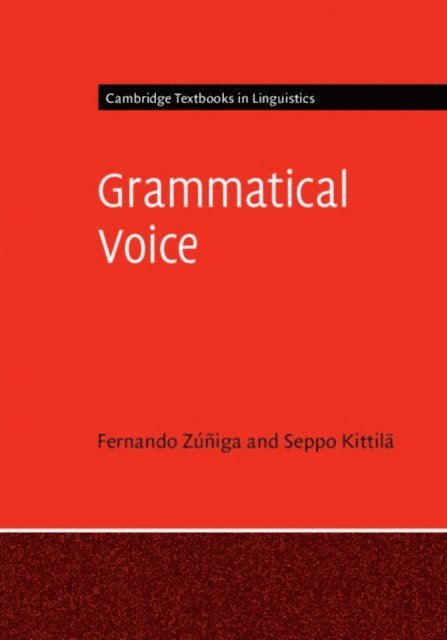
The grammatical category of voice covers a wide range of phenomena, including causatives, applicatives, passives, antipassives, middles, and others. Drawing on data from over 200 languages, Fernando Zúñiga and Seppo Kittilä illustrate the semantic, morphological, and syntactic variation of voice across languages from a range of families and regions. They approach the topic from a broad and explicit perspective, and discuss a variety of topics that are not always regarded as voice, in order to make a clear and useful conceptual delimitation. Clearly organized and accessibly written, the book will be welcomed by students and scholars of linguistics, especially those interested in how grammatical categories work.
E-bok
PDF, Engelska, 2019456 kr
Läs direkt efter köp
The grammatical category of voice covers a wide range of phenomena, including causatives, applicatives, passives, antipassives, middles, and others. Drawing on data from over 200 languages, Fernando Zúñiga and Seppo Kittilä illustrate the semantic, morphological, and syntactic variation of voice across languages from a range of families and regions. They approach the topic from a broad and explicit perspective, and discuss a variety of topics that are not always regarded as voice, in order to make a clear and useful conceptual delimitation. Clearly organized and accessibly written, the book will be welcomed by students and scholars of linguistics, especially those interested in how grammatical categories work.
E-bok
PDF, Engelska, 20244 788 kr
Läs direkt efter köp
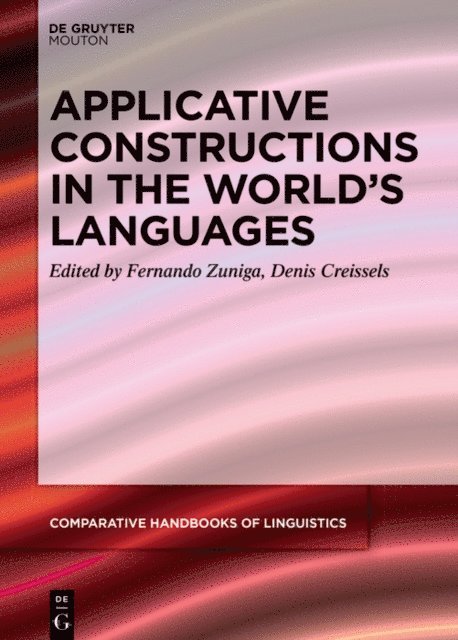
This book presents a state-of-the-art cross-linguistic survey of applicative constructions in the functional-typological tradition. An introductory section sets the terminological and analytical stage, presents the methodology used by the different chapters, and provides a typological outlook. The individual contributions address the morphological, syntactic and semantic variation of applicatives, as well as their discourse-pragmatic function. They cover all major language families and some isolates that feature some illuminating version of the phenomenon, paying special attention to language-internal variation and unity. The phenomena surveyed range from those instances usually considered canonical (valency-increasing, syntactically and semantically predictable, productive, dedicated, and optional) to those occasionally understudied in descriptive works and frequently neglected in comparative studies (valency-neutral, rather unpredictable, lexicalized, syncretic, and/or obligatory).
E-bok
Engelska, 20244 788 kr
Läs direkt efter köp
This book presents a state-of-the-art cross-linguistic survey of applicative constructions in the functional-typological tradition. An introductory section sets the terminological and analytical stage, presents the methodology used by the different chapters, and provides a typological outlook. The individual contributions address the morphological, syntactic and semantic variation of applicatives, as well as their discourse-pragmatic function. They cover all major language families and some isolates that feature some illuminating version of the phenomenon, paying special attention to language-internal variation and unity. The phenomena surveyed range from those instances usually considered canonical (valency-increasing, syntactically and semantically predictable, productive, dedicated, and optional) to those occasionally understudied in descriptive works and frequently neglected in comparative studies (valency-neutral, rather unpredictable, lexicalized, syncretic, and/or obligatory).
Inbunden, Engelska, 2024
4 873 kr
Skickas inom 5-8 vardagar
This book presents a state-of-the-art cross-linguistic survey of applicative constructions in the functional-typological tradition. An introductory section sets the terminological and analytical stage, presents the methodology used by the different chapters, and provides a typological outlook. The individual contributions address the morphological, syntactic and semantic variation of applicatives, as well as their discourse-pragmatic function. They cover all major language families and some isolates that feature some illuminating version of the phenomenon, paying special attention to language-internal variation and unity. The phenomena surveyed range from those instances usually considered canonical (valency-increasing, syntactically and semantically predictable, productive, dedicated, and optional) to those occasionally understudied in descriptive works and frequently neglected in comparative studies (valency-neutral, rather unpredictable, lexicalized, syncretic, and/or obligatory).
Inbunden, Engelska, 2022
1 493 kr
Skickas inom 5-8 vardagar
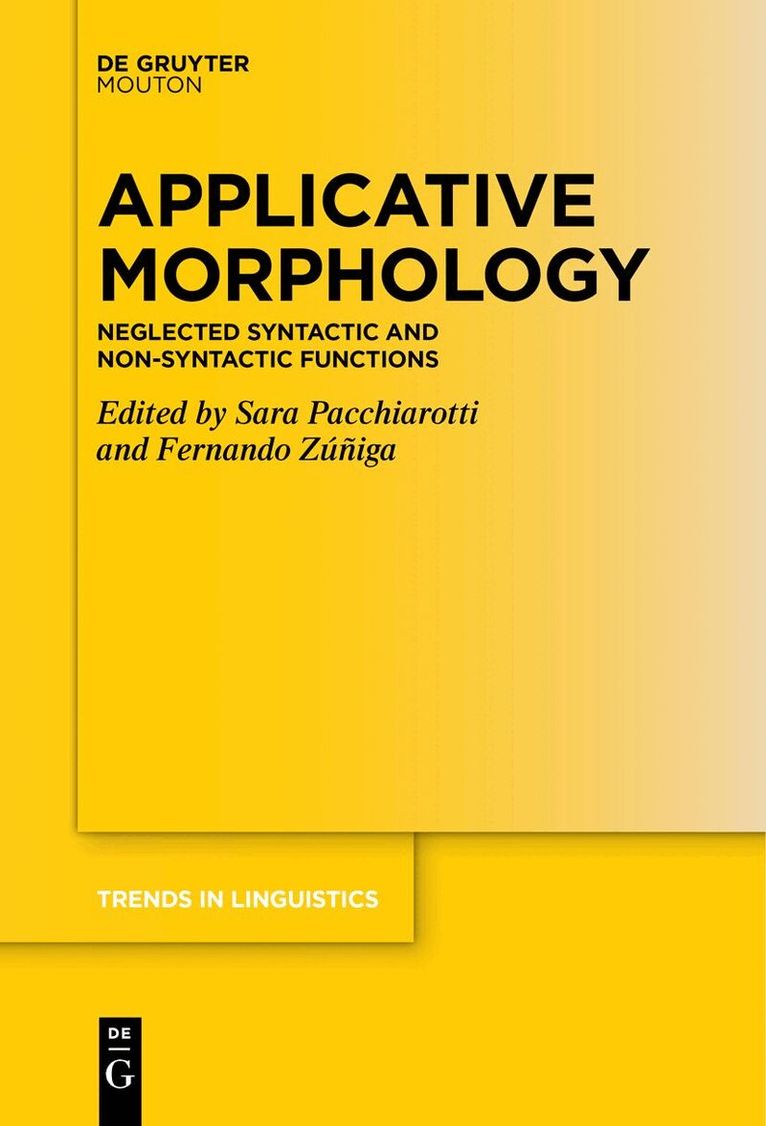
This book is about recurrent functions of applicative morphology not included in typologically-oriented definitions. Based on substantial cross-linguistic evidence, it challenges received wisdom on applicatives in several ways. First, in many of the surveyed languages, applicatives are the sole means to introduce a non-Actor semantic role into a clause. When there is an alternative way of expression, the applicative counterpart often has no valence-increasing effect on the targeted root. Second, applicative morphology can introduce constituents which are not syntactic objects and/or co-occur with obliques. Third, functions such as conveying aspectual nuances to the predicate (intensity, repetition, habituality) or its arguments (partitive P, highly individuated P), narrow-focusing constituents, and functioning as category-changing devices are attested in geographically distant and genetically unrelated languages. Further, this volume reveals that spatial-related morphology is prone to developing applicative functions in disparate languages and phyla. Finally, several contributions discuss the diachrony of applicative constructions and their (non-syntactic) attested functions, including a case of applicatives-in-the-making.
E-bok
PDF, Engelska, 20221 520 kr
Läs direkt efter köp
This book is about recurrent functions of applicative morphology not included in typologically-oriented definitions. Based on substantial cross-linguistic evidence, it challenges received wisdom on applicatives in several ways. First, in many of the surveyed languages, applicatives are the sole means to introduce a non-Actor semantic role into a clause. When there is an alternative way of expression, the applicative counterpart often has no valence-increasing effect on the targeted root. Second, applicative morphology can introduce constituents which are not syntactic objects and/or co-occur with obliques. Third, functions such as conveying aspectual nuances to the predicate (intensity, repetition, habituality) or its arguments (partitive P, highly individuated P), narrow-focusing constituents, and functioning as category-changing devices are attested in geographically distant and genetically unrelated languages. Further, this volume reveals that spatial-related morphology is prone to developing applicative functions in disparate languages and phyla. Finally, several contributions discuss the diachrony of applicative constructions and their (non-syntactic) attested functions, including a case of applicatives-in-the-making.
E-bok
Engelska, 20221 507 kr
Läs direkt efter köp
This book is about recurrent functions of applicative morphology not included in typologically-oriented definitions. Based on substantial cross-linguistic evidence, it challenges received wisdom on applicatives in several ways. First, in many of the surveyed languages, applicatives are the sole means to introduce a non-Actor semantic role into a clause. When there is an alternative way of expression, the applicative counterpart often has no valence-increasing effect on the targeted root. Second, applicative morphology can introduce constituents which are not syntactic objects and/or co-occur with obliques. Third, functions such as conveying aspectual nuances to the predicate (intensity, repetition, habituality) or its arguments (partitive P, highly individuated P), narrow-focusing constituents, and functioning as category-changing devices are attested in geographically distant and genetically unrelated languages. Further, this volume reveals that spatial-related morphology is prone to developing applicative functions in disparate languages and phyla. Finally, several contributions discuss the diachrony of applicative constructions and their (non-syntactic) attested functions, including a case of applicatives-in-the-making.
Häftad, Engelska, 2024
303 kr
Skickas inom 3-6 vardagar
This book is about recurrent functions of applicative morphology not included in typologically-oriented definitions. Based on substantial cross-linguistic evidence, it challenges received wisdom on applicatives in several ways. First, in many of the surveyed languages, applicatives are the sole means to introduce a non-Actor semantic role into a clause. When there is an alternative way of expression, the applicative counterpart often has no valence-increasing effect on the targeted root. Second, applicative morphology can introduce constituents which are not syntactic objects and/or co-occur with obliques. Third, functions such as conveying aspectual nuances to the predicate (intensity, repetition, habituality) or its arguments (partitive P, highly individuated P), narrow-focusing constituents, and functioning as category-changing devices are attested in geographically distant and genetically unrelated languages. Further, this volume reveals that spatial-related morphology is prone to developing applicative functions in disparate languages and phyla. Finally, several contributions discuss the diachrony of applicative constructions and their (non-syntactic) attested functions, including a case of applicatives-in-the-making.