Denis Creissels - Böcker
Visar alla böcker från författaren Denis Creissels. Handla med fri frakt och snabb leverans.
5 produkter
5 produkter
2 101 kr
Skickas inom 7-10 vardagar
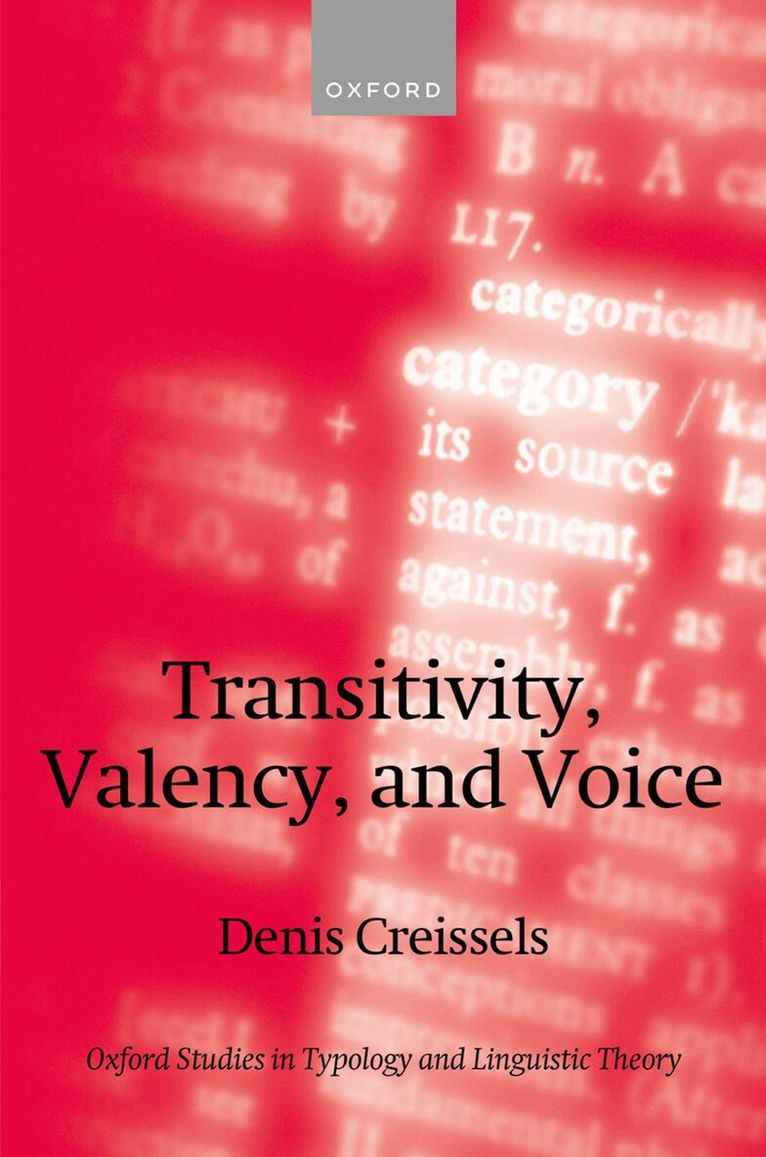
This book sets up a consistent theoretical and terminological framework for the study of the phenomena that are commonly subsumed under the terms transitivity, valency, and voice. These three concepts are at the heart of the most basic aspects of clausal structure in any language; however, there is considerable cross-linguistic variation in the constraints on how verbs combine with noun phrases that refer to participants in the event that they denote or to the circumstances of the event. In this book, Denis Creissels explores and accounts for the extent of this cross-linguistic variation, capturing its regularities and examining the historical phenomena that have resulted in the emergence of constructions and markers. The novel framework developed in the book allows similar phenomena to be identified across typologically diverse languages, and facilitates systematic comparison of the manifestations of these phenomena in the grammars of individual languages.
4 944 kr
Skickas inom 5-8 vardagar
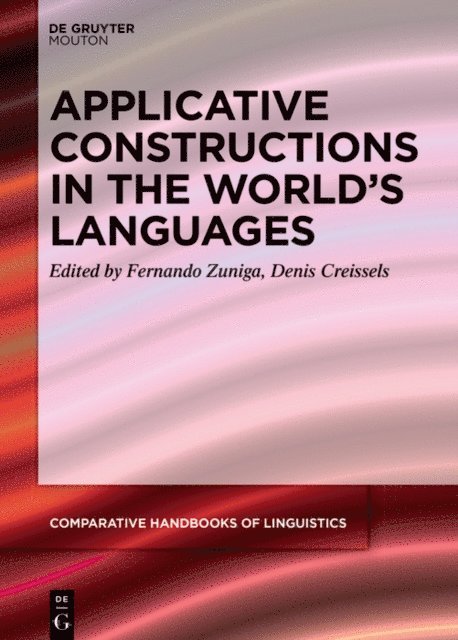
This book presents a state-of-the-art cross-linguistic survey of applicative constructions in the functional-typological tradition. An introductory section sets the terminological and analytical stage, presents the methodology used by the different chapters, and provides a typological outlook. The individual contributions address the morphological, syntactic and semantic variation of applicatives, as well as their discourse-pragmatic function. They cover all major language families and some isolates that feature some illuminating version of the phenomenon, paying special attention to language-internal variation and unity. The phenomena surveyed range from those instances usually considered canonical (valency-increasing, syntactically and semantically predictable, productive, dedicated, and optional) to those occasionally understudied in descriptive works and frequently neglected in comparative studies (valency-neutral, rather unpredictable, lexicalized, syncretic, and/or obligatory).
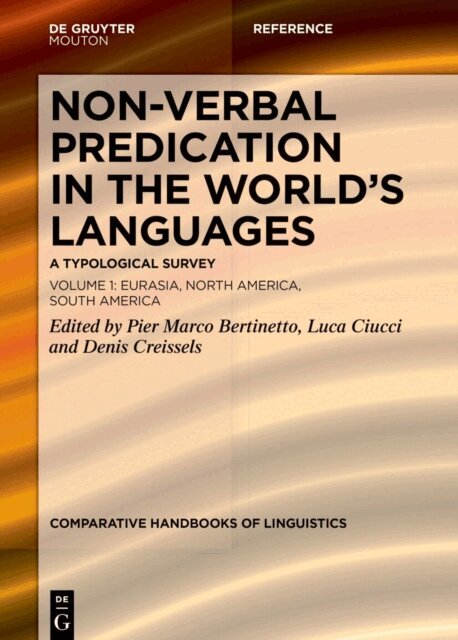
Non-verbal Predication in the World’s Languages
A Typological Survey Volume 1: Eurasia, North America, South America
Inbunden, Engelska, 2025
4 832 kr
Skickas inom 7-10 vardagar
The notion of predication is usually associated with the lexical class of verbs. However, the predicate function may also be expressed by Noun / Adjective / Adverb / Quantifier Phrases: a. John is a doctor. b. The man is old. c. The boys are in the garden. d. Sam's friends are many. Natural languages do, with respect to non-verbal predication, what they are expected to do in any compartment of grammar: they sharply diverge in their behavior.This book offers a wide typological overview of how languages deal with non-verbal predication (henceforth: NVP). After the pioneering works by Hengeveld (1992) and Stassen (1997), no other work has attempted to provide a comprehensive overview of this pervasive syntactic phenomenon. Hence, the need for this book.The introductory chapter highlights the main features to be considered: the lexical and morphosyntactic nature of the predicate. the morphological expression of NVP. the semantic types of NVP. The bulk of the book consists of a collection of papers, written by well-known specialists, targeting different languages or language families, thus offering a rich array of typological data.This book will be of interest to typologists, syntacticians of any theoretical creed, and students of linguistics at large.
Non-verbal Predication in the World’s Languages
A Typological Survey Volume 2: Africa, Austronesia, Papunesia, Australia
Inbunden, Engelska, 2025
4 832 kr
Skickas inom 7-10 vardagar
The notion of predication is usually associated with the lexical class of verbs. However, the predicate function may also be expressed by Noun / Adjective / Adverb / Quantifier Phrases: a. John is a doctor. b. The man is old. c. The boys are in the garden. d. Sam's friends are many. Natural languages do, with respect to non-verbal predication, what they are expected to do in any compartment of grammar: they sharply diverge in their behavior.This book offers a wide typological overview of how languages deal with non-verbal predication (henceforth: NVP). After the pioneering works by Hengeveld (1992) and Stassen (1997), no other work has attempted to provide a comprehensive overview of this pervasive syntactic phenomenon. Hence, the need for this book.The introductory chapter highlights the main features to be considered: the lexical and morphosyntactic nature of the predicate. the morphological expression of NVP. the semantic types of NVP. The bulk of the book consists of a collection of papers, written by well-known specialists, targeting different languages or language families, thus offering a rich array of typological data.This book will be of interest to typologists, syntacticians of any theoretical creed, and students of linguistics at large.
Del 14 - African Sources for African History
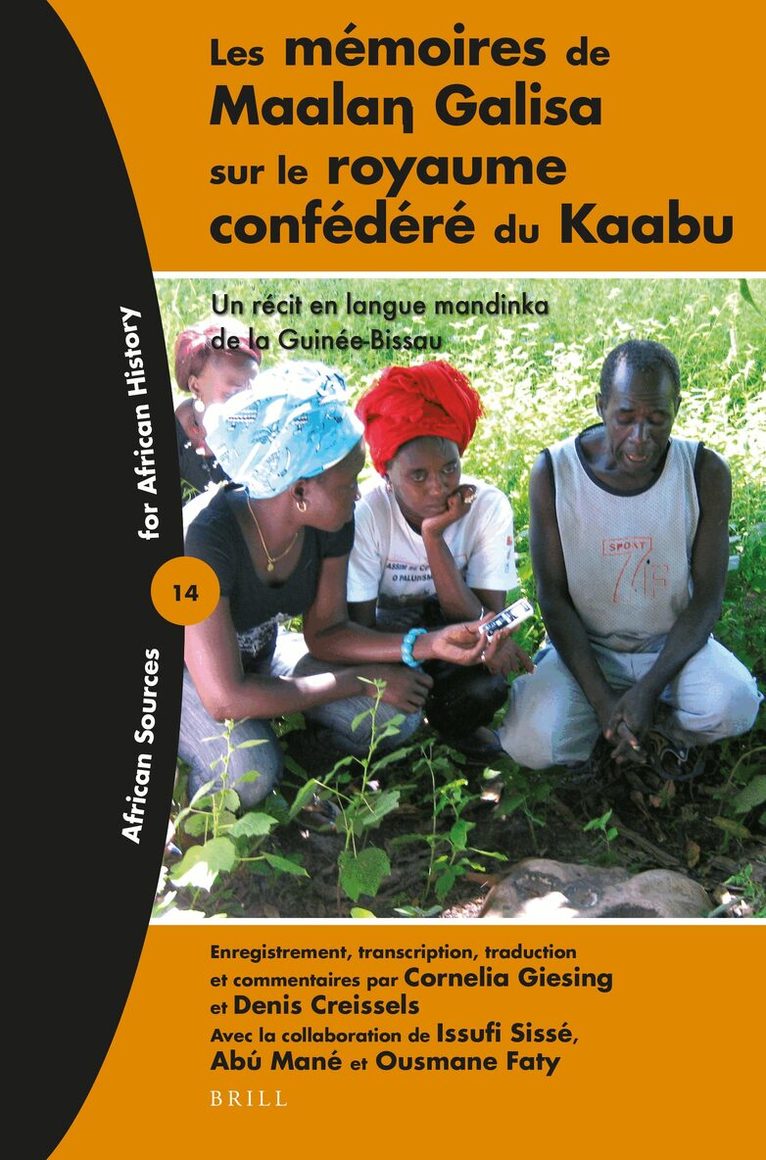
Les mémoires de Maalaŋ Galisa sur le royaume confédéré du Kaabu
Un récit en langue mandinka de la Guinée-Bissau
Häftad, Franska, 2017
1 426 kr
Skickas inom 5-8 vardagar
Edition d'un récit en mandinka par Maalaŋ Galisa (octobre 1988) sur la constitution et les conditions de vie au Kaabu, territoire situé entre la Gambie, le Sénégal et la Guinée-Bissau, connu depuis le 16e siècle et détruit vers 1867. La gamme des sujets couvre: le peuplement, le gouvernement, les codes de conduite des guerriers, religieux, esclaves et 'hôtes étrangers', les règles de l'esclavage, du mariage et de la succession, la coexistence des religions, les relations entre groupes d'âge et de genre.Le texte diffère d'autres qui se focalisent sur un unique fondateur-patriarche, Tiramakan de l'épopée de Sunjata. Galisa parle du sud-est du Kaabu, à la frontière avec la Guinée. Il ajoute des couleurs locales au modèle mandinka, évoquant la puissance féminine et certains conflits violents.Edition of a recital in Mandinka by Maalaŋ Galisa (October 1988) on the political constitution and living conditions in Kaabu, a territory situated between present Gambia, Senegal and Guinea-Bissau, known since the 16th century, definitely destroyed in 1867. The narrative presents a range of topics covering governance, codes of conduct of warriors, clerics, slaves and 'strangers', rules of slavery, marriage and succession, the cohabitation of different religions, relations of age and gender.This text is distinctive from others focussing on a single founder-patriarch, Tiramakan of the Epic of Sunjata. Galisa focuses on South-eastern Kaabu, bordering on the region of Labé (Guinea). He adds local colours to the Mandinka model, depicting powerful women and violent conflicts resulting from injustice.