Ferraresi Gisella Ferraresi – författare
Visar alla böcker från författaren Ferraresi Gisella Ferraresi. Handla med fri frakt och snabb leverans.
2 produkter
2 produkter
E-bok
PDF, Engelska, 20081 384 kr
Läs direkt efter köp
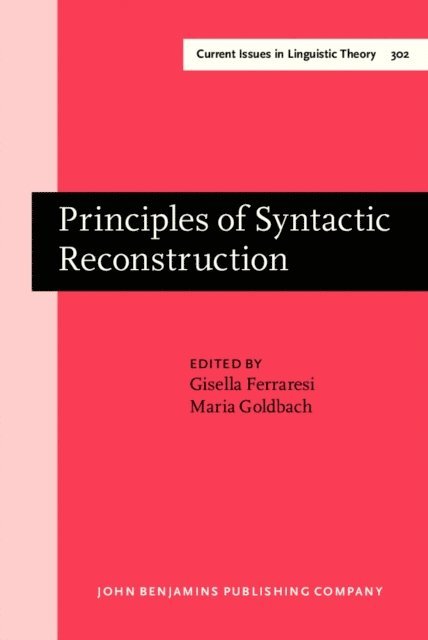
This is a collection of state-of-the-art papers in the field of syntactic reconstruction. It treats a range of topics which are representative of current debates in historical syntax. The novelty and merit of the present book is, the editors believe, that, in contrast to most previous work on diachronic syntax, it combines the perspectives of the traditional philological research on syntactic reconstruction with the insights of modern syntactic theory, as it is emphasised in the Foreword by Giuseppe Longobardi. The volume includes articles by well-recognized researchers in historical linguistics with a focus on syntactic change. In the present volume syntactic reconstruction is discussed from a variety of angles, including historical linguistics, phenomena of language contact, generative approaches as well as typological and variationist research. In the articles, languages from a diverse range of families are discussed, including Indo-European, North and South Caucasian, Sino-Tibetan, and Turkic.
E-bok
PDF, Engelska, 2003909 kr
Läs direkt efter köp
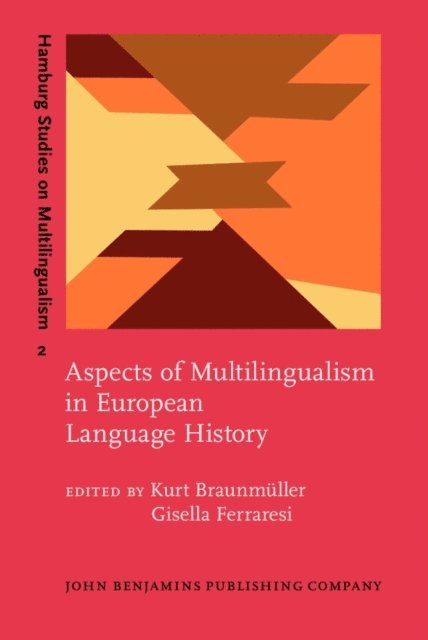
This volume gives an up-to-date account of various situations of language contact and multilingualism in Europe especially from a historical point of view. Its ten contributions present newly collected data from different parts of the continent seen through diverse theoretical perspectives. They show a richness of topics and data that not only reveal numerous historical and sociological facts but also afford considerable insight into possible effects multilingualism and language contact might have on language change. The collection begins its journey through Europe in the British Isles. Then it turns to northern Europe and looks at how multilingualism worked in three towns that are all marked by border and contact situations. The journey continues with linguistic-historical and political-historical visits to Sweden and to Lithuania before the reader is taken to central Europe, where we will deal with the influence of Latin on written German. As far as southern Europe is concerned, the study continues on the Iberian peninsula, where the relationship between Portuguese and Spanish is focused, to be followed by Sardinia and Malta, two islands whose unique geohistorical positions give rise to some consideration of multilingualism in the Mediterranean.