Fiona Nunan - Böcker
Visar alla böcker från författaren Fiona Nunan. Handla med fri frakt och snabb leverans.
12 produkter
12 produkter
2 088 kr
Skickas inom 10-15 vardagar
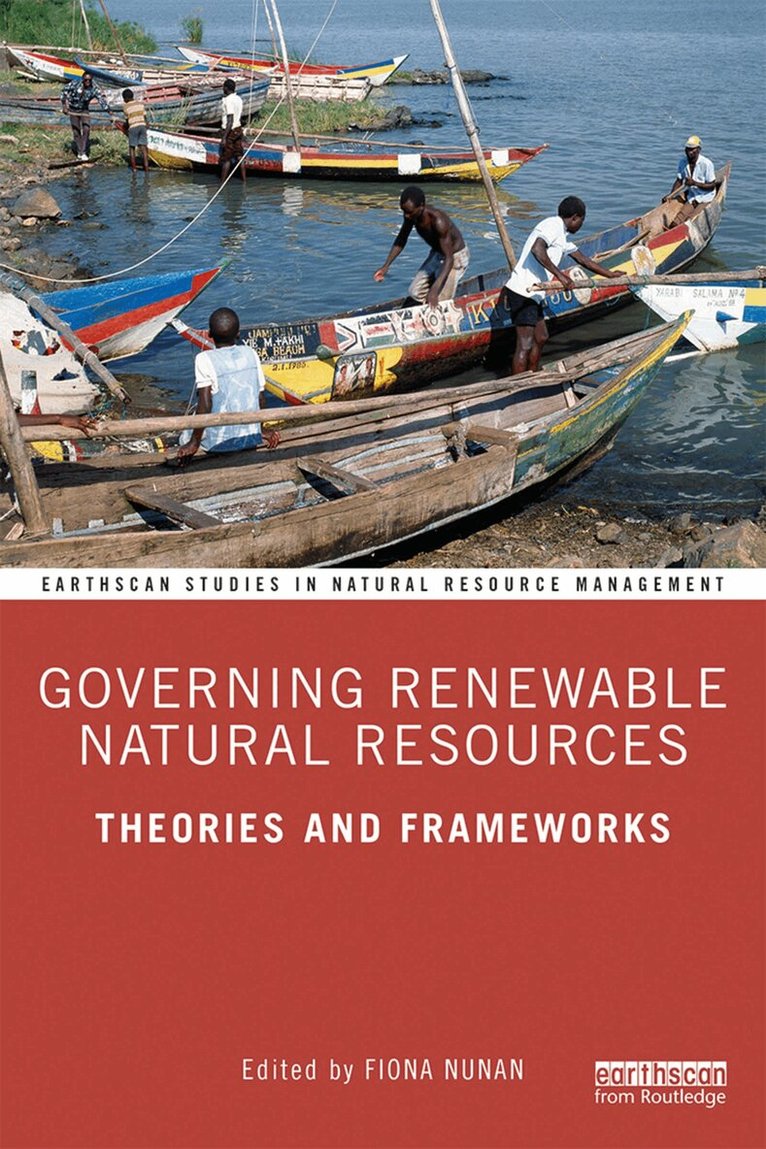
In one volume, this book brings together a diversity of approaches, theory and frameworks that can be used to analyse the governance of renewable natural resources.Renewable natural resources are under pressure, with over-exploitation and degradation raising concern globally. Understanding governance systems and practice is essential for developing effective and fair solutions. This book introduces readers to key concepts and issues concerned with the governance of renewable natural resources and illustrates the diversity of approaches, theories and frameworks that have been used to analyse governance systems and practice. Each chapter provides an introduction to an area of literature and theory and demonstrates application through a case study. The book covers a range of geographical locations, with a focus on low- and middle-income countries, and several types of natural resources. The approaches and theories introduced include common property theory, political ecology, institutional analysis, the social -ecological systems framework and social network analysis. Findings from across the chapters support an analytical focus on institutions and local context and a practical focus on diverse, flexible and inclusive governance solutions.The book serves as an essential introduction to the governance of renewable natural resources for students, researchers and practitioners.
644 kr
Skickas inom 10-15 vardagar
In one volume, this book brings together a diversity of approaches, theory and frameworks that can be used to analyse the governance of renewable natural resources.Renewable natural resources are under pressure, with over-exploitation and degradation raising concern globally. Understanding governance systems and practice is essential for developing effective and fair solutions. This book introduces readers to key concepts and issues concerned with the governance of renewable natural resources and illustrates the diversity of approaches, theories and frameworks that have been used to analyse governance systems and practice. Each chapter provides an introduction to an area of literature and theory and demonstrates application through a case study. The book covers a range of geographical locations, with a focus on low- and middle-income countries, and several types of natural resources. The approaches and theories introduced include common property theory, political ecology, institutional analysis, the social -ecological systems framework and social network analysis. Findings from across the chapters support an analytical focus on institutions and local context and a practical focus on diverse, flexible and inclusive governance solutions.The book serves as an essential introduction to the governance of renewable natural resources for students, researchers and practitioners.
3 161 kr
Skickas inom 10-15 vardagar
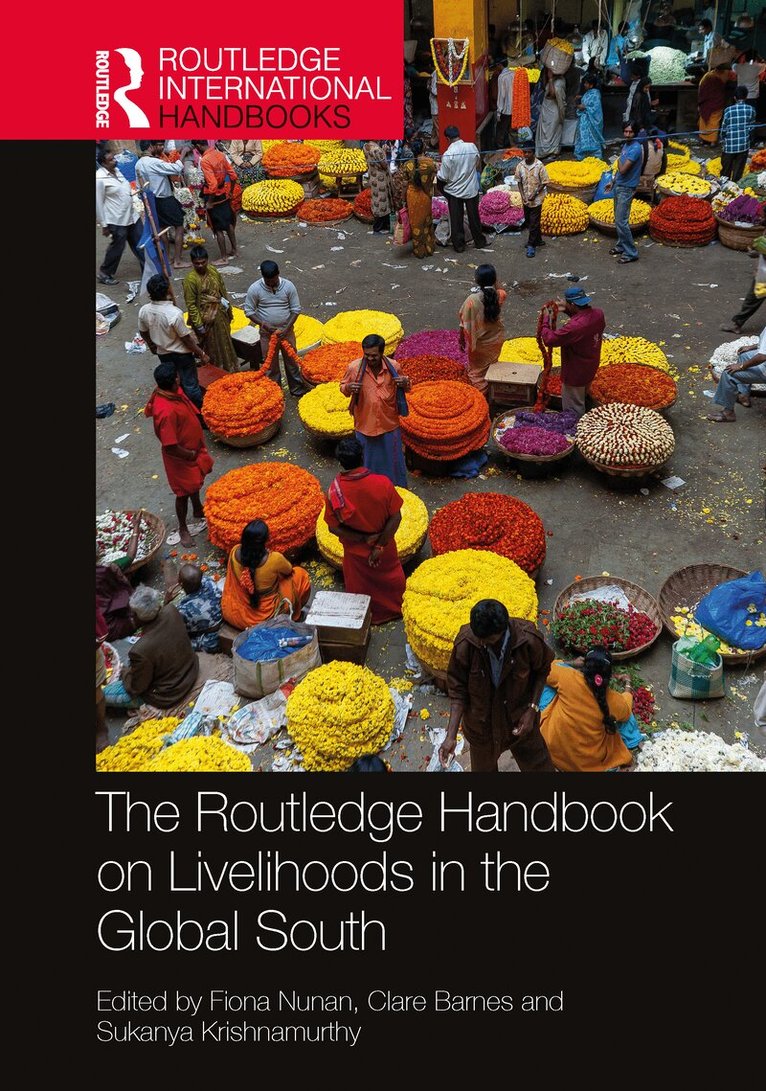
The Routledge Handbook on Livelihoods in the Global South presents a unique, timely, comprehensive overview of livelihoods in low- and middle-income countries. Since their widespread adoption in the 1990s, livelihoods perspectives, frameworks and methods have influenced diverse areas of research, policy and practice.The concept of livelihoods reflects the complexity of strategies and practices used by individuals, households and communities to meet their needs and live their lives. The Handbook brings together insights and critical analysis from diverse approaches and experiences, learning from research and practice over the last 30 years. The Handbook comprises an introductory section on key concepts and frameworks, followed by five parts, on researching livelihoods, negotiating livelihoods, generating livelihoods, enabling livelihoods and contextualising livelihoods. The introduction provides readers with an appreciation of concepts researched and applied in the five parts, including chapters on vulnerability and resilience, social capital and networks, and institutions. Each part reflects the diversity of approaches taken to understanding livelihoods, whilst recognising commonalities, including the centrality of power in shaping, enabling and constraining livelihoods. The book also reflects diversity of context, including conflict, climate change and religion, as well as in generating livelihoods, through agriculture, small-scale mining and pastoralism. The aim of each chapter is to provide a critically informed introduction and overview of key concepts, issues and debates of relevance to the topic, with each chapter concluding with suggestions for further reading.It will be an essential resource to students, researchers and practitioners of international development and related fields. Researchers and practitioners will also benefit from the book's diverse disciplinary contributions and by the wide and contemporary coverage.
Understanding Poverty and the Environment
Analytical frameworks and approaches
Inbunden, Engelska, 2015
2 289 kr
Skickas inom 10-15 vardagar
Does poverty lead to environmental degradation? Do degraded environments and natural resources lead to poverty? Or, are there other forces at play? Is the relationship between poverty and the environment really as straightforward as the vicious circle portrayal of ‘poverty leading to environmental destruction leading to more poverty’ would suggest? Does it matter if the relationship is portrayed in this way? This book suggests that it does matter. Arguing that such a portrayal is unhelpful and misleading, the book brings together a diverse range of analytical frameworks and approaches that can enable a much deeper investigation of the context and nature of poverty-environment relationships. Analytical frameworks and approaches examined in the book include political ecology, a gendered lens, Critical Institutionalism, the Environmental Entitlements framework, the Institutional Analysis and Development approach, the Sustainable Livelihoods Framework, wellbeing analysis, social network analysis and frameworks for the analysis of the governance of natural resources. Recommended further reading draws on published material from the last thirty years as well as key contemporary publications, giving readers a steer towards essential texts and authors within each subject area. Key themes running through the analytical frameworks and approaches are identified and examined, including power, access, institutions and scale.
725 kr
Skickas inom 10-15 vardagar
Does poverty lead to environmental degradation? Do degraded environments and natural resources lead to poverty? Or, are there other forces at play? Is the relationship between poverty and the environment really as straightforward as the vicious circle portrayal of ‘poverty leading to environmental destruction leading to more poverty’ would suggest? Does it matter if the relationship is portrayed in this way? This book suggests that it does matter. Arguing that such a portrayal is unhelpful and misleading, the book brings together a diverse range of analytical frameworks and approaches that can enable a much deeper investigation of the context and nature of poverty-environment relationships. Analytical frameworks and approaches examined in the book include political ecology, a gendered lens, Critical Institutionalism, the Environmental Entitlements framework, the Institutional Analysis and Development approach, the Sustainable Livelihoods Framework, wellbeing analysis, social network analysis and frameworks for the analysis of the governance of natural resources. Recommended further reading draws on published material from the last thirty years as well as key contemporary publications, giving readers a steer towards essential texts and authors within each subject area. Key themes running through the analytical frameworks and approaches are identified and examined, including power, access, institutions and scale.
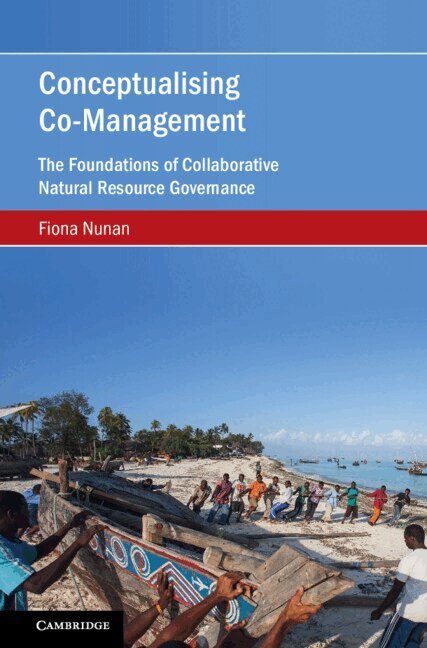
Conceptualising Co-Management
The Foundations of Collaborative Natural Resource Governance
Inbunden, Engelska, 2026
1 440 kr
Kommande
Co-management has been adopted internationally, across all types of natural resource settings, bringing resource users and others into governance with government. Multiple aspects of co-management have been studied, from power-sharing to social networks and accountability, identifying a wide range of concepts that form the foundations of co-management. By bringing together and interrogating a wide range of concepts, from all natural resource sectors, including forests, fisheries and grazing land, this book identifies how each concept contributes to the understanding and practice of co-management. Concepts such as collaboration, participation, institutions, power, community, cohesion, representation, accountability, trust, legitimacy, scale, rights, justice, values, identity and adaptation are reviewed. Each chapter reviews foundational literature and identifies key implications for co-management. These are brought together in a concluding chapter that identifies recurring themes from across the chapters and develops a social relational definition and conceptual framework for the understanding and practice of co-management.
Conceptualising Co-Management
The Foundations of Collaborative Natural Resource Governance
Häftad, Engelska, 2026
434 kr
Kommande
Co-management has been adopted internationally, across all types of natural resource settings, bringing resource users and others into governance with government. Multiple aspects of co-management have been studied, from power-sharing to social networks and accountability, identifying a wide range of concepts that form the foundations of co-management. By bringing together and interrogating a wide range of concepts, from all natural resource sectors, including forests, fisheries and grazing land, this book identifies how each concept contributes to the understanding and practice of co-management. Concepts such as collaboration, participation, institutions, power, community, cohesion, representation, accountability, trust, legitimacy, scale, rights, justice, values, identity and adaptation are reviewed. Each chapter reviews foundational literature and identifies key implications for co-management. These are brought together in a concluding chapter that identifies recurring themes from across the chapters and develops a social relational definition and conceptual framework for the understanding and practice of co-management.
663 kr
Skickas inom 10-15 vardagar
The Routledge Handbook on Livelihoods in the Global South presents a unique, timely, comprehensive overview of livelihoods in low- and middle-income countries. Since their widespread adoption in the 1990s, livelihoods perspectives, frameworks and methods have influenced diverse areas of research, policy and practice.The concept of livelihoods reflects the complexity of strategies and practices used by individuals, households and communities to meet their needs and live their lives. The Handbook brings together insights and critical analysis from diverse approaches and experiences, learning from research and practice over the last 30 years. The Handbook comprises an introductory section on key concepts and frameworks, followed by five parts, on researching livelihoods, negotiating livelihoods, generating livelihoods, enabling livelihoods and contextualising livelihoods. The introduction provides readers with an appreciation of concepts researched and applied in the five parts, including chapters on vulnerability and resilience, social capital and networks, and institutions. Each part reflects the diversity of approaches taken to understanding livelihoods, whilst recognising commonalities, including the centrality of power in shaping, enabling and constraining livelihoods. The book also reflects diversity of context, including conflict, climate change and religion, as well as in generating livelihoods, through agriculture, small-scale mining and pastoralism. The aim of each chapter is to provide a critically informed introduction and overview of key concepts, issues and debates of relevance to the topic, with each chapter concluding with suggestions for further reading.It will be an essential resource to students, researchers and practitioners of international development and related fields. Researchers and practitioners will also benefit from the book's diverse disciplinary contributions and by the wide and contemporary coverage.
Researching Institutions in Natural Resource Governance
Methods and Frameworks
Inbunden, Engelska, 2024
1 953 kr
Skickas inom 10-15 vardagar
This book presents an overview of different data collection methods and approaches that have been used to identify and analyse institutions associated with natural resource governance.Institutions as rules of the game are fundamental to the management, governance and use of renewable natural resources, such as fisheries, forests and water. Yet researching institutions, particularly informal institutions, can be challenging as they can be difficult to identify, investigate and understand. This volume tackles this challenge head on. The innovative collection brings together contributions from different disciplines and traditions reporting and reflecting on a range of qualitative and quantitative research methods and experiences. The book begins by reviewing definitions and typologies of institutions and introduces different approaches to researching institutions in natural resource governance, namely the Bloomington School, associated with Elinor Ostrom, and Critical Institutionalism. Following this, each chapter provides an overview and example of application of research approaches and methods, including mixed methods, institutional grammar, fuzzy cognitive mapping, network analysis, assemblage and ethnography. The concluding chapter identifies key insights into institutions and lessons on researching institutions. From these, the chapter provides a set of observations on researching institutions in natural resource governance, with the aim of providing guidance for new and experienced researchers.The volume provides an essential introduction for students and researchers into the range of methods and approaches, and their practical application, that can be used to research institutions associated with natural resource governance.
675 kr
Kommande
This book presents an overview of different data collection methods and approaches that have been used to identify and analyse institutions associated with natural resource governance.Institutions as rules of the game are fundamental to the management, governance and use of renewable natural resources, such as fisheries, forests and water. Yet researching institutions, particularly informal institutions, can be challenging as they can be difficult to identify, investigate and understand. This volume tackles this challenge head on. The innovative collection brings together contributions from different disciplines and traditions reporting and reflecting on a range of qualitative and quantitative research methods and experiences. The book begins by reviewing definitions and typologies of institutions and introduces different approaches to researching institutions in natural resource governance, namely the Bloomington School, associated with Elinor Ostrom, and Critical Institutionalism. Following this, each chapter provides an overview and example of application of research approaches and methods, including mixed methods, institutional grammar, fuzzy cognitive mapping, network analysis, assemblage and ethnography. The concluding chapter identifies key insights into institutions and lessons on researching institutions. From these, the chapter provides a set of observations on researching institutions in natural resource governance, with the aim of providing guidance for new and experienced researchers.The volume provides an essential introduction for students and researchers into the range of methods and approaches, and their practical application, that can be used to research institutions associated with natural resource governance.
2 088 kr
Skickas inom 10-15 vardagar
Making Climate Compatible Development Happen introduces readers to the concept of climate compatible development (CCD) through exploring what it might look like, how it could be achieved in practice and identifying challenges and dilemmas raised by CCD. The book brings together research that explores the assumptions underlying CCD and applies the concept in a range of geographic and sectoral settings.The volume makes a significant contribution to the theorisation and evidence-base for how development efforts can be made more climate resilient and with lower greenhouse gas emissions than a ‘business as usual’ approach. It provides critical reflections on the vision and conceptualisation of CCD, exploring how to encourage it, and what trade-offs and challenges may be encountered. The contributions discuss the feasibility of achieving CCD, mechanisms that may support progress towards it, challenges that may be experienced and the roles of, and impacts on, different stakeholder groups. Following a critical reflection on the concept of CCD, the potential nature of, and barriers to, CCD, it is examined in relation to agriculture, renewable energy, forestry, pastoralism, coastal areas and fisheries, with case studies taken from countries including Ghana, India, Kenya, Mongolia, Mozambique and Peru.The book provides a valuable cross-sectoral and international critical reflection on the theory and practice of CCD, and will be a resource for postgraduates, established scholars and undergraduates from any social science discipline, policymakers and practitioners studying or working on areas related to the interface between environment (climate change) and international development.
576 kr
Skickas inom 10-15 vardagar
Making Climate Compatible Development Happen introduces readers to the concept of climate compatible development (CCD) through exploring what it might look like, how it could be achieved in practice and identifying challenges and dilemmas raised by CCD. The book brings together research that explores the assumptions underlying CCD and applies the concept in a range of geographic and sectoral settings.The volume makes a significant contribution to the theorisation and evidence-base for how development efforts can be made more climate resilient and with lower greenhouse gas emissions than a ‘business as usual’ approach. It provides critical reflections on the vision and conceptualisation of CCD, exploring how to encourage it, and what trade-offs and challenges may be encountered. The contributions discuss the feasibility of achieving CCD, mechanisms that may support progress towards it, challenges that may be experienced and the roles of, and impacts on, different stakeholder groups. Following a critical reflection on the concept of CCD, the potential nature of, and barriers to, CCD, it is examined in relation to agriculture, renewable energy, forestry, pastoralism, coastal areas and fisheries, with case studies taken from countries including Ghana, India, Kenya, Mongolia, Mozambique and Peru.The book provides a valuable cross-sectoral and international critical reflection on the theory and practice of CCD, and will be a resource for postgraduates, established scholars and undergraduates from any social science discipline, policymakers and practitioners studying or working on areas related to the interface between environment (climate change) and international development.