Fiorella De Cindio – författare
Visar alla böcker från författaren Fiorella De Cindio. Handla med fri frakt och snabb leverans.
5 produkter
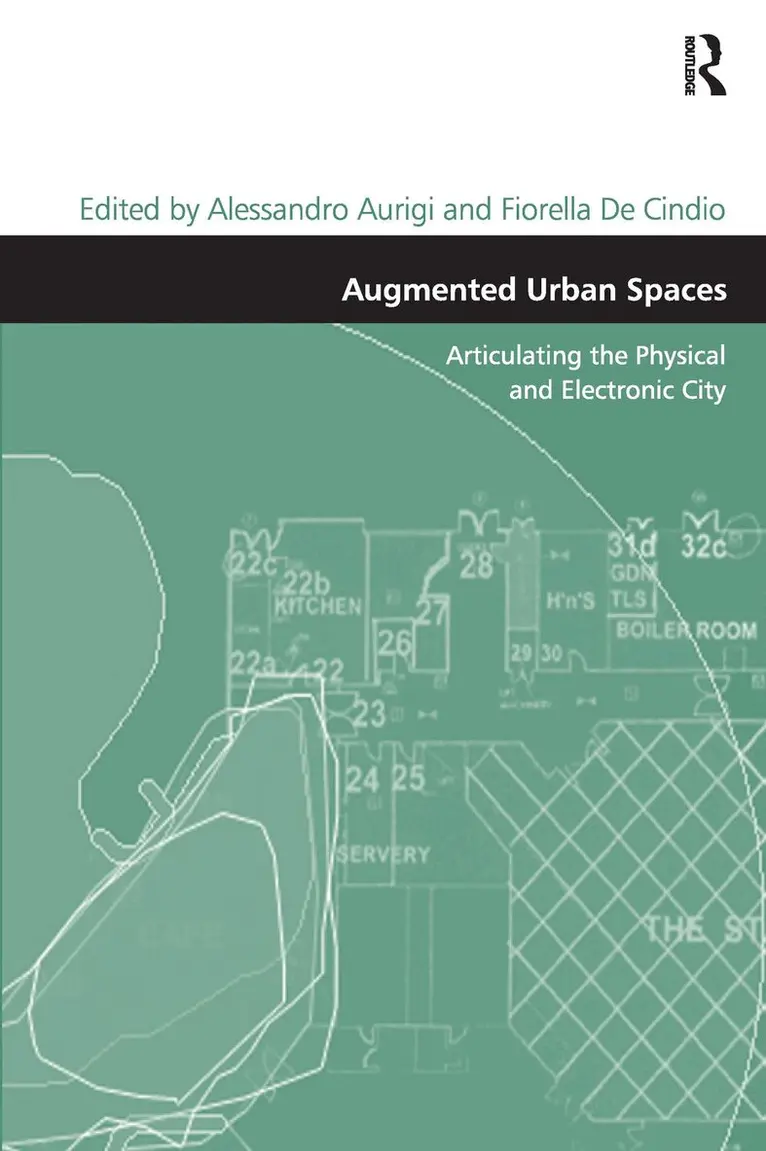
Augmented Urban Spaces
Articulating the Physical and Electronic City
Av Fiorella De Cindio, Alessandro Aurigi
Inbunden, 2008
2754 kr
Lägg i varukorg
There have been numerous possible scenarios depicted on the impact of the internet on urban spaces. Considering ubiquitous/pervasive computing, mobile, wireless connectivity and the acceptance of the Internet as a non-extraordinary part of our everyday lives mean that physical urban space is …
Augmented Urban Spaces
Articulating the Physical and Electronic City
Av Fiorella De Cindio, Alessandro Aurigi
E-bok, 2016
3065 kr
Lägg i varukorg
There have been numerous possible scenarios depicted on the impact of the internet on urban spaces. Considering ubiquitous/pervasive computing, mobile, wireless connectivity and the acceptance of the Internet as a non-extraordinary part of our everyday lives mean that physical urban space is …
Augmented Urban Spaces
Articulating the Physical and Electronic City
Av Fiorella De Cindio, Alessandro Aurigi
E-bok, 2016
3065 kr
Lägg i varukorg
There have been numerous possible scenarios depicted on the impact of the internet on urban spaces. Considering ubiquitous/pervasive computing, mobile, wireless connectivity and the acceptance of the Internet as a non-extraordinary part of our everyday lives mean that physical urban space is …
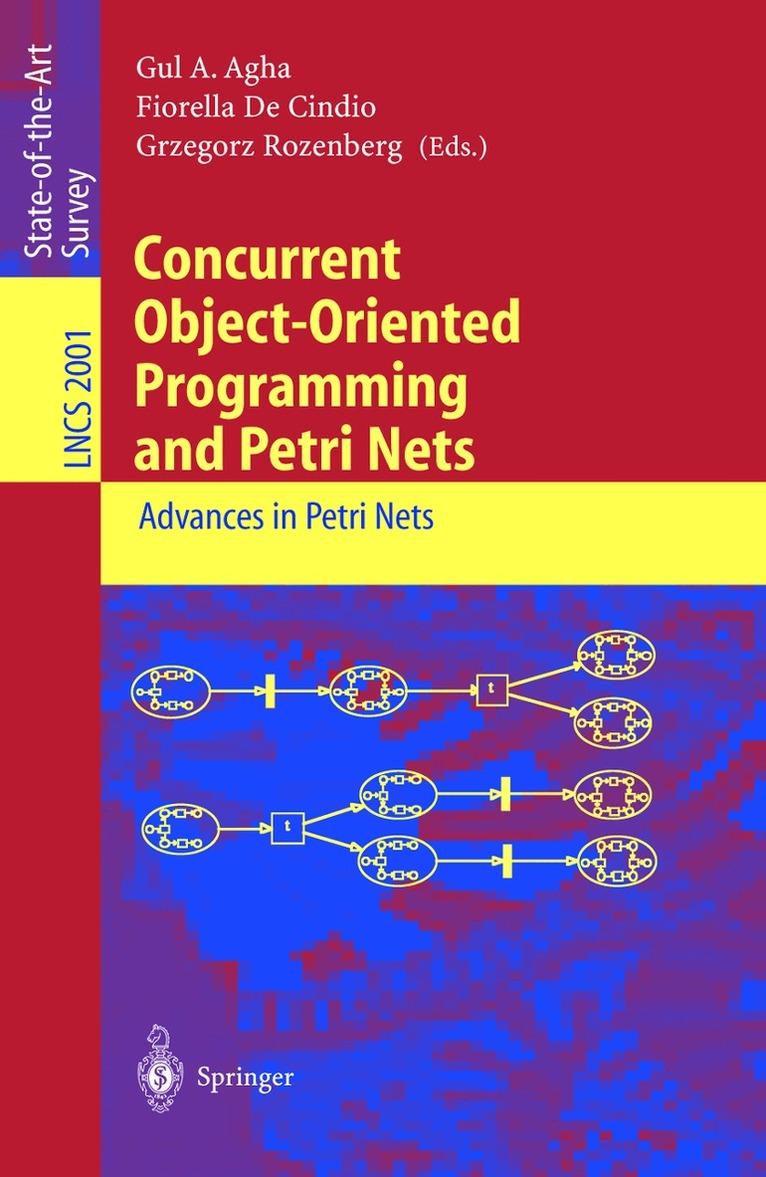
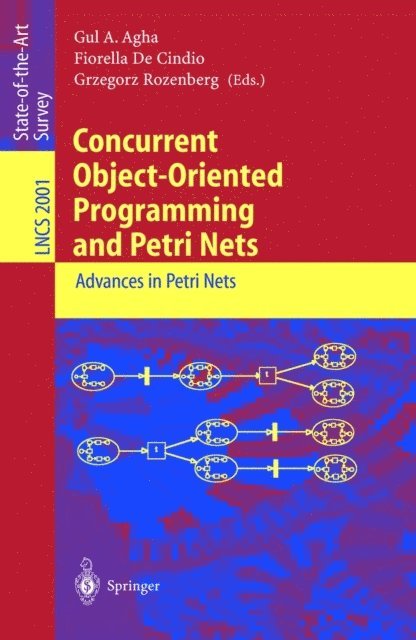
Concurrent Object-Oriented Programming and Petri Nets
Advances in Petri Nets
Av Gul A. Agha, Fiorella De Cindio m. fl.
Häftad, 2001
1128 kr
Lägg i varukorg
Concurrency and distribution have become the dominant paradigm and concern in computer science. Despite the fact that much of the early research in object-oriented programming focused on sequential systems, objects are a natural unit of distribution and concurrency - as elucidated early on by …
Concurrent Object-Oriented Programming and Petri Nets
Advances in Petri Nets
Av Grzegorz Rozenberg, Fiorella De Cindio m. fl.
E-bok, 2003
1459 kr
Lägg i varukorg
Concurrency and distribution have become the dominant paradigm and concern in computer science. Despite the fact that much of the early research in object-oriented programming focused on sequential systems, objects are a natural unit of distribution and concurrency - as elucidated early on by …