Fiorentini Ilaria Fiorentini – författare
Visar alla böcker från författaren Fiorentini Ilaria Fiorentini. Handla med fri frakt och snabb leverans.
2 produkter
2 produkter
E-bok
Engelska, 20241 622 kr
Läs direkt efter köp
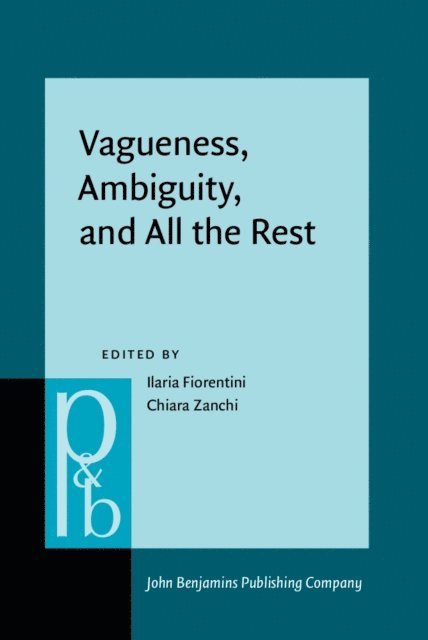
This book aims to address a gap in the existing literature on the relationship between vagueness and ambiguity, as well as on their differences and similarities, both in synchrony and diachrony, and taking into consideration their relation to language use. The book is divided into two parts, which address specific and broader research questions from different perspectives. The former part examines the differences between ambiguity and vagueness from a bird-eye perspective, with a particular focus on their respective functions and roles in language change. It also presents innovative linguistic resources and tools for the study of these phenomena. The second part contains case studies on vagueness and ambiguity in language change and use. It considers different strategies and languages, including English, French, German, Italian, Medieval Latin, and Old Italian. The readership for this volume is broad, encompassing scholars in a range of disciplines, including pragmatics, spoken discourse, conversation analysis, discourse genres (political, commercial, notarial discourse), corpus studies, language change, pragmaticalization, and language typology.
E-bok
Engelska, 20211 384 kr
Läs direkt efter köp
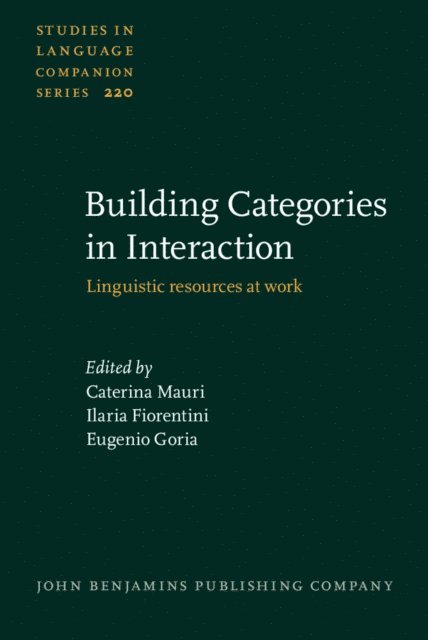
This book addresses the topic of linguistic categorization from a novel perspective. While most of the early research has focused on how linguistic systems reflect some pre-existing ways of categorizing experience, the contributions included in this volume seek to understand how linguistic resources of various nature (prosodic cues, affixes, constructions, discourse markers, ...) can be 'put to work' in order to actively build categories in discourse and in interaction, to achieve social goals. This question is addressed in different ways by researchers from different subfields of linguistics, including psycholinguistics, conversation analysis, linguistic typology and discourse pragmatics, and a major point of innovation is represented in fact by the interdisciplinary nature of the volume and in the systematic search for converging evidence.