Florencia Sannders – författare
Visar alla böcker från författaren Florencia Sannders. Handla med fri frakt och snabb leverans.
4 produkter
4 produkter
526 kr
Läs direkt efter köp
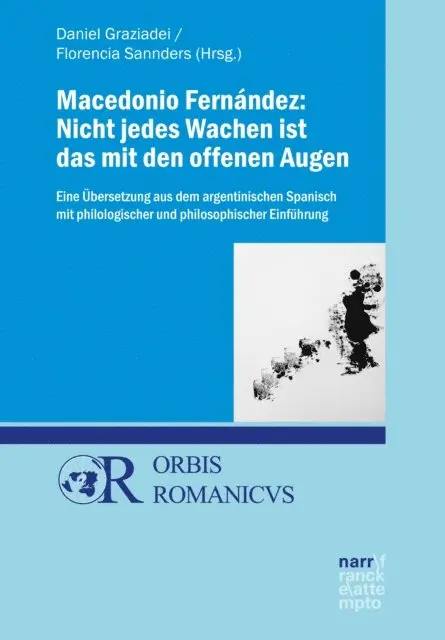
Die Totalität eines wachsamen Zustands des Wachens verneint der Titel des 1928 erschienenen Erstlingswerks No toda es vigilia la de las ojos abiertos des argentinischen Philosophen Macedonio Fernández, das nun erstmals in deutscher Sprache erhältlich ist. Bei dem Autor handelt es sich um den wichtigsten Vorläufer von Jorge Luis Borges, der 1952 über den eben Verstorbenen sagte, dass er ihn jahrelang bis hin zum passioniert-devoten Plagiat imitiert habe. Das Werk ist eine leidenschaftliche, träumerisch-verspielte Kritik an jeglicher Philosophie der Vernunft. Ein dekolonialer Angriff auf die großen europäischen Philosophen (von Kant bis Hobbes) voller Ironie und Parodie erwartet Sie!Die Publikation umfasst eine Einführung in Autor und Werk (Michael Rössner) sowie eine philosophische Einordnung (Victor Ferretti), die Übersetzung (Daniel Graziadei und Florencia Sannders) sowie ein Nachwort der Übersetzerin und des Übersetzers.
E-bok
PDF, Tyska, 2022526 kr
Läs direkt efter köp
Die Totalität eines wachsamen Zustands des Wachens verneint der Titel des 1928 erschienenen Erstlingswerks No toda es vigilia la de las ojos abiertos des argentinischen Philosophen Macedonio Fernández, das nun erstmals in deutscher Sprache erhältlich ist. Bei dem Autor handelt es sich um den wichtigsten Vorläufer von Jorge Luis Borges, der 1952 über den eben Verstorbenen sagte, dass er ihn jahrelang bis hin zum passioniert-devoten Plagiat imitiert habe. Das Werk ist eine leidenschaftliche, träumerisch-verspielte Kritik an jeglicher Philosophie der Vernunft. Ein dekolonialer Angriff auf die großen europäischen Philosophen (von Kant bis Hobbes) voller Ironie und Parodie erwartet Sie!Die Publikation umfasst eine Einführung in Autor und Werk (Michael Rössner) sowie eine philosophische Einordnung (Victor Ferretti), die Übersetzung (Daniel Graziadei und Florencia Sannders) sowie ein Nachwort der Übersetzerin und des Übersetzers.
Häftad, Engelska, 2021
398 kr
Skickas inom 3-6 vardagar
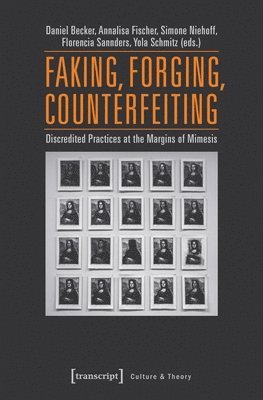
Forgeries are an omnipresent part of our culture and closely related to traditional ideas of authenticity, legality, authorship, creativity, and innovation. Based on the concept of mimesis, this volume illustrates how forgeries must be understood as autonomous aesthetic practices – creative acts in themselves – rather than as mere rip-offs of an original work of art.The proceedings bring together research from different scholarly fields. They focus on various mimetic practices such as pseudo-translations, imposters, identity theft, and hoaxes in different artistic and historic contexts. By opening up the scope of the aesthetic implications of fakes, this anthology aims to consolidate forging as an autonomous method of creation.
E-bok
PDF, Engelska, 2020273 kr
Läs direkt efter köp
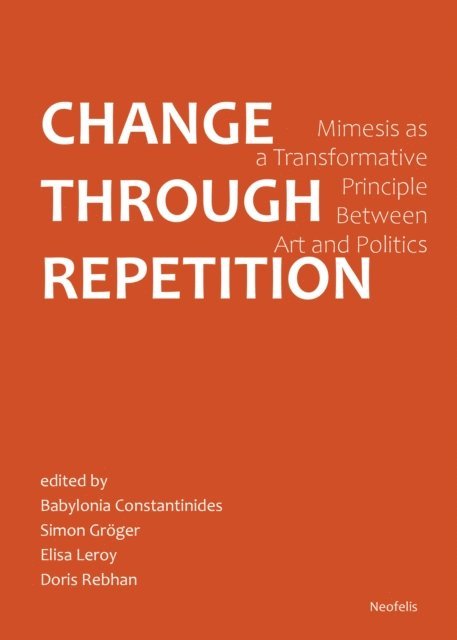
Art and politics are related through repetition. Both realms are structured by practices of repetition and share a common room of sens(e)uality – aesthetics in the emphatic sense of the word. It is the aesthetics and practices of repetition that reveal the relation between both realms. This volume proposes to explore aesthetic and cultural phenomena that effect change in the non-aesthetical realm, not so much in spite, but precisely because of their being ''mere'' repetitions.Repetition shapes art works through procedures and processes of reproduction, copying, depiction, or reenactment. As representation of the world, mimetic art''s relationship to the political and social world can be conceived as repetition. When can mimetic works of art nonetheless become a trigger, participant in or vehicle for political and social transformation? How do mimetic practices as diverse as those of the Research Institute Forensic Architecture, the theater of Milo Rau, video installations with found footage from social media and the fictional NSK State address and change regimes of visibility? How can practices such as performative gender constitution and propaganda, which (ostensibly) affirm regimes of visibility, be understood as processes of change through repetition? How do commemorative cultures and practices of documentation interrelate? How is historical reality produced through mimesis with a view to an imaginary political future?By exploring works of art from a wide range of historical periods, places, media and contexts – from the political thought hidden in Hegel''s Aesthetics through Hélène Cixous''s practice of writing difference(s), from contemporary applied theater through the Gezi Park Uprising in 2013, and from installations of fictional national museums through to the artistic commemoration of assassinated political activists in Iran – all contributions in this volume attempt to show how a concept of change through repetition can help redefine the relationship between art and politics and to enlighten us on the transformative potential of repetition in ''political art''.