Forum on Public-Private Partnerships for Global Health and Safety – författare
Visar alla böcker från författaren Forum on Public-Private Partnerships for Global Health and Safety. Handla med fri frakt och snabb leverans.
7 produkter
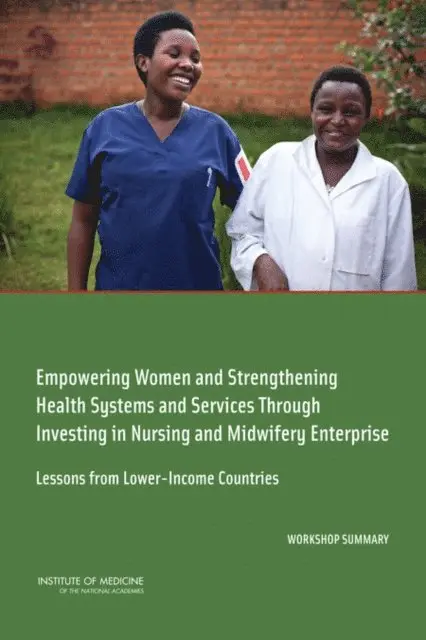
Empowering Women and Strengthening Health Systems and Services Through Investing in Nursing and Midwifery Enterprise
Lessons from Lower-Income Countries: Workshop Summary
Av Global Forum on Innovation in Health Professional Education, Forum on Public-Private Partnerships for Global Health and Safety m. fl.
E-bok, 2015
696 kr
Lägg i varukorg
In September 2014, the Global Forum on Innovation in Health Professional Education and the Forum on Public-Private Partnerships for Global Health and Safety of the Institute of Medicine convened a workshop on empowering women and strengthening health systems and services through investing in …
Approaches to Universal Health Coverage and Occupational Health and Safety for the Informal Workforce in Developing Countries
Workshop Summary
Av Forum on Public-Private Partnerships for Global Health and Safety, Board on Global Health m. fl.
E-bok, 2016
606 kr
Lägg i varukorg
Universal health coverage (UHC) has been recognized by the World Health Organization as a key element in reducing social inequality and a critical component of sustainable development and poverty reduction. In most of the world UHC is sought through a combination of public and private-sector health …
Role of Public-Private Partnerships in Health Systems Strengthening
Workshop Summary
Av and Medicine National Academies of Sciences, Engineering, Institute of Medicine m. fl.
Häftad, 2016
708 kr
Lägg i varukorg
Over the past several decades, the public and private sectors made significant investments in global health, leading to meaningful changes for many of the world's poor. These investments and the resulting progress are often concentrated in vertical health programs, such as child and maternal …
Role of Public-Private Partnerships in Health Systems Strengthening
Workshop Summary
Av Forum on Public-Private Partnerships for Global Health and Safety, Board on Global Health m. fl.
E-bok, 2016
642 kr
Lägg i varukorg
Over the past several decades, the public and private sectors made significant investments in global health, leading to meaningful changes for many of the world''s poor. These investments and the resulting progress are often concentrated in vertical health programs, such as child and maternal …
Exploring Shared Value in Global Health and Safety
Workshop Summary
Av and Medicine National Academies of Sciences, Engineering, Health and Medicine Division m. fl.
Häftad, 2016
435 kr
Lägg i varukorg
Companies today are operating in a more complex and competitive environment where traditional models for doing business are no longer sufficient and expectations of business are growing both internally and externally. Many companies have long and robust histories of contributing to their …
Exploring Shared Value in Global Health and Safety
Workshop Summary
Av Forum on Public-Private Partnerships for Global Health and Safety, Board on Global Health m. fl.
E-bok, 2016
660 kr
Lägg i varukorg
Companies today are operating in a more complex and competitive environment where traditional models for doing business are no longer sufficient and expectations of business are growing both internally and externally. Many companies have long and robust histories of contributing to their …
Using Technology to Advance Global Health
Proceedings of a Workshop
Av Forum on Public-Private Partnerships for Global Health and Safety, Board on Global Health m. fl.
E-bok, 2018
716 kr
Lägg i varukorg
To explore how the use of technology can facilitate progress toward globally recognized health priorities, the Forum on Public–Private Partnerships for Global Health and Safety organized a public workshop. Participants identified and explored the major challenges and opportunities for developing …