Fotini Christia - Böcker
Visar alla böcker från författaren Fotini Christia. Handla med fri frakt och snabb leverans.
4 produkter
4 produkter
448 kr
Skickas inom 7-10 vardagar
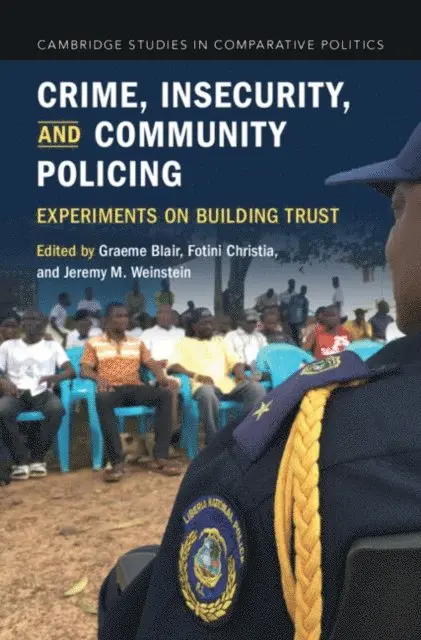
How can societies effectively reduce crime without exacerbating adversarial relationships between the police and citizens? In recent decades, perhaps the most celebrated innovation in police reform has been the introduction of community policing, where citizens are involved in building channels of dialogue and improving police-citizen collaboration. Despite the widespread adoption of community policing in the United States and increasingly in the developing world, there is still limited credible evidence about whether it realistically increases trust in the police or reduces crime. Through simultaneously coordinated field experiments in a diversity of political contexts, this book presents the outcome of a major research initiative into the efficacy of community policing. Scholars from around the world uncover whether, and under what conditions, this highly influential strategy for tackling crime and insecurity is effective. With its highly innovative approach to cumulative learning, this project represents a new frontier in the study of police reform.
1 258 kr
Skickas inom 7-10 vardagar
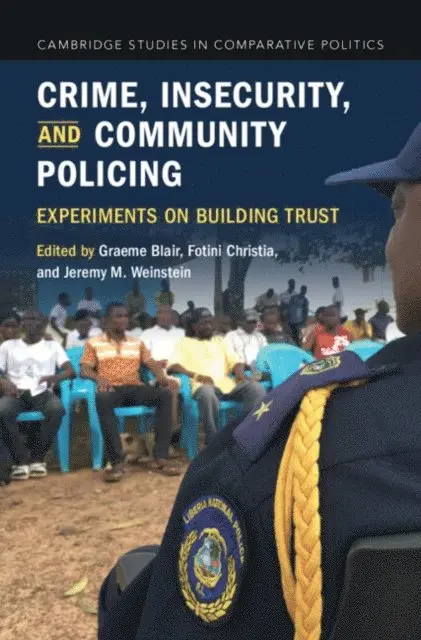
How can societies effectively reduce crime without exacerbating adversarial relationships between the police and citizens? In recent decades, perhaps the most celebrated innovation in police reform has been the introduction of community policing, where citizens are involved in building channels of dialogue and improving police-citizen collaboration. Despite the widespread adoption of community policing in the United States and increasingly in the developing world, there is still limited credible evidence about whether it realistically increases trust in the police or reduces crime. Through simultaneously coordinated field experiments in a diversity of political contexts, this book presents the outcome of a major research initiative into the efficacy of community policing. Scholars from around the world uncover whether, and under what conditions, this highly influential strategy for tackling crime and insecurity is effective. With its highly innovative approach to cumulative learning, this project represents a new frontier in the study of police reform.
1 166 kr
Skickas inom 7-10 vardagar
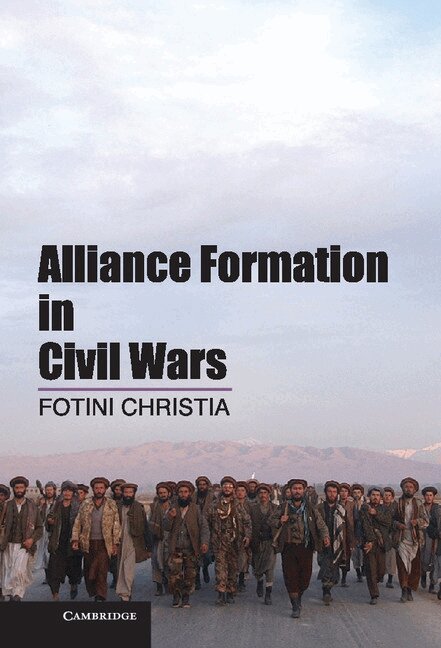
Some of the most brutal and long-lasting civil wars of our time involve the rapid formation and disintegration of alliances among warring groups, as well as fractionalization within them. It would be natural to suppose that warring groups form alliances based on shared identity considerations - such as Christian groups allying with Christian groups - but this is not what we see. Two groups that identify themselves as bitter foes one day, on the basis of some identity narrative, might be allies the next day and vice versa. Nor is any group, however homogeneous, safe from internal fractionalization. Rather, looking closely at the civil wars in Afghanistan and Bosnia and testing against the broader universe of fifty-three cases of multiparty civil wars, Fotini Christia finds that the relative power distribution between and within various warring groups is the primary driving force behind alliance formation, alliance changes, group splits and internal group takeovers.
360 kr
Skickas inom 7-10 vardagar
Some of the most brutal and long-lasting civil wars of our time involve the rapid formation and disintegration of alliances among warring groups, as well as fractionalization within them. It would be natural to suppose that warring groups form alliances based on shared identity considerations - such as Christian groups allying with Christian groups - but this is not what we see. Two groups that identify themselves as bitter foes one day, on the basis of some identity narrative, might be allies the next day and vice versa. Nor is any group, however homogeneous, safe from internal fractionalization. Rather, looking closely at the civil wars in Afghanistan and Bosnia and testing against the broader universe of fifty-three cases of multiparty civil wars, Fotini Christia finds that the relative power distribution between and within various warring groups is the primary driving force behind alliance formation, alliance changes, group splits and internal group takeovers.