
FranAois Gauthier – författare
874 kr
Läs direkt efter köp
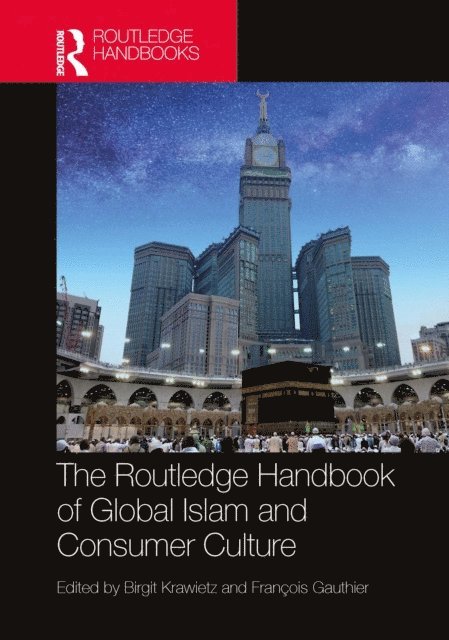
The Routledge Handbook of Global Islam and Consumer Culture is an outstanding inter- and transdisciplinary reference source to key topics, problems, and debates in this challenging research field. The study of Islam is enriched by investigating religion and, notably, Islamic normativity (fiqh) as a resource for product design, attitudes toward commodification, and appropriated patterns of behavior. Comprising 35 chapters (including an extended Introduction) by a team of international contributors from chairholders to advanced graduate students, the handbook is divided into seven parts:
Guiding Frameworks of Understanding Historical Probes Urbanism and Consumption Body Manipulation, Vestiary Regimes, and Gender Mediated Religion and Culture Consumer Culture, Lifestyle, and Senses of the Self through Consumption MarketsThese sections examine vibrant debates around consumption, frugality, Islamic jurisprudence and fatwas in the world economy, capitalism, neoliberalism, trade relations, halalization, (labor) tourism and travel infrastructure, body modification, fashion, self-fashioning, lifestylization, Islamic kitsch, urban regeneration, heritage, Islamic finance, the internet, and Quran recitation versus music. Contributions present selected case studies from countries across the world, including China, Indonesia, Malaysia, Morocco, Nigeria, Qatar, Pakistan, and Turkey.
The handbook is essential reading for students and researchers in Islamic studies, Near and Middle Eastern studies, religious studies, and cultural studies. The handbook will also be very useful for those in related fields, such as politics, area studies, sociology, anthropology, and history.
Chapter 11 of this book is freely available as a downloadable Open Access PDF at http://www.taylorfrancis.com under a Creative Commons [Attribution-Non Commercial-No Derivatives (CC BY-NC-ND) 4.0 license.
874 kr
Läs direkt efter köp
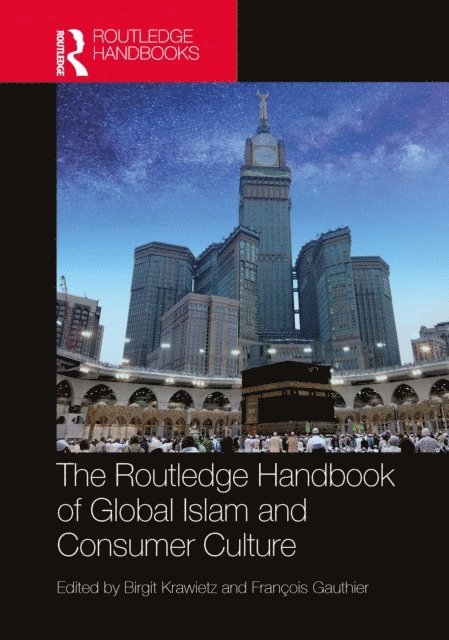
The Routledge Handbook of Global Islam and Consumer Culture is an outstanding inter- and transdisciplinary reference source to key topics, problems, and debates in this challenging research field. The study of Islam is enriched by investigating religion and, notably, Islamic normativity (fiqh) as a resource for product design, attitudes toward commodification, and appropriated patterns of behavior. Comprising 35 chapters (including an extended Introduction) by a team of international contributors from chairholders to advanced graduate students, the handbook is divided into seven parts:
Guiding Frameworks of Understanding Historical Probes Urbanism and Consumption Body Manipulation, Vestiary Regimes, and Gender Mediated Religion and Culture Consumer Culture, Lifestyle, and Senses of the Self through Consumption MarketsThese sections examine vibrant debates around consumption, frugality, Islamic jurisprudence and fatwas in the world economy, capitalism, neoliberalism, trade relations, halalization, (labor) tourism and travel infrastructure, body modification, fashion, self-fashioning, lifestylization, Islamic kitsch, urban regeneration, heritage, Islamic finance, the internet, and Quran recitation versus music. Contributions present selected case studies from countries across the world, including China, Indonesia, Malaysia, Morocco, Nigeria, Qatar, Pakistan, and Turkey.
The handbook is essential reading for students and researchers in Islamic studies, Near and Middle Eastern studies, religious studies, and cultural studies. The handbook will also be very useful for those in related fields, such as politics, area studies, sociology, anthropology, and history.
Chapter 11 of this book is freely available as a downloadable Open Access PDF at http://www.taylorfrancis.com under a Creative Commons [Attribution-Non Commercial-No Derivatives (CC BY-NC-ND) 4.0 license.
942 kr
Läs direkt efter köp
942 kr
Läs direkt efter köp
942 kr
Läs direkt efter köp
942 kr
Läs direkt efter köp
858 kr
Läs direkt efter köp
Like any other subject, the study of religion is a child of its time. Shaped and forged over the course of the twentieth century, it has reflected the interests and political situation of the world at the time. As the twenty-first century unfolds, it is undergoing a major transition along with religion itself. This volume showcases new work and new approaches to religion which work across boundaries of religious tradition, academic discipline and region.
The influence of globalizing processes has been evident in social and cultural networking by way of new media like the internet, in the extensive power of global capitalism and in the increasing influence of international bodies and legal instruments. Religion has been changing and adapting too. This handbook offers fresh insights on the dynamic reality of religion in global societies today by underscoring transformations in eight key areas: Market and Branding; Contemporary Ethics and Virtues; Intimate Identities; Transnational Movements; Diasporic Communities; Responses to Diversity; National Tensions; and Reflections on ‘Religion’. These themes demonstrate the handbook’s new topics and approaches that move beyond existing agendas.
Bringing together scholars of all ages and stages of career from around the world, the handbook showcases the dynamism of religion in global societies. It is an accessible introduction to new ways of approaching the study of religion practically, theoretically and geographically.
858 kr
Läs direkt efter köp
Like any other subject, the study of religion is a child of its time. Shaped and forged over the course of the twentieth century, it has reflected the interests and political situation of the world at the time. As the twenty-first century unfolds, it is undergoing a major transition along with religion itself. This volume showcases new work and new approaches to religion which work across boundaries of religious tradition, academic discipline and region.
The influence of globalizing processes has been evident in social and cultural networking by way of new media like the internet, in the extensive power of global capitalism and in the increasing influence of international bodies and legal instruments. Religion has been changing and adapting too. This handbook offers fresh insights on the dynamic reality of religion in global societies today by underscoring transformations in eight key areas: Market and Branding; Contemporary Ethics and Virtues; Intimate Identities; Transnational Movements; Diasporic Communities; Responses to Diversity; National Tensions; and Reflections on ‘Religion’. These themes demonstrate the handbook’s new topics and approaches that move beyond existing agendas.
Bringing together scholars of all ages and stages of career from around the world, the handbook showcases the dynamism of religion in global societies. It is an accessible introduction to new ways of approaching the study of religion practically, theoretically and geographically.