Birgit Krawietz – författare
3 682 kr
Skickas inom 10-15 vardagar
808 kr
Kommande
2 269 kr
Skickas inom 10-15 vardagar
874 kr
Läs direkt efter köp
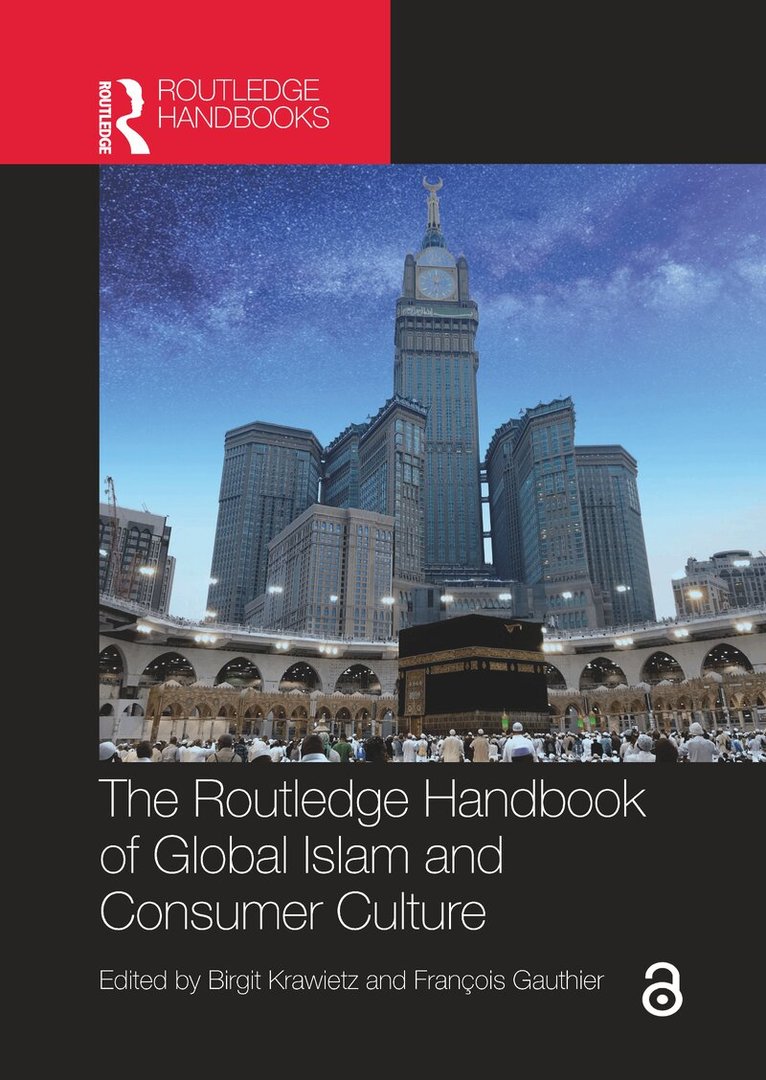
The Routledge Handbook of Global Islam and Consumer Culture is an outstanding inter- and transdisciplinary reference source to key topics, problems, and debates in this challenging research field. The study of Islam is enriched by investigating religion and, notably, Islamic normativity (fiqh) as a resource for product design, attitudes toward commodification, and appropriated patterns of behavior. Comprising 35 chapters (including an extended Introduction) by a team of international contributors from chairholders to advanced graduate students, the handbook is divided into seven parts:
Guiding Frameworks of Understanding Historical Probes Urbanism and Consumption Body Manipulation, Vestiary Regimes, and Gender Mediated Religion and Culture Consumer Culture, Lifestyle, and Senses of the Self through Consumption MarketsThese sections examine vibrant debates around consumption, frugality, Islamic jurisprudence and fatwas in the world economy, capitalism, neoliberalism, trade relations, halalization, (labor) tourism and travel infrastructure, body modification, fashion, self-fashioning, lifestylization, Islamic kitsch, urban regeneration, heritage, Islamic finance, the internet, and Quran recitation versus music. Contributions present selected case studies from countries across the world, including China, Indonesia, Malaysia, Morocco, Nigeria, Qatar, Pakistan, and Turkey.
The handbook is essential reading for students and researchers in Islamic studies, Near and Middle Eastern studies, religious studies, and cultural studies. The handbook will also be very useful for those in related fields, such as politics, area studies, sociology, anthropology, and history.
Chapter 11 of this book is freely available as a downloadable Open Access PDF at http://www.taylorfrancis.com under a Creative Commons [Attribution-Non Commercial-No Derivatives (CC BY-NC-ND) 4.0 license.
874 kr
Läs direkt efter köp
The Routledge Handbook of Global Islam and Consumer Culture is an outstanding inter- and transdisciplinary reference source to key topics, problems, and debates in this challenging research field. The study of Islam is enriched by investigating religion and, notably, Islamic normativity (fiqh) as a resource for product design, attitudes toward commodification, and appropriated patterns of behavior. Comprising 35 chapters (including an extended Introduction) by a team of international contributors from chairholders to advanced graduate students, the handbook is divided into seven parts:
Guiding Frameworks of Understanding Historical Probes Urbanism and Consumption Body Manipulation, Vestiary Regimes, and Gender Mediated Religion and Culture Consumer Culture, Lifestyle, and Senses of the Self through Consumption MarketsThese sections examine vibrant debates around consumption, frugality, Islamic jurisprudence and fatwas in the world economy, capitalism, neoliberalism, trade relations, halalization, (labor) tourism and travel infrastructure, body modification, fashion, self-fashioning, lifestylization, Islamic kitsch, urban regeneration, heritage, Islamic finance, the internet, and Quran recitation versus music. Contributions present selected case studies from countries across the world, including China, Indonesia, Malaysia, Morocco, Nigeria, Qatar, Pakistan, and Turkey.
The handbook is essential reading for students and researchers in Islamic studies, Near and Middle Eastern studies, religious studies, and cultural studies. The handbook will also be very useful for those in related fields, such as politics, area studies, sociology, anthropology, and history.
Chapter 11 of this book is freely available as a downloadable Open Access PDF at http://www.taylorfrancis.com under a Creative Commons [Attribution-Non Commercial-No Derivatives (CC BY-NC-ND) 4.0 license.
1 178 kr
Läs direkt efter köp
This book is designed to reflect both our current knowledge regarding sport, globalisation and ‘"encounters" with several important "post-colonial" or non-western societies and to draw together scholars from a range of different disciplines. Case studies of cultural encounters in Central, South-East Asia, Asia Minor and the Arabian peninsula capture the paradoxical processes of emulation, resistance and transformation that are at work in the diffusion and development of "sport" and body cultures. These case studies bring together insights from anthropology, cultural studies, geography, history, law, sociology, various area and post-colonial studies.
1 178 kr
Läs direkt efter köp
This book is designed to reflect both our current knowledge regarding sport, globalisation and ‘"encounters" with several important "post-colonial" or non-western societies and to draw together scholars from a range of different disciplines. Case studies of cultural encounters in Central, South-East Asia, Asia Minor and the Arabian peninsula capture the paradoxical processes of emulation, resistance and transformation that are at work in the diffusion and development of "sport" and body cultures. These case studies bring together insights from anthropology, cultural studies, geography, history, law, sociology, various area and post-colonial studies.
750 kr
Skickas inom 10-15 vardagar
940 kr
Skickas inom 10-15 vardagar
849 kr
Läs direkt efter köp
849 kr
Läs direkt efter köp
2 511 kr
Skickas inom 10-15 vardagar
1 407 kr
Skickas inom 10-15 vardagar
1 733 kr
Läs direkt efter köp
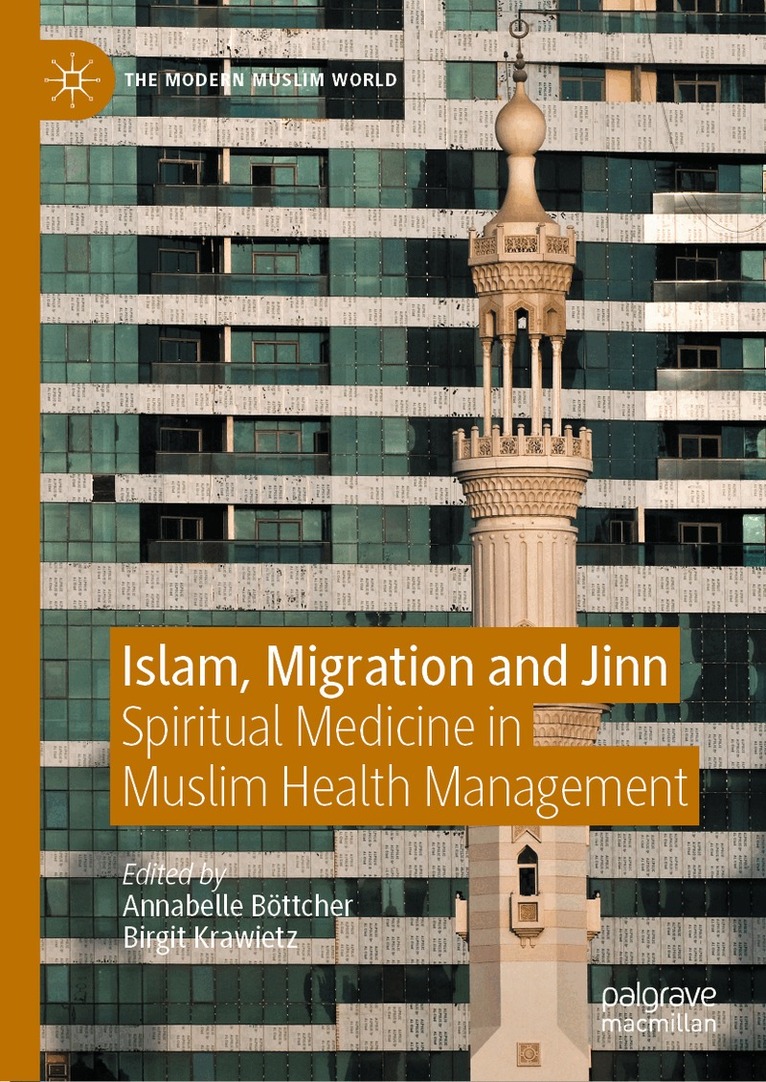
This book explores the agency of Jinn, the so-called “demons of Islam”. They are regarded as mostly invisible and highly mobile creatures. In a globalized world with manifold forms of forced and voluntary migrations, Jinn are likewise on the move, interfering in the human world and affecting the mental and physical health of Muslims. This continuous challenge has so far been mainly addressed by traditional Muslim health management and by the so-called spiritual medicine or medicine of the Prophet. This book shifts perspective. Its interdisciplinary chapters deal with the transformation of manifold cultural resources by first analyzing the doctrinal and cultural history of Jinn and the treatment of Jinn affliction in Arabic texts and other sources. It then discusses case studies of Muslims and current health management approaches in the Middle East, namely in Egypt and Syria. Finally, it turns to the role of Jinn in a number of migratory settings such as Spain, Denmark, Great Britain and Guantanamo.
1 407 kr
Skickas inom 10-15 vardagar
2 602 kr
Skickas inom 5-8 vardagar
2 638 kr
Läs direkt efter köp
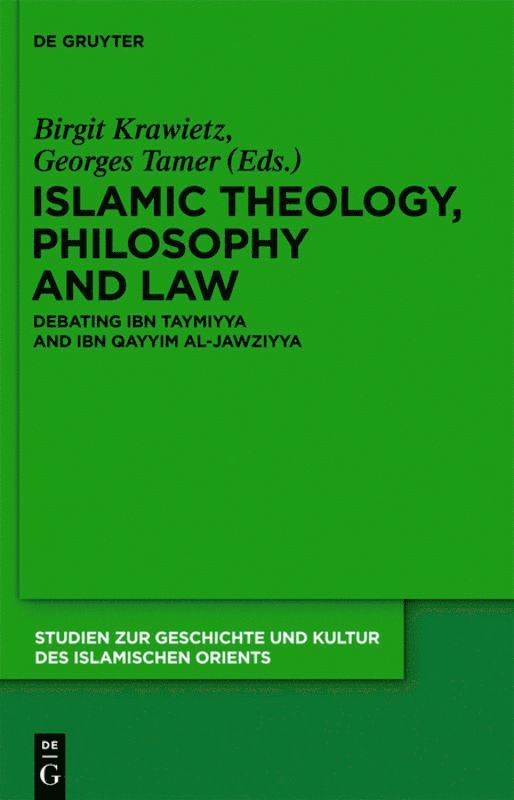
A unique collection of studies, the present volume sheds new light on central themes of Ibn Taymiyya''s (661/1263-728/1328) and Ibn Qayyim al-Jawziyya''s (691/1292-751/1350) thought and the relevance of their ideas to diverse Muslim societies. Investigating their positions in Islamic theology, philosophy and law, the contributions discuss a wide range of subjects, e.g. law and order; the divine compulsion of human beings; the eternity of eschatological punishment; the treatment of Sufi terminology; and the proper Islamic attitude towards Christianity. Notably, a section of the book is dedicated to analyzing Ibn Taymiyya''s struggle for and against reason as well as his image as a philosopher in contemporary Islamic thought. Several articles present the influential legacy of both thinkers in shaping an Islamic discourse facing the challenges of modernity. This volume will be especially useful for students and scholars of Islamic studies, philosophy, sociology, theology, and history of ideas.
1 518 kr
Skickas inom 5-8 vardagar
1 530 kr
Läs direkt efter köp
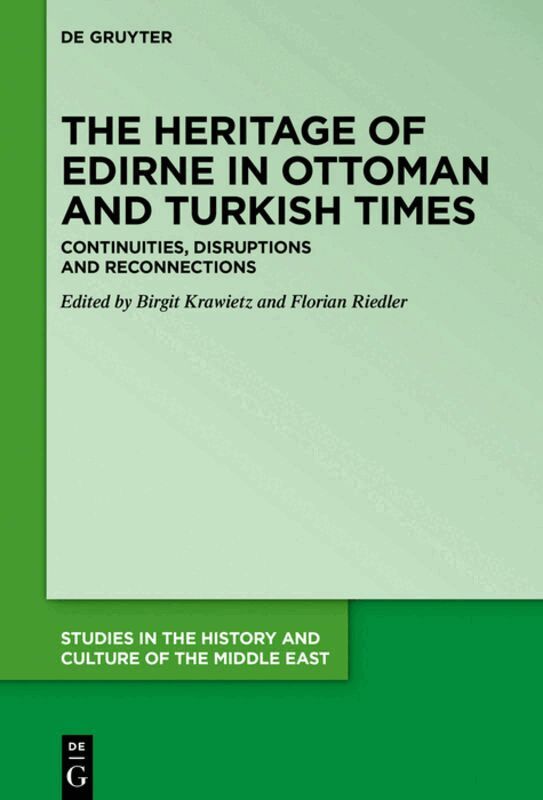
Modern scholarship has not given Edirne the attention it deserves regarding its significance as one of the capitals of the Ottoman Empire. This edited volume offers a reinterpretation of Edirne’s history from Early Ottoman times to recent periods of the Turkish Republic. Presently, disconnections and discontinuities introduced by the transition from empire to nation state still characterize the image of the city and the historiography about it.
In contrast, this volume examines how the city engages in the forming, deflecting and creative appropriation of its heritage, a process that has turned Edirne into a UNESCO heritage hotspot. A closer historical analysis demonstrates the dissonances and contradictions that these different interpretations and uses of heritage produce. From the beginning, Edirne was shaped by its connectivity and relationality to other places, above all to Istanbul.
This perspective is employed at many different levels, e.g., with regard to its population, institutions, architecture, infrastructures and popular culture, but also regarding the imaginations Edirne triggered. In sum, this multi-disciplinary volume boosts urban history beyond Istanbul and offers new insight into Ottoman and Turkish connectivities from the vantage point of certain key moments of Edirne’s history.
1 530 kr
Läs direkt efter köp
Modern scholarship has not given Edirne the attention it deserves regarding its significance as one of the capitals of the Ottoman Empire. This edited volume offers a reinterpretation of Edirne’s history from Early Ottoman times to recent periods of the Turkish Republic. Presently, disconnections and discontinuities introduced by the transition from empire to nation state still characterize the image of the city and the historiography about it.
In contrast, this volume examines how the city engages in the forming, deflecting and creative appropriation of its heritage, a process that has turned Edirne into a UNESCO heritage hotspot. A closer historical analysis demonstrates the dissonances and contradictions that these different interpretations and uses of heritage produce. From the beginning, Edirne was shaped by its connectivity and relationality to other places, above all to Istanbul.
This perspective is employed at many different levels, e.g., with regard to its population, institutions, architecture, infrastructures and popular culture, but also regarding the imaginations Edirne triggered. In sum, this multi-disciplinary volume boosts urban history beyond Istanbul and offers new insight into Ottoman and Turkish connectivities from the vantage point of certain key moments of Edirne’s history.