Florian Riedler – författare
2 331 kr
Skickas inom 10-15 vardagar
617 kr
Skickas inom 10-15 vardagar
2 331 kr
Skickas inom 10-15 vardagar
819 kr
Läs direkt efter köp
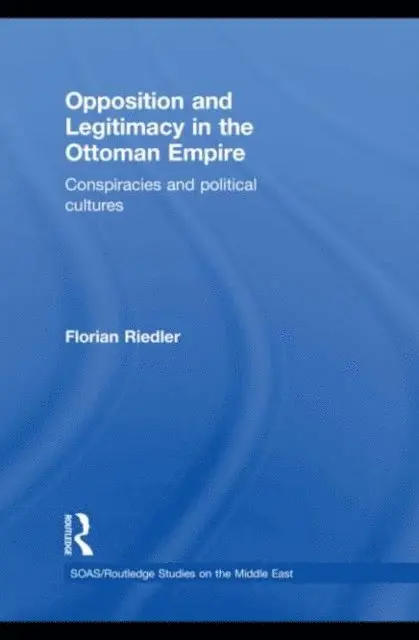
This book looks at opposition to the Ottoman government in the second half of the nineteenth century, examining a number of key political conspiracies and how these relate to an existing political culture. In his detailed analysis of these conspiracies, the author offers a new perspective on an important and well researched period of Ottoman history.
A close reading of police records on five conspiracies offers the opportunity to analyse this opposition in great detail, giving special attention to the different groups of political actors in these conspiracies that often did not come from the established political elites. Florian Riedler investigates how their background of class and education, but also their individual life experiences influenced their aims and strategies, their political styles as well as their ways of thinking on political legitimacy. In contrast, the reaction of the authorities to these conspiracies reveals the official understanding of Ottoman legitimacy.
The picture that emerges of the political culture of opposition during the second half of the nineteenth century offers a unique contribution to our understanding of the great changes in the political system of the Ottoman Empire at the time. As such, it will be of great interest to scholars of Middle Eastern history, political history, and the Ottoman Empire.
819 kr
Läs direkt efter köp
This book looks at opposition to the Ottoman government in the second half of the nineteenth century, examining a number of key political conspiracies and how these relate to an existing political culture. In his detailed analysis of these conspiracies, the author offers a new perspective on an important and well researched period of Ottoman history.
A close reading of police records on five conspiracies offers the opportunity to analyse this opposition in great detail, giving special attention to the different groups of political actors in these conspiracies that often did not come from the established political elites. Florian Riedler investigates how their background of class and education, but also their individual life experiences influenced their aims and strategies, their political styles as well as their ways of thinking on political legitimacy. In contrast, the reaction of the authorities to these conspiracies reveals the official understanding of Ottoman legitimacy.
The picture that emerges of the political culture of opposition during the second half of the nineteenth century offers a unique contribution to our understanding of the great changes in the political system of the Ottoman Empire at the time. As such, it will be of great interest to scholars of Middle Eastern history, political history, and the Ottoman Empire.
936 kr
Läs direkt efter köp
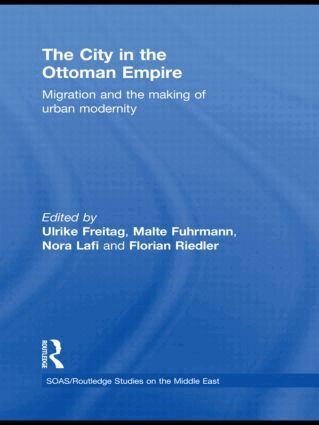
The nexus of urban governance and human migration was a crucial feature in the modernisation of cities in the Ottoman Empire of the nineteenth century. This book connects these two concepts to examine the Ottoman city as a destination of human migration, throwing new light on the question of conviviality and cosmopolitanism from the perspective of the legal, administrative and political frameworks within which these occur.
Focusing on groups of migrants with various ethnic, regional and professional backgrounds, the book juxtaposes the trajectories of these people with attempts by local administrations and the government to control their movements and settlements. By combining a perspective from below with one that focuses on government action, the authors offer broad insights into the phenomenon of migration and city life as a whole. Chapters explore how increased migration driven by new means of transport, military expulsion and economic factors were countered by the state’s attempts to control population movements, as well as the strong internal reforms in the Ottoman world.
Providing a rare comparative perspective on an area often fragmented by area studies boundaries, this book will be of great interest to students of History, Middle Eastern Studies, Balkan Studies, Urban Studies and Migration Studies.
970 kr
Läs direkt efter köp
The nexus of urban governance and human migration was a crucial feature in the modernisation of cities in the Ottoman Empire of the nineteenth century. This book connects these two concepts to examine the Ottoman city as a destination of human migration, throwing new light on the question of conviviality and cosmopolitanism from the perspective of the legal, administrative and political frameworks within which these occur.
Focusing on groups of migrants with various ethnic, regional and professional backgrounds, the book juxtaposes the trajectories of these people with attempts by local administrations and the government to control their movements and settlements. By combining a perspective from below with one that focuses on government action, the authors offer broad insights into the phenomenon of migration and city life as a whole. Chapters explore how increased migration driven by new means of transport, military expulsion and economic factors were countered by the state’s attempts to control population movements, as well as the strong internal reforms in the Ottoman world.
Providing a rare comparative perspective on an area often fragmented by area studies boundaries, this book will be of great interest to students of History, Middle Eastern Studies, Balkan Studies, Urban Studies and Migration Studies.
864 kr
Skickas inom 10-15 vardagar
1 251 kr
Skickas inom 5-8 vardagar
358 kr
Läs direkt efter köp
1 518 kr
Skickas inom 5-8 vardagar
1 530 kr
Läs direkt efter köp
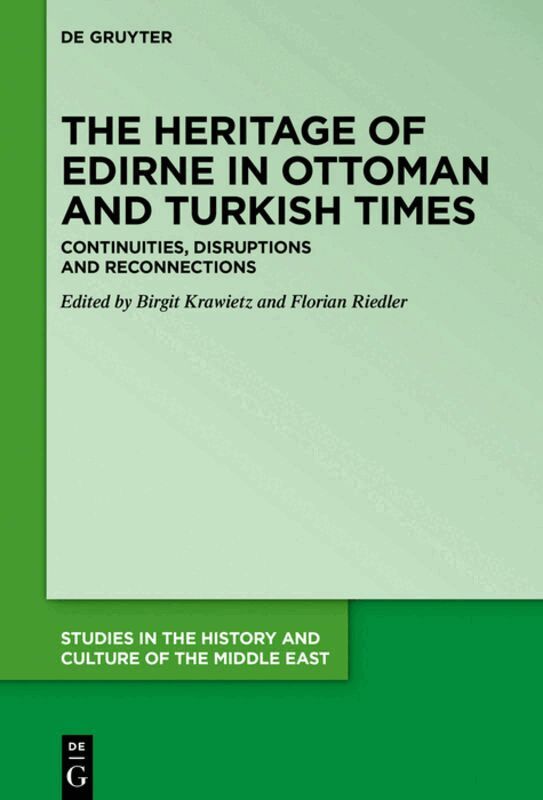
Modern scholarship has not given Edirne the attention it deserves regarding its significance as one of the capitals of the Ottoman Empire. This edited volume offers a reinterpretation of Edirne’s history from Early Ottoman times to recent periods of the Turkish Republic. Presently, disconnections and discontinuities introduced by the transition from empire to nation state still characterize the image of the city and the historiography about it.
In contrast, this volume examines how the city engages in the forming, deflecting and creative appropriation of its heritage, a process that has turned Edirne into a UNESCO heritage hotspot. A closer historical analysis demonstrates the dissonances and contradictions that these different interpretations and uses of heritage produce. From the beginning, Edirne was shaped by its connectivity and relationality to other places, above all to Istanbul.
This perspective is employed at many different levels, e.g., with regard to its population, institutions, architecture, infrastructures and popular culture, but also regarding the imaginations Edirne triggered. In sum, this multi-disciplinary volume boosts urban history beyond Istanbul and offers new insight into Ottoman and Turkish connectivities from the vantage point of certain key moments of Edirne’s history.
1 530 kr
Läs direkt efter köp
Modern scholarship has not given Edirne the attention it deserves regarding its significance as one of the capitals of the Ottoman Empire. This edited volume offers a reinterpretation of Edirne’s history from Early Ottoman times to recent periods of the Turkish Republic. Presently, disconnections and discontinuities introduced by the transition from empire to nation state still characterize the image of the city and the historiography about it.
In contrast, this volume examines how the city engages in the forming, deflecting and creative appropriation of its heritage, a process that has turned Edirne into a UNESCO heritage hotspot. A closer historical analysis demonstrates the dissonances and contradictions that these different interpretations and uses of heritage produce. From the beginning, Edirne was shaped by its connectivity and relationality to other places, above all to Istanbul.
This perspective is employed at many different levels, e.g., with regard to its population, institutions, architecture, infrastructures and popular culture, but also regarding the imaginations Edirne triggered. In sum, this multi-disciplinary volume boosts urban history beyond Istanbul and offers new insight into Ottoman and Turkish connectivities from the vantage point of certain key moments of Edirne’s history.
788 kr
Skickas inom 11-20 vardagar