Ulrich Hofmeister – författare
Visar alla böcker från författaren . Handla med fri frakt och snabb leverans.
3 produkter
3 produkter
Inbunden, Engelska, 2023
2 474 kr
Skickas inom 10-15 vardagar
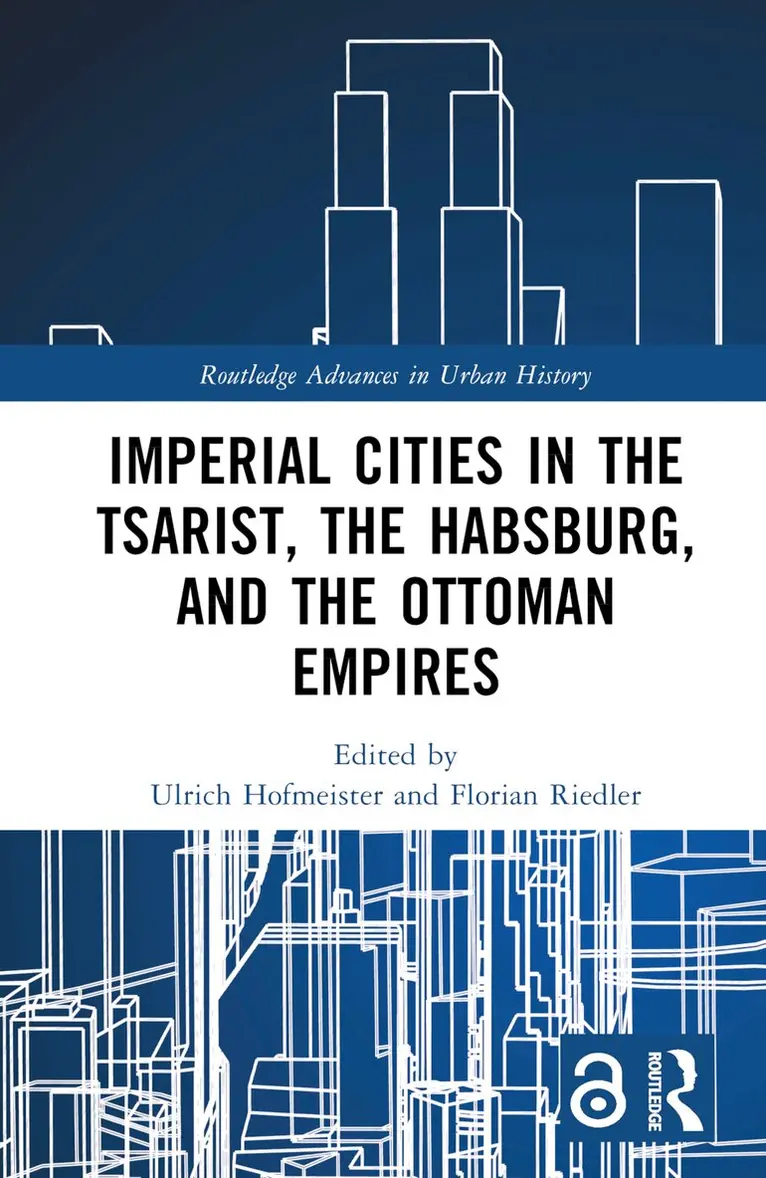
This book explores the various ways imperial rule constituted and shaped the cities of Eastern Europe until World War I in the Tsarist, Habsburg, and Ottoman empires.In these three empires, the cities served as hubs of imperial rule: their institutions and infrastructures enabled the diffusion of power within the empires while they also served as the stages where the empire was displayed in monumental architecture and public rituals. To this day, many cities possess a distinctively imperial legacy in the form of material remnants, groups of inhabitants, or memories that shape the perceptions of in- and outsiders. The contributions to this volume address in detail the imperial entanglements of a dozen cities from a long-term perspective reaching back to the eighteenth century. They analyze the imperial capitals as well as smaller cities in the periphery. All of them are "imperial cities" in the sense that they possess traces of imperial rule. By comparing the three empires of Eastern Europe this volume seeks to establish commonalities in this particular geography and highlight trans-imperial exchanges and entanglements.This volume is essential reading to students and scholars alike interested in imperial and colonial history, urban history, and European history.The Open Access version of this book, available at http://www.taylorfrancis.com, has been made available under a Creative Commons [Attribution-Non Commercial-No Derivatives (CC-BY-NC-ND)] 4.0 license.
Häftad, Engelska, 2024
638 kr
Skickas inom 10-15 vardagar
This book explores the various ways imperial rule constituted and shaped the cities of Eastern Europe until World War I in the Tsarist, Habsburg, and Ottoman empires.In these three empires, the cities served as hubs of imperial rule: their institutions and infrastructures enabled the diffusion of power within the empires while they also served as the stages where the empire was displayed in monumental architecture and public rituals. To this day, many cities possess a distinctively imperial legacy in the form of material remnants, groups of inhabitants, or memories that shape the perceptions of in- and outsiders. The contributions to this volume address in detail the imperial entanglements of a dozen cities from a long-term perspective reaching back to the eighteenth century. They analyze the imperial capitals as well as smaller cities in the periphery. All of them are "imperial cities" in the sense that they possess traces of imperial rule. By comparing the three empires of Eastern Europe this volume seeks to establish commonalities in this particular geography and highlight trans-imperial exchanges and entanglements.This volume is essential reading to students and scholars alike interested in imperial and colonial history, urban history, and European history.The Open Access version of this book, available at http://www.taylorfrancis.com, has been made available under a Creative Commons [Attribution-Non Commercial-No Derivatives (CC-BY-NC-ND)] 4.0 license.
E-bok
PDF, Tyska, 2019889 kr
Läs direkt efter köp
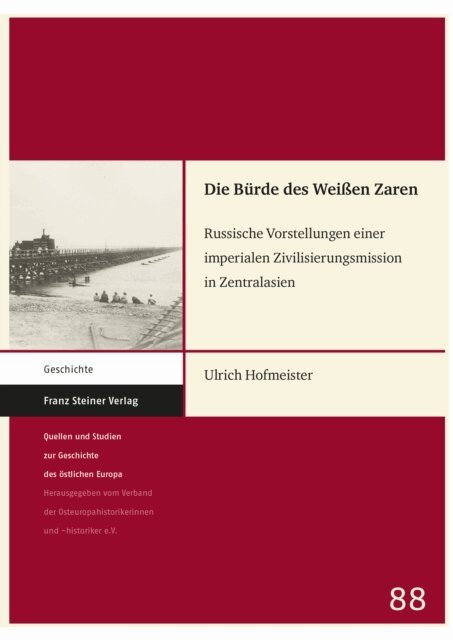
Als das Zarenreich ab den 1860er Jahren Zentralasien eroberte, war die russische Öffentlichkeit davon überzeugt, dass man damit einer moralischen Verpflichtung nachkomme: die europäische Zivilisation in Asien zu verbreiten. Obwohl Russland selbst häufig als rückständig gesehen wurde, argumentierten russische Politiker und Publizisten, dass auch das Zarenreich die "Bürde des weißen Mannes" schultern müsse, mit der die europäischen Großmächte ihre Kolonialherrschaft in Asien und Afrika rechtfertigten.Ulrich Hofmeister analysiert die Strategien, die zur vermeintlichen Zivilisierung Zentralasiens diskutiert wurden und stellt die russische Herrschaft in Zentralasien dabei in den Kontext des globalen Kolonialismus. Er zeigt, wie die russischen Zivilisierungsansprüche letztlich daran scheiterten, dass das Zarenreich nicht bereit war, Vorstellungen der Einheimischen zu berücksichtigen, und stattdessen auf seiner kolonialen Vormachtstellung beharrte. Dennoch diente die Idee einer Zivilisierungsmission bis in die Sowjetzeit hinein als Rechtfertigung für die koloniale Beherrschung Zentralasiens.