Steffen Wippel - Böcker
Visar alla böcker från författaren Steffen Wippel. Handla med fri frakt och snabb leverans.
6 produkter
6 produkter
691 kr
Skickas inom 10-15 vardagar
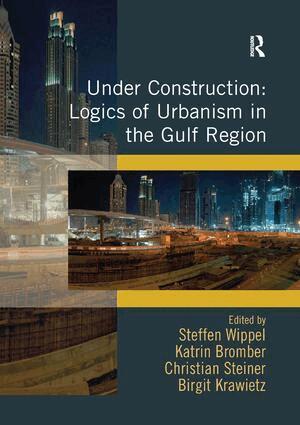
Interdisciplinary in approach, this volume explores and deciphers the symbolic value and iconicity of the built environment in the Arab Gulf Region, its aesthetics, language and performative characteristics. Bringing together a range of studies by artists, curators and scholars, it demonstrates how Dubai appeared - at least until the financial crisis - to be leading the construction race and has already completed a large number of its landmark architecture and strategic facilities. In contrast, cities like the Qatari capital Doha still appear to be heavily ’under construction’ and in countries like the Sultanate of Oman, ultra-luxury tourism projects were started only recently. While the construction of artificial islands, theme parks and prestige sport facilities has attracted considerable attention, much less is known about the region’s widespread implementation of innovative infrastructure such as global container ports, free zones, inter-island causeways and metro lines. This volume argues that these endeavours are not simply part of a strategy to prepare for the post-oil era for future economic survival and prosperity in the Lower Gulf region, but that they are also aiming to strengthen identitarian patterns and specific national brands. In doing so, they exhibit similar, yet remarkably diverse modes of engaging with certain global trends and present - questionably - distinct ideas for putting themselves on the global map. Each country aims to grab attention with regard to the world-wide flow of goods and capital and thus provide its own citizens with a socially acceptable trajectory for the future. By doing that, the countries in the Gulf are articulating a new semiotic and paradigm of urban development. For the first time, this volume maps these trends in their relation to architecture and infrastructure, in particular by treating them as semiotics in their own right. It suggests that recent developments in this region of the world not only represen
2 150 kr
Skickas inom 10-15 vardagar
Interdisciplinary in approach, this volume explores and deciphers the symbolic value and iconicity of the built environment in the Arab Gulf Region, its aesthetics, language and performative characteristics. Bringing together a range of studies by artists, curators and scholars, it demonstrates how Dubai appeared - at least until the financial crisis - to be leading the construction race and has already completed a large number of its landmark architecture and strategic facilities. In contrast, cities like the Qatari capital Doha still appear to be heavily ’under construction’ and in countries like the Sultanate of Oman, ultra-luxury tourism projects were started only recently. While the construction of artificial islands, theme parks and prestige sport facilities has attracted considerable attention, much less is known about the region’s widespread implementation of innovative infrastructure such as global container ports, free zones, inter-island causeways and metro lines. This volume argues that these endeavours are not simply part of a strategy to prepare for the post-oil era for future economic survival and prosperity in the Lower Gulf region, but that they are also aiming to strengthen identitarian patterns and specific national brands. In doing so, they exhibit similar, yet remarkably diverse modes of engaging with certain global trends and present - questionably - distinct ideas for putting themselves on the global map. Each country aims to grab attention with regard to the world-wide flow of goods and capital and thus provide its own citizens with a socially acceptable trajectory for the future. By doing that, the countries in the Gulf are articulating a new semiotic and paradigm of urban development. For the first time, this volume maps these trends in their relation to architecture and infrastructure, in particular by treating them as semiotics in their own right. It suggests that recent developments in this region of the world not only represen
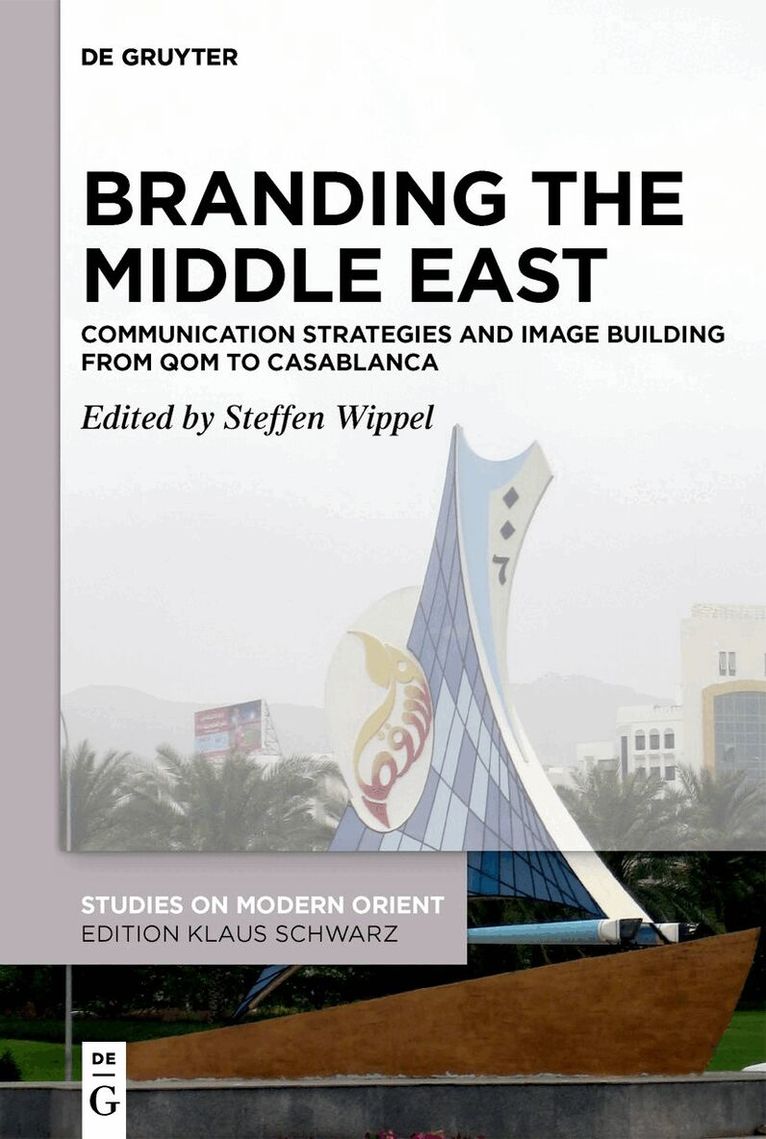
Branding the Middle East
Communication Strategies and Image Building from Qom to Casablanca
Inbunden, Engelska, 2023
1 571 kr
Skickas inom 5-8 vardagar
This edited volume investigates place, product, and personal branding in the Middle East and North Africa, including some studies from adjacent regions and the wider Islamicate world. Going beyond simply presenting logos and slogans, it critically analyses processes of strategic communication and image building under general conditions of globalisation, neoliberalisation, and postmodernisation and, in a regional perspective, of lasting authoritarian rule and increased endeavours for “worlding.” In particular, it looks at the multiple actors involved in branding activities, their interests and motives, and investigates tools, channels, and forms of branding. A major interest exists in the entanglements of different spatial scales and in the (in)consistencies of communication measures. Attention is paid to reconfigurations of certain images over time and to the positioning of objects of branding in time and space. Historical case studies supplement the focus on contemporary branding efforts. While branding in the Western world and many emerging economies has been meticulously analysed, this edited volume fills an important gap in the research on MENA countries.
542 kr
Skickas inom 5-8 vardagar
Del 6 - United Nations University Series on Regionalism
Regionalizing Oman
Political, Economic and Social Dynamics
Inbunden, Engelska, 2013
1 064 kr
Skickas inom 10-15 vardagar
This volume addresses the historical structures and current dynamics of Oman’s regionalization processes and their political, economic and social dimensions. It is based on an interdisciplinary and trans-regional dialogue between scholars from different social sciences and area studies such as political science, economics, management, economic and social geography, history, social anthropology and linguistics as well as Middle East/West Asian, gulf and African studies, and develops four major axes of research:- Oman’s integration into global and regional flows of goods, capital, people and ideas;- The multi-scaled political negotiation of such integration (or disintegration) processes;- Consequences of suchlike processes and forms of regionalization for (translocal) actors;- Ideas and strategic communication of regional belonging and the constitution of regions.Each chapter deals with one or more of these issues. Part I deals with concepts of regionalisation and region-building and presents different approaches that accentuate certain dimensions of these processes and come from different disciplinary backgrounds. Part II focuses on the translocal, transnational and (trans)regional movement of people, their practices and imaginations, be they contemporary labour in- and out-migrants, returnees from Eastern Africa or nomadic tribal members. Part III takes a closer look particularly at economic issues and regionalisation processes that are mainly based on multiple trade links, regional development policies or politics of regionalism. Part IV analyses political and socio-cultural issues in regional and global perspectives.
Del 6 - United Nations University Series on Regionalism
Regionalizing Oman
Political, Economic and Social Dynamics
Häftad, Engelska, 2015
1 064 kr
Skickas inom 10-15 vardagar
This volume addresses the historical structures and current dynamics of Oman’s regionalization processes and their political, economic and social dimensions. It is based on an interdisciplinary and trans-regional dialogue between scholars from different social sciences and area studies such as political science, economics, management, economic and social geography, history, social anthropology and linguistics as well as Middle East/West Asian, gulf and African studies, and develops four major axes of research:- Oman’s integration into global and regional flows of goods, capital, people and ideas;- The multi-scaled political negotiation of such integration (or disintegration) processes;- Consequences of suchlike processes and forms of regionalization for (translocal) actors;- Ideas and strategic communication of regional belonging and the constitution of regions.Each chapter deals with one or more of these issues. Part I deals with concepts of regionalisation and region-building and presents different approaches that accentuate certain dimensions of these processes and come from different disciplinary backgrounds. Part II focuses on the translocal, transnational and (trans)regional movement of people, their practices and imaginations, be they contemporary labour in- and out-migrants, returnees from Eastern Africa or nomadic tribal members. Part III takes a closer look particularly at economic issues and regionalisation processes that are mainly based on multiple trade links, regional development policies or politics of regionalism. Part IV analyses political and socio-cultural issues in regional and global perspectives.