Francesco Papadia – författare
Visar alla böcker från författaren Francesco Papadia. Handla med fri frakt och snabb leverans.
8 produkter
8 produkter
E-bok
PDF, Engelska, 2014488 kr
Läs direkt efter köp
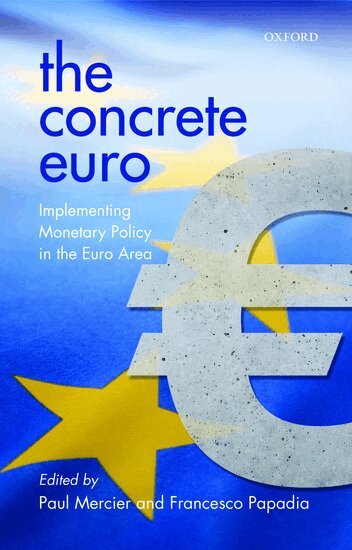
The euro area''s framework for monetary policy implementation was introduced in 1999. Eleven years on, this volume examines the theoretical and historical underpinnings of the framework, how it has fared in practice, and what challenges it is likely to face in the future. The technology serving the implementation of monetary policy has historically been the exclusive preserve of a narrow group of specialists but the recent global financial crisis brought the issueinto the public eye, as the supply of base money exploded while inflation risked turning into deflation. This book addresses all the aspects of monetary policy implementation, with particular emphasis on the European Central Bank and the euro, allowing a more informed assessment of a neglected, butimportant, aspect of economic life, and a better understanding of the exceptional developments brought about by the financial crisis. Written by the leading money market operators at the European Central Bank who were involved in creating and implementing the framework, and who are still managing monetary policy implementation at the Bank today, this book provides a rare insider account of how the framework has evolved, how it works in practice, and the challenges of monetary policyimplementation going forward.
E-bok
PDF, Engelska, 20181 044 kr
Läs direkt efter köp
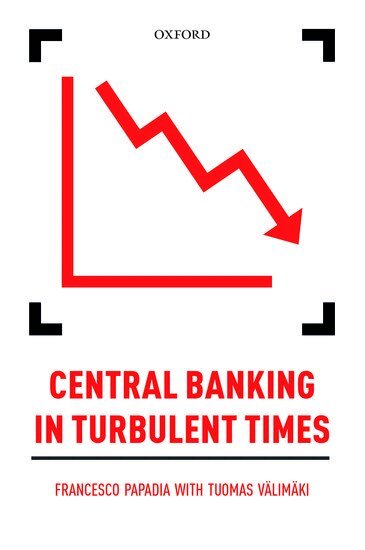
Central banks came out of the Great Recession with increased power and responsibilities. Indeed, central banks are often now seen as ''the only game in town'', and a place to put innumerable problems vastly exceeding their traditional remit. These new powers do not fit well, however, with the independence of central banks, remote from the democratic control of government.Central Banking in Turbulent Times examines fundamental questions about the central banking system, asking whether the model of an independent central bank devoted to price stability is the final resting point of a complex development that started centuries ago. It dissects the hypothesis that the Great Recession has prompted a reassessment of that model; a renewed emphasis on financial stability has emerged, possibly vying for first rank in the hierarchy of objectives of centralbanks. This raises the risk of dilemmas, since the Great Recession brought into question implicit assumptions that the pursuit of price stability would also lead to financial stability. In addition, the border between monetary and fiscal policy was blurred both in the US and in Europe. Central Banking in TurbulentTimes asks whether the model prevailing before the Great Recession has been irrevocably altered. Are we entering, as Charles Goodhart has hypothesized, into the ''fourth epoch'' of central banking? Are changes to central banks part of a move away from the global liberal order that seemed to have prevailed at the turn of the century? Central Banking in Turbulent Times seeks to answer these questions as it examines how changes can allow for the maintenance of price stability,while adapting to the long-term consequences of the Great Recession.
E-bok
Engelska, 20181 053 kr
Läs direkt efter köp
Central banks came out of the Great Recession with increased power and responsibilities. Indeed, central banks are often now seen as ''the only game in town'', and a place to put innumerable problems vastly exceeding their traditional remit. These new powers do not fit well, however, with the independence of central banks, remote from the democratic control of government.Central Banking in Turbulent Times examines fundamental questions about the central banking system, asking whether the model of an independent central bank devoted to price stability is the final resting point of a complex development that started centuries ago. It dissects the hypothesis that the Great Recession has prompted a reassessment of that model; a renewed emphasis on financial stability has emerged, possibly vying for first rank in the hierarchy of objectives of centralbanks. This raises the risk of dilemmas, since the Great Recession brought into question implicit assumptions that the pursuit of price stability would also lead to financial stability. In addition, the border between monetary and fiscal policy was blurred both in the US and in Europe. Central Banking in TurbulentTimes asks whether the model prevailing before the Great Recession has been irrevocably altered. Are we entering, as Charles Goodhart has hypothesized, into the ''fourth epoch'' of central banking? Are changes to central banks part of a move away from the global liberal order that seemed to have prevailed at the turn of the century? Central Banking in Turbulent Times seeks to answer these questions as it examines how changes can allow for the maintenance of price stability,while adapting to the long-term consequences of the Great Recession.
Häftad, Engelska, 2014
644 kr
Skickas inom 7-10 vardagar
The euro area's framework for monetary policy implementation was introduced in 1999. Eleven years on, this volume examines the theoretical and historical underpinnings of the framework, how it has fared in practice, and what challenges it is likely to face in the future. The technology serving the implementation of monetary policy has historically been the exclusive preserve of a narrow group of specialists but the recent global financial crisis brought the issue into the public eye, as the supply of base money exploded while inflation risked turning into deflation. This book addresses all the aspects of monetary policy implementation, with particular emphasis on the European Central Bank and the euro, allowing a more informed assessment of a neglected, but important, aspect of economic life, and a better understanding of the exceptional developments brought about by the financial crisis. Written by the leading money market operators at the European Central Bank who were involved in creating and implementing the framework, and who are still managing monetary policy implementation at the Bank today, this book provides a rare insider account of how the framework has evolved, how it works in practice, and the challenges of monetary policy implementation going forward.
Inbunden, Engelska, 2018
1 243 kr
Skickas inom 5-8 vardagar
Central banks came out of the Great Recession with increased power and responsibilities. Indeed, central banks are often now seen as 'the only game in town', and a place to put innumerable problems vastly exceeding their traditional remit. These new powers do not fit well, however, with the independence of central banks, remote from the democratic control of government.Central Banking in Turbulent Times examines fundamental questions about the central banking system, asking whether the model of an independent central bank devoted to price stability is the final resting point of a complex development that started centuries ago. It dissects the hypothesis that the Great Recession has prompted a reassessment of that model; a renewed emphasis on financial stability has emerged, possibly vying for first rank in the hierarchy of objectives of central banks. This raises the risk of dilemmas, since the Great Recession brought into question implicit assumptions that the pursuit of price stability would also lead to financial stability. In addition, the border between monetary and fiscal policy was blurred both in the US and in Europe. Central Banking in Turbulent Times asks whether the model prevailing before the Great Recession has been irrevocably altered. Are we entering, as Charles Goodhart has hypothesized, into the 'fourth epoch' of central banking? Are changes to central banks part of a move away from the global liberal order that seemed to have prevailed at the turn of the century? Central Banking in Turbulent Times seeks to answer these questions as it examines how changes can allow for the maintenance of price stability, while adapting to the long-term consequences of the Great Recession.
Inbunden, Engelska, 2011
1 784 kr
Skickas inom 5-8 vardagar
The euro area's framework for monetary policy implementation was introduced in 1999. Eleven years on, this volume examines the theoretical and historical underpinnings of the framework, how it has fared in practice, and what challenges it is likely to face in the future. The technology serving the implementation of monetary policy has historically been the exclusive preserve of a narrow group of specialists but the recent global financial crisis brought the issue into the public eye, as the supply of base money exploded while inflation risked turning into deflation. This book addresses all the aspects of monetary policy implementation, with particular emphasis on the European Central Bank and the euro, allowing a more informed assessment of a neglected, but important, aspect of economic life, and a better understanding of the exceptional developments brought about by the financial crisis. Written by the leading money market operators at the European Central Bank who were involved in creating and implementing the framework, and who are still managing monetary policy implementation at the Bank today, this book provides a rare insider account of how the framework has evolved, how it works in practice, and the challenges of monetary policy implementation going forward.
Häftad, Engelska, 1994
609 kr
Skickas inom 7-10 vardagar
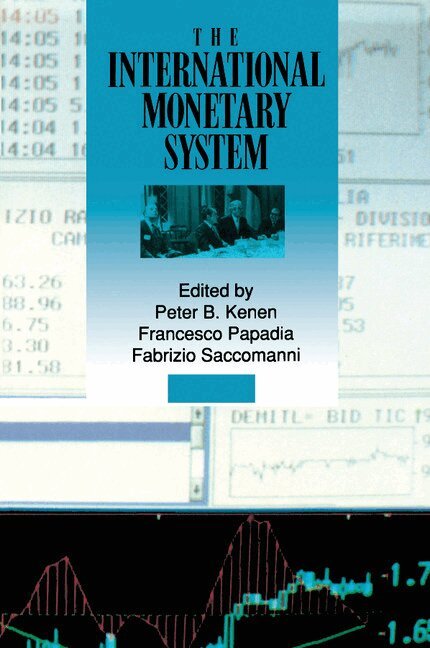
In the two decades prior to publication of this 1994 book, international monetary relations had been characterised by latent instability, and then by severe tensions. Yet the issue of reforming the international monetary system does not appear on the agenda of the policy makers of the major countries involved. The International Monetary System tries to analyse this apparent contradiction. It brings together contributions from some of the most authoritative academic economists and monetary officials, and examines each of the fundamental functions of the international monetary system. There is broad support for improving present monetary arrangements with the aim of ensuring more stable conditions in monetary and financial markets and of promoting the orderly adjustment of payments disequilibria. For political reasons a fully-fledged reform exercise is unlikely, but very few experts seem to like the status quo. This book provides the reader with a comprehensive account of the institutional and policy changes required to manage an increasingly integrated and interdependent global monetary and financial system.
E-bok
Engelska, 2021111 kr
Läs direkt efter köp
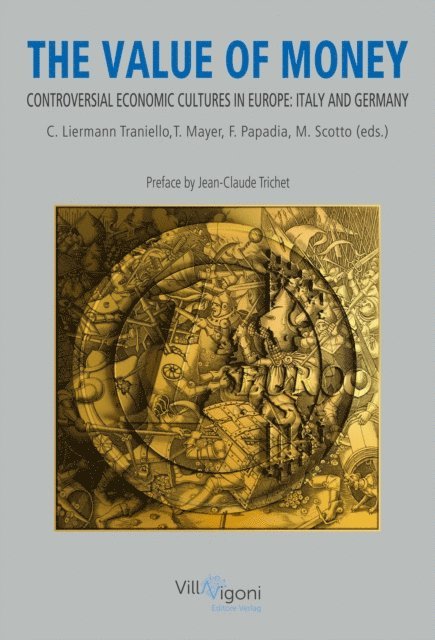
Thanks to the collaboration with renowned economists and policymakers, the publication compares Italian and German macro-economic cultures and performances. When the Bretton Woods system crumbled and currencies lost their direct link to the dollar and their indirect link to gold, these two countries embarked upon strongly different monetary policies. This divergence was reflected in the evolution of the exchange rates: the value of one D-Mark increased from 170 Italian lira under Bretton Woods to 990 Italian lira at the start of European Monetary Union: an astounding devaluation of about 85 per cent for the lira! Firstly, the volume describes the German and the Italian economic and, specifically, monetary models, with major attention paid to institutions such as Deutsche Bundesbank and Banca d''Italia, analysing their development in a diachronic perspective. Secondly, these paradigms are contextualized within a broader European context, which is fundamental to reflect upon possible future scenarios.Das Buch versammelt renommierte Ökonomen und Politiker, hauptsächlich (aber nicht nur) aus Italien und Deutschland. Die Autoren vergleichen die makroökonomischen Kulturen und die Leistungsfähigkeit der beiden Länder. Seit dem Zusammenbruch des Bretton-Woods-Systems verfolgen beide Länder sehr unterschiedliche Geldpolitiken. Die Divergenz spiegelte sich auch in der Entwicklung der Wechselkurse: Der Wert der D-Mark stieg von 170 italienischen Lire unter Bretton Woods-Bedingungen auf 990 italienische Lire zu Beginn der Europäischen Währungsunion – eine atemberaubende Abwertung der Lira um rund 85 Prozent! Der Sammelband beschreibt das deutsche und das italienische Wirtschafts- und insbesondere das Geldmodell. Institutionen wie die Bundesbank und die Banca d''Italia stehen im Zentrum. Der historische Hintergrund wird ebenfalls ausgeleuchtet. In einem zweiten Schritt werden diese Modelle in einem breiteren europäischen Kontext analysiert, auch um mögliche künftige Szenarien aufzuzeigen. Mit Beiträgen von: Pierluigi Ciocca, Lorenzo Codogno, Fabio Colasanti, Federico Fubini, Daniel Gros, Otmar Issing, Harold James, Hans-Helmut Kotz, Ivo Maes, Klaus Masuch, Thomas Mayer, Stefano Micossi, Pier Carlo Padoan, Francesco Papadia, Lucio Pench, Tobias Piller, André Sapir, Gunther Schnabl, Ludger Schuhknecht, Sabine Seeger, Giulio Tremonti, Gertrude Tumpel-Gugerell. Vorwort von Jean-Claude Trichet