Francesco Ricci – författare
2 493 kr
Läs direkt efter köp
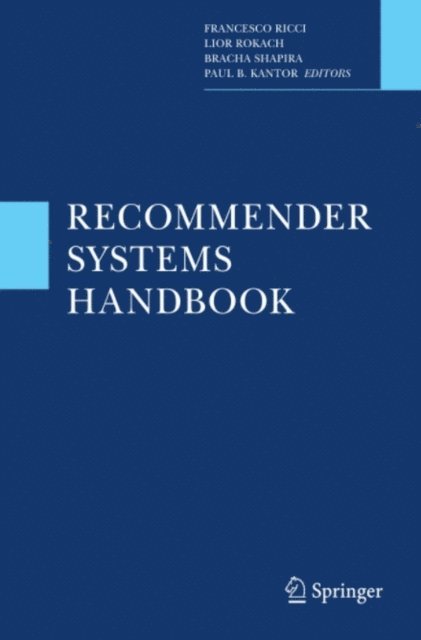
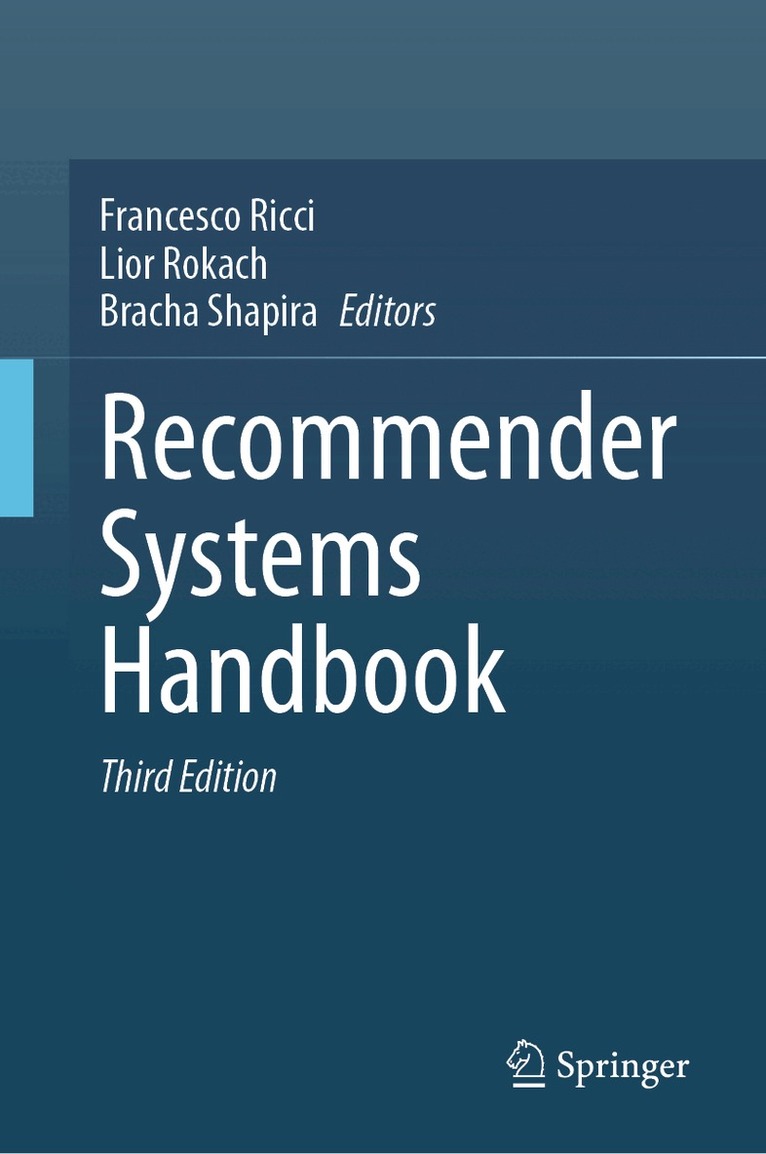
The explosive growth of e-commerce and online environments has made the issue of information search and selection increasingly serious; users are overloaded by options to consider and they may not have the time or knowledge to personally evaluate these options. Recommender systems have proven to be a valuable way for online users to cope with the information overload and have become one of the most powerful and popular tools in electronic commerce. Correspondingly, various techniques for recommendation generation have been proposed. During the last decade, many of them have also been successfully deployed in commercial environments.
Recommender Systems Handbook, an edited volume, is a multi-disciplinary effort that involves world-wide experts from diverse fields, such as artificial intelligence, human computer interaction, information technology, data mining, statistics, adaptive user interfaces, decision support systems, marketing, and consumer behavior. Theoreticiansand practitioners from these fields continually seek techniques for more efficient, cost-effective and accurate recommender systems. This handbook aims to impose a degree of order on this diversity, by presenting a coherent and unified repository of recommender systems’ major concepts, theories, methodologies, trends, challenges and applications. Extensive artificial applications, a variety of real-world applications, and detailed case studies are included.
Recommender Systems Handbook illustrates how this technology can support the user in decision-making, planning and purchasing processes. It works for well known corporations such as Amazon, Google, Microsoft and AT&T. This handbook is suitable for researchers and advanced-level students in computer science as a reference.
Thermodynamics for the Practicing Engineer
1 668 kr
Skickas inom 11-20 vardagar
1 898 kr
Läs direkt efter köp
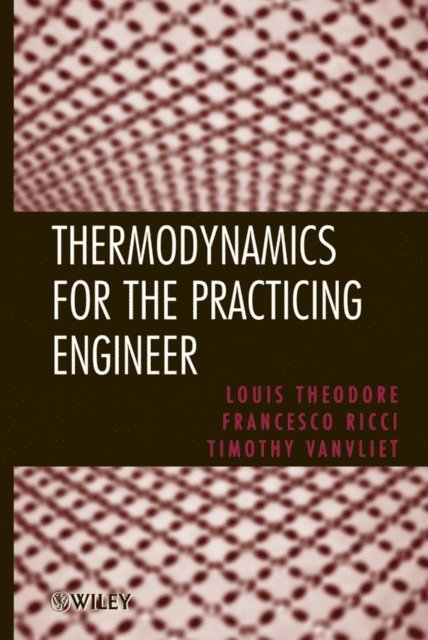
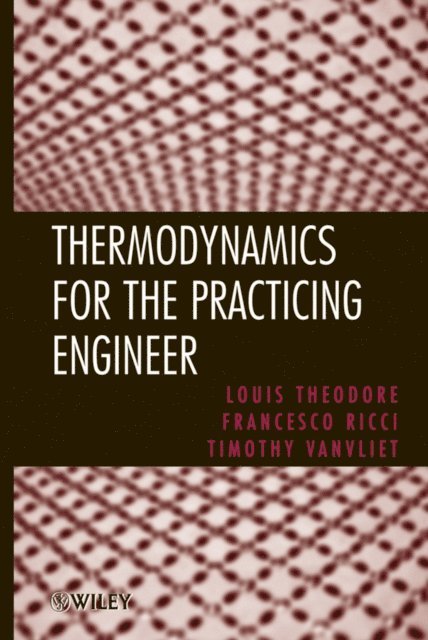
Thermodynamics for the Practicing Engineer, as the title suggests, is written for all practicing engineers and anyone studying to become one. Its focus therefore is on applications of thermodynamics, addressing both technical and pragmatic problems in the field. Readers are provided a solid base in thermodynamics theory; however, the text is mostly dedicated to demonstrating how theory is applied to solve real-world problems.
This text''s four parts enable readers to easily gain a foundation in basic principles and then learn how to apply them in practice:
Part One: Introduction. Sets forth the basic principles of thermodynamics, reviewing such topics as units and dimensions, conservation laws, gas laws, and the second law of thermodynamics.Part Two: Enthalpy Effects. Examines sensible, latent, chemical reaction, and mixing enthalpy effects.
Part Three: Equilibrium Thermodynamics. Addresses both principles and calculations for phase, vapor-liquid, and chemical reaction equilibrium.
Part Four: Other Topics. Reviews such important issues as economics, numerical methods, open-ended problems, environmental concerns, health and safety management, ethics, and exergy.
Throughout the text, detailed illustrative examples demonstrate how all the principles, procedures, and equations are put into practice. Additional practice problems enable readers to solve real-world problems similar to the ones that they will encounter on the job.
Readers will gain a solid working knowledge of thermodynamics principles and applications upon successful completion of this text. Moreover, they will be better prepared when approaching/addressing advanced material and more complex problems.
Mass Transfer Operations for the Practicing Engineer
2 146 kr
Skickas inom 5-8 vardagar
2 468 kr
Läs direkt efter köp
An invaluable guide for problem solving in mass transfer operations
This book takes a highly pragmatic approach to providing the principles and applications of mass transfer operations by offering a valuable, easily accessible guide to solving engineering problems. Both traditional and novel mass transfer processes receive treatment. As with all of the books in this series, emphasis is placed on an example-based approach to illustrating key engineering concepts.
The book is divided into two major parts. It starts with the principles underlying engineering problemsshowing readers how to apply general engineering principles to the topic of mass transfer operations. It then goes on to provide step-by-step guidance for traditional mass transfer operations, including distillation, absorption and stripping, and adsorption, plus novel mass transfer processes. Essential topics for professional engineering exams are also covered.
Geared towards chemical, environmental, civil, and mechanical engineers working on real-world industrial applications, Mass Transfer Operations for the Practicing Engineer features:
Numerous sample problems and solutions with real-world applications
Clear, precise explanations on how to carry out the basic calculations associated with mass transfer operations
Coverage of topics from the ground up for readers without prior knowledge of the subject
Overview of topics relevant to the ABET (Accreditation Board for Engineering and Technology) for those taking the Professional Engineering (PE) exams
Appendix containing relevant mass transfer operation charts and tables
471 kr
Skickas inom 5-8 vardagar
357 kr
Skickas inom 5-8 vardagar
558 kr
Skickas inom 5-8 vardagar
430 kr
Skickas inom 5-8 vardagar
571 kr
Skickas inom 5-8 vardagar
442 kr
Skickas inom 5-8 vardagar
482 kr
Skickas inom 5-8 vardagar
385 kr
Skickas inom 5-8 vardagar
433 kr
Skickas inom 5-8 vardagar
331 kr
Skickas inom 5-8 vardagar
446 kr
Skickas inom 5-8 vardagar
344 kr
Skickas inom 5-8 vardagar
433 kr
Skickas inom 5-8 vardagar
331 kr
Skickas inom 5-8 vardagar
3 668 kr
Skickas inom 10-15 vardagar
4 270 kr
Läs direkt efter köp
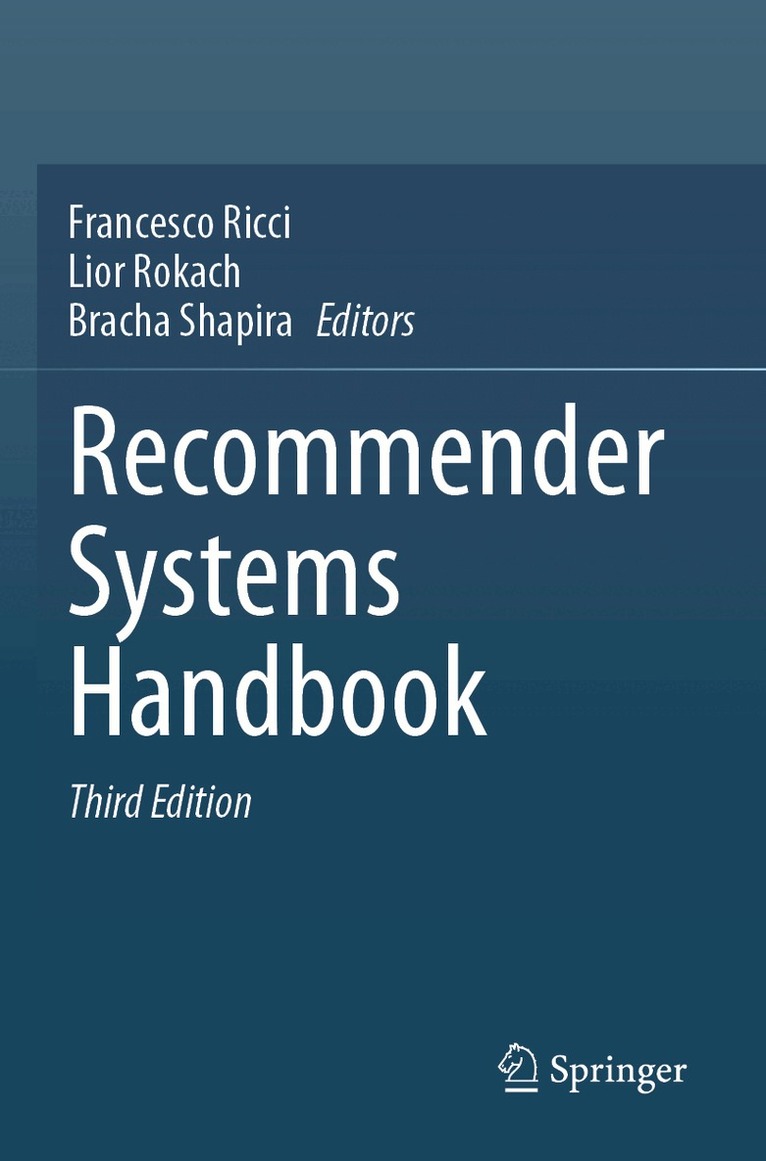
This third edition handbook describes in detail the classical methods as well as extensions and novel approaches that were more recently introduced within this field. It consists of five parts: general recommendation techniques, special recommendation techniques, value and impact of recommender systems, human computer interaction, and applications. The first part presents the most popular and fundamental techniques currently used for building recommender systems, such as collaborative filtering, semantic-based methods, recommender systems based on implicit feedback, neural networks and context-aware methods.
The second part of this handbook introduces more advanced recommendation techniques, such as session-based recommender systems, adversarial machine learning for recommender systems, group recommendation techniques, reciprocal recommenders systems, natural language techniques for recommender systems and cross-domain approaches to recommender systems. The third part covers a wide perspective to the evaluation of recommender systems with papers on methods for evaluating recommender systems, their value and impact, the multi-stakeholder perspective of recommender systems, the analysis of the fairness, novelty and diversity in recommender systems. The fourth part contains a few chapters on the human computer dimension of recommender systems, with research on the role of explanation, the user personality and how to effectively support individual and group decision with recommender systems. The last part focusses on application in several important areas, such as, food, music, fashion and multimedia recommendation.
This informative third edition handbook provides a comprehensive, yet concise and convenient reference source to recommender systems for researchers and advanced-level students focused on computer science and data science. Professionals working in data analytics that are using recommendation and personalization techniques will also find this handbook a useful tool.
3 668 kr
Skickas inom 10-15 vardagar
2 468 kr
Läs direkt efter köp
An invaluable guide for problem solving in mass transfer operations
This book takes a highly pragmatic approach to providing the principles and applications of mass transfer operations by offering a valuable, easily accessible guide to solving engineering problems. Both traditional and novel mass transfer processes receive treatment. As with all of the books in this series, emphasis is placed on an example-based approach to illustrating key engineering concepts.
The book is divided into two major parts. It starts with the principles underlying engineering problemsshowing readers how to apply general engineering principles to the topic of mass transfer operations. It then goes on to provide step-by-step guidance for traditional mass transfer operations, including distillation, absorption and stripping, and adsorption, plus novel mass transfer processes. Essential topics for professional engineering exams are also covered.
Geared towards chemical, environmental, civil, and mechanical engineers working on real-world industrial applications, Mass Transfer Operations for the Practicing Engineer features:
Numerous sample problems and solutions with real-world applications
Clear, precise explanations on how to carry out the basic calculations associated with mass transfer operations
Coverage of topics from the ground up for readers without prior knowledge of the subject
Overview of topics relevant to the ABET (Accreditation Board for Engineering and Technology) for those taking the Professional Engineering (PE) exams
Appendix containing relevant mass transfer operation charts and tables
1 898 kr
Läs direkt efter köp
Thermodynamics for the Practicing Engineer, as the title suggests, is written for all practicing engineers and anyone studying to become one. Its focus therefore is on applications of thermodynamics, addressing both technical and pragmatic problems in the field. Readers are provided a solid base in thermodynamics theory; however, the text is mostly dedicated to demonstrating how theory is applied to solve real-world problems.
This text''s four parts enable readers to easily gain a foundation in basic principles and then learn how to apply them in practice:
Part One: Introduction. Sets forth the basic principles of thermodynamics, reviewing such topics as units and dimensions, conservation laws, gas laws, and the second law of thermodynamics.Part Two: Enthalpy Effects. Examines sensible, latent, chemical reaction, and mixing enthalpy effects.
Part Three: Equilibrium Thermodynamics. Addresses both principles and calculations for phase, vapor-liquid, and chemical reaction equilibrium.
Part Four: Other Topics. Reviews such important issues as economics, numerical methods, open-ended problems, environmental concerns, health and safety management, ethics, and exergy.
Throughout the text, detailed illustrative examples demonstrate how all the principles, procedures, and equations are put into practice. Additional practice problems enable readers to solve real-world problems similar to the ones that they will encounter on the job.
Readers will gain a solid working knowledge of thermodynamics principles and applications upon successful completion of this text. Moreover, they will be better prepared when approaching/addressing advanced material and more complex problems.
409 kr
Skickas inom 3-6 vardagar
419 kr
Skickas inom 3-6 vardagar
419 kr
Skickas inom 3-6 vardagar
389 kr
Skickas inom 3-6 vardagar
419 kr
Skickas inom 3-6 vardagar
389 kr
Skickas inom 3-6 vardagar