Lior Rokach - Böcker
Visar alla böcker från författaren Lior Rokach. Handla med fri frakt och snabb leverans.
15 produkter
15 produkter
554 kr
Skickas inom 10-15 vardagar
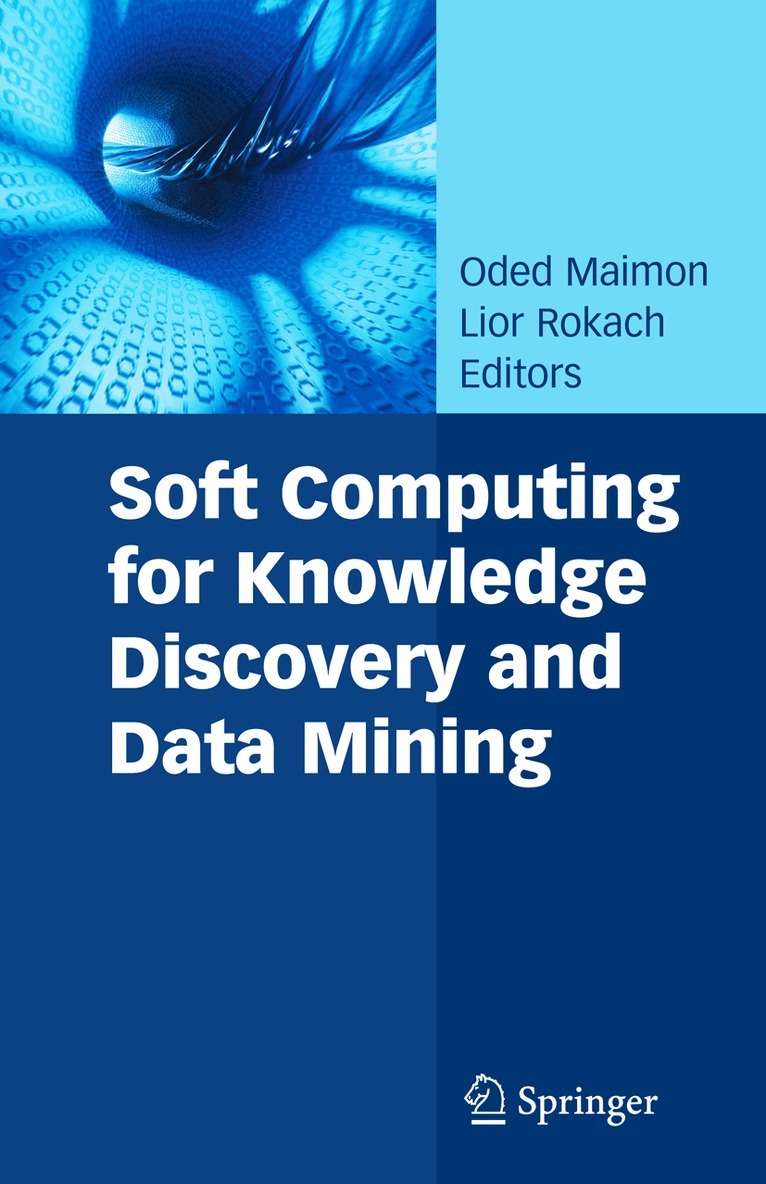
Data mining is the science and technology of exploring large and complex bodies of data in order to discover useful patterns. It is extremely important because it enables modeling and knowledge extraction from abundant data availability. Soft Computing for Knowledge Discovery and Data Mining introduces soft computing methods extending the envelope of problems that data mining can solve efficiently. It presents practical soft-computing approaches in data mining. This edited volume by highly regarded authors, includes several contributors of the 2005, Data Mining and Knowledge Discovery Handbook. This book was written to provide investigators in the fields of information systems, engineering, computer science, statistics and management with a profound source for the role of soft computing in data mining. Not only does this book feature illustrations of various applications including manufacturing, medical, banking, insurance and others, but also includes various real-world case studies with detailed results. Soft Computing for Knowledge Discovery and Data Mining is designed for practitioners and researchers in industry.Practitioners and researchers may be particularly interested in the description of real world data mining projects performed with soft computing.This book is also suitable as a secondary textbook or reference for advanced-level students in information systems, engineering, computer science and statistics management.
3 547 kr
Skickas inom 10-15 vardagar
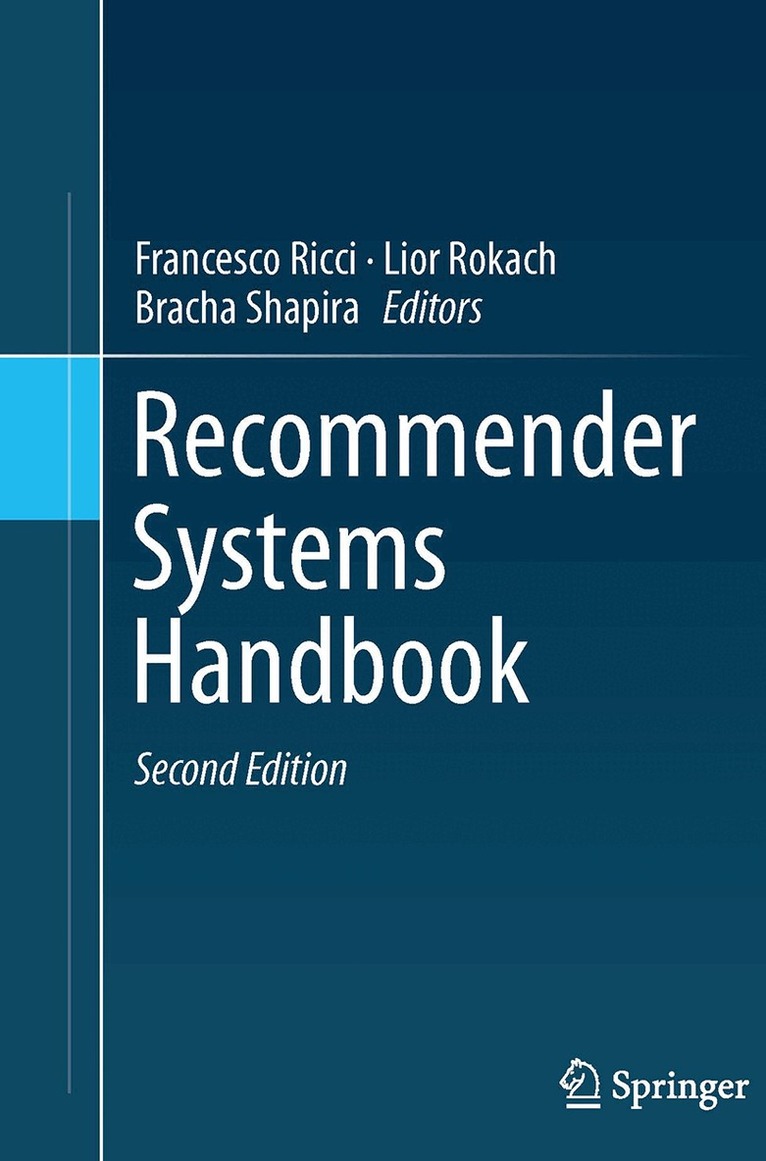
This third edition handbook describes in detail the classical methods as well as extensions and novel approaches that were more recently introduced within this field. It consists of five parts: general recommendation techniques, special recommendation techniques, value and impact of recommender systems, human computer interaction, and applications. The first part presents the most popular and fundamental techniques currently used for building recommender systems, such as collaborative filtering, semantic-based methods, recommender systems based on implicit feedback, neural networks and context-aware methods. The second part of this handbook introduces more advanced recommendation techniques, such as session-based recommender systems, adversarial machine learning for recommender systems, group recommendation techniques, reciprocal recommenders systems, natural language techniques for recommender systems and cross-domain approaches to recommender systems. The third part covers a wide perspective to the evaluation of recommender systems with papers on methods for evaluating recommender systems, their value and impact, the multi-stakeholder perspective of recommender systems, the analysis of the fairness, novelty and diversity in recommender systems. The fourth part contains a few chapters on the human computer dimension of recommender systems, with research on the role of explanation, the user personality and how to effectively support individual and group decision with recommender systems. The last part focusses on application in several important areas, such as, food, music, fashion and multimedia recommendation. This informative third edition handbook provides a comprehensive, yet concise and convenient reference source to recommender systems for researchers and advanced-level students focused on computer science and data science. Professionals working in data analytics that are using recommendation and personalization techniques will also find this handbook a useful tool.
3 547 kr
Skickas inom 10-15 vardagar
This third edition handbook describes in detail the classical methods as well as extensions and novel approaches that were more recently introduced within this field. It consists of five parts: general recommendation techniques, special recommendation techniques, value and impact of recommender systems, human computer interaction, and applications. The first part presents the most popular and fundamental techniques currently used for building recommender systems, such as collaborative filtering, semantic-based methods, recommender systems based on implicit feedback, neural networks and context-aware methods. The second part of this handbook introduces more advanced recommendation techniques, such as session-based recommender systems, adversarial machine learning for recommender systems, group recommendation techniques, reciprocal recommenders systems, natural language techniques for recommender systems and cross-domain approaches to recommender systems. The third part covers a wide perspective to the evaluation of recommender systems with papers on methods for evaluating recommender systems, their value and impact, the multi-stakeholder perspective of recommender systems, the analysis of the fairness, novelty and diversity in recommender systems. The fourth part contains a few chapters on the human computer dimension of recommender systems, with research on the role of explanation, the user personality and how to effectively support individual and group decision with recommender systems. The last part focusses on application in several important areas, such as, food, music, fashion and multimedia recommendation. This informative third edition handbook provides a comprehensive, yet concise and convenient reference source to recommender systems for researchers and advanced-level students focused on computer science and data science. Professionals working in data analytics that are using recommendation and personalization techniques will also find this handbook a useful tool.
554 kr
Skickas inom 10-15 vardagar
Data mining is the science and technology of exploring large and complex bodies of data in order to discover useful patterns. It is extremely important because it enables modeling and knowledge extraction from abundant data availability.Soft Computing for Knowledge Discovery and Data Mining introduces soft computing methods extending the envelope of problems that data mining can solve efficiently. It presents practical soft-computing approaches in data mining. This edited volume by highly regarded authors, includes several contributors of the 2005, Data Mining and Knowledge Discovery Handbook. This book was written to provide investigators in the fields of information systems, engineering, computer science, statistics and management with a profound source for the role of soft computing in data mining. Not only does this book feature illustrations of various applications including manufacturing, medical, banking, insurance and others, but also includes various real-world case studies with detailed results.Soft Computing for Knowledge Discovery and Data Mining is designed for practitioners and researchers in industry. Practitioners and researchers may be particularly interested in the description of real world data mining projects performed with soft computing. This book is also suitable as a secondary textbook or reference for advanced-level students in information systems, engineering, computer science and statistics management.
554 kr
Skickas inom 10-15 vardagar
SpringerBriefs present concise summaries of cutting-edge research and practical applications across a wide spectrum of fields. Featuring compact volumes of 50 to 100 pages (approximately 20,000- 40,000 words), the series covers a range of content from professional to academic. Briefs allow authors to present their ideas and readers to absorb them with minimal time investment. As part of Springer’s eBook collection, SpringBriefs are published to millions of users worldwide. Information/Data Leakage poses a serious threat to companies and organizations, as the number of leakage incidents and the cost they inflict continues to increase. Whether caused by malicious intent, or an inadvertent mistake, data loss can diminish a company’s brand, reduce shareholder value, and damage the company’s goodwill and reputation. This book aims to provide a structural and comprehensive overview of the practical solutions and current research in the DLP domain. This is the first comprehensive book that is dedicated entirely to the field of data leakage and covers all important challenges and techniques to mitigate them. Its informative, factual pages will provide researchers, students and practitioners in the industry with a comprehensive, yet concise and convenient reference source to this fascinating field.We have grouped existing solutions into different categories based on a described taxonomy. The presented taxonomy characterizes DLP solutions according to various aspects such as: leakage source, data state, leakage channel, deployment scheme, preventive/detective approaches, and the action upon leakage. In the commercial part we review solutions of the leading DLP market players based on professional research reports and material obtained from the websites of the vendors. In the academic part we cluster the academic work according to the nature of the leakage and protection into various categories. Finally, we describe main data leakage scenarios and present for eachscenario the most relevant and applicable solution or approach that will mitigate and reduce the likelihood and/or impact of the leakage scenario.
3 547 kr
Skickas inom 10-15 vardagar
This second edition of a well-received text, with 20 new chapters, presents a coherent and unified repository of recommender systems’ major concepts, theories, methodologies, trends, and challenges. A variety of real-world applications and detailed case studies are included. In addition to wholesale revision of the existing chapters, this edition includes new topics including: decision making and recommender systems, reciprocal recommender systems, recommender systems in social networks, mobile recommender systems, explanations for recommender systems, music recommender systems, cross-domain recommendations, privacy in recommender systems, and semantic-based recommender systems. This multi-disciplinary handbook involves world-wide experts from diverse fields such as artificial intelligence, human-computer interaction, information retrieval, data mining, mathematics, statistics, adaptive user interfaces, decision support systems, psychology, marketing, and consumer behavior. Theoreticians and practitioners from these fields will find this reference to be an invaluable source of ideas, methods and techniques for developing more efficient, cost-effective and accurate recommender systems.
554 kr
Skickas inom 10-15 vardagar
This book explores a proactive and domain-driven method to classification tasks. This novel proactive approach to data mining not only induces a model for predicting or explaining a phenomenon, but also utilizes specific problem/domain knowledge to suggest specific actions to achieve optimal changes in the value of the target attribute. In particular, the authors suggest a specific implementation of the domain-driven proactive approach for classification trees. The book centers on the core idea of moving observations from one branch of the tree to another. It introduces a novel splitting criterion for decision trees, termed maximal-utility, which maximizes the potential for enhancing profitability in the output tree. Two real-world case studies, one of a leading wireless operator and the other of a major security company, are also included and demonstrate how applying the proactive approach to classification tasks can solve business problems. Proactive Data Mining with Decision Trees is intended for researchers, practitioners and advanced-level students.
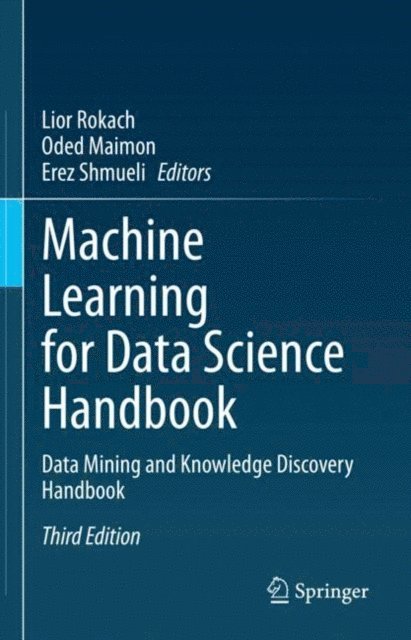
Machine Learning for Data Science Handbook
Data Mining and Knowledge Discovery Handbook
Inbunden, Engelska, 2023
3 040 kr
Skickas inom 10-15 vardagar
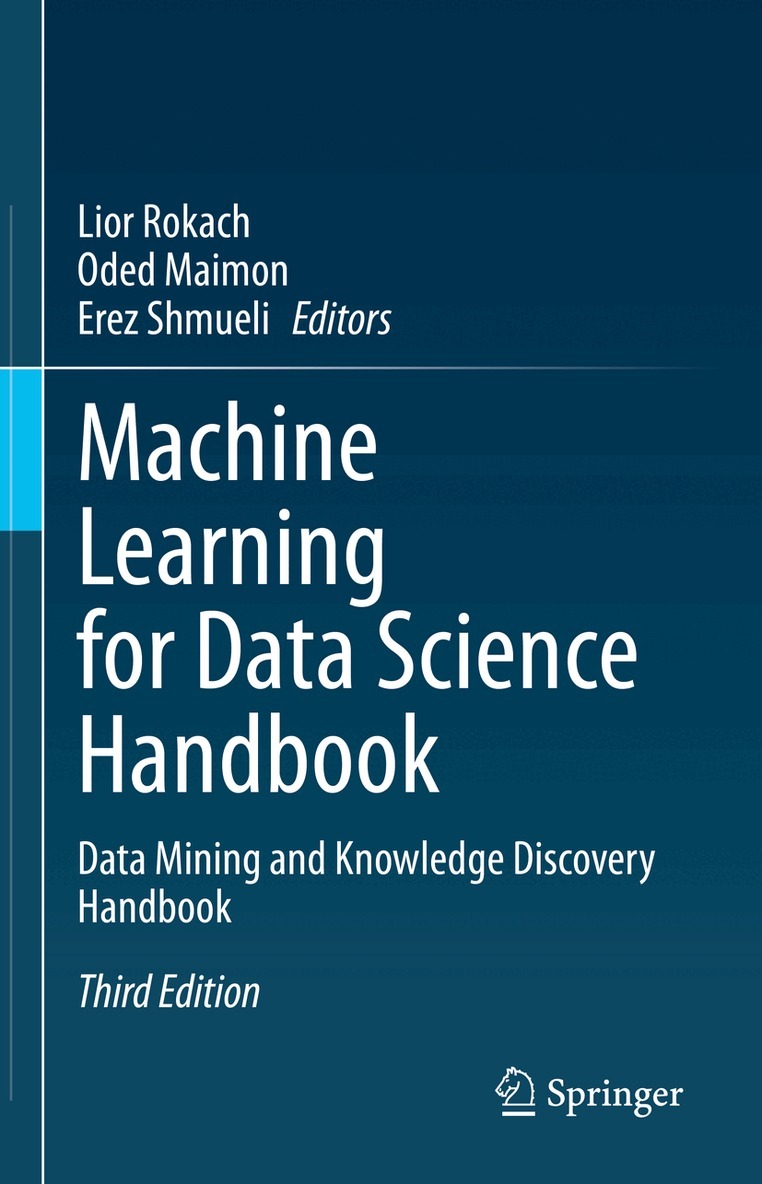
This book is a major update to the very successful first and second editions (2005 and 2010) of Data Mining and Knowledge Discovery Handbook. Since the last edition, this field has continued to evolve and to gain popularity. Existing methods are constantly being improved and new methods, applications and aspects are introduced. The new title of this handbook and its content reflect these changes thoroughly. Some existing chapters have been brought up to date. In addition to major revision of the existing chapters, the new edition includes totally new topics, such as: deep learning, explainable AI, human factors and social issues and advanced methods for big-data. The significant enhancement to the content reflects the growth in importance of data science. The third edition is also a timely opportunity to incorporate many other changes based on peers and students’ feedback.This comprehensive handbook also presents a coherent and unified repository of data science major concepts, theories, methods, trends, challenges and applications. It covers all the crucial important machine learning methods used in data science.Today's accessibility and abundance of data make data science matters of considerable importance and necessity. Given the field's recent growth, it's not surprising that researchers and practitioners now have a wide range of methods and tools at their disposal. While statistics is fundamental for data science, methods originated from artificial intelligence, particularly machine learning, are also playing a significant role.This handbook aims to serve as the main reference for researchers in the fields of information technology, e-Commerce, information retrieval, data science, machine learning, data mining, databases and statistics as well as advanced level students studying computer science or electrical engineering. Practitioners working within these related fields and data scientists will also want to purchase this handbook as a reference.
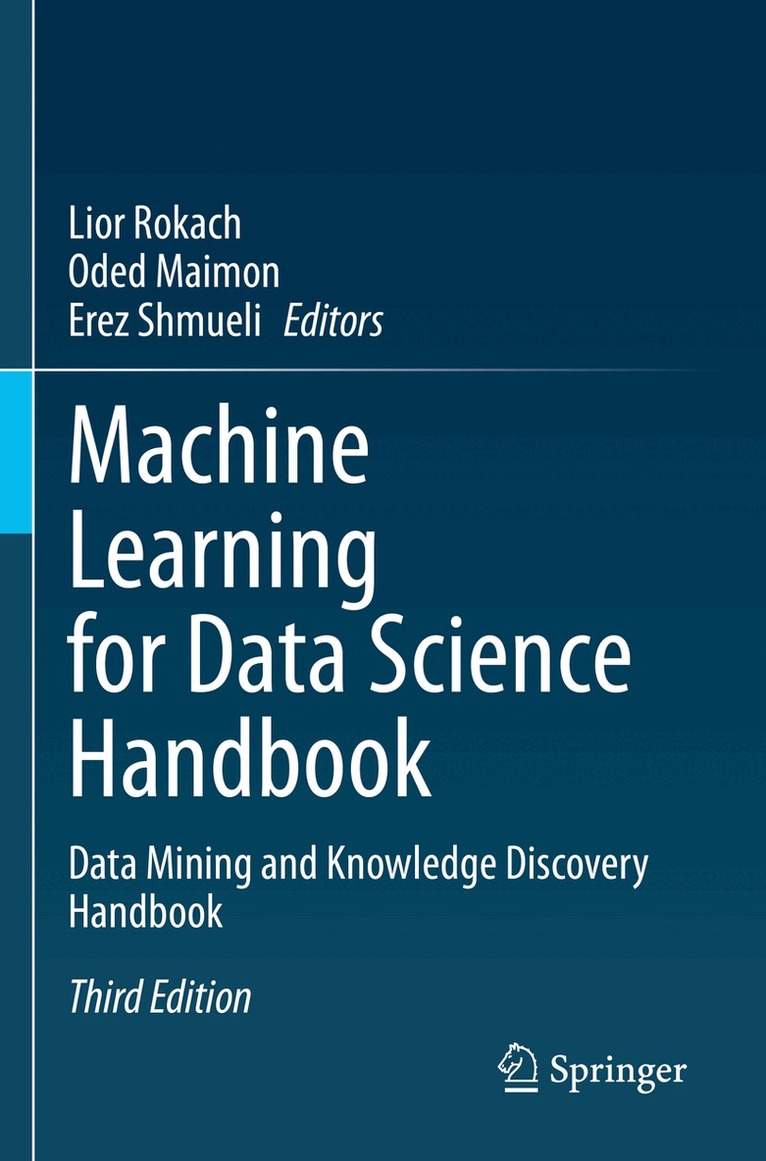
Machine Learning for Data Science Handbook
Data Mining and Knowledge Discovery Handbook
Häftad, Engelska, 2024
3 040 kr
Skickas inom 10-15 vardagar
This book is a major update to the very successful first and second editions (2005 and 2010) of Data Mining and Knowledge Discovery Handbook. Since the last edition, this field has continued to evolve and to gain popularity. Existing methods are constantly being improved and new methods, applications and aspects are introduced. The new title of this handbook and its content reflect these changes thoroughly. Some existing chapters have been brought up to date. In addition to major revision of the existing chapters, the new edition includes totally new topics, such as: deep learning, explainable AI, human factors and social issues and advanced methods for big-data. The significant enhancement to the content reflects the growth in importance of data science. The third edition is also a timely opportunity to incorporate many other changes based on peers and students’ feedback.This comprehensive handbook also presents a coherent and unified repository of data science major concepts, theories, methods, trends, challenges and applications. It covers all the crucial important machine learning methods used in data science.Today's accessibility and abundance of data make data science matters of considerable importance and necessity. Given the field's recent growth, it's not surprising that researchers and practitioners now have a wide range of methods and tools at their disposal. While statistics is fundamental for data science, methods originated from artificial intelligence, particularly machine learning, are also playing a significant role.This handbook aims to serve as the main reference for researchers in the fields of information technology, e-Commerce, information retrieval, data science, machine learning, data mining, databases and statistics as well as advanced level students studying computer science or electrical engineering. Practitioners working within these related fields and data scientists will also want to purchase this handbook as a reference.
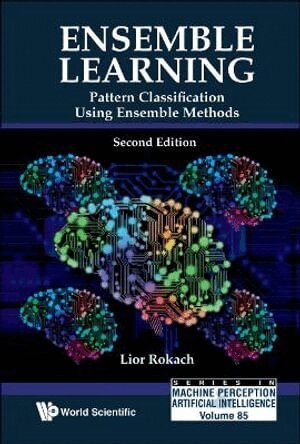
Del 85 - Series In Machine Perception And Artificial Intelligence
Ensemble Learning: Pattern Classification Using Ensemble Methods
Inbunden, Engelska, 2019
1 682 kr
Skickas inom 3-6 vardagar
This updated compendium provides a methodical introduction with a coherent and unified repository of ensemble methods, theories, trends, challenges, and applications. More than a third of this edition comprised of new materials, highlighting descriptions of the classic methods, and extensions and novel approaches that have recently been introduced.Along with algorithmic descriptions of each method, the settings in which each method is applicable and the consequences and tradeoffs incurred by using the method is succinctly featured. R code for implementation of the algorithm is also emphasized.The unique volume provides researchers, students and practitioners in industry with a comprehensive, concise and convenient resource on ensemble learning methods.
1 546 kr
Skickas inom 3-6 vardagar
Cluster analysis is a fundamental data analysis task that aims to group similar data points together, revealing the inherent structure and patterns within complex datasets. This book serves as a comprehensive and accessible guide, taking readers on a captivating journey through the foundational principles of cluster analysis.At its core, the book delves deeply into various clustering algorithms, covering partitioning methods, hierarchical methods, and advanced techniques such as mixture density-based clustering, graph clustering, and grid-based clustering. Each method is presented with clear, concise explanations, supported by illustrative examples and hands-on implementations in the R programming language — a popular and powerful tool for data analysis and visualization.Recognizing the importance of cluster validation and evaluation, the book devotes a dedicated chapter to exploring a wide range of internal and external quality criteria, equipping readers with the necessary tools to assess the performance of clustering algorithms. For those eager to stay at the forefront of the field, the book also presents deep learning-based clustering methods, showcasing the remarkable capabilities of neural networks in uncovering hidden structures within complex, high-dimensional data.Whether you are a student seeking to expand your knowledge, a data analyst looking to enhance your toolbox, or a researcher exploring the frontiers of data analysis, this book will provide you with a solid foundation in cluster analysis and empower you to tackle a wide range of data-driven problems.
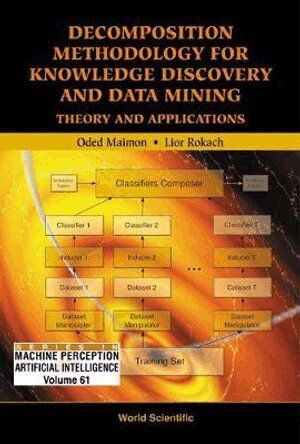
Del 61 - Series In Machine Perception And Artificial Intelligence
Decomposition Methodology For Knowledge Discovery And Data Mining: Theory And Applications
Inbunden, Engelska, 2005
1 772 kr
Skickas inom 5-8 vardagar
Data Mining is the science and technology of exploring data in order to discover previously unknown patterns. It is a part of the overall process of Knowledge Discovery in Databases (KDD). The accessibility and abundance of information today makes data mining a matter of considerable importance and necessity. This book provides an introduction to the field with an emphasis on advanced decomposition methods in general data mining tasks and for classification tasks in particular. The book presents a complete methodology for decomposing classification problems into smaller and more manageable sub-problems that are solvable by using existing tools. The various elements are then joined together to solve the initial problem.The benefits of decomposition methodology in data mining include: increased performance (classification accuracy); conceptual simplification of the problem; enhanced feasibility for huge databases; clearer and more comprehensible results; reduced runtime by solving smaller problems and by using parallel/distributed computation; and the opportunity of using different techniques for individual sub-problems.
Del 69 - Series In Machine Perception And Artificial Intelligence
Data Mining With Decision Trees: Theory And Applications
Inbunden, Engelska, 2007
1 770 kr
Skickas inom 5-8 vardagar
This is the first comprehensive book dedicated entirely to the field of decision trees in data mining and covers all aspects of this important technique.Decision trees have become one of the most powerful and popular approaches in knowledge discovery and data mining, the science and technology of exploring large and complex bodies of data in order to discover useful patterns. The area is of great importance because it enables modeling and knowledge extraction from the abundance of data available. Both theoreticians and practitioners are continually seeking techniques to make the process more efficient, cost-effective and accurate. Decision trees, originally implemented in decision theory and statistics, are highly effective tools in other areas such as data mining, text mining, information extraction, machine learning, and pattern recognition. This book invites readers to explore the many benefits in data mining that decision trees offer:
Del 75 - Series In Machine Perception And Artificial Intelligence
Pattern Classification Using Ensemble Methods
Inbunden, Engelska, 2009
1 371 kr
Skickas inom 5-8 vardagar
Researchers from various disciplines such as pattern recognition, statistics, and machine learning have explored the use of ensemble methodology since the late seventies. Thus, they are faced with a wide variety of methods, given the growing interest in the field. This book aims to impose a degree of order upon this diversity by presenting a coherent and unified repository of ensemble methods, theories, trends, challenges and applications.The book describes in detail the classical methods, as well as the extensions and novel approaches developed recently. Along with algorithmic descriptions of each method, it also explains the circumstances in which this method is applicable and the consequences and the trade-offs incurred by using the method.
Del 81 - Series In Machine Perception And Artificial Intelligence
Data Mining With Decision Trees: Theory And Applications (2nd Edition)
Inbunden, Engelska, 2014
1 682 kr
Skickas inom 3-6 vardagar
Decision trees have become one of the most powerful and popular approaches in knowledge discovery and data mining; it is the science of exploring large and complex bodies of data in order to discover useful patterns. Decision tree learning continues to evolve over time. Existing methods are constantly being improved and new methods introduced.This 2nd Edition is dedicated entirely to the field of decision trees in data mining; to cover all aspects of this important technique, as well as improved or new methods and techniques developed after the publication of our first edition. In this new edition, all chapters have been revised and new topics brought in. New topics include Cost-Sensitive Active Learning, Learning with Uncertain and Imbalanced Data, Using Decision Trees beyond Classification Tasks, Privacy Preserving Decision Tree Learning, Lessons Learned from Comparative Studies, and Learning Decision Trees for Big Data. A walk-through guide to existing open-source data mining software is also included in this edition.This book invites readers to explore the many benefits in data mining that decision trees offer: