Francis Ponge - Böcker
Visar alla böcker från författaren Francis Ponge. Handla med fri frakt och snabb leverans.
7 produkter
7 produkter
1 174 kr
Skickas inom 10-15 vardagar
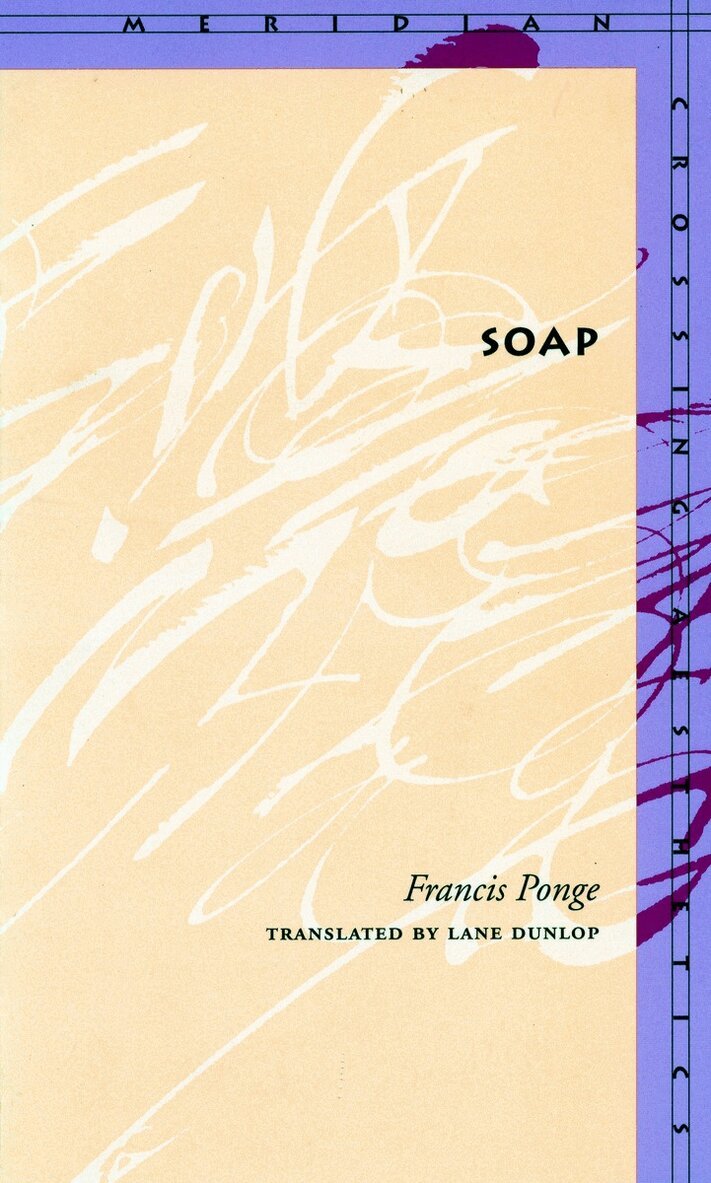
". . . And now, dear reader, for your intellectual toilet, here is a little piece of soap. Well handled, we guarantee it will be enough. Let us hold this magic stone."The poet Francis Ponge (1899-1988) occupied a significant and unchallenged place in French letters for over fifty years, attracting the attention and admiration of generations of leading intellectuals, writers, and painters, a notable feat in France, where reputations are periodically reassessed and undone with the arrival of new literary and philosophical schools.Soap occupies a crucial, pivotal position in Ponge's work. Begun during the German occupation when he was in the Resistance, though completed two decades later, it determined, according to Ponge, the form of almost all his postwar writing. With this work, he began to turn away from the small, perfect poem toward a much more open form, a kind of prose poem which incorporates a laboratory or workshop, recounting its own process of coming into being along with the final result. The outcome is a new form of writing, which one could call "processual poetry." Ponge's later work, from Soap on, is a very important tool in the questioning and rethinking of literary genres, of poetry and prose, of what is literature.There is a blurring of boundaries between Soap and soap (which was hard to come by during the Resistance and is also, of course, metaphorical for a larger social restitution). Soap contains the sum of Ponge's aesthetics and materialist ethics and his belief in the supremacy of language as it becomes the object of the text. In the words of Serge Gavronsky, "this work, perhaps one of the longest running metaphors in literature, slowly unwinds, bubbles in verbal inventions, and finally evaporates, leaving the water slightly troubled, slightly darker, but the hands clean, really clean. . . . Out of murky literary habits, Ponge has devised a way of cleaning his text, and through it, man himself, his vocabulary, and as a consequence, his way of being in the world."
280 kr
Skickas inom 7-10 vardagar
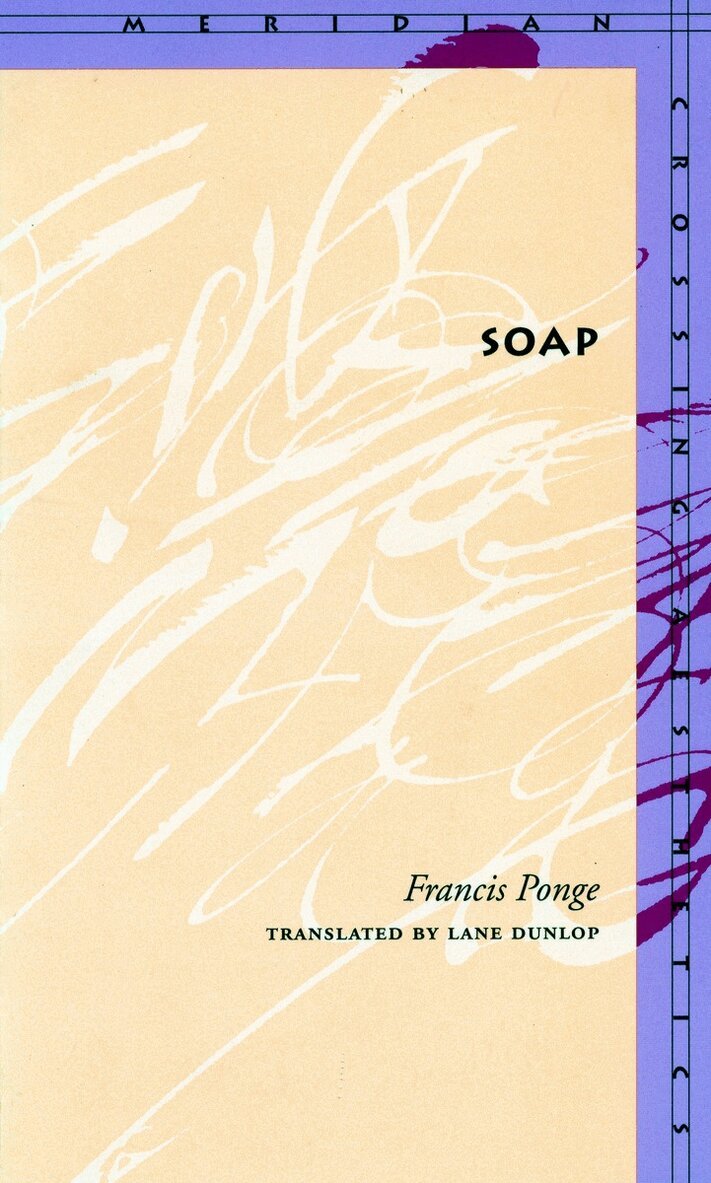
". . . And now, dear reader, for your intellectual toilet, here is a little piece of soap. Well handled, we guarantee it will be enough. Let us hold this magic stone."The poet Francis Ponge (1899-1988) occupied a significant and unchallenged place in French letters for over fifty years, attracting the attention and admiration of generations of leading intellectuals, writers, and painters, a notable feat in France, where reputations are periodically reassessed and undone with the arrival of new literary and philosophical schools.Soap occupies a crucial, pivotal position in Ponge's work. Begun during the German occupation when he was in the Resistance, though completed two decades later, it determined, according to Ponge, the form of almost all his postwar writing. With this work, he began to turn away from the small, perfect poem toward a much more open form, a kind of prose poem which incorporates a laboratory or workshop, recounting its own process of coming into being along with the final result. The outcome is a new form of writing, which one could call "processual poetry." Ponge's later work, from Soap on, is a very important tool in the questioning and rethinking of literary genres, of poetry and prose, of what is literature.There is a blurring of boundaries between Soap and soap (which was hard to come by during the Resistance and is also, of course, metaphorical for a larger social restitution). Soap contains the sum of Ponge's aesthetics and materialist ethics and his belief in the supremacy of language as it becomes the object of the text. In the words of Serge Gavronsky, "this work, perhaps one of the longest running metaphors in literature, slowly unwinds, bubbles in verbal inventions, and finally evaporates, leaving the water slightly troubled, slightly darker, but the hands clean, really clean. . . . Out of murky literary habits, Ponge has devised a way of cleaning his text, and through it, man himself, his vocabulary, and as a consequence, his way of being in the world."
258 kr
Skickas inom 3-6 vardagar
152 kr
Tillfälligt slut
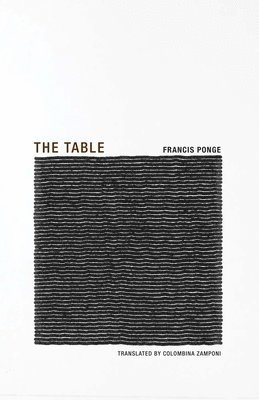
The final chapter in Francis Ponge’s interrogation of unassuming objectsWritten from 1967 to 1973 over a series of early mornings in seclusion in his country home, The Table offers a final chapter in Francis Ponge’s interrogation of the unassuming objects in his life: in this case, the table upon which he wrote. In his effort to get at the presence lying beneath his elbow, Ponge charts out a space of silent consolation that lies beyond (and challenges) scientific objectivity and poetic transport. This is one of Ponge’s most personal, overlooked, and—because it was the project he was working on when he died—his least processed works. It reveals the personal struggle Ponge engaged in throughout all of his writing, a hesitant uncertainty he usually pared away from his published texts that is at touching opposition to the manufactured, “durable mother” of the table on and of which he here writes.
167 kr
Skickas inom 3-6 vardagar
184 kr
Skickas inom 3-6 vardagar
130 kr
Tillfälligt slut
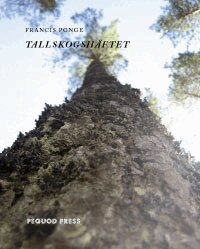
Ponges sakliga betraktelse av en tallskog för oss rakt in i diskussioner om språk, moral och skönhet, men är mest av allt en kärleksförklaring till just tallskogen. Boken utkom på franska 1947 och finns nu för första gången på svenska i översättning av Malte Persson.