Frank Bruinsma – författare
Visar alla böcker från författaren Frank Bruinsma. Handla med fri frakt och snabb leverans.
5 produkter
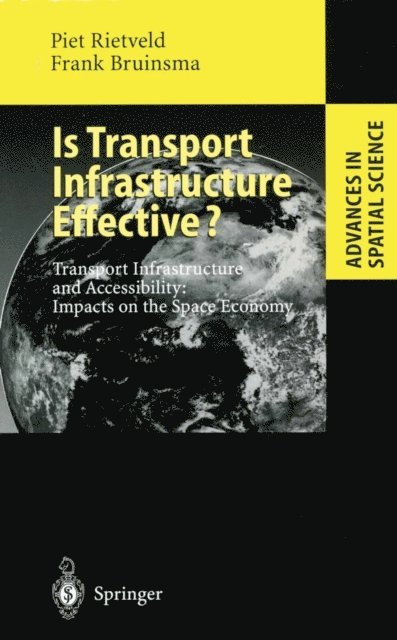
Is Transport Infrastructure Effective?
Transport Infrastructure and Accessibility: Impacts on the Space Economy
Av Frank Bruinsma, Piet Rietveld
E-bok, 2012
1785 kr
Lägg i varukorg
When in 1989 the authors started research on infrastructure, they did not foresee that this would lead to a long-term involvement in this area. Our beginning happened to coincide with the publication of David Aschauer''s article on public capital and productivity, which induced a large flow of …
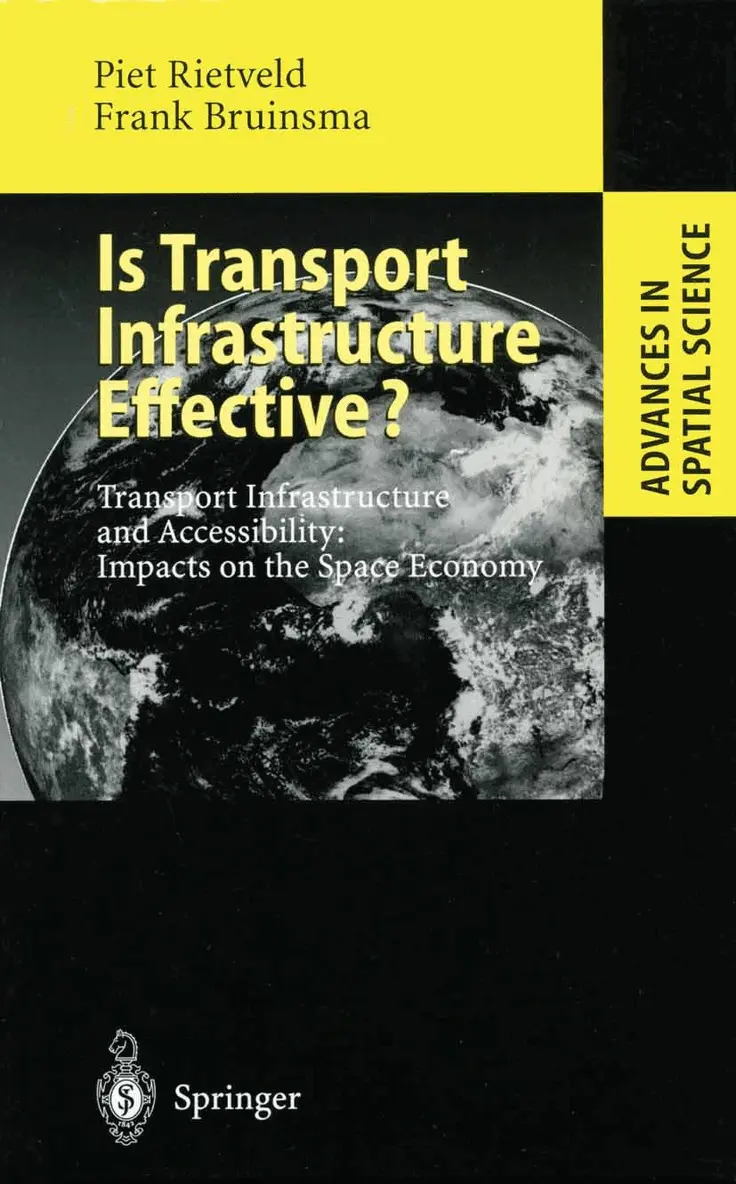
Is Transport Infrastructure Effective?
Transport Infrastructure and Accessibility: Impacts on the Space Economy
Av Piet Rietveld, Frank Bruinsma
Häftad, 2012
1419 kr
Lägg i varukorg
When in 1989 the authors started research on infrastructure, they did not foresee that this would lead to a long-term involvement in this area. Our beginning happened to coincide with the publication of David Aschauer's article on public capital and productivity, which induced a large flow of …
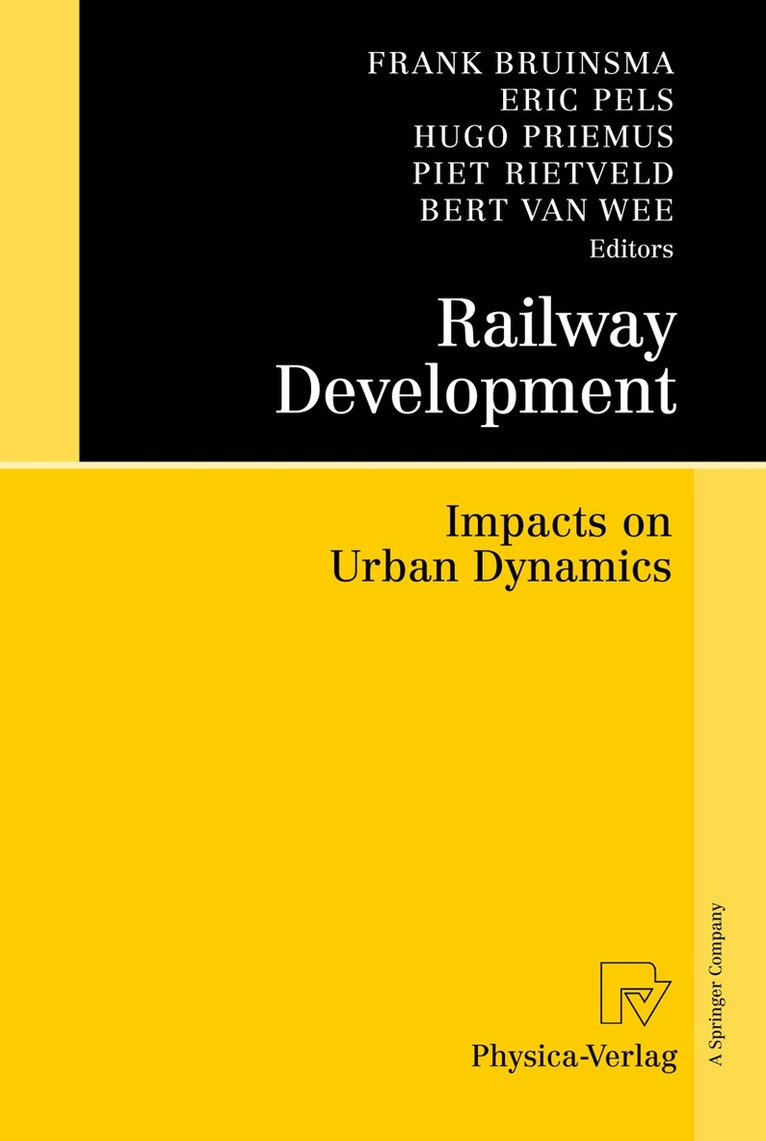
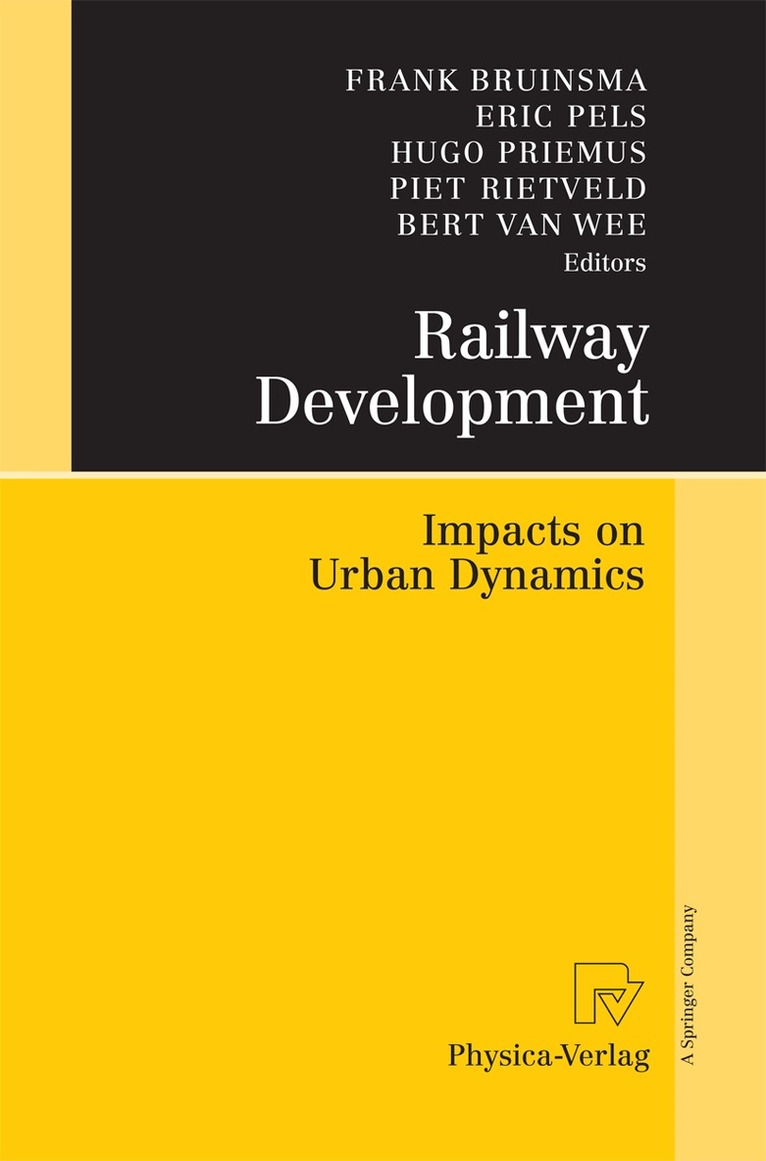
Railway Development
Impacts on Urban Dynamics
Av Frank Bruinsma, Eric Pels m. fl.
Inbunden, 2007
1636 kr
Lägg i varukorg
The revitalisation of railway station areas has been a hot issue in policy making in Europe in recent years. The introduction of two new railway systems - the high speed train and light rail systems - has pushed forward the redevelopment of not only railway stations themselves, but also of their - …
Railway Development
Impacts on Urban Dynamics
Av Bert van Wee, Piet Rietveld m. fl.
E-bok, 2007
2174 kr
Lägg i varukorg
The revitalisation of railway station areas has been a hot issue in policy making in Europe in recent years. The introduction of two new railway systems - the high speed train and light rail systems - has pushed forward the redevelopment of not only railway stations themselves, but also of their - …
Railway Development
Impacts on Urban Dynamics
Av Frank Bruinsma, Eric Pels m. fl.
Häftad, 2014
1636 kr
Lägg i varukorg
The revitalisation of railway station areas has been a hot issue in policy making in Europe in recent years. The introduction of two new railway systems - the high speed train and light rail systems - has pushed forward the redevelopment of not only railway stations themselves, but also of their - …