Frank L.K. Ohemeng – författare
Visar alla böcker från författaren Frank L.K. Ohemeng. Handla med fri frakt och snabb leverans.
5 produkter
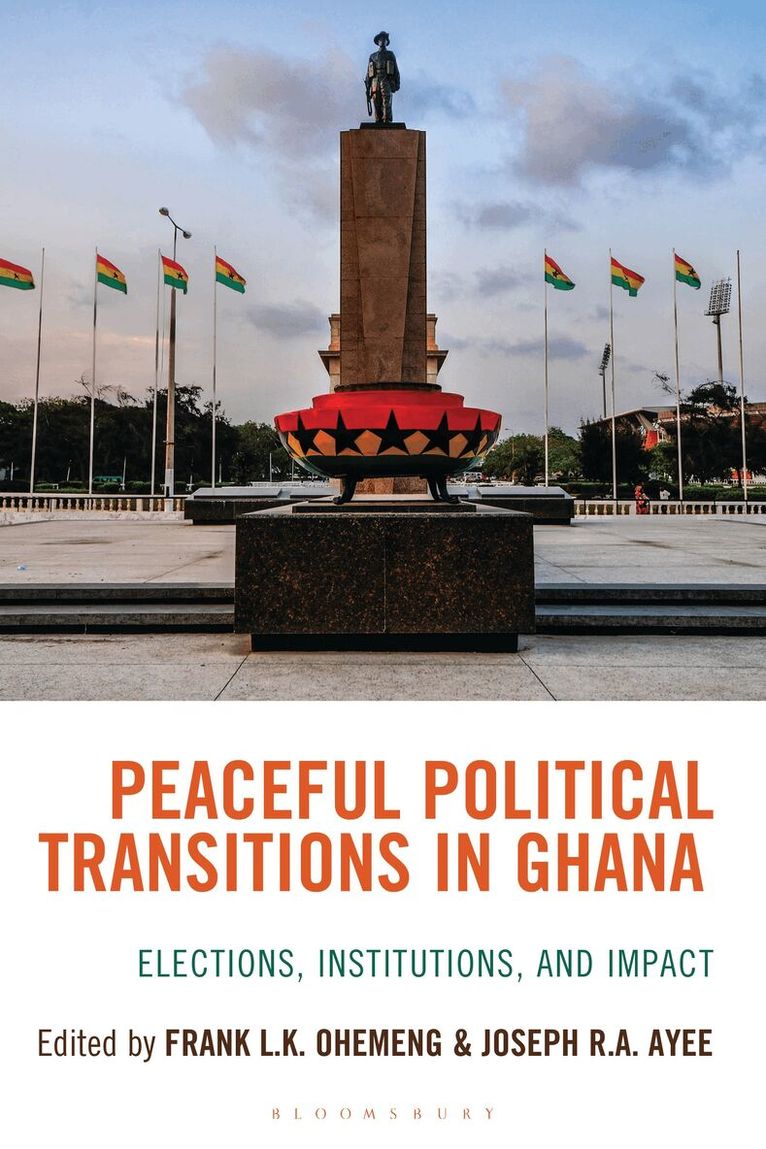
Peaceful Political Transitions in Ghana
Elections, Institutions, and Impact
Av Frank L.K. Ohemeng, Joseph R.A. Ayee
Inbunden, 2026
1263 kr
Kommande
Examining nine peaceful political transitions in Ghana from 1993 to 2025, this book covers the dynamics of these transitions, the role of local and international actors, and institutions in these transitions, and the achievements and challenges encountered.The phenomenon of political transition has …
Think Tanks, Governance, and Development in Africa
Av Frank L.K. Ohemeng, Joseph R.A. Ayee
Inbunden, 2024
1844 kr
Lägg i varukorg
This significant book addresses an important missing link in the literature on politics, governance, public policy and administration in sub-Saharan Africa. It contributes to the understanding of emergent independent institutions that are now playing active roles in formulating and implementing …
Think Tanks, Governance, and Development in Africa
Av Joseph R.A. Ayee, Frank L.K. Ohemeng
E-bok, 2024
459 kr
Lägg i varukorg
This significant book addresses an important missing link in the literature on politics, governance, public policy and administration in sub-Saharan Africa. It contributes to the understanding of emergent independent institutions that are now playing active roles in formulating and implementing …
Politics of Democratic Backsliding
Bureaucratic and Political Relationships in Emerging and Developing Countries
Av Frank L.K. Ohemeng, Joseph R.A. Ayee m. fl.
Inbunden, 2026
1123 kr
Kommande
The elections of Boris Johnson in the UK and Donald Trump in the US, along with the authoritarian tendencies of some leaders in the Global South, have shaken the foundations of democracy. These leaders see democratic institutions as obstacles to populist ideas, sparking debates and disregard for …
Peaceful Political Transitions in Ghana
Elections, Institutions, and Impact
Av Frank L.K. Ohemeng, Joseph R.A. Ayee
E-bok, 2026
1373 kr
Kommande
Examining nine peaceful political transitions in Ghana from 1993 to 2025, this book covers the dynamics of these transitions, the role of local and international actors, and institutions in these transitions, and the achievements and challenges encountered.The phenomenon of political transition has …