Frank S. de Boer – författare
Visar alla böcker från författaren Frank S. de Boer. Handla med fri frakt och snabb leverans.
21 produkter
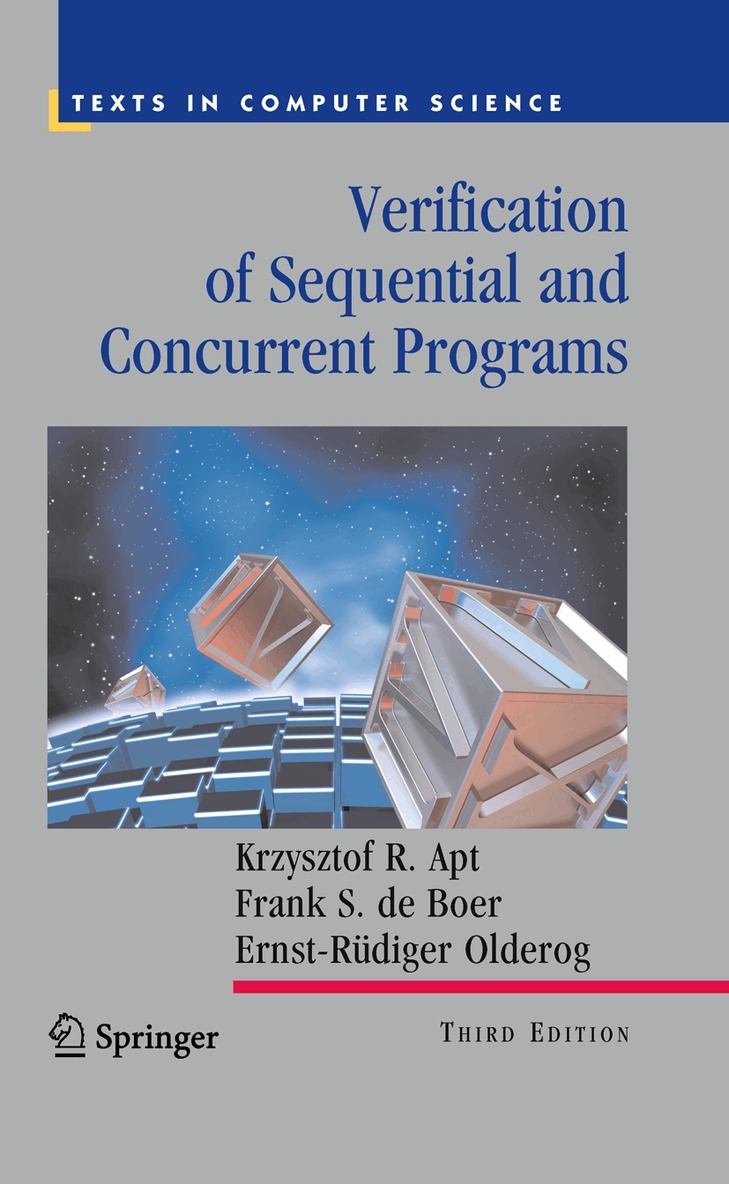
Verification of Sequential and Concurrent Programs
Av Krzysztof R. Apt, Frank S. de Boer m. fl.
Häftad, 2012
902 kr
Lägg i varukorg
HIS BOOK CONTAINS a most comprehensive text that presents syntax-directed and compositional methods for the formal veri?- T cation of programs. The approach is not language-bounded in the sense that it covers a large variety of programming models and features that appear in most modern programming …
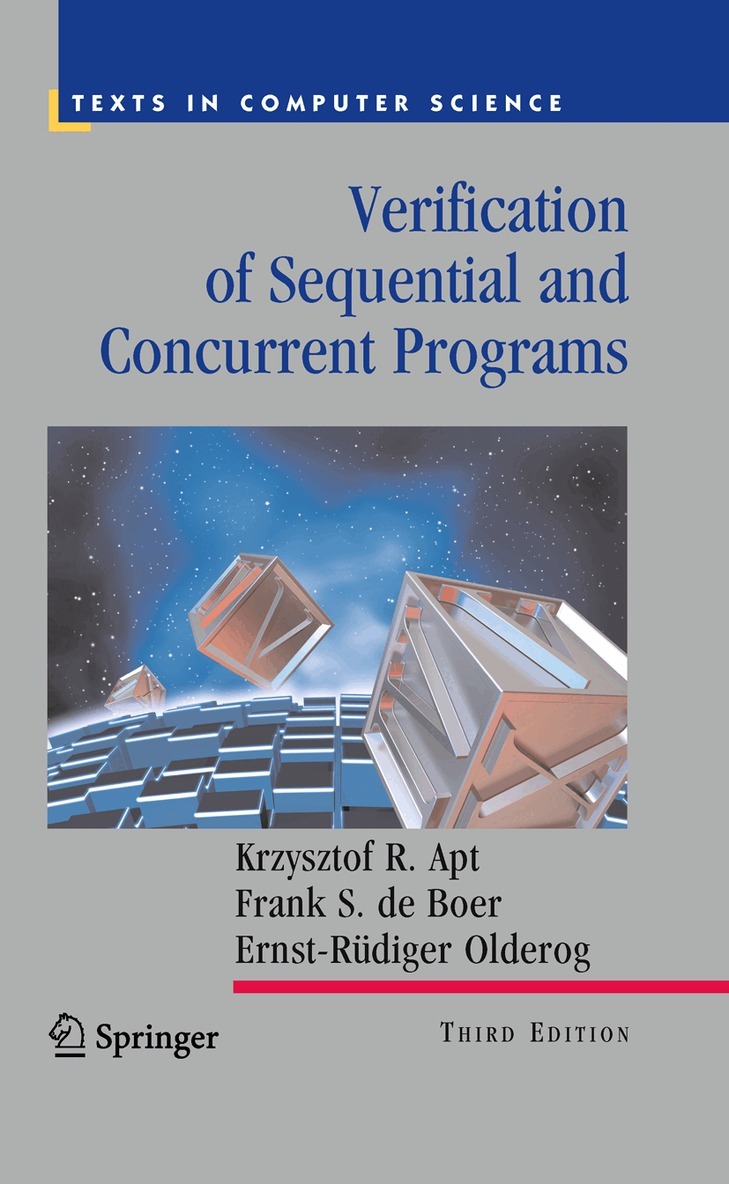
Verification of Sequential and Concurrent Programs
Av Krzysztof R. Apt, Frank S. de Boer m. fl.
Inbunden, 2009
1128 kr
Lägg i varukorg
HIS BOOK CONTAINS a most comprehensive text that presents syntax-directed and compositional methods for the formal veri?- T cation of programs. The approach is not language-bounded in the sense that it covers a large variety of programming models and features that appear in most modern programming …
Verification of Sequential and Concurrent Programs
Av Ernst-Rudiger Olderog, Frank S. de Boer m. fl.
E-bok, 2009
1175 kr
Lägg i varukorg
HIS BOOK CONTAINS a most comprehensive text that presents syntax-directed and compositional methods for the formal veri?- T cation of programs. The approach is not language-bounded in the sense that it covers a large variety of programming models and features that appear in most modern programming …
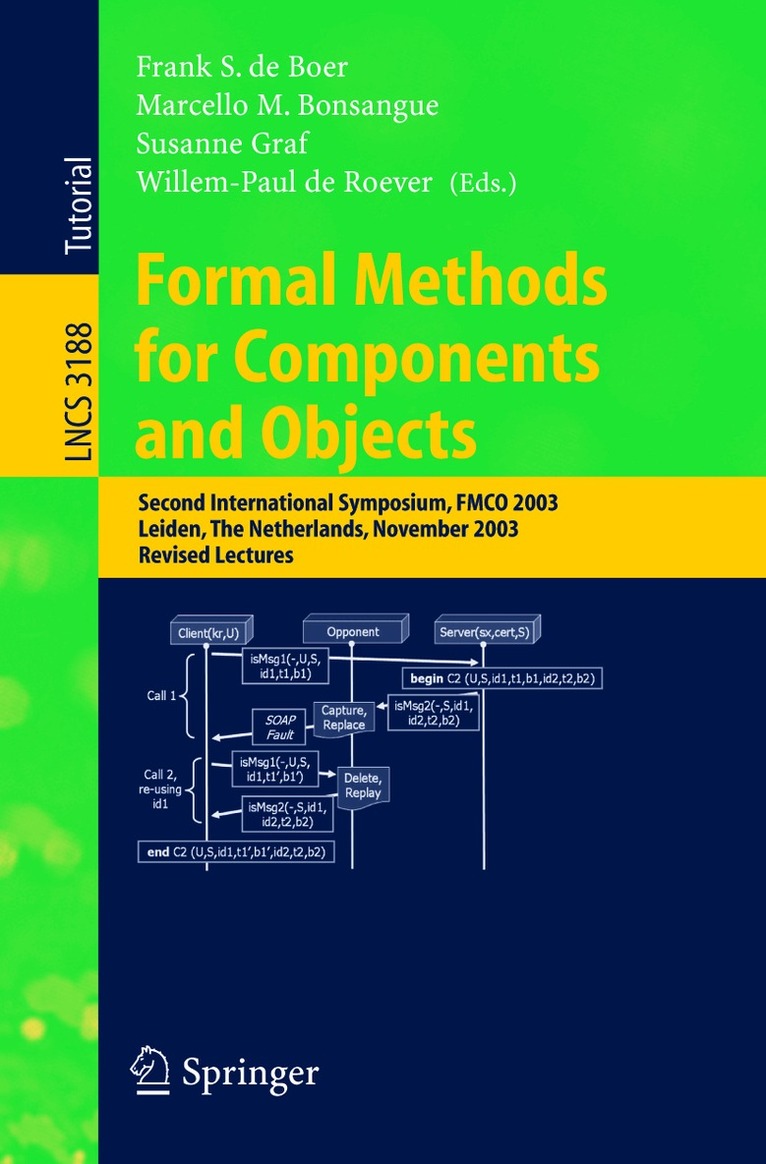
Formal Methods for Components and Objects
Second International Symposium, FMCO 2003, Leiden, The Netherlands, November 4-7, 2003. Revised Lectures
Av Frank S. de Boer, Marcello M. Bonsangue m. fl.
Häftad, 2004
567 kr
Lägg i varukorg
Formal methods have been applied successfully to the verification of medium-sized programs in protocol and hardware design. However, their application to more complex systems, resulting from the object-oriented and the more recent component-based software engineering paradigms, requires further …
Formal Methods for Components and Objects
Third International Symposium, FMCO 2004, Leiden, The Netherlands, November 2-5, 2004, Revised Lectures
Av Frank S. de Boer, Marcello M. Bonsangue m. fl.
Häftad, 2005
567 kr
Lägg i varukorg
Formal methods have been applied successfully to the verification of medium-sized programs in protocol and hardware design. However, their application to the development of large systems requires more emphasis on specification, modelling and validation techniques supporting the concepts of …
Formal Methods for Components and Objects
Second International Symposium, FMCO 2003, Leiden, The Netherlands, November 4-7, 2003. Revised Lectures
Av Willem-Paul de Roever, Susanne Graf m. fl.
E-bok, 2004
755 kr
Lägg i varukorg
Formal methods have been applied successfully to the verification of medium-sized programs in protocol and hardware design. However, their application to more complex systems, resulting from the object-oriented and the more recent component-based software engineering paradigms, requires further …
Formal Methods for Components and Objects
Third International Symposium, FMCO 2004, Leiden, The Netherlands, November 2-5, 2004, Revised Lectures
Av Willem-Paul de Roever, Susanne Graf m. fl.
E-bok, 2005
755 kr
Lägg i varukorg
Formal methods have been applied successfully to the verification of medium-sized programs in protocol and hardware design. However, their application to the development of large systems requires more emphasis on specification, modelling and validation techniques supporting the concepts of …
Formal Methods for Components and Objects
4th International Symposium, FMCO 2005, Amsterdam, The Netherlands, November 1-4, 2005, Revised Lectures
Av Frank S. de Boer, Marcello M. Bonsangue m. fl.
Häftad, 2006
567 kr
Lägg i varukorg
Formal methods have been applied successfully to the verification of medium-sized programs in protocol and hardware design. However, their application to the development of large systems requires more emphasis on specification, modelling and validation techniques supporting the concepts of …
Formal Methods for Components and Objects
4th International Symposium, FMCO 2005, Amsterdam, The Netherlands, November 1-4, 2005, Revised Lectures
Av Willem-Paul de Roever, Susanne Graf m. fl.
E-bok, 2006
755 kr
Lägg i varukorg
Formal methods have been applied successfully to the verification of medium-sized programs in protocol and hardware design. However, their application to the development of large systems requires more emphasis on specification, modelling and validation techniques supporting the concepts of …
Formal Methods for Components and Objects
5th International Symposium, FMCO 2006, Amsterdam, Netherlands, November 7-10,2006, Revised Lectures
Av Frank S. de Boer, Marcello M. Bonsangue m. fl.
Häftad, 2007
567 kr
Lägg i varukorg
Formal methods have been applied successfully to the verification of medium-sized programs in protocol and hardware design. However, their application to the development of large systems requires more emphasis on specification, modelling and validation techniques supporting the concepts of …
Formal Methods for Components and Objects
5th International Symposium, FMCO 2006, Amsterdam, Netherlands, November 7-10,2006, Revised Lectures
Av Willem-Paul de Roever, Susanne Graf m. fl.
E-bok, 2008
755 kr
Lägg i varukorg
Formal methods have been applied successfully to the verification of medium-sized programs in protocol and hardware design. However, their application to the development of large systems requires more emphasis on specification, modelling and validation techniques supporting the concepts of …
Formal Methods for Components and Objects
8th International Symposium, FMCO 2009, Eindhoven, The Netherlands, November 4-6, 2009. Revised Selected Papers
Av Frank S. de Boer, Marcello M. Bonsangue m. fl.
Häftad, 2011
567 kr
Lägg i varukorg
All modern industries rely on large and complex software systems. In order toconstruct such large systems in a systematic manner, the focus of the developmentmethodologies has switched in the last two decades from functional to structuralissues. Formal methods have been applied successfully to the …
Formal Methods for Components and Objects
8th International Symposium, FMCO 2009, Eindhoven, The Netherlands, November 4-6, 2009. Revised Selected Papers
Av Michael Leuschel, Stefan Hallerstede m. fl.
E-bok, 2010
755 kr
Lägg i varukorg
All modern industries rely on large and complex software systems. In order toconstruct such large systems in a systematic manner, the focus of the developmentmethodologies has switched in the last two decades from functional to structuralissues. Formal methods have been applied successfully to the …
Formal Methods for Components and Objects
9th International Symposium, FMCO 2010, Graz, Austria, November 29 - December 1, 2010
Av Bernhard K. Aichernig, Frank S. de Boer m. fl.
Häftad, 2011
567 kr
Lägg i varukorg
The focus in development methodologies of large and complex software systems has switched in the last two decades from functional issues to structural issues; this holds for both the object-oriented and the more recent component-based software engineering paradigms. Formal methods have been applied …
Formal Methods for Components and Objects
9th International Symposium, FMCO 2010, Graz, Austria, November 29 - December 1, 2010
Av Marcello M. Bonsangue, Frank S. de Boer m. fl.
E-bok, 2011
734 kr
Lägg i varukorg
The focus in development methodologies of large and complex software systems has switched in the last two decades from functional issues to structural issues; this holds for both the object-oriented and the more recent component-based software engineering paradigms. Formal methods have been applied …
Theoretical Computer Science
7th IFIP TC1/WG 2.2 International Conference, TCS 2012, Amsterdam, The Netherlands, September 26-28, 2012, Proceedings
Av Jos C.M. Baeten, Tom Ball m. fl.
Häftad, 2012
551 kr
Lägg i varukorg
This book constitutes the refereed proceedings of the 7th FIP WG 2.2 International Conference, TCS 2012, held in Amsterdam, The Netherlands, in September 2012. The 25 revised full papers presented, together with one invited talk, were carefully reviewed and selected from 48 submissions. New results …
Theoretical Computer Science
7th IFIP TC1/WG 2.2 International Conference, TCS 2012, Amsterdam, The Netherlands, September 26-28, 2012, Proceedings
Av Frank S. de Boer, Tom Ball m. fl.
E-bok, 2012
718 kr
Lägg i varukorg
This book constitutes the refereed proceedings of the 7th FIP WG 2.2 International Conference, TCS 2012, held in Amsterdam, The Netherlands, in September 2012. The 25 revised full papers presented, together with one invited talk, were carefully reviewed and selected from 48 submissions. New results …
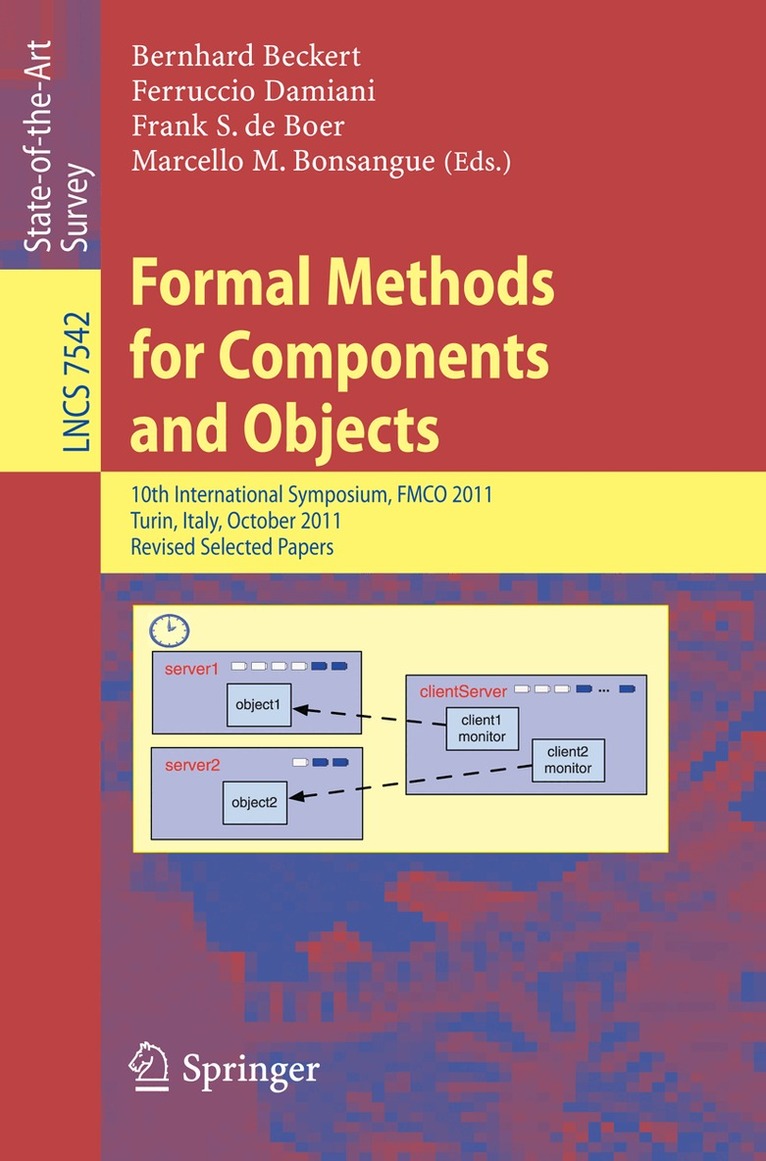
Formal Methods for Components and Objects
10th International Symposium, FMCO 2011, Turin, Italy, October 3-5, 2011, Revised Selected Papers
Av Bernhard Beckert, Ferruccio Damiani m. fl.
Häftad, 2013
567 kr
Lägg i varukorg
Formal methods have been applied successfully to the verification of medium-sized programs in protocol and hardware design for some time. However, their application to the development of large systems requires more emphasis on specification, modeling, and validation techniques supporting the …
Formal Methods for Components and Objects
10th International Symposium, FMCO 2011, Turin, Italy, October 3-5, 2011, Revised Selected Papers
Av Marcello M. Bonsangue, Frank S. de Boer m. fl.
E-bok, 2013
734 kr
Lägg i varukorg
Formal methods have been applied successfully to the verification of medium-sized programs in protocol and hardware design for some time. However, their application to the development of large systems requires more emphasis on specification, modeling, and validation techniques supporting the …
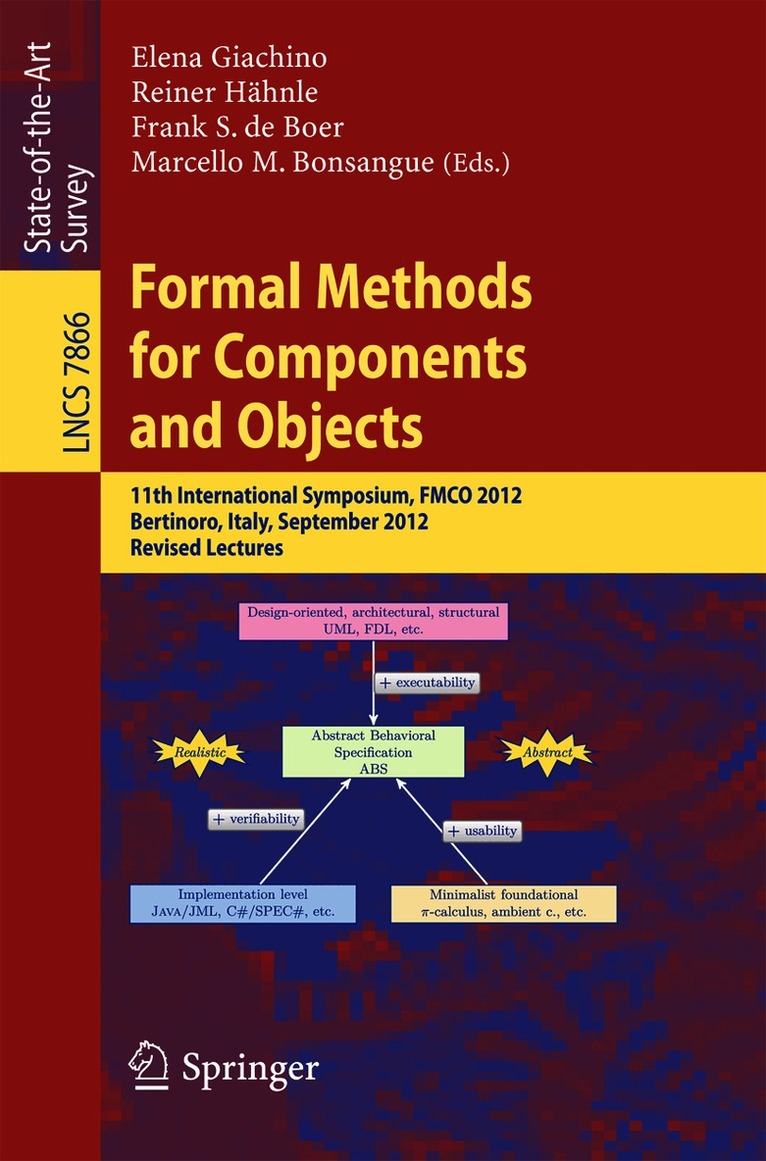
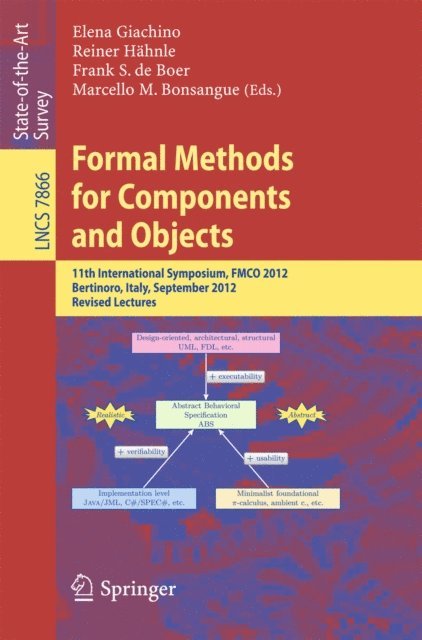
Formal Methods for Components and Objects
11th International Symposium, FMCO 2012, Bertinoro, Italy, September 24-28, 2012, Revised Lectures
Av Elena Giachino, Reiner Hähnle m. fl.
Häftad, 2013
523 kr
Lägg i varukorg
This book constitutes revised lectures from the 11th Symposium on Formal Methods for Components and Object, FMCO 2012, held in Bertinoro, Italy, in September 2012. The 8 lectures featured in this volume are by world-renowned experts within the area of formal models for objects and components. The …
Formal Methods for Components and Objects
11th International Symposium, FMCO 2012, Bertinoro, Italy, September 24-28, 2012, Revised Lectures
Av Marcello M. Bonsangue, Frank S. de Boer m. fl.
E-bok, 2013
672 kr
Lägg i varukorg
This book constitutes revised lectures from the 11th Symposium on Formal Methods for Components and Object, FMCO 2012, held in Bertinoro, Italy, in September 2012. The 8 lectures featured in this volume are by world-renowned experts within the area of formal models for objects and components. The …