Frank Wilkinson – författare
2 790 kr
Skickas inom 5-8 vardagar
2 346 kr
Skickas inom 5-8 vardagar
362 kr
Skickas inom 5-8 vardagar
696 kr
Läs direkt efter köp
664 kr
Skickas inom 10-15 vardagar
873 kr
Skickas inom 10-15 vardagar
604 kr
Läs direkt efter köp
First published in 1984, Industrial Relations in the Future highlights probable developments in Britain’s system of industrial relations into the 1990s. It also provides a basis for further and detailed analysis and debate of issues central to the nation’s future. Written by distinguished scholars in their respective fields, the three main sections give reviews from three contrasting traditions- mainstream industrial relations, industrial sociology and management, and labour economics. These accounts are highly complementary in the ways in which, in each and every case, issues of collective bargaining, managerial strategy and union response, and the behaviour of governments are all set against a broad backcloth of economic, political, and social changes. The authors see the ultimate outcome as depending greatly on the policies and types of action of organised labour, managements and governments, and possibly of wider social movements as well. This book will be an essential read for scholars and researchers of labour economics, industrial sociology, economics, and public policy.
604 kr
Läs direkt efter köp
First published in 1984, Industrial Relations in the Future highlights probable developments in Britain’s system of industrial relations into the 1990s. It also provides a basis for further and detailed analysis and debate of issues central to the nation’s future. Written by distinguished scholars in their respective fields, the three main sections give reviews from three contrasting traditions- mainstream industrial relations, industrial sociology and management, and labour economics. These accounts are highly complementary in the ways in which, in each and every case, issues of collective bargaining, managerial strategy and union response, and the behaviour of governments are all set against a broad backcloth of economic, political, and social changes. The authors see the ultimate outcome as depending greatly on the policies and types of action of organised labour, managements and governments, and possibly of wider social movements as well. This book will be an essential read for scholars and researchers of labour economics, industrial sociology, economics, and public policy.
413 kr
Skickas inom 5-8 vardagar
299 kr
Skickas inom 5-8 vardagar
1 504 kr
Skickas inom 10-15 vardagar
525 kr
Skickas inom 10-15 vardagar
1 010 kr
Läs direkt efter köp
1 010 kr
Läs direkt efter köp
538 kr
Skickas inom 10-15 vardagar
1 460 kr
Skickas inom 10-15 vardagar
2 482 kr
Skickas inom 10-15 vardagar
788 kr
Läs direkt efter köp
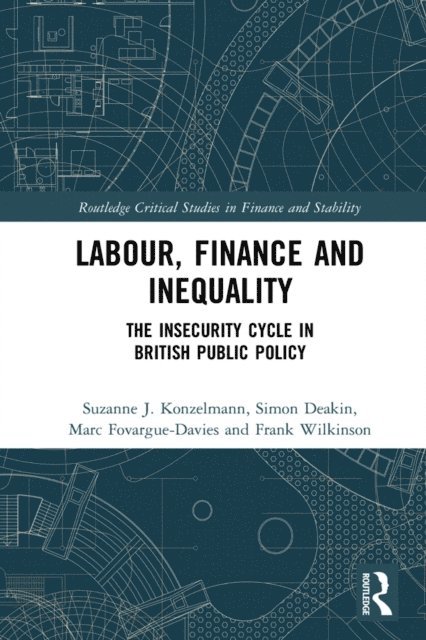
Following the 2008 "global" financial crisis, the viability of globalised financial capitalism was called into question. The resulting fear and uncertainty produced a momentary return to "Keynesian" policies. But as soon as emergency stimuli – and bank bail-outs – appeared to stabilise the situation, there was a sharp reversal; and successive British governments and the financial sector have since attempted to return to business as usual.
Historically, much smaller shocks have been able to produce dramatic change, with the 1978 "Winter of Discontent" providing a catalyst for the election of Margaret Thatcher, the ultimate abandonment of the post-war Keynesian consensus, and the ushering-in of neoliberalism. Nor is apparent success a guarantee against change, with Winston Churchill being swept from office by the first majority Labour government in 1945 – at a point which should have marked his greatest triumph.
In this book, these apparently inexplicable shifts in the conventional wisdom and the accompanying policy paradigm are explored through the lens of the interest groups that have jostled for position since the second industrial revolution. In this context, inequality, poverty, free market capitalism and the social welfare state have interacted in an uneasy, dynamic dance – the "insecurity cycle". The authors explore these interactions, their impact on the relationship between society and the economy, and the possible implications of Brexit and a re-energised political left.
Written in an engaging and accessible style, Labour, Finance and Inequality will be a key resource for academics and students of social and political economics as well as public policy. It will also offer considerable insight to policy makers and a more general non-specialist audience.
656 kr
Läs direkt efter köp
656 kr
Läs direkt efter köp
300 kr
Skickas inom 3-6 vardagar