Fransiska Louwagie – författare
Visar alla böcker från författaren Fransiska Louwagie. Handla med fri frakt och snabb leverans.
7 produkter
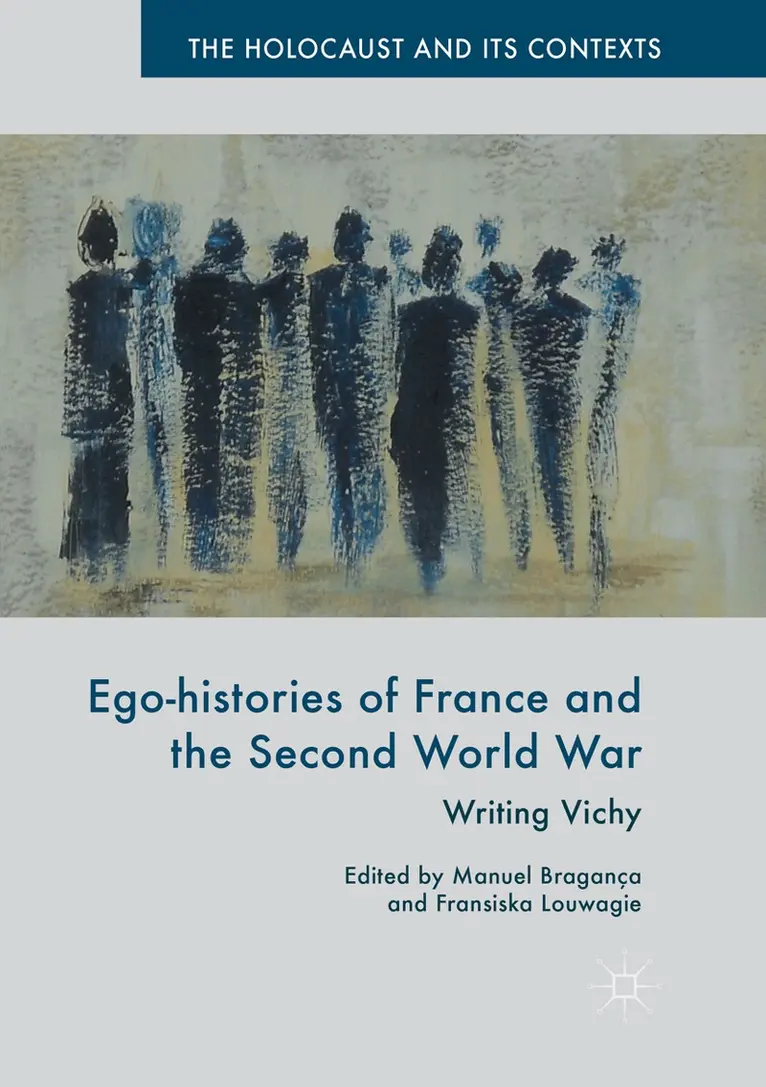
Ego-histories of France and the Second World War
Writing Vichy
Av Manuel Bragança, Fransiska Louwagie
Häftad, 2019
1014 kr
Lägg i varukorg
This volume presents the intellectual autobiographies of fourteen leading scholars in the fields of history, literature, film and cultural studies who have dedicated a considerable part of their career to researching the history and memories of France during the Second World War. Basedin five …
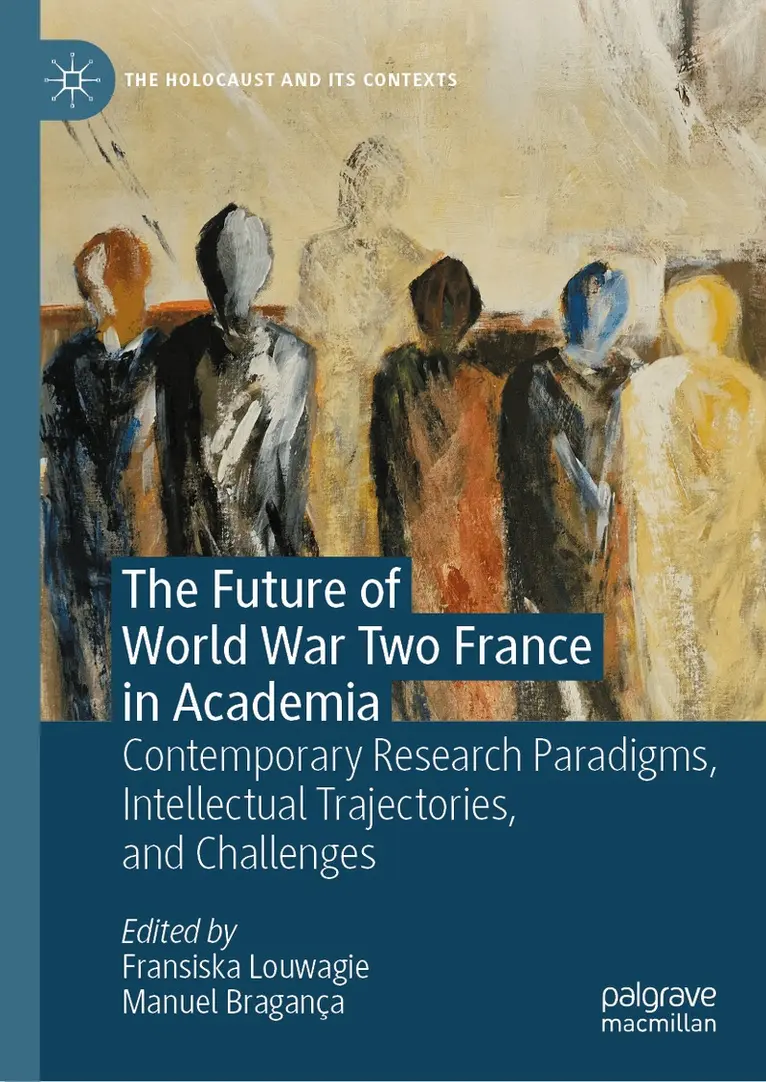
Future of World War Two France in Academia
Contemporary Research Paradigms, Intellectual Trajectories, and Challenges
Av Fransiska Louwagie, Manuel Bragança
Inbunden, 2026
1577 kr
Lägg i varukorg
This book examines the intellectual trajectories of international mid-career scholars working on the Second World War and the Holocaust in France across a wide range of disciplines, including history, literature, and cultural studies. It scrutinises disciplinary and interdisciplinary dynamics, and …
Future of World War Two France in Academia
Contemporary Research Paradigms, Intellectual Trajectories, and Challenges
Av Manuel Braganca, Fransiska Louwagie
E-bok, 2026
2006 kr
Lägg i varukorg
This book examines the intellectual trajectories of international mid-career scholars working on the Second World War and the Holocaust in France across a wide range of disciplines, including history, literature, and cultural studies. It scrutinises disciplinary and interdisciplinary dynamics, and …
Ego-histories of France and the Second World War
Writing Vichy
Av Manuel Bragança, Fransiska Louwagie
Inbunden, 2018
1014 kr
Lägg i varukorg
This volume presents the intellectual autobiographies of fourteen leading scholars in the fields of history, literature, film and cultural studies who have dedicated a considerable part of their career to researching the history and memories of France during the Second World War. Basedin five …
Ego-histories of France and the Second World War
Writing Vichy
Av Fransiska Louwagie, Manuel Braganca
E-bok, 2018
1306 kr
Lägg i varukorg
This volume presents the intellectual autobiographies of fourteen leading scholars in the fields of history, literature, film and cultural studies who have dedicated a considerable part of their career to researching the history and memories of France during the Second World War. Based in five …
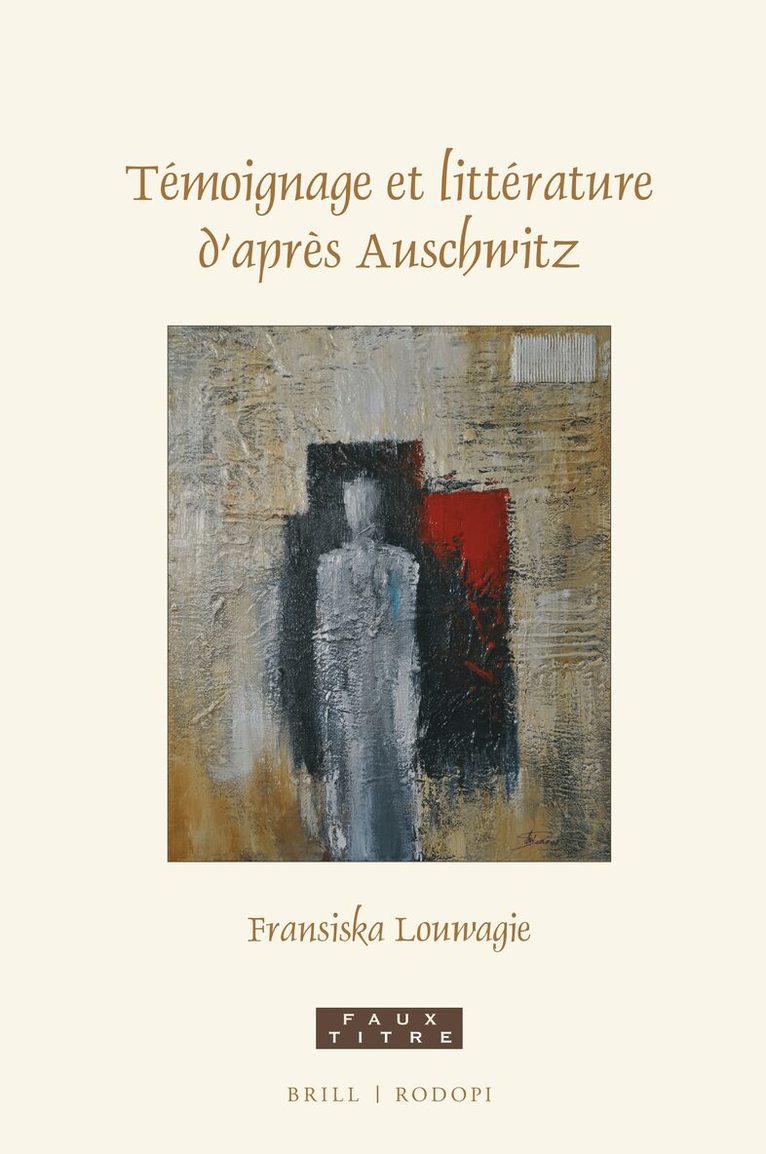
Témoignage et littérature d’après Auschwitz
Inbunden, 2020
2643 kr
Lägg i varukorg
Dans Témoignage et littérature d’après Auschwitz, Fransiska Louwagie offre des études critiques provenant de deux centres de gravité de la littérature de la Shoah et des camps nazis : les œuvres des témoins-survivants et celles des générations suivantes. Le livre explore les œuvres d’écrivains …
Témoignage et littérature d’après Auschwitz
Häftad, 2024
1001 kr
Lägg i varukorg
Dans Témoignage et littérature d’après Auschwitz, Fransiska Louwagie offre des études critiques provenant de deux centres de gravité de la littérature de la Shoah et des camps nazis : les œuvres des témoins-survivants et celles des générations suivantes. Le livre explore les œuvres d’écrivains …