Frederic Landy – författare
Visar alla böcker från författaren . Handla med fri frakt och snabb leverans.
4 produkter
4 produkter
Del 1 - Urban Challenges
Megacity Slums: Social Exclusion, Space And Urban Policies In Brazil And India
Inbunden, Engelska, 2013
2 309 kr
Skickas inom 5-8 vardagar
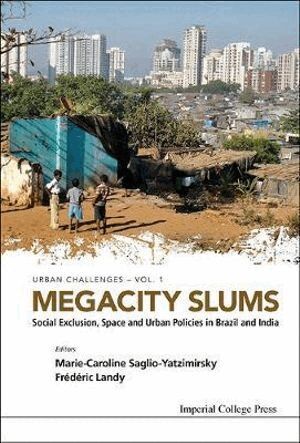
This book looks at slums and social exclusion in the four major megacities of India and Brazil, and analyzes the interrelationships between urban policies and housing and environmental issues. In Delhi, Mumbai, Rio de Janeiro and São Paulo, the challenges they pose have spurred public actors into action through housing, rehabilitation and conservation programs, not to mention civil society and the inhabitants themselves. On the other hand, one must wonder whether these challenges were partly created by the deficiencies of these very public actors and civil society, be it their lack of intervention (as advocates of government intervention would argue), or the flaws and inadequacies of their actions (as supporters of the free market would suggest). Are policies alleviating or aggravating social exclusion? This book explores these questions and more.
Inbunden, Engelska, 2018
1 406 kr
Skickas inom 10-15 vardagar
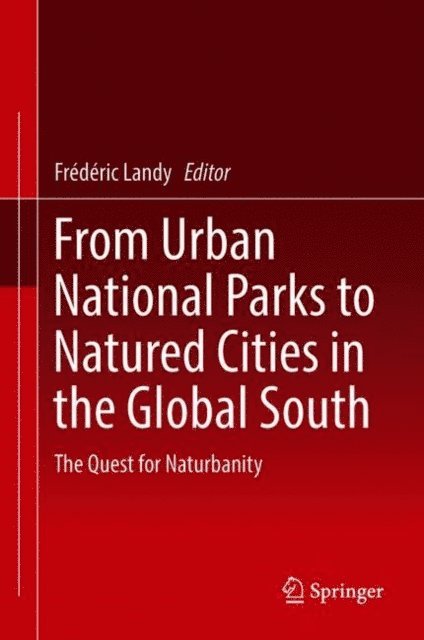
This important volume focuses on the sensitive issue of interrelationships between national parks situated near or within urban areas and their urban environment. It engages with both urban and conservation issues and and compares four national parks located in four large cities in the global South: Rio de Janeiro, Cape Town, Mumbai, and Nairobi. Though primarily undertaken as academic research, the project has intensively collaborated with the institutions in charge of these parks. The comparative structure of this volume is also original and unique: each of the chapters incorporates insight from all four sites as far as possible.The term “naturbanity” expresses the necessity for cities endowed with a national park to integrate it into their functioning. Conversely, such parks must take into account their location in an urban environment, both as a source of heavy pressures on nature and as a nexus of incentives to support their conservation. The principle of non-exclusivity, that is, neither the city nor the park has a right nor even the possibility to negate the other’s presence, summarizes the main argument of this book. Naturbanity thus blurs the old “modern” dichotomy of nature/culture: animals and human beings can often jump the physical and ideological walls separating many parks from the adjacent city. The 13 chapters and substantive introduction of this volume discuss various aspects of naturbanity: the histories of park creation; interaction between people and parks; urban governance and parks; urban conservation models; wildlife management; environmental education; and so on. This is a must-read for students and researchers interested in social ecology, social geography, conservation, urban planning and ecological policy.
E-bok
Engelska, 20181 258 kr
Läs direkt efter köp
This important volume focuses on the sensitive issue of interrelationships between national parks situated near or within urban areas and their urban environment. It engages with both urban and conservation issues and and compares four national parks located in four large cities in the global South: Rio de Janeiro, Cape Town, Mumbai, and Nairobi. Though primarily undertaken as academic research, the project has intensively collaborated with the institutions in charge of these parks. The comparative structure of this volume is also original and unique: each of the chapters incorporates insight from all four sites as far as possible.The term “naturbanity” expresses the necessity for cities endowed with a national park to integrate it into their functioning. Conversely, such parks must take into account their location in an urban environment, both as a source of heavy pressures on nature and as a nexus of incentives to support their conservation. The principle of non-exclusivity, that is, neither the city nor the park has a right nor even the possibility to negate the other’s presence, summarizes the main argument of this book. Naturbanity thus blurs the old “modern” dichotomy of nature/culture: animals and human beings can often jump the physical and ideological walls separating many parks from the adjacent city. The 13 chapters and substantive introduction of this volume discuss various aspects of naturbanity: the histories of park creation; interaction between people and parks; urban governance and parks; urban conservation models; wildlife management; environmental education; and so on. This is a must-read for students and researchers interested in social ecology, social geography, conservation, urban planning and ecological policy.
Häftad, Engelska, 2019
976 kr
Skickas inom 10-15 vardagar
This important volume focuses on the sensitive issue of interrelationships between national parks situated near or within urban areas and their urban environment. It engages with both urban and conservation issues and and compares four national parks located in four large cities in the global South: Rio de Janeiro, Cape Town, Mumbai, and Nairobi. Though primarily undertaken as academic research, the project has intensively collaborated with the institutions in charge of these parks. The comparative structure of this volume is also original and unique: each of the chapters incorporates insight from all four sites as far as possible.The term “naturbanity” expresses the necessity for cities endowed with a national park to integrate it into their functioning. Conversely, such parks must take into account their location in an urban environment, both as a source of heavy pressures on nature and as a nexus of incentives to support their conservation. The principle of non-exclusivity, that is, neither the city nor the park has a right nor even the possibility to negate the other’s presence, summarizes the main argument of this book. Naturbanity thus blurs the old “modern” dichotomy of nature/culture: animals and human beings can often jump the physical and ideological walls separating many parks from the adjacent city. The 13 chapters and substantive introduction of this volume discuss various aspects of naturbanity: the histories of park creation; interaction between people and parks; urban governance and parks; urban conservation models; wildlife management; environmental education; and so on. This is a must-read for students and researchers interested in social ecology, social geography, conservation, urban planning and ecological policy.