Fulvio Gini - Böcker
Visar alla böcker från författaren Fulvio Gini. Handla med fri frakt och snabb leverans.
2 produkter
2 produkter
Del 52 - Adaptive and Cognitive Dynamic Systems: Signal Processing, Learning, Communications and Control
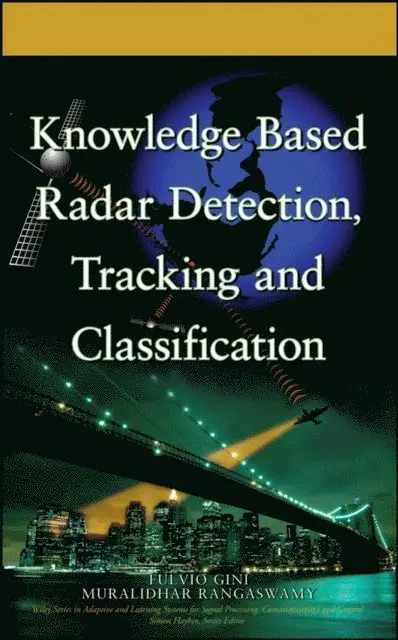
Knowledge Based Radar Detection, Tracking and Classification
Inbunden, Engelska, 2008
1 917 kr
Skickas inom 11-20 vardagar
Discover the technology for the next generation of radar systems Here is the first book that brings together the key concepts essential for the application of Knowledge Based Systems (KBS) to radar detection, tracking, classification, and scheduling. The book highlights the latest advances in both KBS and radar signal and data processing, presenting a range of perspectives and innovative results that have set the stage for the next generation of adaptive radar systems.The book begins with a chapter introducing the concept of Knowledge Based (KB) radar.The remaining nine chapters focus on current developments and recent applications of KB concepts to specific radar functions. Among the key topics explored are: Fundamentals of relevant KB techniques KB solutions as they apply to the general radar problem KBS applications for the constant false-alarm rate processor KB control for space-time adaptive processing KB techniques applied to existing radar systems Integrated end-to-end radar signals Data processing with overarching KB control All chapters are self-contained, enabling readers to focus on those topics of greatest interest. Each one begins with introductory remarks, moves on to detailed discussions and analysis, and ends with a list of references. Throughout the presentation, the authors offer examples of how KBS works and how it can dramatically improve radar performance and capability. Moreover, the authors forecast the impact of KB technology on future systems, including important civilian, military, and homeland defense applications.With chapters contributed by leading international researchers and pioneers in the field, this text is recommended for both students and professionals in radar and sonar detection, tracking, and classification and radar resource management.
2 076 kr
Skickas inom 3-6 vardagar
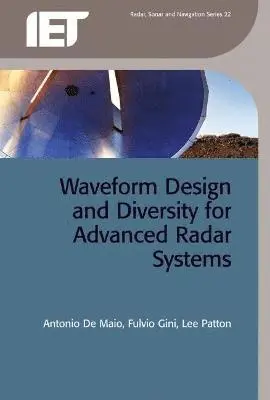
The phrase 'waveform design and diversity' refers to an area of radar research that focuses on novel transmission strategies as a way to improve performance in a variety of civil, defense and homeland security applications. Three basic principles are at the core of waveform diversity. First is the principle that any and all knowledge of the operational environment should be exploited in system design and operation. Second is the principle of the fully adaptive system, that is, that the system should respond to dynamic environmental conditions. Third is the principle of measurement diversity as a way to increase system robustness and expand the design trade space. Waveform design and diversity concepts can be found dating back to the mid-twentieth century. However, it has only been in the past decade or so, as academics and practitioners have rushed to exploit recent advances in radar hardware component technology, such as arbitrary waveform generation and linear power amplification, that waveform diversity has become a distinct area of research. The purpose of this book is to survey this burgeoning field in a way that brings together the diverse yet complementary topics that comprise it. The topics covered range from the purely theoretical to the applied, and the treatment of these topics ranges from tutorial explanation to forward-looking research discussions. The topics treated in this book include: classical waveform design and its extensions through information theory, multiple-input multiple-output systems, and the bio-inspired sensing perspective; the exploration of measurement diversity through distributed radar systems, in both cooperative and non-cooperative configurations; the optimal adaptation of the transmit waveform for target detection, tracking, and identification; and more. This representative cross-section of topics provides the reader with a chance to see the three principles of waveform diversity at work, and will hopefully point the way to further advances in this exciting area of research.