Fumiko Miyazaki – författare
Visar alla böcker från författaren Fumiko Miyazaki. Handla med fri frakt och snabb leverans.
5 produkter
5 produkter
Inbunden, Engelska, 2020
1 531 kr
Skickas inom 5-8 vardagar
In 1829, three women and three men were paraded through Osaka and crucified. Placards set up at the execution ground proclaimed their crime: they were devotees of the “pernicious creed” of Christianity. Middle-aged widows, the women made a living as mediums, healers, and fortune-tellers. Two of the men dabbled in divination; the third was a doctor who collected books in Chinese on Western learning and Christianity.This was a startling development. No one in Japan had been identified and punished as a Christian for more than a century, and now, avowed devotees of the proscribed sect had appeared in the very heart of the realm. Just decades before the arrival of Perry’s black ships and the fall of the Tokugawa shogunate, the incident reignited fears of Christians as evil sorcerers, plotting to undermine society and overthrow the country.Christian Sorcerers on Trial offers annotated translations of a range of sources on this sensational event, from the 1827 arrest of the alleged Christians through the case’s afterlife. The protagonists’ testimonies relate with striking detail their life histories, practices, and motivations. The record of deliberations in Edo and communications between Osaka and Edo officials illuminate the operation of the Tokugawa system of criminal justice. Retellings of the incident show how the story was transmitted and received. Translated and put in context by Fumiko Miyazaki, Kate Wildman Nakai, and Mark Teeuwen, the sources provide students and scholars alike with an extraordinarily rich picture of late Edo social life, religious practices, and judicial procedures.
Häftad, Engelska, 2020
389 kr
Skickas inom 5-8 vardagar
In 1829, three women and three men were paraded through Osaka and crucified. Placards set up at the execution ground proclaimed their crime: they were devotees of the “pernicious creed” of Christianity. Middle-aged widows, the women made a living as mediums, healers, and fortune-tellers. Two of the men dabbled in divination; the third was a doctor who collected books in Chinese on Western learning and Christianity.This was a startling development. No one in Japan had been identified and punished as a Christian for more than a century, and now, avowed devotees of the proscribed sect had appeared in the very heart of the realm. Just decades before the arrival of Perry’s black ships and the fall of the Tokugawa shogunate, the incident reignited fears of Christians as evil sorcerers, plotting to undermine society and overthrow the country.Christian Sorcerers on Trial offers annotated translations of a range of sources on this sensational event, from the 1827 arrest of the alleged Christians through the case’s afterlife. The protagonists’ testimonies relate with striking detail their life histories, practices, and motivations. The record of deliberations in Edo and communications between Osaka and Edo officials illuminate the operation of the Tokugawa system of criminal justice. Retellings of the incident show how the story was transmitted and received. Translated and put in context by Fumiko Miyazaki, Kate Wildman Nakai, and Mark Teeuwen, the sources provide students and scholars alike with an extraordinarily rich picture of late Edo social life, religious practices, and judicial procedures.
Häftad, Engelska, 2020
386 kr
Skickas inom 5-8 vardagar
Although scholars have emphasized the importance of women’s networks for civil society in twentieth-century Japan, Women and Networks in Nineteenth-Century Japan is the first book to tackle the subject for the contentious and consequential nineteenth century. The essays traverse the divide when Japan started transforming itself from a decentralized to a centralized government, from legally imposed restrictions on movement to the breakdown of travel barriers, and from ad hoc schooling to compulsory elementary school education. As these essays suggest, such changes had a profound impact on women and their roles in networks. Rather than pursue a common methodology, the authors take diverse approaches to this topic that open up fruitful avenues for further exploration.Most of the essays in this volume are by Japanese scholars; their inclusion here provides either an introduction to their work or the opportunity to explore their scholarship further. Because women are often invisible in historical documentation, the authors use a range of sources (such as diaries, letters, and legal documents) to reconstruct the familial, neighborhood, religious, political, work, and travel networks that women maintained, constructed, or found themselves in, sometimes against their will. In so doing, most but not all of the authors try to decenter historical narratives built on men’s activities and men’s occupational and status-based networks, and instead recover women’s activities in more localized groupings and personal associations.
Inbunden, Engelska, 2020
990 kr
Skickas
Although scholars have emphasized the importance of women’s networks for civil society in twentieth-century Japan, Women and Networks in Nineteenth-Century Japan is the first book to tackle the subject for the contentious and consequential nineteenth century. The essays traverse the divide when Japan started transforming itself from a decentralized to a centralized government, from legally imposed restrictions on movement to the breakdown of travel barriers, and from ad hoc schooling to compulsory elementary school education. As these essays suggest, such changes had a profound impact on women and their roles in networks. Rather than pursue a common methodology, the authors take diverse approaches to this topic that open up fruitful avenues for further exploration.Most of the essays in this volume are by Japanese scholars; their inclusion here provides either an introduction to their work or the opportunity to explore their scholarship further. Because women are often invisible in historical documentation, the authors use a range of sources (such as diaries, letters, and legal documents) to reconstruct the familial, neighborhood, religious, political, work, and travel networks that women maintained, constructed, or found themselves in, sometimes against their will. In so doing, most but not all of the authors try to decenter historical narratives built on men’s activities and men’s occupational and status-based networks, and instead recover women’s activities in more localized groupings and personal associations.
E-bok
Engelska, 2020587 kr
Läs direkt efter köp
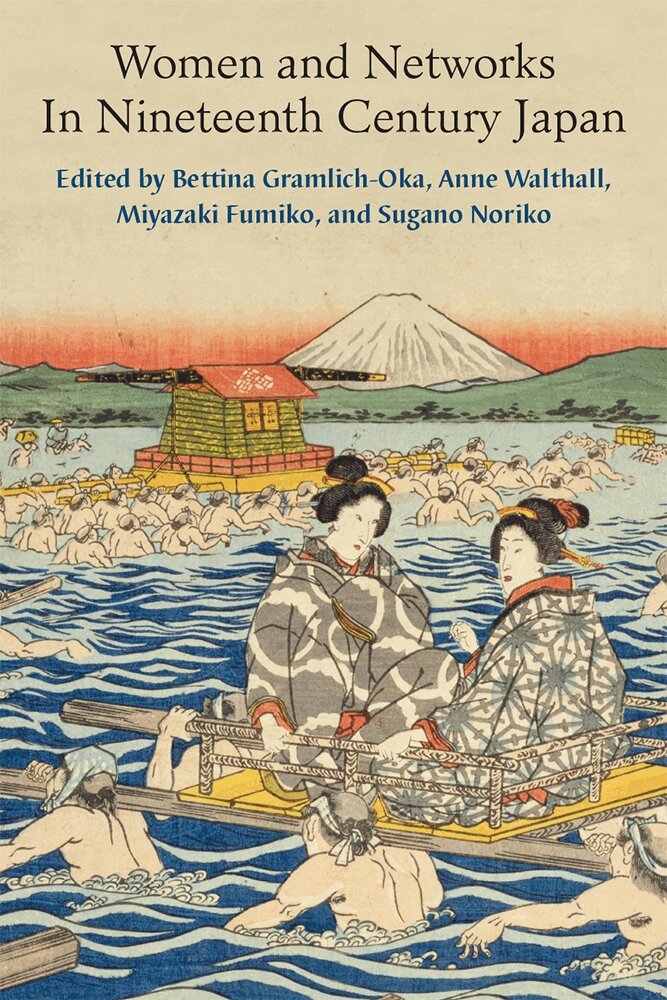
Although scholars have emphasized the importance of women’s networks for civil society in twentieth-century Japan, Women and Networks in Nineteenth-Century Japan is the first book to tackle the subject for the contentious and consequential nineteenth century. The essays traverse the divide when Japan started transforming itself from a decentralized to a centralized government, from legally imposed restrictions on movement to the breakdown of travel barriers, and from ad hoc schooling to compulsory elementary school education. As these essays suggest, such changes had a profound impact on women and their roles in networks. Rather than pursue a common methodology, the authors take diverse approaches to this topic that open up fruitful avenues for further exploration. Most of the essays in this volume are by Japanese scholars; their inclusion here provides either an introduction to their work or the opportunity to explore their scholarship further. Because women are often invisible in historical documentation, the authors use a range of sources (such as diaries, letters, and legal documents) to reconstruct the familial, neighborhood, religious, political, work, and travel networks that women maintained, constructed, or found themselves in, sometimes against their will. In so doing, most but not all of the authors try to decenter historical narratives built on men’s activities and men’s occupational and status-based networks, and instead recover women’s activities in more localized groupings and personal associations.