Fumin Zhang - Böcker
Visar alla böcker från författaren Fumin Zhang. Handla med fri frakt och snabb leverans.
5 produkter
5 produkter
1 179 kr
Skickas inom 10-15 vardagar
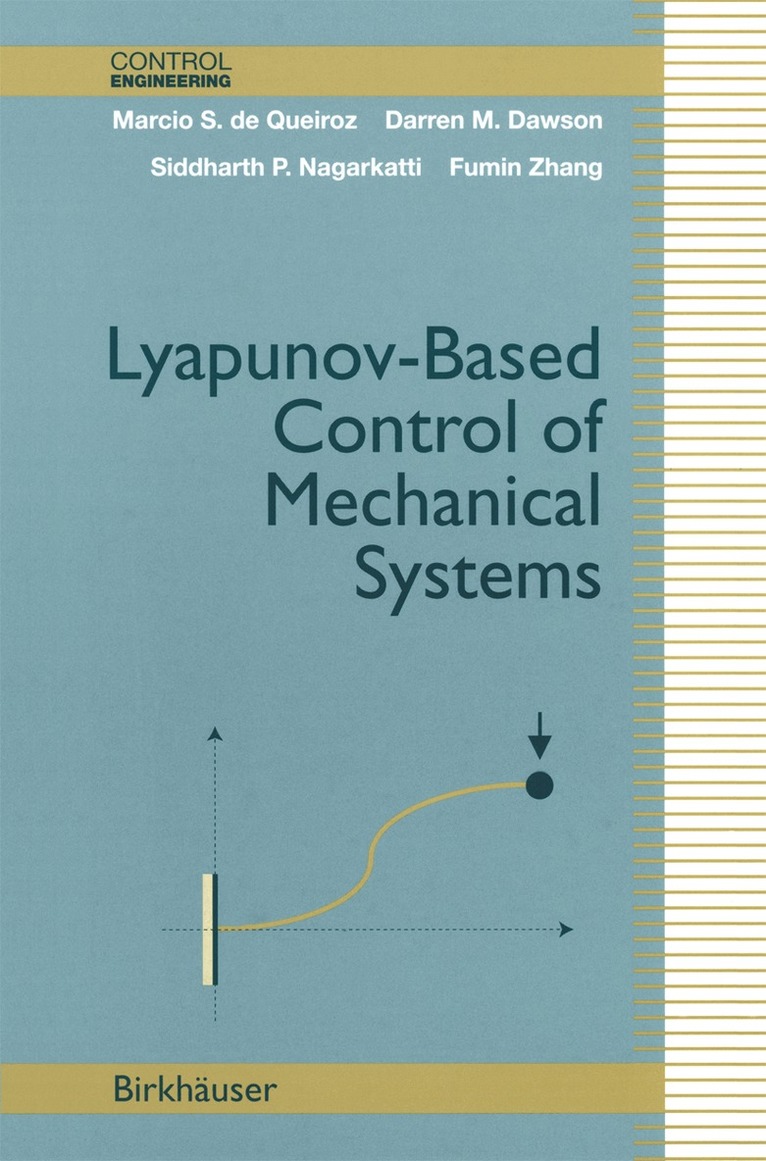
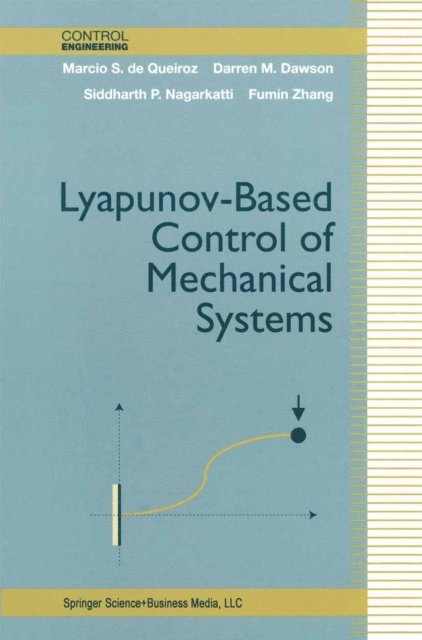
The design of nonlinear controllers for mechanical systems has been an ex tremely active area of research in the last two decades. From a theoretical point of view, this attention can be attributed to their interesting dynamic behavior, which makes them suitable benchmarks for nonlinear control the oreticians. On the other hand, recent technological advances have produced many real-world engineering applications that require the automatic con trol of mechanical systems. the mechanism for de Often, Lyapunov-based techniques are utilized as veloping different nonlinear control structures for mechanical systems. The allure of the Lyapunov-based framework for mechanical system control de sign can most likely be assigned to the fact that Lyapunov function candi dates can often be crafted from physical insight into the mechanics of the system. That is, despite the nonlinearities, couplings, and/or the flexible effects associated with the system, Lyapunov-based techniques can often be used to analyze the stability of the closed-loop system by using an energy like function as the Lyapunov function candidate. In practice, the design procedure often tends to be an iterative process that results in the death of many trees. That is, the controller and energy-like function are often constructed in concert to foster an advantageous stability property and/or robustness property. Fortunately, over the last 15 years, many system the ory and control researchers have labored in this area to produce various design tools that can be applied in a variety of situations.
1 321 kr
Skickas inom 11-20 vardagar
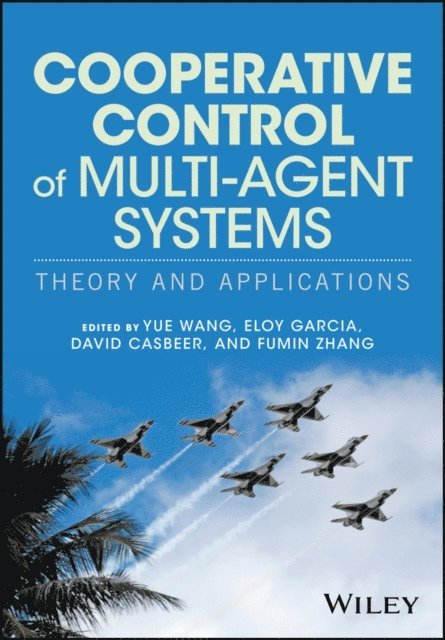
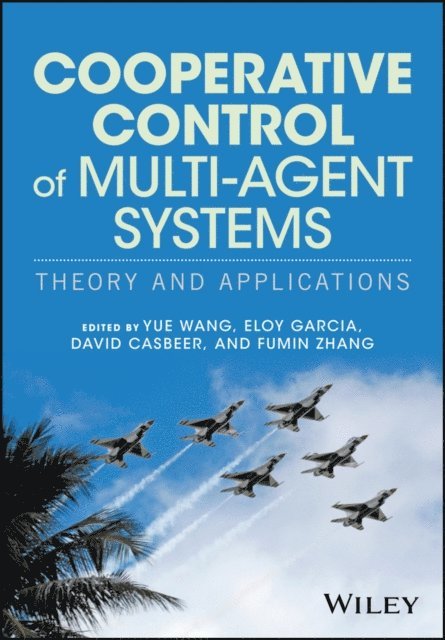
A comprehensive review of the state of the art in the control of multi-agent systems theory and applicationsThe superiority of multi-agent systems over single agents for the control of unmanned air, water and ground vehicles has been clearly demonstrated in a wide range of application areas. Their large-scale spatial distribution, robustness, high scalability and low cost enable multi-agent systems to achieve tasks that could not successfully be performed by even the most sophisticated single agent systems.Cooperative Control of Multi-Agent Systems: Theory and Applications provides a wide-ranging review of the latest developments in the cooperative control of multi-agent systems theory and applications. The applications described are mainly in the areas of unmanned aerial vehicles (UAVs) and unmanned ground vehicles (UGVs). Throughout, the authors link basic theory to multi-agent cooperative control practice — illustrated within the context of highly-realistic scenarios of high-level missions — without losing site of the mathematical background needed to provide performance guarantees under general working conditions. Many of the problems and solutions considered involve combinations of both types of vehicles. Topics explored include target assignment, target tracking, consensus, stochastic game theory-based framework, event-triggered control, topology design and identification, coordination under uncertainty and coverage control. Establishes a bridge between fundamental cooperative control theory and specific problems of interest in a wide range of applications areasIncludes example applications from the fields of space exploration, radiation shielding, site clearance, tracking/classification, surveillance, search-and-rescue and moreFeatures detailed presentations of specific algorithms and application frameworks with relevant commercial and military applicationsProvides a comprehensive look at the latest developments in this rapidly evolving field, while offering informed speculation on future directions for collective control systemsThe use of multi-agent system technologies in both everyday commercial use and national defense is certain to increase tremendously in the years ahead, making this book a valuable resource for researchers, engineers, and applied mathematicians working in systems and controls, as well as advanced undergraduates and graduate students interested in those areas.
1 179 kr
Skickas inom 10-15 vardagar
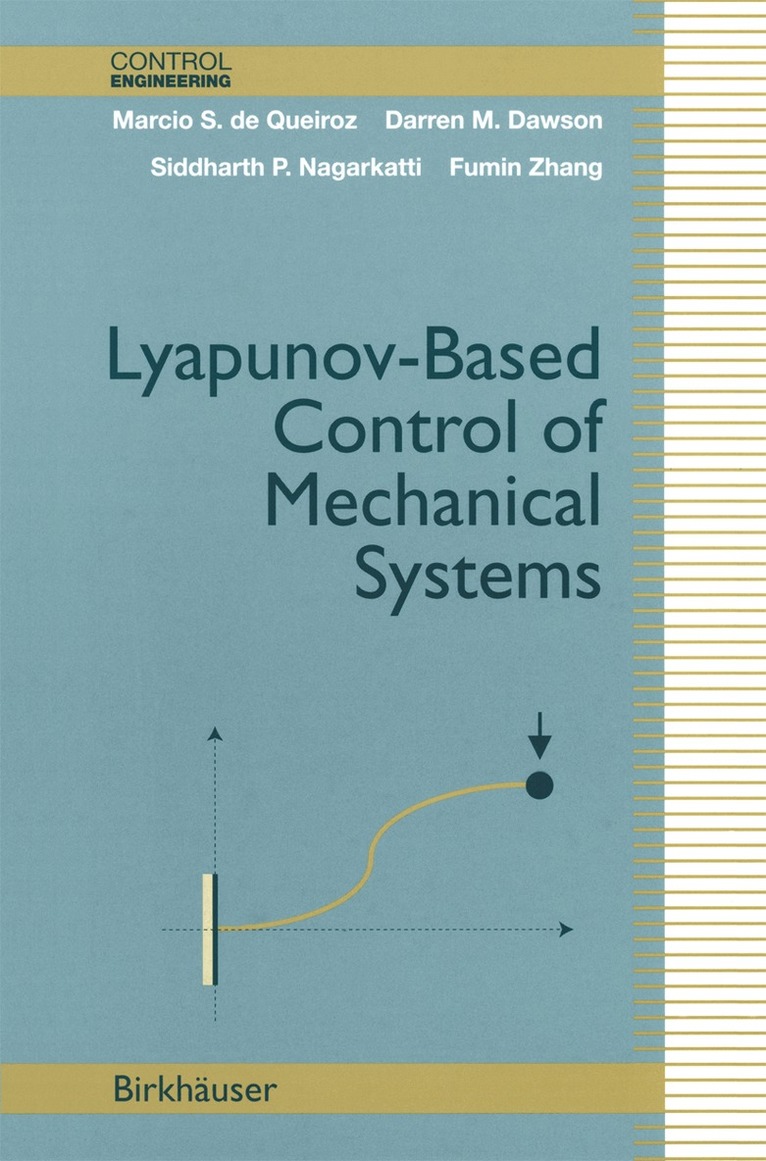
The design of nonlinear controllers for mechanical systems has been an ex tremely active area of research in the last two decades. From a theoretical point of view, this attention can be attributed to their interesting dynamic behavior, which makes them suitable benchmarks for nonlinear control the oreticians. On the other hand, recent technological advances have produced many real-world engineering applications that require the automatic con trol of mechanical systems. the mechanism for de Often, Lyapunov-based techniques are utilized as veloping different nonlinear control structures for mechanical systems. The allure of the Lyapunov-based framework for mechanical system control de sign can most likely be assigned to the fact that Lyapunov function candi dates can often be crafted from physical insight into the mechanics of the system. That is, despite the nonlinearities, couplings, and/or the flexible effects associated with the system, Lyapunov-based techniques can often be used to analyze the stability of the closed-loop system by using an energy like function as the Lyapunov function candidate. In practice, the design procedure often tends to be an iterative process that results in the death of many trees. That is, the controller and energy-like function are often constructed in concert to foster an advantageous stability property and/or robustness property. Fortunately, over the last 15 years, many system the ory and control researchers have labored in this area to produce various design tools that can be applied in a variety of situations.
1 582 kr
Skickas inom 10-15 vardagar
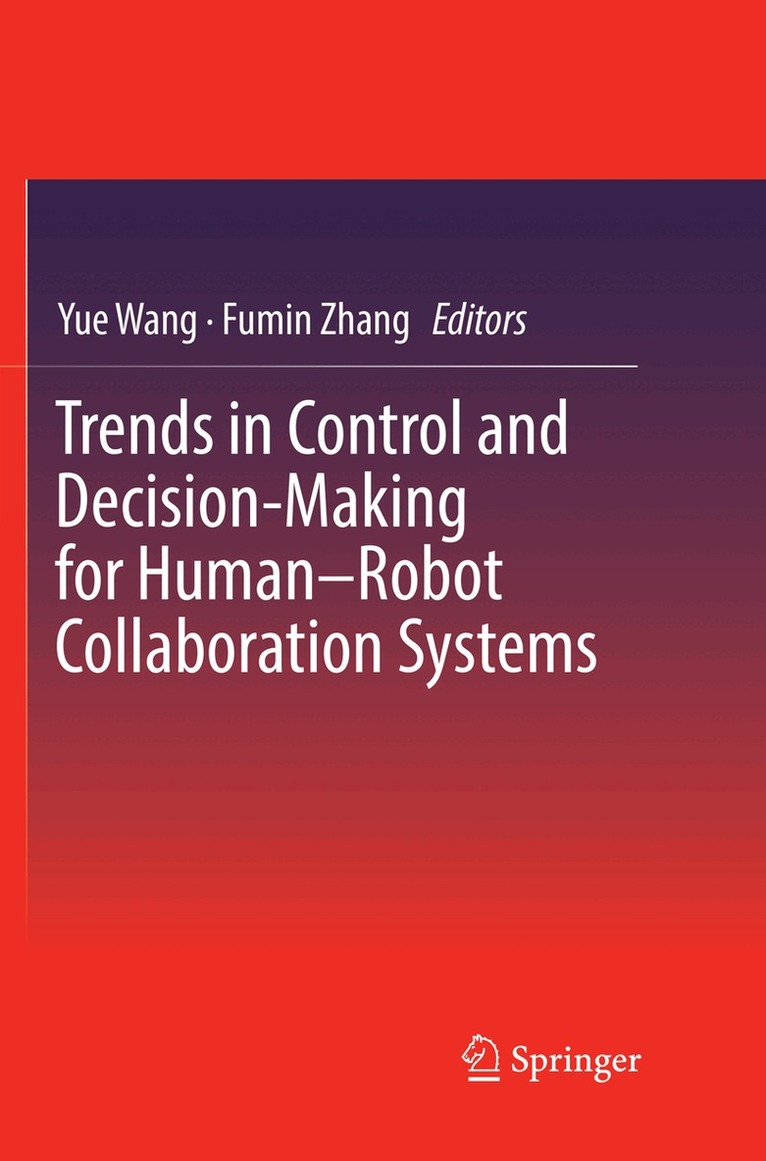
This book provides an overview of recent research developments in the automation and control of robotic systems that collaborate with humans. A measure of human collaboration being necessary for the optimal operation of any robotic system, the contributors exploit a broad selection of such systems to demonstrate the importance of the subject, particularly where the environment is prone to uncertainty or complexity. They show how such human strengths as high-level decision-making, flexibility, and dexterity can be combined with robotic precision, and ability to perform task repetitively or in a dangerous environment.The book focuses on quantitative methods and control design for guaranteed robot performance and balanced human experience from both physical human-robot interaction and social human-robot interaction. Its contributions develop and expand upon material presented at various international conferences. They are organized into three parts covering:one-human–one-robot collaboration;one-human–multiple-robot collaboration; andhuman–swarm collaboration.Individual topic areas include resource optimization (human and robotic), safety in collaboration, human trust in robot and decision-making when collaborating with robots, abstraction of swarm systems to make them suitable for human control, modeling and control of internal force interactions for collaborative manipulation, and the sharing of control between human and automated systems, etc. Control and decision-making algorithms feature prominently in the text, importantly within the context of human factors and the constraints they impose. Applications such as assistive technology, driverless vehicles, cooperative mobile robots, manufacturing robots and swarm robots are considered. Illustrative figures and tables are provided throughout the book.Researchers and students working in controls, and the interaction of humans and robots will learn new methods for human–robot collaboration from this book and will find the cutting edge of the subject described in depth.
1 590 kr
Skickas inom 10-15 vardagar
This book provides an overview of recent research developments in the automation and control of robotic systems that collaborate with humans. A measure of human collaboration being necessary for the optimal operation of any robotic system, the contributors exploit a broad selection of such systems to demonstrate the importance of the subject, particularly where the environment is prone to uncertainty or complexity. They show how such human strengths as high-level decision-making, flexibility, and dexterity can be combined with robotic precision, and ability to perform task repetitively or in a dangerous environment.The book focuses on quantitative methods and control design for guaranteed robot performance and balanced human experience from both physical human-robot interaction and social human-robot interaction. Its contributions develop and expand upon material presented at various international conferences. They are organized into three parts covering:one-human–one-robot collaboration;one-human–multiple-robot collaboration; andhuman–swarm collaboration.Individual topic areas include resource optimization (human and robotic), safety in collaboration, human trust in robot and decision-making when collaborating with robots, abstraction of swarm systems to make them suitable for human control, modeling and control of internal force interactions for collaborative manipulation, and the sharing of control between human and automated systems, etc. Control and decision-making algorithms feature prominently in the text, importantly within the context of human factors and the constraints they impose. Applications such as assistive technology, driverless vehicles, cooperative mobile robots, manufacturing robots and swarm robots are considered. Illustrative figures and tables are provided throughout the book.Researchers and students working in controls, and the interaction of humans and robots will learn new methods for human–robot collaboration from this book and will find the cutting edge of the subject described in depth.