G E Gorman - Böcker
Visar alla böcker från författaren G E Gorman. Handla med fri frakt och snabb leverans.
5 produkter
5 produkter
Information Needs Analysis
Principles and practice in information organizations
Inbunden, Engelska, 2017
2 392 kr
Skickas inom 5-8 vardagar
If you want to provide an information service that truly fulfils your users' needs, this book is essential reading. Analysing and assessing the information needs of clients is key to the provision of effective service and appropriate collections in both face-to-face and virtual library services. The importance of information needs analysis is widely recognized by information professionals, but currently there is little substantive, detailed work in the professional literature devoted to this important topic. This new book is designed to fill that gap, by supporting practitioners in developing an information needs analysis strategy, and offering the necessary professional skills and techniques to do so. It will offer guidance to team leaders and senior managers in all areas of library work, especially those involved in collection management, service provision and web development, and is equally applicable to the needs of academic, public, government, commercial and other more specialized library and information services. The text adopts a hands-on, jargon-free approach, and includes relevant examples, case studies, reader activities and sources of further reading. Key areas covered include:what is information needs analysis?how is needs analysis conducted?what are the varieties of needs analysis?how are analyses evaluated and reported? Readership: The book will be essential reading for library and information practitioners, team leaders and senior managers. It will also be a core text on course reading lists in departments of library and information studies.
141 kr
Skickas
This established text is the only introduction to qualitative research methodologies in the field of library and information management. Its extensive coverage encompasses all aspects of qualitative research work from conception to completion, and all types of study in a variety of settings from multi-site projects to data organization. The book features many case studies and examples, and offers a comprehensive manual of practice designed for LIS professionals. This new edition has been thoroughly revised and includes three new chapters. It has been updated to take account of the substantial growth in the amount and quality of web-based information relevant to qualitative research methods and practice, and the many developments in software applications and resources. The authors have identified a clear need for a new chapter on the evaluation of existing research, as a gateway into new research for information professionals. The final chapter, 'Human Resources In Knowledge Management', takes the form of a model case study, and is an 'ideal' qualitative investigation in an information setting. It exemplifies many of the approaches to qualitative research discussed in earlier chapters. Readership: Directed primarily at the beginner researcher, this book also offers a practical refresher in this important area for the more experienced researcher. It is a useful tool for all practitioners and researchers in information organizations, whether libraries, archives, knowledge management centres, record management centres, or any other type of information service provider.
Information Needs Analysis
Principles and practice in information organizations
Häftad, Engelska, 2014
1 163 kr
Skickas inom 5-8 vardagar
If you want to provide an information service that truly fulfils your users' needs, this book is essential reading. Analysing and assessing the information needs of clients is key to the provision of effective service and appropriate collections in both face-to-face and virtual library services. The importance of information needs analysis is widely recognized by information professionals, but currently there is little substantive, detailed work in the professional literature devoted to this important topic. This new book is designed to fill that gap, by supporting practitioners in developing an information needs analysis strategy, and offering the necessary professional skills and techniques to do so. It will offer guidance to team leaders and senior managers in all areas of library work, especially those involved in collection management, service provision and web development, and is equally applicable to the needs of academic, public, government, commercial and other more specialized library and information services. The text adopts a hands-on, jargon-free approach, and includes relevant examples, case studies, reader activities and sources of further reading. Key areas covered include:what is information needs analysis?how is needs analysis conducted?what are the varieties of needs analysis?how are analyses evaluated and reported? Readership: The book will be essential reading for library and information practitioners, team leaders and senior managers. It will also be a core text on course reading lists in departments of library and information studies.
1 203 kr
Tillfälligt slut
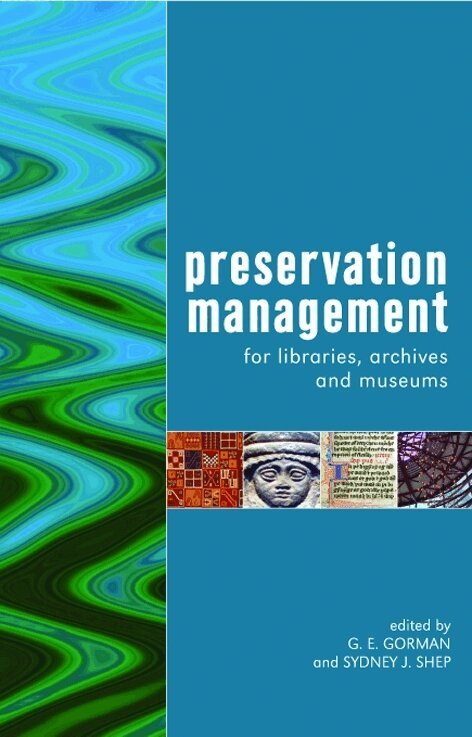
Memory institutions such as libraries, archives, galleries and museums all share pressing concerns about preserving heritage, whether in the form of material and documentary cultural artefacts in collections, or in the form of new digitally born material. Recent incidents of natural disaster and cultural genocide, together with the global turn to digitization, have forced librarians, archivists and curators to rethink and restructure their primary modes of operation. Preservation management now sits at the top of the agenda for heritage institutions around the world, as collection development policies and practices are negotiated between libraries, museums, archives, funding agencies and governments. Historically separate cultural institutions are now converging to share limited resources, develop compatible ideologies and co-ordinate distributed collections. This forward-looking collection charts the diversity of preservation management in the contemporary information landscape, and offers guidance on preservation methods for the sustainability of collections from a range of international experts. The authors are connected to a wide international network of professional associations and NGOs, and have been selected not only for their specific expertise, but for the contribution they are making to the future of preservation management. The chapters cover:managing the documentary heritage: issues for the present and futurepreservation policy and planningintangible heritage: museums and preservationsurrogacy and the artefactmoving with the times in search of permanencea valuation model for paper conservation researchpreservation of audiovisual media: traditional to interactive formatschallenges of managing the digitally born artefactpreserving cultural heritage in times of conflictaccess and the social contract in memory institutionsredefining ‘the collection’ in the 21st century. Readership: There is urgent need for heritage management initiatives and robust disaster planning that will safeguard our cultural heritage and recognize the right of the end-user to ownership of it. This is an informed and essential guide to managing collection and preservation strategies for anyone working in the library, archive, museum or broader cultural heritage sectors.
Managing Information Resources in Libraries
Collection Management in Theory and Practice
Häftad, Engelska, 2006
1 033 kr
Skickas inom 5-8 vardagar
Libraries and information services are being transformed by the increasing availability of electronic information. The management of information resources in libraries is of greater, not lesser importance in the digital world. Librarians are well placed to provide leadership in the new century as they draw on enduring principles and updated skills to provide organized access to worthwhile information in order to meet the needs of library clients. Developments in this area have been so rapid in the last few years that no current work on collection management covers it adequately. This book fills that gap by presenting an overall view of the information resources that library clients are likely to require in the 21st century. It is an accessible practice-based guide encompassing all areas of collection management, but with a particular focus upon what is new or different from traditional approaches. Integrating discussion of available electronic information sources throughout, it covers: • collection management in the organizational context • collection development policies • library co-operation and networking • selection principles and resources • principles of acquisition, access and licensing • budget management • collection evaluation and review • preservation and weeding of library resources. The book features many examples and case studies, together with focus questions at the start of each chapter and suggestions for further reading at the end. It also includes a detailed annotated bibliography. Readership: Written in a straightforward and accessible way, this is essential reading for acquisitions librarians and collection managers in all types of libraries, as well as for students of library and information studies.