Gabriel Ciobanu – författare
Visar alla böcker från författaren Gabriel Ciobanu. Handla med fri frakt och snabb leverans.
19 produkter
Foundations of Finitely Supported Structures
A Set Theoretical Viewpoint
Av Andrei Alexandru, Gabriel Ciobanu
Inbunden, 2020
1096 kr
Lägg i varukorg
This book presents a set theoretical development for the foundations of the theory of atomic and finitely supported structures. It analyzes whether a classical result can be adequately reformulated by replacing a 'non-atomic structure' with an 'atomic, finitely supported structure’. It also …
Foundations of Finitely Supported Structures
A Set Theoretical Viewpoint
Av Gabriel Ciobanu, Andrei Alexandru
E-bok, 2020
1413 kr
Lägg i varukorg
This book presents a set theoretical development for the foundations of the theory of atomic and finitely supported structures. It analyzes whether a classical result can be adequately reformulated by replacing a ''non-atomic structure'' with an ''atomic, finitely supported structure’. It also …
Foundations of Finitely Supported Structures
A Set Theoretical Viewpoint
Av Andrei Alexandru, Gabriel Ciobanu
Häftad, 2021
1096 kr
Lägg i varukorg
This book presents a set theoretical development for the foundations of the theory of atomic and finitely supported structures. It analyzes whether a classical result can be adequately reformulated by replacing a 'non-atomic structure' with an 'atomic, finitely supported structure’. It also …
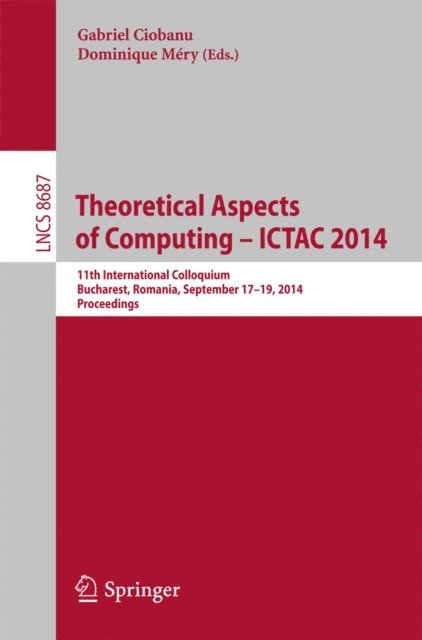
Theoretical Aspects of Computing – ICTAC 2014
11th International Colloquium, Bucharest, Romania, September 17-19, 2014. Proceedings
Av Gabriel Ciobanu, Dominique Méry
Häftad, 2014
552 kr
Lägg i varukorg
This book constitutes the refereed proceedings of the 11th International Colloquium on Theoretical Aspects of Computing, ICTAC 2014 held in Bucharest, Romania, in September 2014. The 25 revised full papers presented together with three invited talks were carefully reviewed and selected from 74 …
Theoretical Aspects of Computing - ICTAC 2014
11th International Colloquium, Bucharest, Romania, September 17-19, 2014. Proceedings
Av Dominique Mery, Gabriel Ciobanu
E-bok, 2014
718 kr
Lägg i varukorg
This book constitutes the refereed proceedings of the 11th International Colloquium on Theoretical Aspects of Computing, ICTAC 2014 held in Bucharest, Romania, in September 2014. The 25 revised full papers presented together with three invited talks were carefully reviewed and selected from 74 …
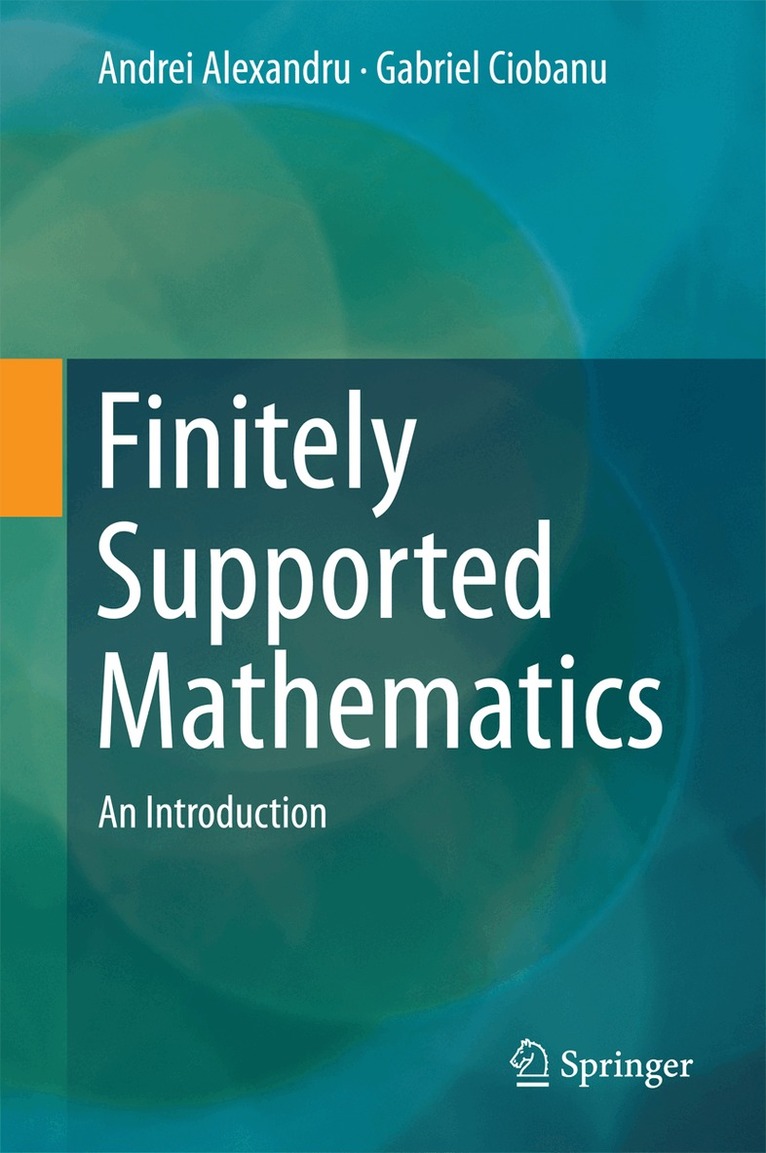
Finitely Supported Mathematics
An Introduction
Av Andrei Alexandru, Gabriel Ciobanu
Inbunden, 2016
552 kr
Lägg i varukorg
In this book the authors present an alternative set theory dealing with a more relaxed notion of infiniteness, called finitely supported mathematics (FSM). It has strong connections to the Fraenkel-Mostowski (FM) permutative model of Zermelo-Fraenkel (ZF) set theory with atoms and to the theory of …
Finitely Supported Mathematics
An Introduction
Av Gabriel Ciobanu, Andrei Alexandru
E-bok, 2016
734 kr
Lägg i varukorg
In this book the authors present an alternative set theory dealing with a more relaxed notion of infiniteness, called finitely supported mathematics (FSM). It has strong connections to the Fraenkel-Mostowski (FM) permutative model of Zermelo-Fraenkel (ZF) set theory with atoms and to the theory of …
Finitely Supported Mathematics
An Introduction
Av Andrei Alexandru, Gabriel Ciobanu
Häftad, 2018
552 kr
Lägg i varukorg
In this book the authors present an alternative set theory dealing with a more relaxed notion of infiniteness, called finitely supported mathematics (FSM). It has strong connections to the Fraenkel-Mostowski (FM) permutative model of Zermelo-Fraenkel (ZF) set theory with atoms and to the theory of …
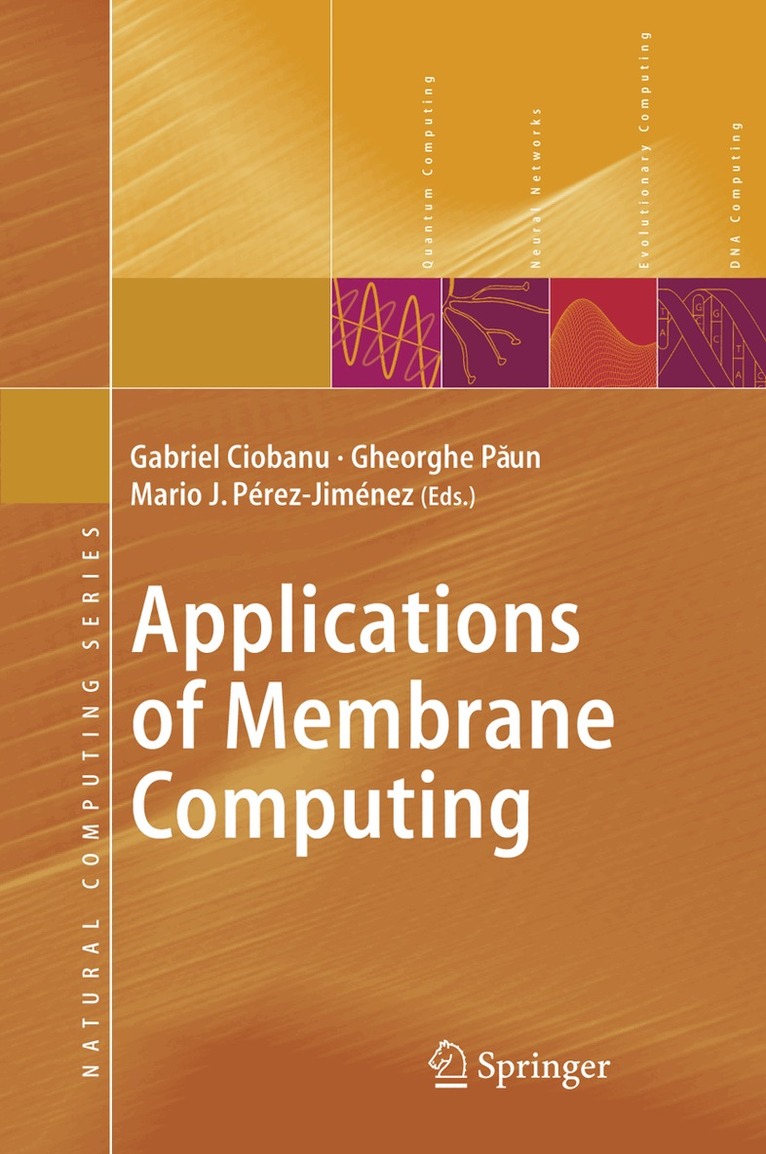
Applications of Membrane Computing
Av Gabriel Ciobanu, Mario J. Pérez-Jiménez m. fl.
Inbunden, 2005
1129 kr
Lägg i varukorg
Membrane computing is a branch of natural computing which investigates computing models abstracted from the structure and functioning of living cells and from their interactions in tissues or higher-order biological structures. The models considered, called membrane systems (P systems), are …
Applications of Membrane Computing
Av Gheorghe Paun, Mario J. Perez-Jimenez m. fl.
E-bok, 2007
1459 kr
Lägg i varukorg
Membrane computing is a branch of natural computing which investigates computing models abstracted from the structure and functioning of living cells and from their interactions in tissues or higher-order biological structures. The models considered, called membrane systems (P systems), are …
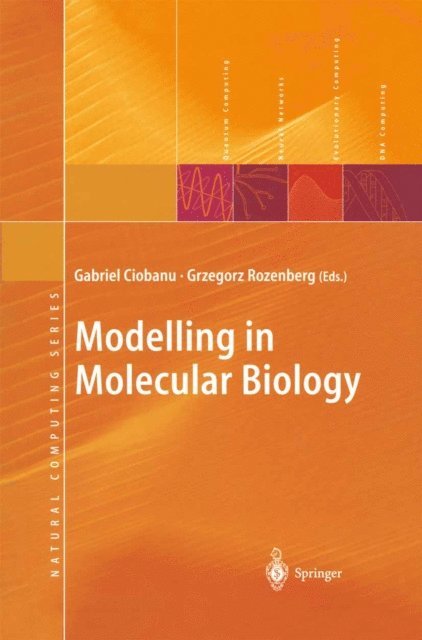
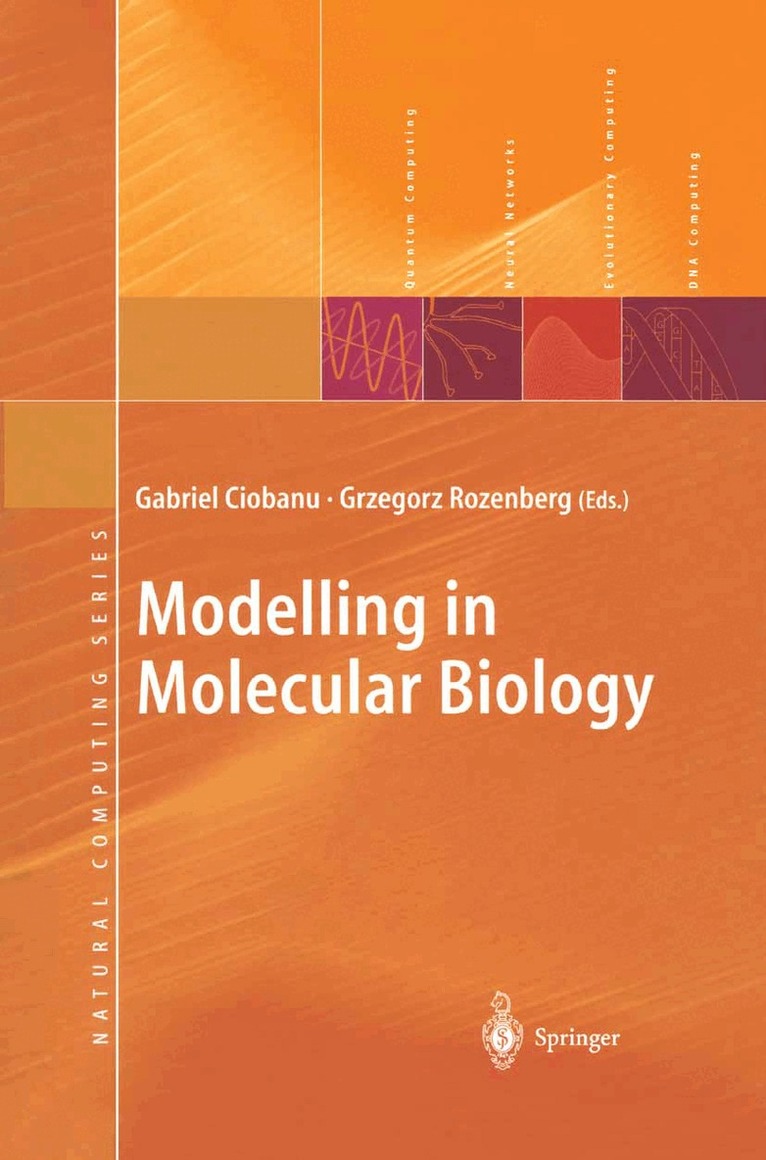
Modelling in Molecular Biology
Av Gabriel Ciobanu, Grzegorz Rozenberg
Inbunden, 2004
1641 kr
Lägg i varukorg
This volume is based on the workshop“Modelling in Molecular Biology” that tookplacein2002inSingapore. Themaingoaloftheworkshopwastopresent models/methods used in solving some fundamental problems in biosciences. The volume consists of a selection of papers presented at the workshop as well as of …
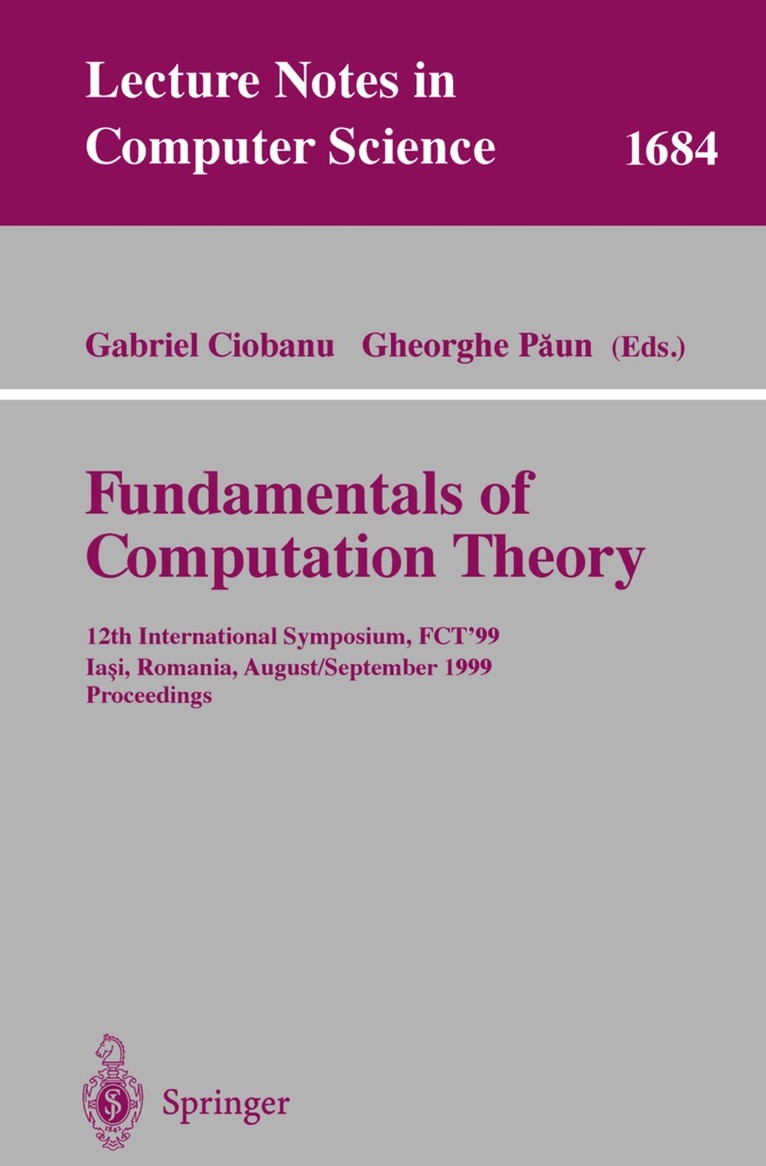
Fundamentals of Computation Theory
12th International Symposium, FCT''99 Iasi, Romania, August 30 - September 3, 1999 Proceedings
Av Gheorghe Paun, Gabriel Ciobanu
E-bok, 2003
1427 kr
Lägg i varukorg
This book constitutes the refereed proceedings of the 12th International Symposium on Fundamentals of Computation Theory, FCT ''99, held in Iasi, Romania in August/September 1999. The 42 revised full papers presented together with four invited papers were carefully selected from a total of 102 …
Fundamentals of Computation Theory
12th International Symposium, FCT'99 Iasi, Romania, August 30 - September 3, 1999 Proceedings
Av Gabriel Ciobanu, Gheorghe Paun
Häftad, 1999
1129 kr
Lägg i varukorg
This book constitutes the refereed proceedings of the 12th International Symposium on Fundamentals of Computation Theory, FCT '99, held in Iasi, Romania in August/September 1999.The 42 revised full papers presented together with four invited papers were carefully selected from a total of 102 …
Applications of Membrane Computing
Av Gabriel Ciobanu, Mario J. Pérez-Jiménez m. fl.
Häftad, 2010
1096 kr
Lägg i varukorg
Membrane computing is a branch of natural computing which investigates computing models abstracted from the structure and functioning of living cells and from their interactions in tissues or higher-order biological structures. The models considered, called membrane systems (P systems), are …
Modelling in Molecular Biology
Av Grzegorz Rozenberg, Gabriel Ciobanu
E-bok, 2012
2065 kr
Lägg i varukorg
This volume is based on the workshop“Modelling in Molecular Biology” that tookplacein2002inSingapore. Themaingoaloftheworkshopwastopresent models/methods used in solving some fundamental problems in biosciences. The volume consists of a selection of papers presented at the workshop as well as of …
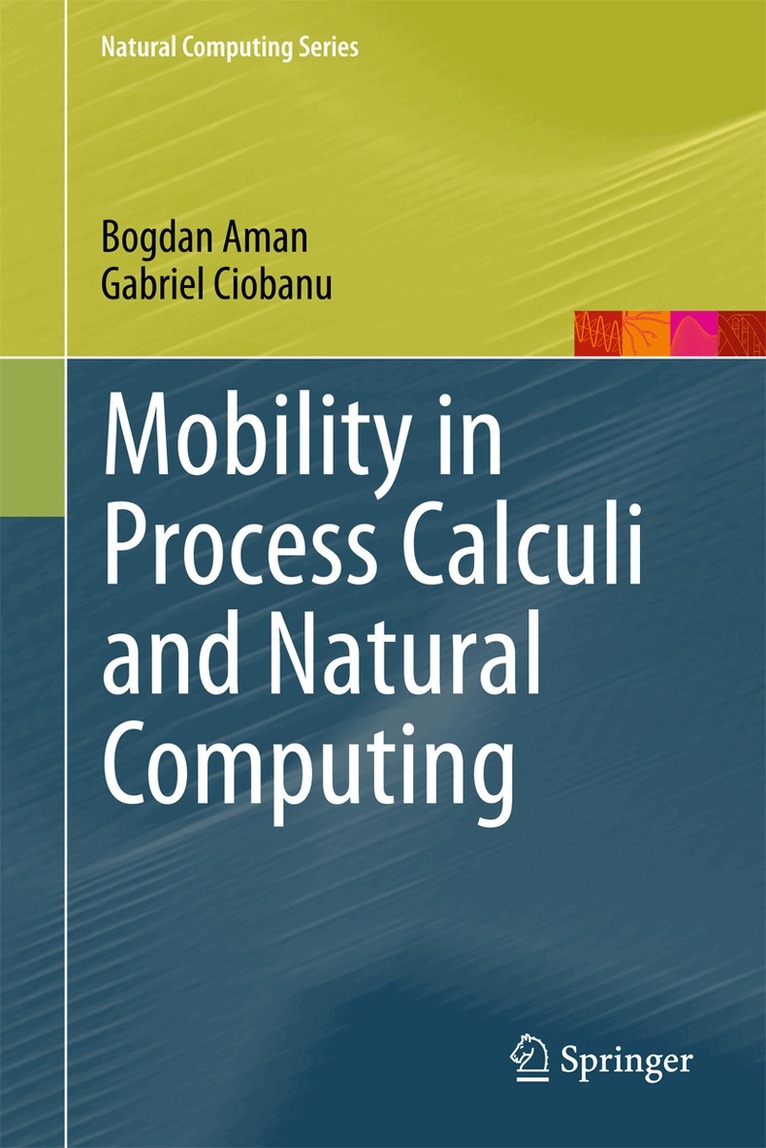
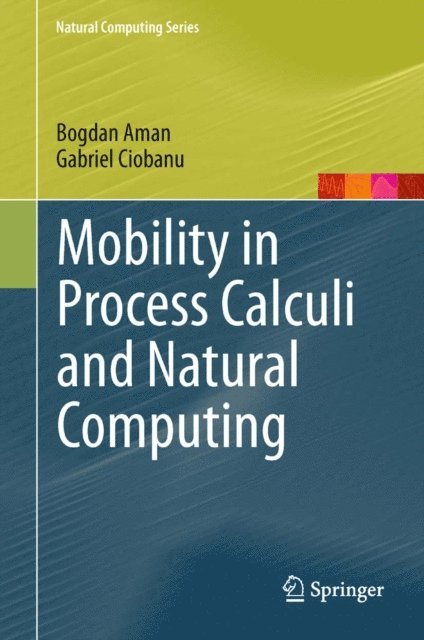
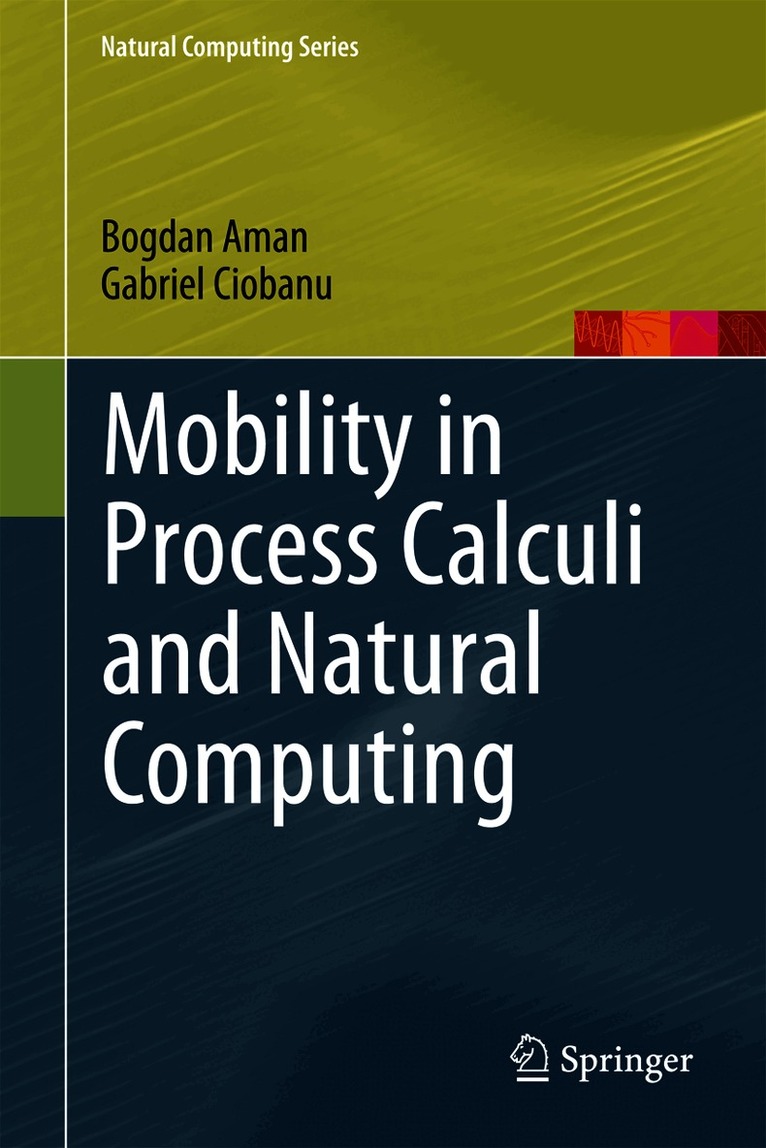
Mobility in Process Calculi and Natural Computing
Av Bogdan Aman, Gabriel Ciobanu
Inbunden, 2011
1129 kr
Lägg i varukorg
The design of formal calculi in which fundamental concepts underlying interactive systems can be described and studied has been a central theme of theoretical computer science in recent decades, while membrane computing, a rule-based formalism inspired by biological cells, is a more recent field …
Mobility in Process Calculi and Natural Computing
Av Gabriel Ciobanu, Bogdan Aman
E-bok, 2011
1427 kr
Lägg i varukorg
The design of formal calculi in which fundamental concepts underlying interactive systems can be described and studied has been a central theme of theoretical computer science in recent decades, while membrane computing, a rule-based formalism inspired by biological cells, is a more recent field …
Mobility in Process Calculi and Natural Computing
Av Bogdan Aman, Gabriel Ciobanu
Häftad, 2014
1129 kr
Lägg i varukorg
The design of formal calculi in which fundamental concepts underlying interactive systems can be described and studied has been a central theme of theoretical computer science in recent decades, while membrane computing, a rule-based formalism inspired by biological cells, is a more recent field …
Modelling in Molecular Biology
Av Gabriel Ciobanu, Grzegorz Rozenberg
Häftad, 2012
1641 kr
Lägg i varukorg
This volume is based on the workshop“Modelling in Molecular Biology” that tookplacein2002inSingapore. Themaingoaloftheworkshopwastopresent models/methods used in solving some fundamental problems in biosciences. The volume consists of a selection of papers presented at the workshop as well as of …