Gabriela Nicolescu - Böcker
Visar alla böcker från författaren Gabriela Nicolescu. Handla med fri frakt och snabb leverans.
13 produkter
13 produkter
2 374 kr
Skickas inom 10-15 vardagar
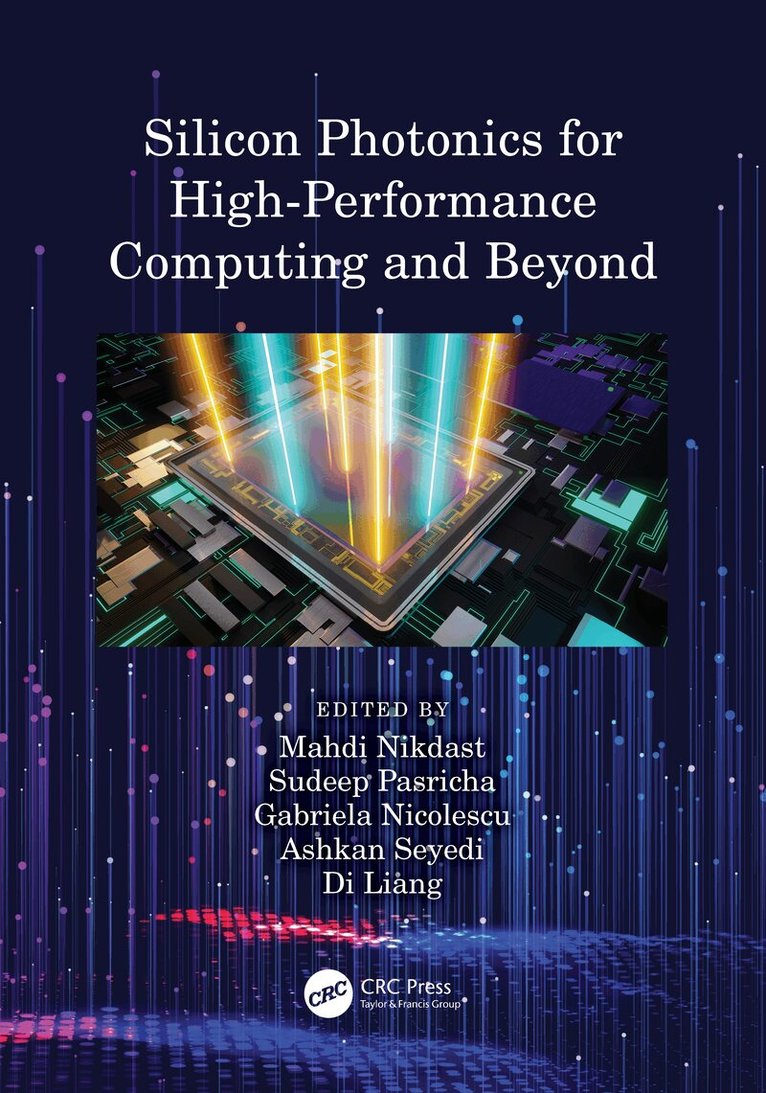
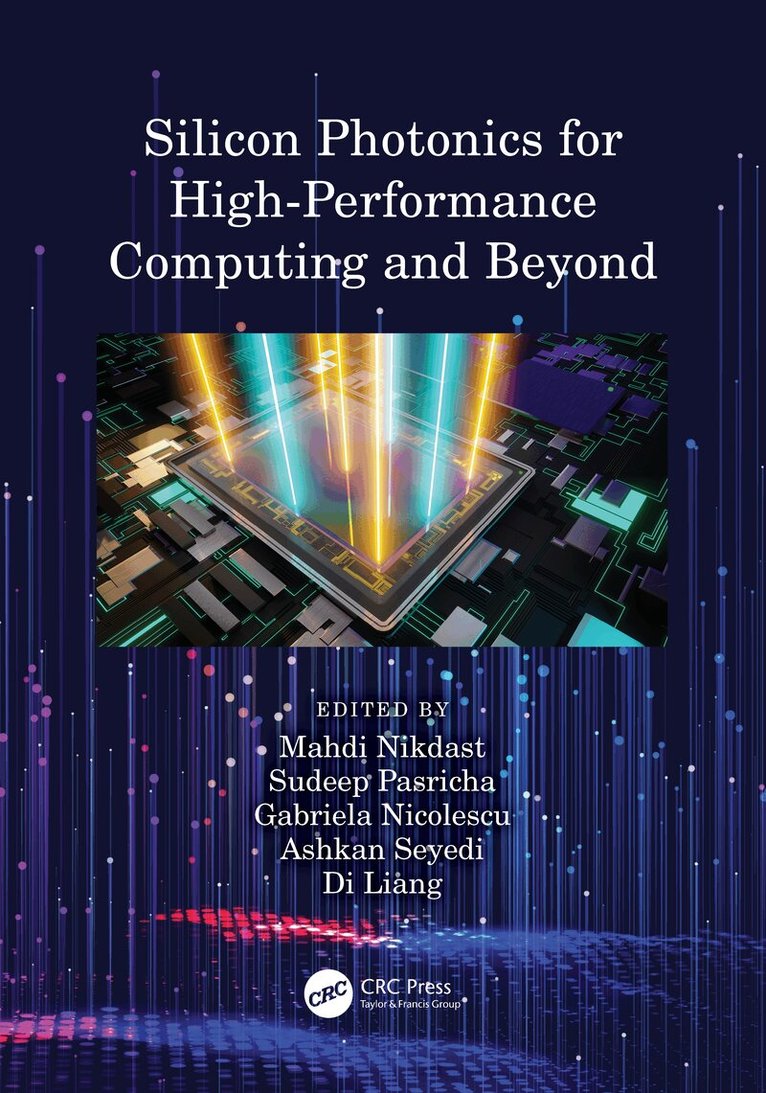
Silicon photonics is beginning to play an important role in driving innovations in communication and computation for an increasing number of applications, from health care and biomedical sensors to autonomous driving, datacenter networking, and security. In recent years, there has been a significant amount of effort in industry and academia to innovate, design, develop, analyze, optimize, and fabricate systems employing silicon photonics, shaping the future of not only Datacom and telecom technology but also high-performance computing and emerging computing paradigms, such as optical computing and artificial intelligence. Different from existing books in this area, Silicon Photonics for High-Performance Computing and Beyond presents a comprehensive overview of the current state-of-the-art technology and research achievements in applying silicon photonics for communication and computation. It focuses on various design, development, and integration challenges, reviews the latest advances spanning materials, devices, circuits, systems, and applications. Technical topics discussed in the book include:• Requirements and the latest advances in high-performance computing systems• Device- and system-level challenges and latest improvements to deploy silicon photonics in computing systems• Novel design solutions and design automation techniques for silicon photonic integrated circuits• Novel materials, devices, and photonic integrated circuits on silicon• Emerging computing technologies and applications based on silicon photonicsSilicon Photonics for High-Performance Computing and Beyond presents a compilation of 19 outstanding contributions from academic and industry pioneers in the field. The selected contributions present insightful discussions and innovative approaches to understand current and future bottlenecks in high-performance computing systems and traditional computing platforms, and the promise of silicon photonics to address those challenges. It is ideal for researchers and engineers working in the photonics, electrical, and computer engineering industries as well as academic researchers and graduate students (M.S. and Ph.D.) in computer science and engineering, electronic and electrical engineering, applied physics, photonics, and optics.
913 kr
Skickas inom 10-15 vardagar
Silicon photonics is beginning to play an important role in driving innovations in communication and computation for an increasing number of applications, from health care and biomedical sensors to autonomous driving, datacenter networking, and security. In recent years, there has been a significant amount of effort in industry and academia to innovate, design, develop, analyze, optimize, and fabricate systems employing silicon photonics, shaping the future of not only Datacom and telecom technology but also high-performance computing and emerging computing paradigms, such as optical computing and artificial intelligence. Different from existing books in this area, Silicon Photonics for High-Performance Computing and Beyond presents a comprehensive overview of the current state-of-the-art technology and research achievements in applying silicon photonics for communication and computation. It focuses on various design, development, and integration challenges, reviews the latest advances spanning materials, devices, circuits, systems, and applications. Technical topics discussed in the book include:• Requirements and the latest advances in high-performance computing systems• Device- and system-level challenges and latest improvements to deploy silicon photonics in computing systems• Novel design solutions and design automation techniques for silicon photonic integrated circuits• Novel materials, devices, and photonic integrated circuits on silicon• Emerging computing technologies and applications based on silicon photonicsSilicon Photonics for High-Performance Computing and Beyond presents a compilation of 19 outstanding contributions from academic and industry pioneers in the field. The selected contributions present insightful discussions and innovative approaches to understand current and future bottlenecks in high-performance computing systems and traditional computing platforms, and the promise of silicon photonics to address those challenges. It is ideal for researchers and engineers working in the photonics, electrical, and computer engineering industries as well as academic researchers and graduate students (M.S. and Ph.D.) in computer science and engineering, electronic and electrical engineering, applied physics, photonics, and optics.
1 102 kr
Skickas inom 10-15 vardagar
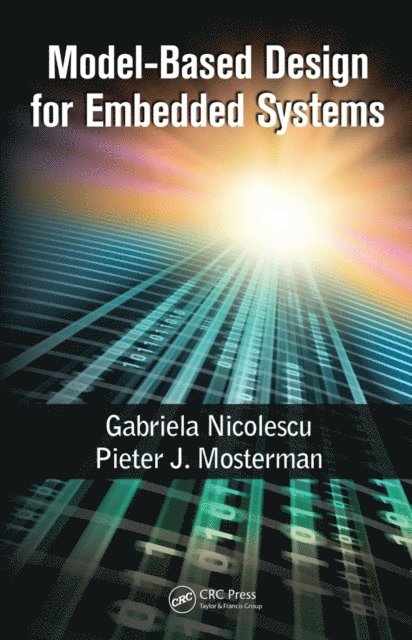
The demands of increasingly complex embedded systems and associated performance computations have resulted in the development of heterogeneous computing architectures that often integrate several types of processors, analog and digital electronic components, and mechanical and optical components—all on a single chip. As a result, now the most prominent challenge for the design automation community is to efficiently plan for such heterogeneity and to fully exploit its capabilities.A compilation of work from internationally renowned authors, Model-Based Design for Embedded Systems elaborates on related practices and addresses the main facets of heterogeneous model-based design for embedded systems, including the current state of the art, important challenges, and the latest trends. Focusing on computational models as the core design artifact, this book presents the cutting-edge results that have helped establish model-based design and continue to expand its parameters.The book is organized into three sections: Real-Time and Performance Analysis in Heterogeneous Embedded Systems, Design Tools and Methodology for Multiprocessor System-on-Chip, and Design Tools and Methodology for Multidomain Embedded Systems. The respective contributors share their considerable expertise on the automation of design refinement and how to relate properties throughout this refinement while enabling analytic and synthetic qualities. They focus on multi-core methodological issues, real-time analysis, and modeling and validation, taking into account how optical, electronic, and mechanical components often interface. Model-based design is emerging as a solution to bridge the gap between the availability of computational capabilities and our inability to make full use of them yet. This approach enables teams to start the design process using a high-level model that is gradually refined through abstraction levels to ultimately yield a prototype. When executed well, model-based design encourages enhanced performance and quicker time to market for a product. Illustrating a broad and diverse spectrum of applications such as in the automotive aerospace, health care, consumer electronics, this volume provides designers with practical, readily adaptable modeling solutions for their own practice.
1 171 kr
Skickas inom 7-10 vardagar
The Porous Museum examines questions of museum practice, aesthetics and politics through a focused study of The National Museum of the Romanian Peasant in Bucharest. The museum has functioned successively as a museum of art, a communist museum, the headquarters of the communist secret police, and a museum of folk art. Gabriela Nicolescu traces the museum's spectacular biography and follows the transformation of its practices and aesthetics through three very different political regimes in the 20th and early 21st century: monarchist, socialist and post-socialist.Nicolescu's fascinating study starts with a focus on a dumped and smashed statue of the revolutionary figureheads Marx, Engels and Lenin in the museum's rear yard as an expression of the complicated journey of modern Romania. She considers questions of recycling and rupture, with some exhibits and practices carried over from one regime to another, whilst others have been discarded in favour of the completely new. Through this process, the museum can been seen as a microcosm of the wider nation state and the ways in which the past is remembered or rejected.The interdependency of politics, ethics and aesthetics that Nicolescu terms 'porosity' is an attribute of museums all over the world. Applying original anthropological research to key ethnographic museums in Romania and elsewhere in Europe, the book moves beyond regional and media stereotypes by arguing for the influence of local oral histories on national history.
389 kr
Skickas inom 10-15 vardagar
The Porous Museum examines questions of museum practice, aesthetics and politics through a focused study of The National Museum of the Romanian Peasant in Bucharest. The museum has functioned successively as a museum of art, a communist museum, the headquarters of the communist secret police, and a museum of folk art. Gabriela Nicolescu traces the museum's spectacular biography and follows the transformation of its practices and aesthetics through three very different political regimes in the 20th and early 21st century: monarchist, socialist and post-socialist.Nicolescu's fascinating study starts with a focus on a dumped and smashed statue of the revolutionary figureheads Marx, Engels and Lenin in the museum's rear yard as an expression of the complicated journey of modern Romania. She considers questions of recycling and rupture, with some exhibits and practices carried over from one regime to another, whilst others have been discarded in favour of the completely new. Through this process, the museum can been seen as a microcosm of the wider nation state and the ways in which the past is remembered or rejected.The interdependency of politics, ethics and aesthetics that Nicolescu terms 'porosity' is an attribute of museums all over the world. Applying original anthropological research to key ethnographic museums in Romania and elsewhere in Europe, the book moves beyond regional and media stereotypes by arguing for the influence of local oral histories on national history.
3 280 kr
Skickas inom 10-15 vardagar
The demands of increasingly complex embedded systems and associated performance computations have resulted in the development of heterogeneous computing architectures that often integrate several types of processors, analog and digital electronic components, and mechanical and optical components—all on a single chip. As a result, now the most prominent challenge for the design automation community is to efficiently plan for such heterogeneity and to fully exploit its capabilities.A compilation of work from internationally renowned authors, Model-Based Design for Embedded Systems elaborates on related practices and addresses the main facets of heterogeneous model-based design for embedded systems, including the current state of the art, important challenges, and the latest trends. Focusing on computational models as the core design artifact, this book presents the cutting-edge results that have helped establish model-based design and continue to expand its parameters.The book is organized into three sections: Real-Time and Performance Analysis in Heterogeneous Embedded Systems, Design Tools and Methodology for Multiprocessor System-on-Chip, and Design Tools and Methodology for Multidomain Embedded Systems. The respective contributors share their considerable expertise on the automation of design refinement and how to relate properties throughout this refinement while enabling analytic and synthetic qualities. They focus on multi-core methodological issues, real-time analysis, and modeling and validation, taking into account how optical, electronic, and mechanical components often interface. Model-based design is emerging as a solution to bridge the gap between the availability of computational capabilities and our inability to make full use of them yet. This approach enables teams to start the design process using a high-level model that is gradually refined through abstraction levels to ultimately yield a prototype. When executed well, model-based design encourages enhanced performance and quicker time to market for a product. Illustrating a broad and diverse spectrum of applications such as in the automotive aerospace, health care, consumer electronics, this volume provides designers with practical, readily adaptable modeling solutions for their own practice.
1 064 kr
Skickas inom 10-15 vardagar
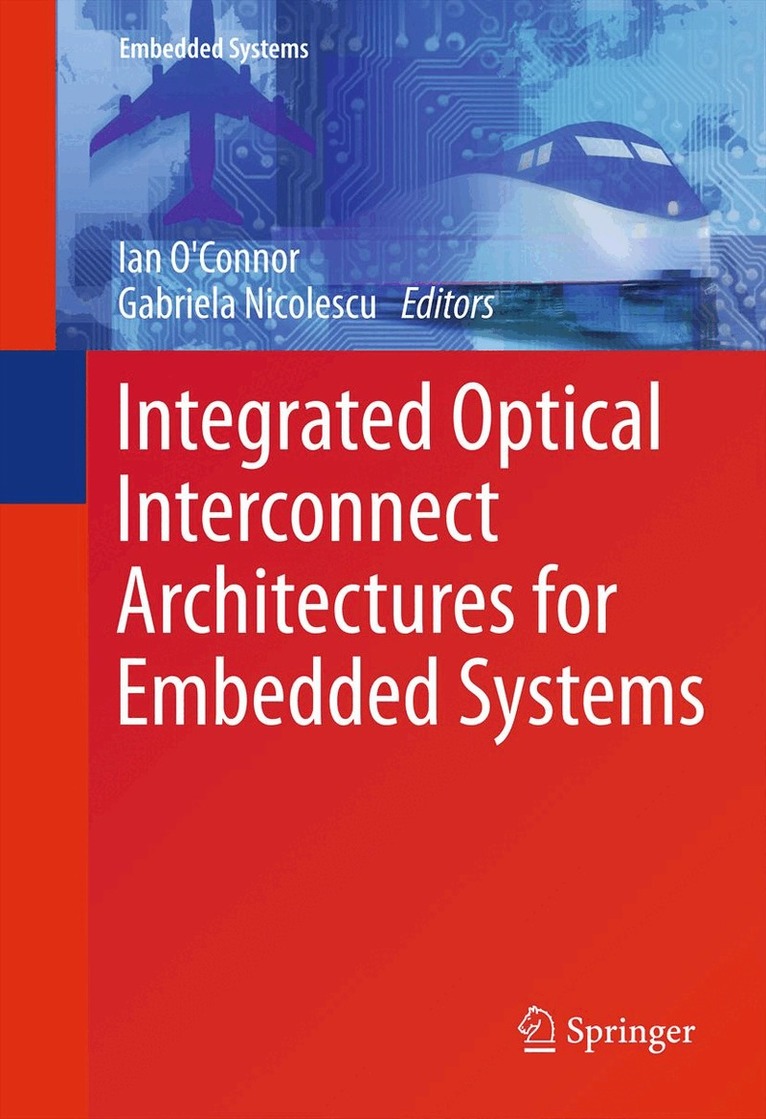
This book provides a broad overview of current research in optical interconnect technologies and architectures. Introductory chapters on high-performance computing and the associated issues in conventional interconnect architectures, and on the fundamental building blocks for integrated optical interconnect, provide the foundations for the bulk of the book which brings together leading experts in the field of optical interconnect architectures for data communication. Particular emphasis is given to the ways in which the photonic components are assembled into architectures to address the needs of data-intensive on-chip communication, and to the performance evaluation of such architectures for specific applications.
1 276 kr
Skickas inom 10-15 vardagar
This book provides a broad overview of current research in optical interconnect technologies and architectures. Introductory chapters on high-performance computing and the associated issues in conventional interconnect architectures, and on the fundamental building blocks for integrated optical interconnect, provide the foundations for the bulk of the book which brings together leading experts in the field of optical interconnect architectures for data communication. Particular emphasis is given to the ways in which the photonic components are assembled into architectures to address the needs of data-intensive on-chip communication, and to the performance evaluation of such architectures for specific applications.
Del 12637 - Lecture Notes in Computer Science
Foundations and Practice of Security
13th International Symposium, FPS 2020, Montreal, QC, Canada, December 1–3, 2020, Revised Selected Papers
Häftad, Engelska, 2021
552 kr
Skickas inom 10-15 vardagar
This book constitutes the revised selected papers of the 13th International Symposium on Foundations and Practice of Security, FPS 2020, held in Montréal, QC, Canada, in December 2020. The 11full papers and 1 short paper presented in this book were carefully reviewed and selected from 23 submissions.
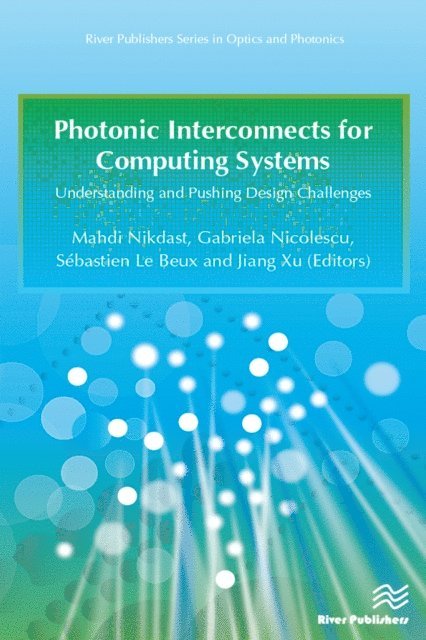
Photonic Interconnects for Computing Systems
Understanding and Pushing Design Challenges
Häftad, Engelska, 2024
494 kr
Skickas inom 10-15 vardagar
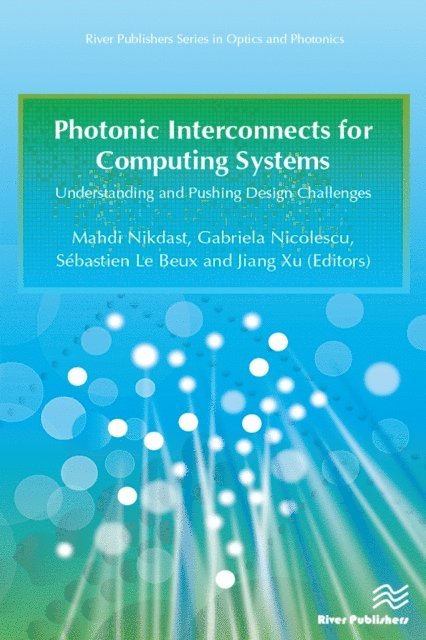
In recent years, there has been a considerable amount of effort, both in industry and academia, focusing on the design, implementation, performance analysis, evaluation and prediction of silicon photonic interconnects for inter- and intra-chip communication, paving the way for the design and dimensioning of the next and future generation of high-performance computing systems. Photonic Interconnects for Computing Systems provides a comprehensive overview of the current state-of-the-art technology and research achievements in employing silicon photonics for interconnection networks and high-performance computing, summarizing main opportunities and some challenges. The majority of the chapters were collected from presentations made at the International Workshop on Optical/Photonic Interconnects for Computing Systems (OPTICS) held over the past two years. The workshop invites internationally recognized speakers on the range of topics relevant to silicon photonics and computing systems. Technical topics discussed in the book include:Design and Implementation of Chip-Scale Photonic Interconnects;Developing Design Automation Solutions for Chip-Scale Photonic Interconnects;Design Space Exploration in Chip-Scale Photonic Interconnects;Thermal Analysis and Modeling in Photonic Interconnects;Design for Reliability;Fabrication Non-Uniformity in Photonic Interconnects;Photonic Interconnects for Computing Systems presents a compilation of outstanding contributions from leading research groups in the field. It presents a comprehensive overview of the design, advantages, challenges, and requirements of photonic interconnects for computing systems. The selected contributions present important discussions and approaches related to the design and development of novel photonic interconnect architectures, as well as various design solutions to improve the performance of such systems while considering different challenges. The book is ideal for personnel in computer/photonic industries as well as academic staff and master/graduate students in computer science and engineering, electronic engineering, electrical engineering and photonics.
Photonic Interconnects for Computing Systems
Understanding and Pushing Design Challenges
Inbunden, Engelska, 2017
1 116 kr
Skickas inom 10-15 vardagar
In recent years, there has been a considerable amount of effort, both in industry and academia, focusing on the design, implementation, performance analysis, evaluation and prediction of silicon photonic interconnects for inter- and intra-chip communication, paving the way for the design and dimensioning of the next and future generation of high-performance computing systems. Photonic Interconnects for Computing Systems provides a comprehensive overview of the current state-of-the-art technology and research achievements in employing silicon photonics for interconnection networks and high-performance computing, summarizing main opportunities and some challenges. The majority of the chapters were collected from presentations made at the International Workshop on Optical/Photonic Interconnects for Computing Systems (OPTICS) held over the past two years. The workshop invites internationally recognized speakers on the range of topics relevant to silicon photonics and computing systems. Technical topics discussed in the book include:Design and Implementation of Chip-Scale Photonic Interconnects; Developing Design Automation Solutions for Chip-Scale Photonic Interconnects; Design Space Exploration in Chip-Scale Photonic Interconnects; Thermal Analysis and Modeling in Photonic Interconnects; Design for Reliability;Fabrication Non-Uniformity in Photonic Interconnects;Photonic Interconnects for Computing Systems presents a compilation of outstanding contributions from leading research groups in the field. It presents a comprehensive overview of the design, advantages, challenges, and requirements of photonic interconnects for computing systems. The selected contributions present important discussions and approaches related to the design and development of novel photonic interconnect architectures, as well as various design solutions to improve the performance of such systems while considering different challenges. The book is ideal for personnel in computer/photonic industries as well as academic staff and master/graduate students in computer science and engineering, electronic engineering, electrical engineering and photonics.
1 064 kr
Skickas inom 10-15 vardagar
Design technology to address the new and vast problem of heterogeneous embedded systems design while remaining compatible with standard “More Moore” flows, i.e. capable of simultaneously handling both silicon complexity and system complexity, represents one of the most important challenges facing the semiconductor industry today and will be for several years to come. While the micro-electronics industry, over the years and with its spectacular and unique evolution, has built its own specific design methods to focus mainly on the management of complexity through the establishment of abstraction levels, the emergence of device heterogeneity requires new approaches enabling the satisfactory design of physically heterogeneous embedded systems for the widespread deployment of such systems.Heterogeneous Embedded Systems, compiled largely from a set of contributions from participants of past editions of the Winter School on Heterogeneous Embedded Systems Design Technology (FETCH), proposes a necessarily broad and holistic overview of design techniques used to tackle the various facets of heterogeneity in terms of technology and opportunities at the physical level, signal representations and different abstraction levels, architectures and components based on hardware and software, in all the main phases of design (modeling, validation with multiple models of computation, synthesis and optimization). It concentrates on the specific issues at the interfaces, and is divided into two main parts. The first part examines mainly theoretical issues and focuses on the modeling, validation and design techniques themselves. The second part illustrates the use of these methods in various design contexts at the forefront of new technology and architectural developments.
1 096 kr
Skickas inom 10-15 vardagar
Design technology to address the new and vast problem of heterogeneous embedded systems design while remaining compatible with standard “More Moore” flows, i.e. capable of simultaneously handling both silicon complexity and system complexity, represents one of the most important challenges facing the semiconductor industry today and will be for several years to come. While the micro-electronics industry, over the years and with its spectacular and unique evolution, has built its own specific design methods to focus mainly on the management of complexity through the establishment of abstraction levels, the emergence of device heterogeneity requires new approaches enabling the satisfactory design of physically heterogeneous embedded systems for the widespread deployment of such systems.Heterogeneous Embedded Systems, compiled largely from a set of contributions from participants of past editions of the Winter School on Heterogeneous Embedded Systems Design Technology (FETCH), proposes a necessarily broad and holistic overview of design techniques used to tackle the various facets of heterogeneity in terms of technology and opportunities at the physical level, signal representations and different abstraction levels, architectures and components based on hardware and software, in all the main phases of design (modeling, validation with multiple models of computation, synthesis and optimization). It concentrates on the specific issues at the interfaces, and is divided into two main parts. The first part examines mainly theoretical issues and focuses on the modeling, validation and design techniques themselves. The second part illustrates the use of these methods in various design contexts at the forefront of new technology and architectural developments.