Pieter J. Mosterman - Böcker
Visar alla böcker från författaren Pieter J. Mosterman. Handla med fri frakt och snabb leverans.
5 produkter
5 produkter
1 145 kr
Skickas inom 10-15 vardagar
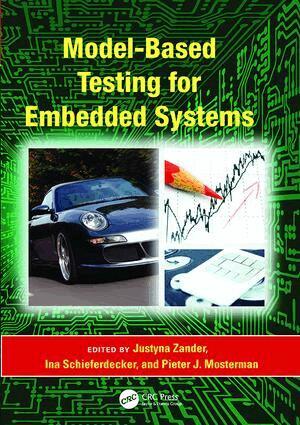
What the experts have to say about Model-Based Testing for Embedded Systems:"This book is exactly what is needed at the exact right time in this fast-growing area. From its beginnings over 10 years ago of deriving tests from UML statecharts, model-based testing has matured into a topic with both breadth and depth. Testing embedded systems is a natural application of MBT, and this book hits the nail exactly on the head. Numerous topics are presented clearly, thoroughly, and concisely in this cutting-edge book. The authors are world-class leading experts in this area and teach us well-used and validated techniques, along with new ideas for solving hard problems. "It is rare that a book can take recent research advances and present them in a form ready for practical use, but this book accomplishes that and more. I am anxious to recommend this in my consulting and to teach a new class to my students."—Dr. Jeff Offutt, professor of software engineering, George Mason University, Fairfax, Virginia, USA"This handbook is the best resource I am aware of on the automated testing of embedded systems. It is thorough, comprehensive, and authoritative. It covers all important technical and scientific aspects but also provides highly interesting insights into the state of practice of model-based testing for embedded systems."—Dr. Lionel C. Briand, IEEE Fellow, Simula Research Laboratory, Lysaker, Norway, and professor at the University of Oslo, Norway"As model-based testing is entering the mainstream, such a comprehensive and intelligible book is a must-read for anyone looking for more information about improved testing methods for embedded systems. Illustrated with numerous aspects of these techniques from many contributors, it gives a clear picture of what the state of the art is today."—Dr. Bruno Legeard, CTO of Smartesting, professor of Software Engineering at the University of Franche-Comté, Besançon, France, and co-author of Practical Model-Based Testing
1 105 kr
Skickas inom 10-15 vardagar
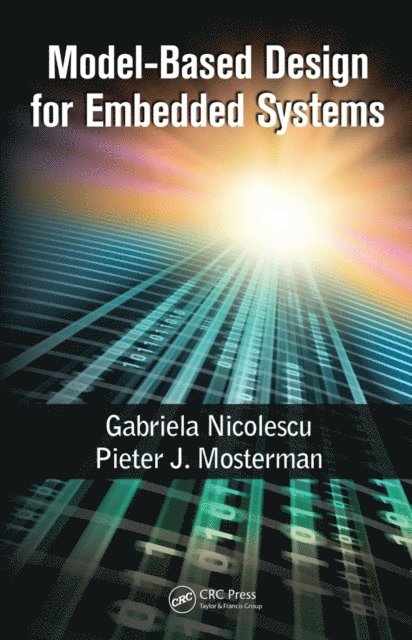
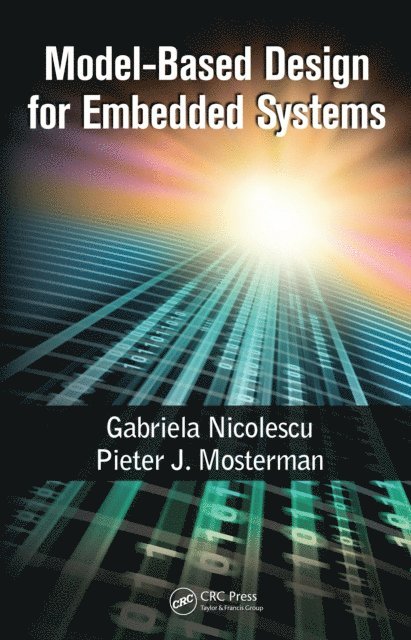
The demands of increasingly complex embedded systems and associated performance computations have resulted in the development of heterogeneous computing architectures that often integrate several types of processors, analog and digital electronic components, and mechanical and optical components—all on a single chip. As a result, now the most prominent challenge for the design automation community is to efficiently plan for such heterogeneity and to fully exploit its capabilities.A compilation of work from internationally renowned authors, Model-Based Design for Embedded Systems elaborates on related practices and addresses the main facets of heterogeneous model-based design for embedded systems, including the current state of the art, important challenges, and the latest trends. Focusing on computational models as the core design artifact, this book presents the cutting-edge results that have helped establish model-based design and continue to expand its parameters.The book is organized into three sections: Real-Time and Performance Analysis in Heterogeneous Embedded Systems, Design Tools and Methodology for Multiprocessor System-on-Chip, and Design Tools and Methodology for Multidomain Embedded Systems. The respective contributors share their considerable expertise on the automation of design refinement and how to relate properties throughout this refinement while enabling analytic and synthetic qualities. They focus on multi-core methodological issues, real-time analysis, and modeling and validation, taking into account how optical, electronic, and mechanical components often interface. Model-based design is emerging as a solution to bridge the gap between the availability of computational capabilities and our inability to make full use of them yet. This approach enables teams to start the design process using a high-level model that is gradually refined through abstraction levels to ultimately yield a prototype. When executed well, model-based design encourages enhanced performance and quicker time to market for a product. Illustrating a broad and diverse spectrum of applications such as in the automotive aerospace, health care, consumer electronics, this volume provides designers with practical, readily adaptable modeling solutions for their own practice.
3 256 kr
Skickas inom 10-15 vardagar
The demands of increasingly complex embedded systems and associated performance computations have resulted in the development of heterogeneous computing architectures that often integrate several types of processors, analog and digital electronic components, and mechanical and optical components—all on a single chip. As a result, now the most prominent challenge for the design automation community is to efficiently plan for such heterogeneity and to fully exploit its capabilities.A compilation of work from internationally renowned authors, Model-Based Design for Embedded Systems elaborates on related practices and addresses the main facets of heterogeneous model-based design for embedded systems, including the current state of the art, important challenges, and the latest trends. Focusing on computational models as the core design artifact, this book presents the cutting-edge results that have helped establish model-based design and continue to expand its parameters.The book is organized into three sections: Real-Time and Performance Analysis in Heterogeneous Embedded Systems, Design Tools and Methodology for Multiprocessor System-on-Chip, and Design Tools and Methodology for Multidomain Embedded Systems. The respective contributors share their considerable expertise on the automation of design refinement and how to relate properties throughout this refinement while enabling analytic and synthetic qualities. They focus on multi-core methodological issues, real-time analysis, and modeling and validation, taking into account how optical, electronic, and mechanical components often interface. Model-based design is emerging as a solution to bridge the gap between the availability of computational capabilities and our inability to make full use of them yet. This approach enables teams to start the design process using a high-level model that is gradually refined through abstraction levels to ultimately yield a prototype. When executed well, model-based design encourages enhanced performance and quicker time to market for a product. Illustrating a broad and diverse spectrum of applications such as in the automotive aerospace, health care, consumer electronics, this volume provides designers with practical, readily adaptable modeling solutions for their own practice.
1 597 kr
Skickas inom 10-15 vardagar
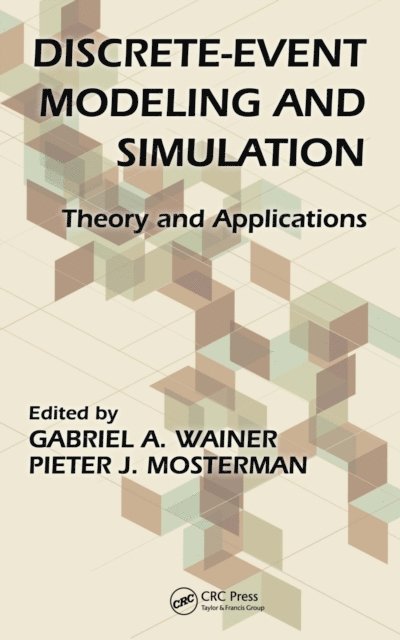
Collecting the work of the foremost scientists in the field, Discrete-Event Modeling and Simulation: Theory and Applications presents the state of the art in modeling discrete-event systems using the discrete-event system specification (DEVS) approach. It introduces the latest advances, recent extensions of formal techniques, and real-world examples of various applications.The book covers many topics that pertain to several layers of the modeling and simulation architecture. It discusses DEVS model development support and the interaction of DEVS with other methodologies. It describes different forms of simulation supported by DEVS, the use of real-time DEVS simulation, the relationship between DEVS and graph transformation, the influence of DEVS variants on simulation performance, and interoperability and composability with emphasis on DEVS standardization. The text also examines extensions to DEVS, new formalisms, and abstractions of DEVS models as well as the theory and analysis behind real-world system identification and control. To support the generation and search of optimal models of a system, a framework is developed based on the system entity structure and its transformation to DEVS simulation models. In addition, the book explores numerous interesting examples that illustrate the use of DEVS to build successful applications, including optical network-on-chip, construction/building design, process control, workflow systems, and environmental models.A one-stop resource on advances in DEVS theory, applications, and methodology, this volume offers a sampling of the best research in the area, a broad picture of the DEVS landscape, and trend-setting applications enabled by the DEVS approach. It provides the basis for future research discoveries and encourages the development of new applications.
3 048 kr
Skickas inom 10-15 vardagar
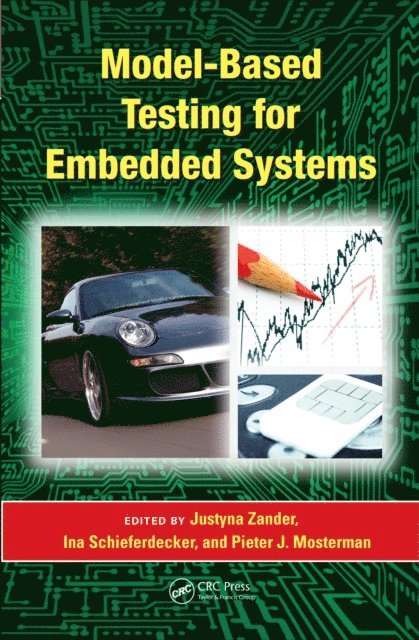
What the experts have to say about Model-Based Testing for Embedded Systems:"This book is exactly what is needed at the exact right time in this fast-growing area. From its beginnings over 10 years ago of deriving tests from UML statecharts, model-based testing has matured into a topic with both breadth and depth. Testing embedded systems is a natural application of MBT, and this book hits the nail exactly on the head. Numerous topics are presented clearly, thoroughly, and concisely in this cutting-edge book. The authors are world-class leading experts in this area and teach us well-used and validated techniques, along with new ideas for solving hard problems. "It is rare that a book can take recent research advances and present them in a form ready for practical use, but this book accomplishes that and more. I am anxious to recommend this in my consulting and to teach a new class to my students."—Dr. Jeff Offutt, professor of software engineering, George Mason University, Fairfax, Virginia, USA"This handbook is the best resource I am aware of on the automated testing of embedded systems. It is thorough, comprehensive, and authoritative. It covers all important technical and scientific aspects but also provides highly interesting insights into the state of practice of model-based testing for embedded systems."—Dr. Lionel C. Briand, IEEE Fellow, Simula Research Laboratory, Lysaker, Norway, and professor at the University of Oslo, Norway"As model-based testing is entering the mainstream, such a comprehensive and intelligible book is a must-read for anyone looking for more information about improved testing methods for embedded systems. Illustrated with numerous aspects of these techniques from many contributors, it gives a clear picture of what the state of the art is today."—Dr. Bruno Legeard, CTO of Smartesting, professor of Software Engineering at the University of Franche-Comté, Besançon, France, and co-author of Practical Model-Based Testing