Gabriela Tejada - Böcker
Visar alla böcker från författaren Gabriela Tejada. Handla med fri frakt och snabb leverans.
4 produkter
4 produkter
Technologies and Innovations for Development
Scientific Cooperation for a Sustainable Future
Inbunden, Engelska, 2012
1 061 kr
Skickas inom 10-15 vardagar
Technological innovation – combined with scientific research – has always constituted a driving force of transformation in our societies. At the same time, it is no longer simply possible to transfer technologies from the North to the South; it is also essential to consider technical innovations that are adapted to the social, environmental, cultural and economic conditions of receiving countries, and which can be appropriated by their potential users and as such prove to be real technologies for fostering development. The first International Scientific Conference on the topic organized by the UNESCO Chair Technologies for Development at the Ecole Polytechnique Fédérale de Lausanne in 2010 focused on its four priority sectors: Technologies for Sustainable Development of Habitat and Cities, ICTs for the Environment, Science and Technology for Disaster Risk Reduction, and Technologies for the Production of Sustainable Energy.This volume reflects the main outcomes of the conference and provides some significant orientation and success criteria for the effective implementation and use of innovative technologies, their aims, their particular applications in the context of developing countries, their accessibility for users, and their appropriation by producers and stakeholders in the field of development both in the North and South, thus ensuring their sustainability. This kind of scientific cooperation also highlights the added values for northern researchers in sharing their knowledge and know-how, leading to a real win-win partnership. The authors gathered within this book include representatives from academic and research institutions and other organizations from diverse countries and offer a significant synergy of competences, approaches and disciplines.
Technologies and Innovations for Development
Scientific Cooperation for a Sustainable Future
Häftad, Engelska, 2014
1 482 kr
Skickas inom 10-15 vardagar
Technological innovation – combined with scientific research – has always constituted a driving force of transformation in our societies. At the same time, it is no longer simply possible to transfer technologies from the North to the South; it is also essential to consider technical innovations that are adapted to the social, environmental, cultural and economic conditions of receiving countries, and which can be appropriated by their potential users and as such prove to be real technologies for fostering development. The first International Scientific Conference on the topic organized by the UNESCO Chair Technologies for Development at the Ecole Polytechnique Fédérale de Lausanne in 2010 focused on its four priority sectors: Technologies for Sustainable Development of Habitat and Cities, ICTs for the Environment, Science and Technology for Disaster Risk Reduction, and Technologies for the Production of Sustainable Energy.This volume reflects the main outcomes of the conference and provides some significant orientation and success criteria for the effective implementation and use of innovative technologies, their aims, their particular applications in the context of developing countries, their accessibility for users, and their appropriation by producers and stakeholders in the field of development both in the North and South, thus ensuring their sustainability. This kind of scientific cooperation also highlights the added values for northern researchers in sharing their knowledge and know-how, leading to a real win-win partnership. The authors gathered within this book include representatives from academic and research institutions and other organizations from diverse countries and offer a significant synergy of competences, approaches and disciplines.
1 061 kr
Skickas inom 10-15 vardagar
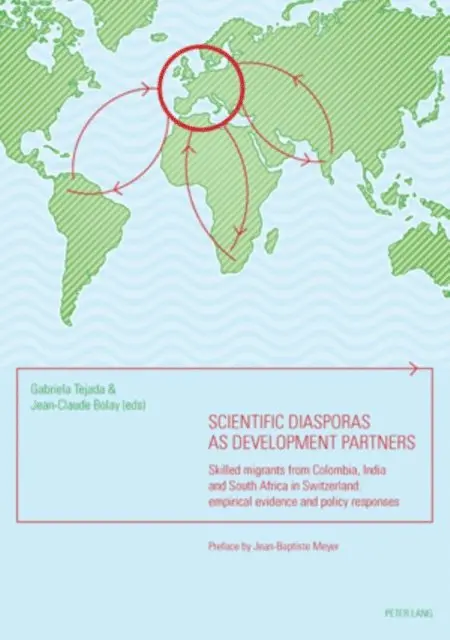
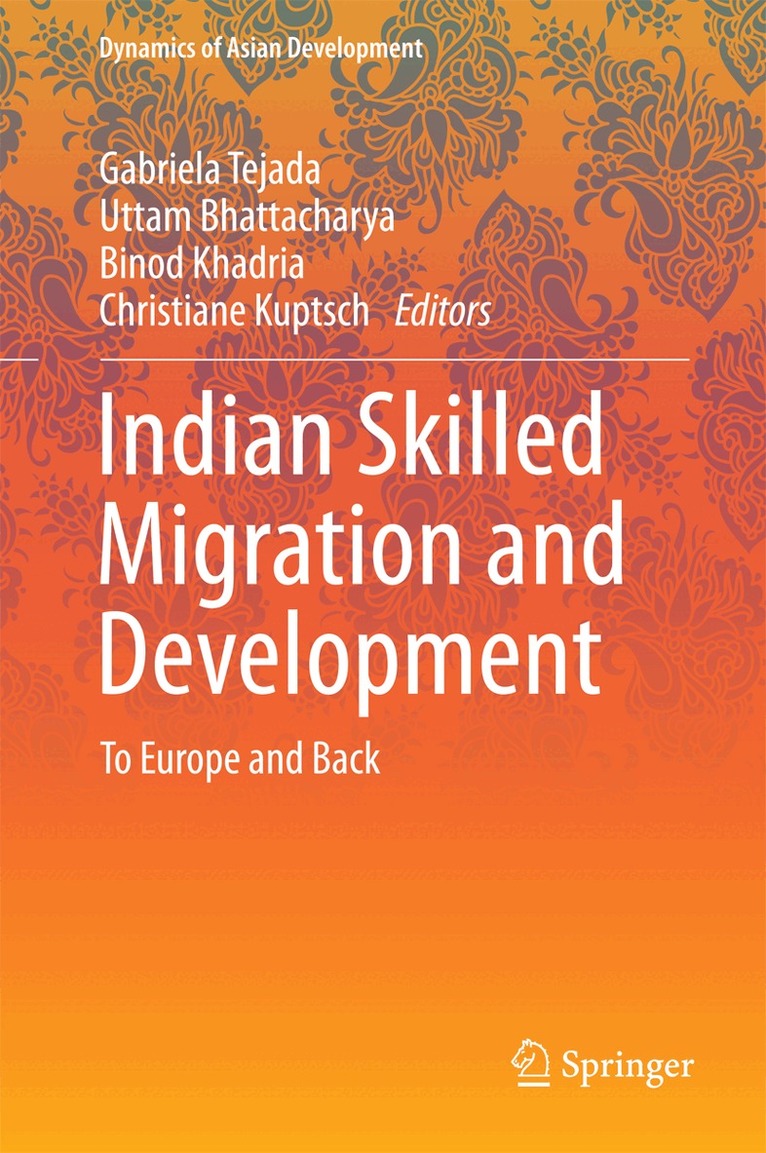
This edited contribution explores strategies and measures for leveraging the potential of skilled diasporas and for advancing knowledge-based evidence on return skilled migration and its impact on development. By taking the example of Indian skilled migration, this study identifies ways of involving returned skilled migrants in home country development as well as proposes approaches to engage the diaspora in development. As high-skill immigration from India to mainland Europe is a rather recent phenomenon, the activities of Indian professionals in Europe are under-researched. The findings have wider application in contributing to the policy dialogue on migration and development, specifically to the advantage for developing and emerging economies. The book employs an interdisciplinary, two-fold approach: The first part of the research looks at how international exposure affects the current situation of skilled returnees in India. The second, European, part of the research examines migration policies, labour market regulations and other institutional settings that enable or hinder skilled Indians’ links with the country of origin. Structural differences between the host countries may facilitate different levels of learning opportunities; thus, this book identifies good practices to promote the involvement of Indian skilled diaspora in socio-economic development. In applying the framework of diaspora contributions as well as the return channel to study the impact on India, the book draws on qualitative and quantitative research methods consisting of policy analysis, in-depth interviews with key experts and skilled migrants and on data sets collected specifically for this study.
1 061 kr
Skickas inom 10-15 vardagar
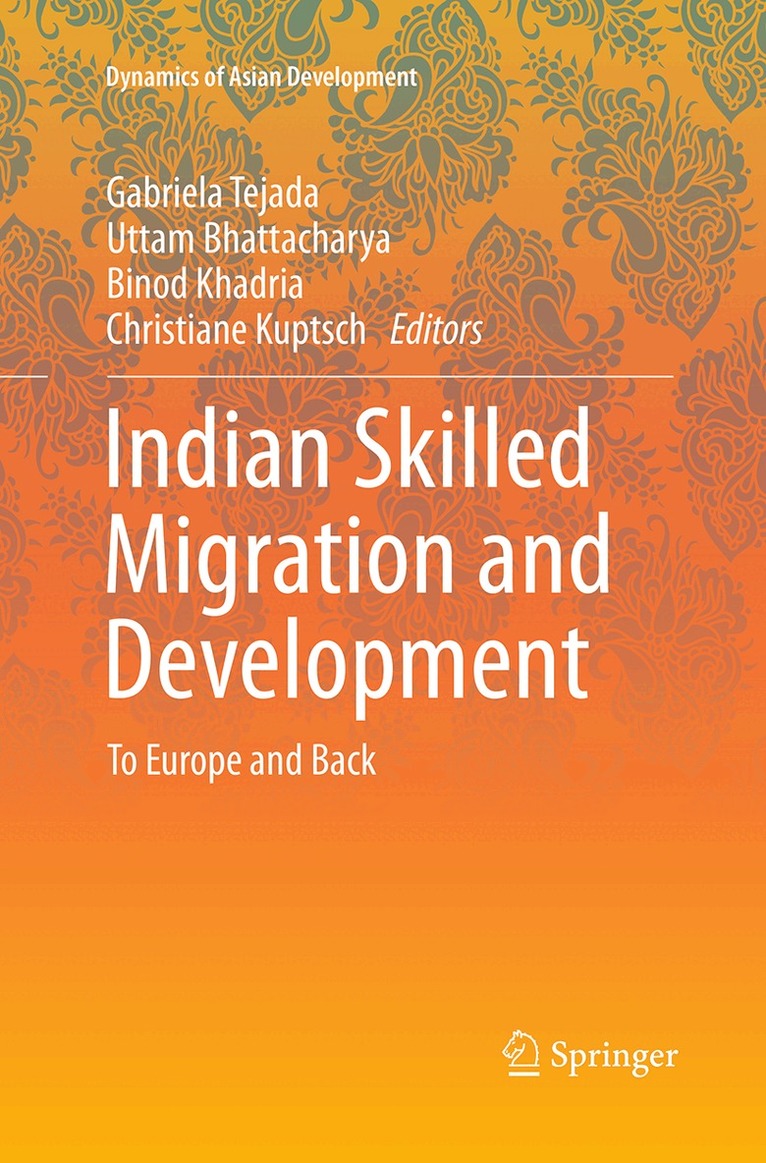
This edited contribution explores strategies and measures for leveraging the potential of skilled diasporas and for advancing knowledge-based evidence on return skilled migration and its impact on development. By taking the example of Indian skilled migration, this study identifies ways of involving returned skilled migrants in home country development as well as proposes approaches to engage the diaspora in development. As high-skill immigration from India to mainland Europe is a rather recent phenomenon, the activities of Indian professionals in Europe are under-researched. The findings have wider application in contributing to the policy dialogue on migration and development, specifically to the advantage for developing and emerging economies. The book employs an interdisciplinary, two-fold approach: The first part of the research looks at how international exposure affects the current situation of skilled returnees in India. The second, European, part of the research examines migration policies, labour market regulations and other institutional settings that enable or hinder skilled Indians’ links with the country of origin. Structural differences between the host countries may facilitate different levels of learning opportunities; thus, this book identifies good practices to promote the involvement of Indian skilled diaspora in socio-economic development. In applying the framework of diaspora contributions as well as the return channel to study the impact on India, the book draws on qualitative and quantitative research methods consisting of policy analysis, in-depth interviews with key experts and skilled migrants and on data sets collected specifically for this study.