Gabriele Schwab - Böcker
Visar alla böcker från författaren Gabriele Schwab. Handla med fri frakt och snabb leverans.
13 produkter
13 produkter
1 185 kr
Skickas inom 3-6 vardagar
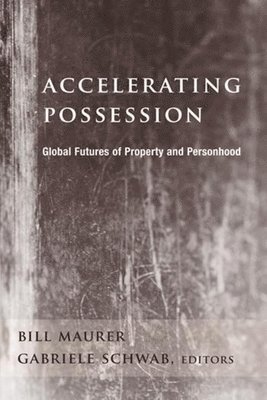
Accelerating Possession is a groundbreaking collection of essays that examines how recent economic movements have revolutionized the relationship between property and personhood. These prominent scholars argue that in our present age, globalization, rampant privatization, and biotechnology have irrevocably changed traditional ideas of property and the self. Definitions of property no longer correspond to the configurations of the person who owns or is subjected to property. Self and ownership have a whole new arithmetic.In these essays, privatization is understood as an array of interconnected processes and relationships through which the capitalist marketplace controls, among other things, the political rights, social membership, and knowledge production that constitute personhood. The contributors believe such processes are accelerating profoundly, and they examine the effects via a range of topics, including the invention of property rights in U.S.-occupied Iraq, the work of John Locke, the art of Jenny Holzer, and the writing of Octavia Butler and Stanislaw Lem.They explore the synergy and dissonance between conceptions of the private as marketable and the private as inalienable, and consider how the contemporary transformations and futures of property and personhood relate to concepts of citizenship, state, culture, and education.These essays were all written with the guiding belief that the evolving relationship between ownership and the self has a fundamental effect on debates in critical theory. The essays are methodologically linked through their emphasis on the linguistic and rhetorical, as well as the philosophical and epistemological. Their focus on reflections of property and personhood in literary, textual, or artistic objects makes this collection a vital cross-disciplinary tool.
849 kr
Tillfälligt slut
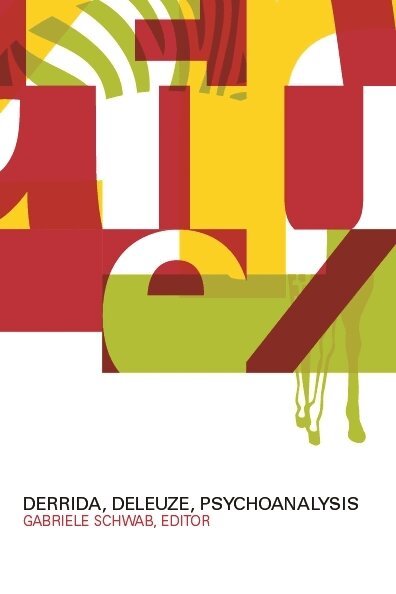
Derrida, Deleuze, Psychoanalysis explores the critical relationship between psychoanalysis and the work of Derrida (Speech and Phenomena, Of Grammatology, and his later writing on autoimmunity, cruelty, war, and human rights) and Deleuze (A Thousand Plateaus, Anti-Oedipus, and more). Each essay illuminates a specific aspect of Derrida's and Deleuze's perspectives on psychoanalysis: the human-animal boundary; the child's polymorphism; the face or mouth as constitutive of ethical responsibility toward others; the connections between pain and suffering and political resistance; the role of masochism in psychoanalytic thinking; the use of psychoanalytic secondary revision in theorizing film; and the political dimension of the unconscious. Placing a particular emphasis on liminal figurations of the human and challenges to discourses on free will, the essays explore shared concerns in Derrida and Deleuze with regard to history, politics, the political unconscious, and resistance.By addressing the need to overcome the split between the psychological and the political, Derrida, Deleuze, Psychoanalysis illuminates the ongoing relevance of psychoanalysis to critical interrogations of culture and politics.
243 kr
Skickas inom 7-10 vardagar
Derrida, Deleuze, Psychoanalysis explores the critical relationship between psychoanalysis and the work of Derrida (Speech and Phenomena, Of Grammatology, and his later writing on autoimmunity, cruelty, war, and human rights) and Deleuze (A Thousand Plateaus, Anti-Oedipus, and more). Each essay illuminates a specific aspect of Derrida's and Deleuze's perspectives on psychoanalysis: the human-animal boundary; the child's polymorphism; the face or mouth as constitutive of ethical responsibility toward others; the connections between pain and suffering and political resistance; the role of masochism in psychoanalytic thinking; the use of psychoanalytic secondary revision in theorizing film; and the political dimension of the unconscious. Placing a particular emphasis on liminal figurations of the human and challenges to discourses on free will, the essays explore shared concerns in Derrida and Deleuze with regard to history, politics, the political unconscious, and resistance.By addressing the need to overcome the split between the psychological and the political, Derrida, Deleuze, Psychoanalysis illuminates the ongoing relevance of psychoanalysis to critical interrogations of culture and politics.
2 278 kr
Skickas inom 3-6 vardagar
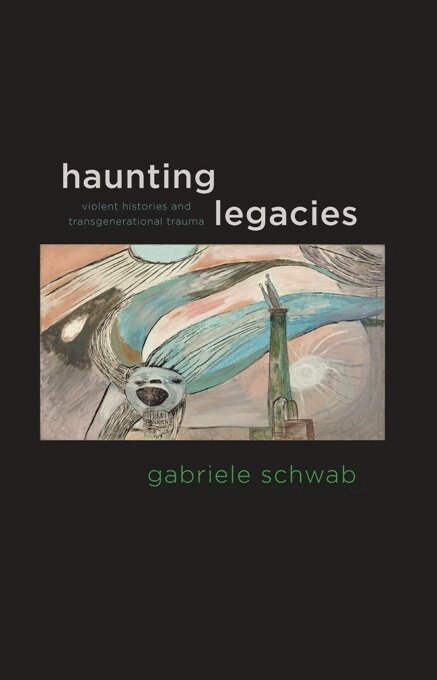
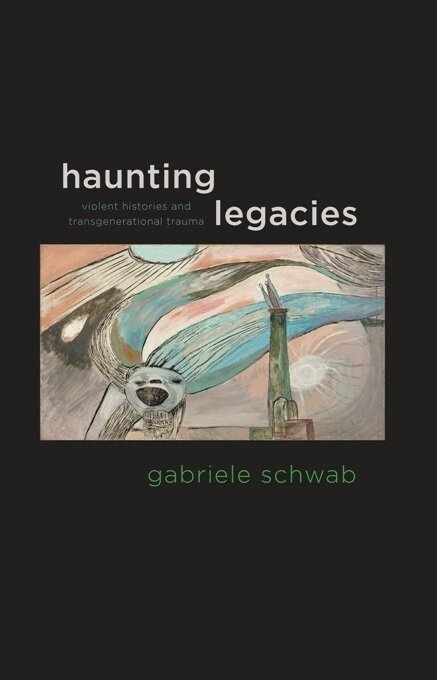
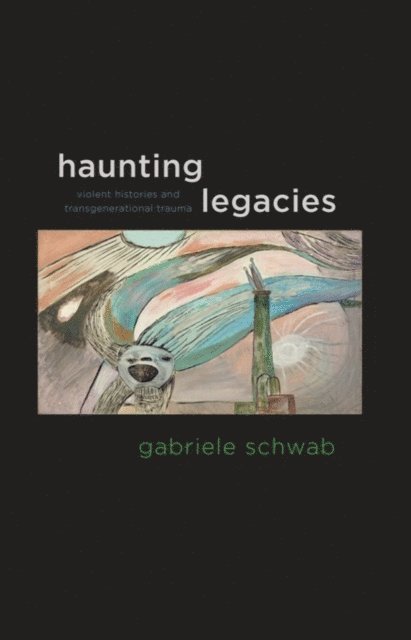
From mass murder to genocide, slavery to colonial suppression, acts of atrocity have lives that extend far beyond the horrific moment. They engender trauma that echoes for generations, in the experiences of those on both sides of the act. Gabriele Schwab reads these legacies in a number of narratives, primarily through the writing of postwar Germans and the descendents of Holocaust survivors. She connects their work to earlier histories of slavery and colonialism and to more recent events, such as South African Apartheid, the practice of torture after 9/11, and the "disappearances" that occurred during South American dictatorships. Schwab's texts include memoirs, such as Ruth Kluger's Still Alive and Marguerite Duras's La Douleur; second-generation accounts by the children of Holocaust survivors, such as Georges Perec's W, Art Spiegelman's Maus, and Philippe Grimbert's Secret; and second-generation recollections by Germans, such as W. G. Sebald's Austerlitz, Sabine Reichel's What Did You Do in the War, Daddy?, and Ursula Duba's Tales from a Child of the Enemy.She also incorporates her own reminiscences of growing up in postwar Germany, mapping interlaced memories and histories as they interact in psychic life and cultural memory. Schwab concludes with a bracing look at issues of responsibility, reparation, and forgiveness across the victim/perpetrator divide.
298 kr
Skickas inom 7-10 vardagar
From mass murder to genocide, slavery to colonial suppression, acts of atrocity have lives that extend far beyond the horrific moment. They engender trauma that echoes for generations, in the experiences of those on both sides of the act. Gabriele Schwab reads these legacies in a number of narratives, primarily through the writing of postwar Germans and the descendents of Holocaust survivors. She connects their work to earlier histories of slavery and colonialism and to more recent events, such as South African Apartheid, the practice of torture after 9/11, and the "disappearances" that occurred during South American dictatorships. Schwab's texts include memoirs, such as Ruth Kluger's Still Alive and Marguerite Duras's La Douleur; second-generation accounts by the children of Holocaust survivors, such as Georges Perec's W, Art Spiegelman's Maus, and Philippe Grimbert's Secret; and second-generation recollections by Germans, such as W. G. Sebald's Austerlitz, Sabine Reichel's What Did You Do in the War, Daddy?, and Ursula Duba's Tales from a Child of the Enemy.She also incorporates her own reminiscences of growing up in postwar Germany, mapping interlaced memories and histories as they interact in psychic life and cultural memory. Schwab concludes with a bracing look at issues of responsibility, reparation, and forgiveness across the victim/perpetrator divide.
1 094 kr
Skickas inom 7-10 vardagar
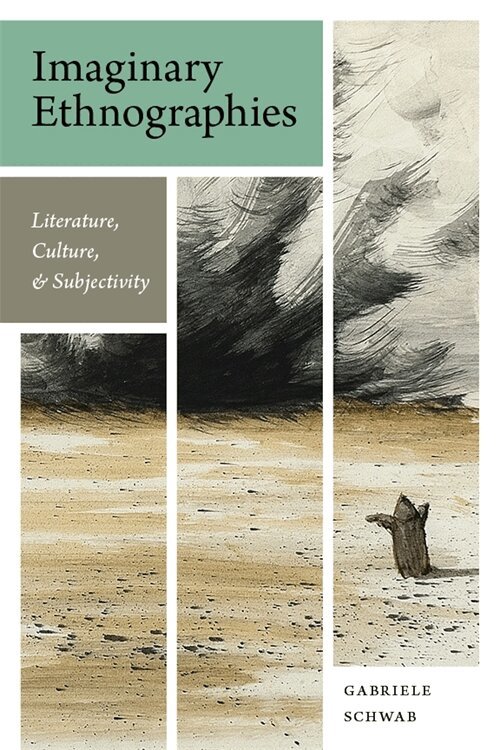
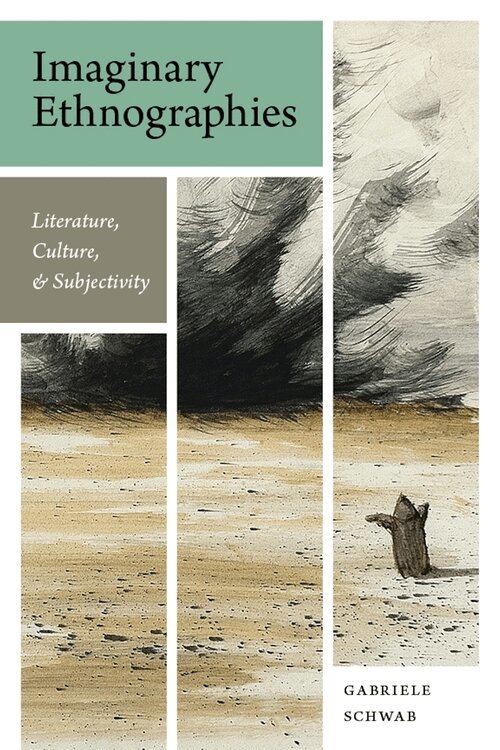
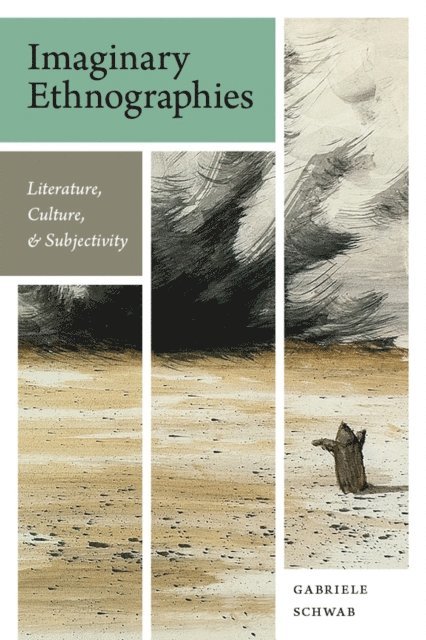
Through readings of iconic figures such as the cannibal, the child, the alien, and the posthuman, Gabriele Schwab analyzes literary explorations at the boundaries of the human. Treating literature as a dynamic medium that "writes culture"-one that makes the abstract particular and local, and situates us within the world-Schwab pioneers a compelling approach to reading literary texts as "anthropologies of the future" that challenge habitual productions of meaning and knowledge. Schwab's study draws on anthropology, philosophy, critical theory, and psychoanalysis to trace literature's profound impact on the cultural imaginary. Following a new interpretation of Derrida's and Levi-Strauss's famous controversy over the indigenous Nambikwara, Schwab explores the vicissitudes of "traveling literature" through novels and films that fashion a cross-cultural imaginary. She also examines the intricate links between colonialism, cannibalism, melancholia, the fate of disenfranchised children under the forces of globalization, and the intertwinement of property and personhood in the neoliberal imaginary.Schwab concludes with an exploration of discourses on the posthuman, using Samuel Beckett's "The Lost Ones" and its depiction of a future lived under the conditions of minimal life. Drawing on a wide range of theories, Schwab engages the productive intersections between literary studies and anthropology, underscoring the power of literature to shape culture, subjectivity, and life.
279 kr
Skickas inom 7-10 vardagar
Through readings of iconic figures such as the cannibal, the child, the alien, and the posthuman, Gabriele Schwab analyzes literary explorations at the boundaries of the human. Treating literature as a dynamic medium that "writes culture"-one that makes the abstract particular and local, and situates us within the world-Schwab pioneers a compelling approach to reading literary texts as "anthropologies of the future" that challenge habitual productions of meaning and knowledge. Schwab's study draws on anthropology, philosophy, critical theory, and psychoanalysis to trace literature's profound impact on the cultural imaginary. Following a new interpretation of Derrida's and Levi-Strauss's famous controversy over the indigenous Nambikwara, Schwab explores the vicissitudes of "traveling literature" through novels and films that fashion a cross-cultural imaginary. She also examines the intricate links between colonialism, cannibalism, melancholia, the fate of disenfranchised children under the forces of globalization, and the intertwinement of property and personhood in the neoliberal imaginary.Schwab concludes with an exploration of discourses on the posthuman, using Samuel Beckett's "The Lost Ones" and its depiction of a future lived under the conditions of minimal life. Drawing on a wide range of theories, Schwab engages the productive intersections between literary studies and anthropology, underscoring the power of literature to shape culture, subjectivity, and life.
1 184 kr
Skickas inom 7-10 vardagar
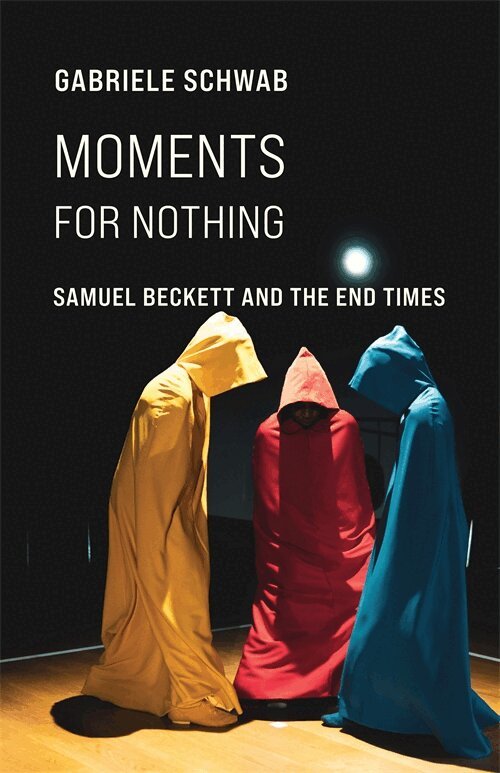
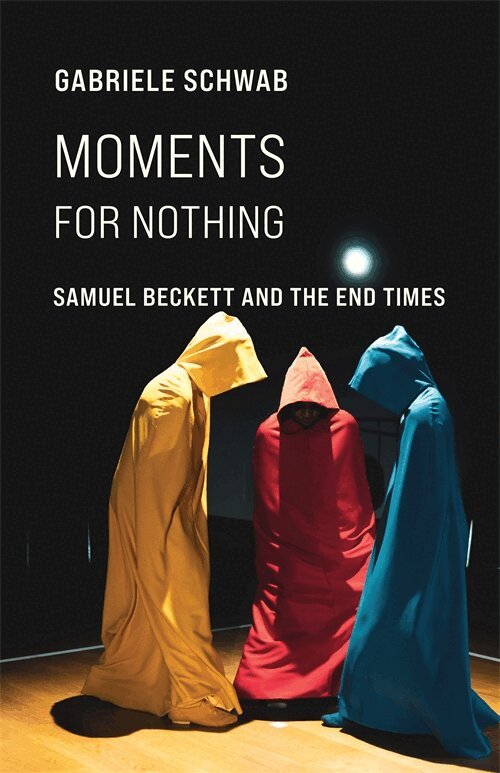
Samuel Beckett’s work has entranced generations of readers with its portrayal of the end times. Beckett’s characters are preoccupied with death, and the specters of cataclysm and extinction overshadow their barren, bleak worlds. Yet somehow, they endure, experiencing surreal and often comic repetitions that seem at once to confront finitude and the infinite, up to the limits of existence.Gabriele Schwab draws on decades of close engagement with Beckett to explore how his work speaks to our current existential anxieties and fears. Interweaving critical analysis with personal reflections, she shows how Beckett’s writing provides unexpected resources for making sense of personal and planetary catastrophes. Moments for Nothing examines the ways Beckett’s works have taken on new meaning in an era of crises—climate change, environmental devastation, and the COVID-19 pandemic—that are defined by both paralyzing stasis and pervasive uncertainty. They also offer a bracing depiction of aging and the end of life, exploring loneliness, vulnerability, and decay. Beckett’s particular vision of the apocalypse and his sense of persistence, Schwab argues, help us understand our times and even, perhaps, provide sanctuary and solace.Moments for Nothing features insightful close readings of iconic works such as Endgame, Happy Days, and the trilogy, as well as lesser-known writings including the thirty-five-second play Breath, which Schwab reconsiders in light of the pandemic.
298 kr
Skickas inom 7-10 vardagar
Samuel Beckett’s work has entranced generations of readers with its portrayal of the end times. Beckett’s characters are preoccupied with death, and the specters of cataclysm and extinction overshadow their barren, bleak worlds. Yet somehow, they endure, experiencing surreal and often comic repetitions that seem at once to confront finitude and the infinite, up to the limits of existence.Gabriele Schwab draws on decades of close engagement with Beckett to explore how his work speaks to our current existential anxieties and fears. Interweaving critical analysis with personal reflections, she shows how Beckett’s writing provides unexpected resources for making sense of personal and planetary catastrophes. Moments for Nothing examines the ways Beckett’s works have taken on new meaning in an era of crises—climate change, environmental devastation, and the COVID-19 pandemic—that are defined by both paralyzing stasis and pervasive uncertainty. They also offer a bracing depiction of aging and the end of life, exploring loneliness, vulnerability, and decay. Beckett’s particular vision of the apocalypse and his sense of persistence, Schwab argues, help us understand our times and even, perhaps, provide sanctuary and solace.Moments for Nothing features insightful close readings of iconic works such as Endgame, Happy Days, and the trilogy, as well as lesser-known writings including the thirty-five-second play Breath, which Schwab reconsiders in light of the pandemic.
299 kr
Skickas inom 10-15 vardagar
"The book not only confirms the high ethical stakes in informed contemporary reading; it offers a rare readerly pleasure in . . . exploring the wider cultural significance of gender and the body and their narrative representation." —Henry Sussman, SUNY-BuffaloGabriele Schwab revitalizes debates about literature's cultural function by exploring literary experience as an encounter with otherness. Drawing on literary theory, anthropology, and psychoanalysis, Schwab contends that literature facilitates contact with cultures that may seem foreign to us. At the same time, literature can render the familiar strange, and foreground what a culture tends to repress. At its best, literature challenges the very boundaries of the culture from which it emerges.Schwab's readings of writers such as Hawthorne, Faulkner, Joyce, Lewis Carroll, Djuna Barnes, Marguerite Duras, and John Cage demonstrate the centrality of aesthetics and the literary to studies of otherness and cultural contact.
Del 43 - Harvard Studies in Comparative Literature
Subjects without Selves
Transitional Texts in Modern Fiction
Inbunden, Engelska, 1994
949 kr
Skickas inom 10-15 vardagar
How do aesthetic forms contribute to different kinds of cultural knowledge? Gabriele Schwab responds to this question with an analysis of the nature of subjectivity in modernist fiction. Drawing on French and Anglo-American psychoanalysis as well as reader response theory, she explores the relationship between language and subjectivity and in so doing illuminates the cultural politics and psychological functions implicit in the aesthetic practices and literary forms of modernism and postmodernism. The result of this exploration is a new understanding of the function of literature as a form of cultural knowledge.Schwab demonstrates how literature creates a transitional space where boundaries of language and subjectivity are continually aped and reshaped on both an individual and a cultural eve. Modern and postmodern experimental texts, in particular, fulfill this function through the multifarious exploration of the boundaries of poetic language and their opening to the unconscious. Undertaking what she terms a literary ethnography of the decentered subject, Schwab examines five novels: Herman Melville's Moby-Dick, Virginia Woolfs The Waves, James Joyce's Finnegans Wake, Samuel Beckett's The Unnamable, and Thomas Pynchon's Gravity's Rainbow. Schwab demonstrates how the aesthetic figurations of unconscious experience in these texts generate new forms of literary language and an aesthetic reception that is directly relevant to an increasingly global and hybridized culture.In her concluding chapter, which introduces the notion of “textual ecologies,” Schwab analyzes the literary subjectivity of “transitional texts” in light of such contemporary theories as systems theory, cybernetics, and the new physics. From this perspective, such texts not only reflect cultural practices but take part in shaping their change and innovation.
1 226 kr
Skickas inom 7-10 vardagar
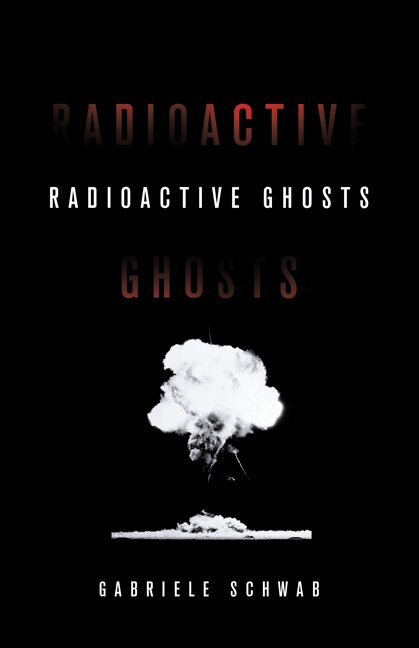
A pioneering examination of nuclear trauma, the continuing and new nuclear peril, and the subjectivities they generateAmid resurgent calls for widespread nuclear energy and “limited nuclear war,” the populations that must live with the consequences of these decisions are increasingly insecure. The nuclear peril combined with the looming threat of climate change means that we are seeing the formation of a new kind of subjectivity: humans who are in a position of perpetual ontological insecurity. In Radioactive Ghosts, Gabriele Schwab articulates a vision of these “nuclear subjectivities” that we all live with.Focusing on the legacies of the Manhattan Project, Hiroshima, and nuclear energy politics, Radioactive Ghosts takes us on a tour of the little-seen sides of our nuclear world. Examining devastating uranium mining on Native lands, nuclear sacrifice zones, the catastrophic accidents at Chernobyl and Fukushima, and the formation of a new transspecies ethics, Schwab shows how individuals threatened with extinction are creating new adaptations, defenses, and communal spaces. Ranging from personal accounts of experiences with radiation to in-depth readings of literature, film, art, and scholarly works, Schwab gives us a complex, idiosyncratic, and personal analysis of one of the most overlooked issues of our time.
291 kr
Skickas inom 7-10 vardagar
A pioneering examination of nuclear trauma, the continuing and new nuclear peril, and the subjectivities they generateAmid resurgent calls for widespread nuclear energy and “limited nuclear war,” the populations that must live with the consequences of these decisions are increasingly insecure. The nuclear peril combined with the looming threat of climate change means that we are seeing the formation of a new kind of subjectivity: humans who are in a position of perpetual ontological insecurity. In Radioactive Ghosts, Gabriele Schwab articulates a vision of these “nuclear subjectivities” that we all live with.Focusing on the legacies of the Manhattan Project, Hiroshima, and nuclear energy politics, Radioactive Ghosts takes us on a tour of the little-seen sides of our nuclear world. Examining devastating uranium mining on Native lands, nuclear sacrifice zones, the catastrophic accidents at Chernobyl and Fukushima, and the formation of a new transspecies ethics, Schwab shows how individuals threatened with extinction are creating new adaptations, defenses, and communal spaces. Ranging from personal accounts of experiences with radiation to in-depth readings of literature, film, art, and scholarly works, Schwab gives us a complex, idiosyncratic, and personal analysis of one of the most overlooked issues of our time.