Bill Maurer - Böcker
Visar alla böcker från författaren Bill Maurer. Handla med fri frakt och snabb leverans.
13 produkter
13 produkter
1 185 kr
Skickas inom 3-6 vardagar
Accelerating Possession is a groundbreaking collection of essays that examines how recent economic movements have revolutionized the relationship between property and personhood. These prominent scholars argue that in our present age, globalization, rampant privatization, and biotechnology have irrevocably changed traditional ideas of property and the self. Definitions of property no longer correspond to the configurations of the person who owns or is subjected to property. Self and ownership have a whole new arithmetic.In these essays, privatization is understood as an array of interconnected processes and relationships through which the capitalist marketplace controls, among other things, the political rights, social membership, and knowledge production that constitute personhood. The contributors believe such processes are accelerating profoundly, and they examine the effects via a range of topics, including the invention of property rights in U.S.-occupied Iraq, the work of John Locke, the art of Jenny Holzer, and the writing of Octavia Butler and Stanislaw Lem.They explore the synergy and dissonance between conceptions of the private as marketable and the private as inalienable, and consider how the contemporary transformations and futures of property and personhood relate to concepts of citizenship, state, culture, and education.These essays were all written with the guiding belief that the evolving relationship between ownership and the self has a fundamental effect on debates in critical theory. The essays are methodologically linked through their emphasis on the linguistic and rhetorical, as well as the philosophical and epistemological. Their focus on reflections of property and personhood in literary, textual, or artistic objects makes this collection a vital cross-disciplinary tool.
271 kr
Tillfälligt slut
175 kr
Tillfälligt slut
400 kr
Skickas inom 7-10 vardagar
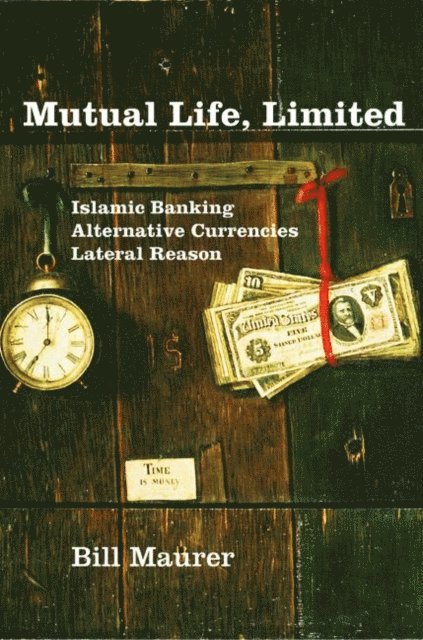
Why are people continually surprised to discover that money is "just" meaning? Mutual Life, Limited spends time among those who, in acknowledging the fictions of finance, are making money anew. It documents ongoing efforts to remake money and finance by Islamic bankers who seek to avoid interest and local currency proponents who would stand outside of national economies. It asks how alternative moneys both escape and reenact dominant forms of money and finance, and reflects critically on their broader implications for scholarship. Based on fieldwork among participants in a local currency system in Ithaca, New York, and among Islamic banking practitioners in the United States, Indonesia, and elsewhere, this book exploits the convergence between the reflexivity of monetary alternatives and social inquiry by questioning the equivalence between money and ethnography. Can money ever be adequate to the value backing it? Can social description ever be adequate to messy and contingent realities?Bill Maurer's ethnographic discovery is that ethnography as such--the holistic description of a way of life--cannot be sustained when faced with a set of practices that anticipates and incorporates it in advance. His fluently written book represents an unprecedented critique of social scientific approaches to money through an ethnographic description of specific monetary alternatives, while also speaking broadly to the very problem of anthropological knowledge in the twenty-first century.
1 112 kr
Skickas inom 7-10 vardagar
From Bitcoin to Apple Pay, big changes seem to be afoot in the world of money. Yet the use of coins and paper bills has persisted for 3,000 years. In How Would You Like to Pay?, leading anthropologist Bill Maurer narrates money's history, considers its role in everyday life, and discusses the implications of how new technologies are changing how we pay. These changes are especially important in the developing world, where people who lack access to banks are using cell phones in creative ways to send and save money. To truly understand money, Maurer explains, is to understand and appreciate the complex infrastructures and social relationships it relies on. Engaging and straightforward, How Would You Like to Pay? rethinks something so familiar and fundamental in new and exciting ways. Ultimately, considering how we would like to pay gives insights into determining how we would like to live.
354 kr
Skickas inom 10-15 vardagar
From Bitcoin to Apple Pay, big changes seem to be afoot in the world of money. Yet the use of coins and paper bills has persisted for 3,000 years. In How Would You Like to Pay?, leading anthropologist Bill Maurer narrates money's history, considers its role in everyday life, and discusses the implications of how new technologies are changing how we pay. These changes are especially important in the developing world, where people who lack access to banks are using cell phones in creative ways to send and save money. To truly understand money, Maurer explains, is to understand and appreciate the complex infrastructures and social relationships it relies on. Engaging and straightforward, How Would You Like to Pay? rethinks something so familiar and fundamental in new and exciting ways. Ultimately, considering how we would like to pay gives insights into determining how we would like to live.
113 kr
Skickas inom 7-10 vardagar
Data is too big to be left to the data analysts. Data: Now Bigger and Better! brings together researchers whose work is deeply informed by the conceptual frameworks of anthropology-frameworks that are comparative as well as field-based. From kinship to gifts, everything old becomes rich with new insight when the anthropological archive washes over "big data." Bringing together anthropology's classic debates and contemporary interventions, the book counters the future-oriented speculation so characteristic of discussions regarding big data. Drawing on long-standing experience in industry contexts, the contributors also provide analytical provocations that can help reframe some of the most important shifts in technology and society in the first half of the twenty-first century.
2 223 kr
Skickas inom 7-10 vardagar
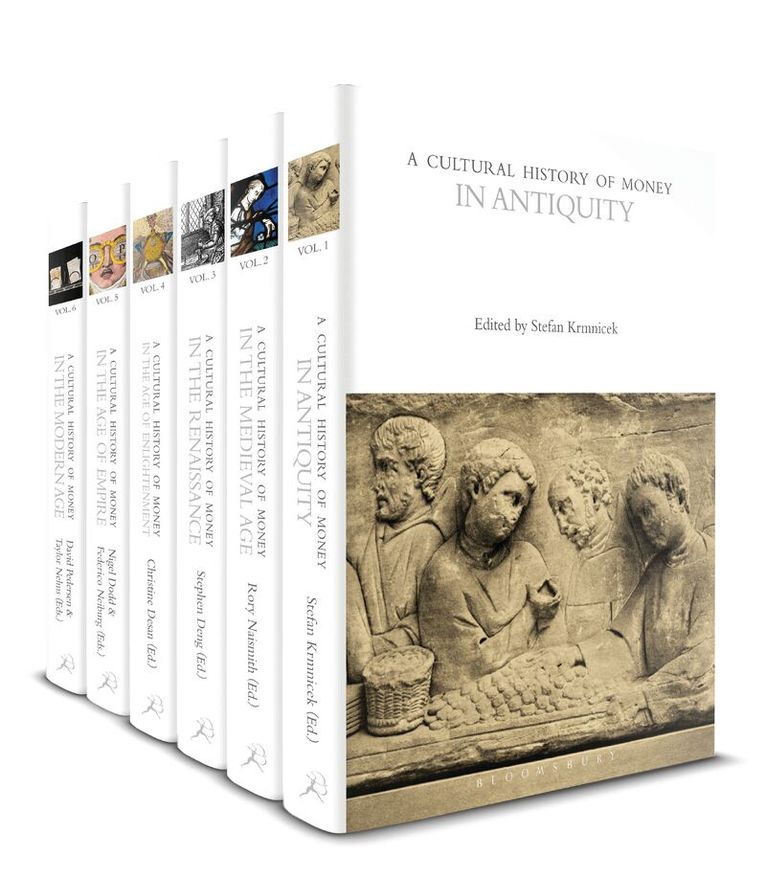
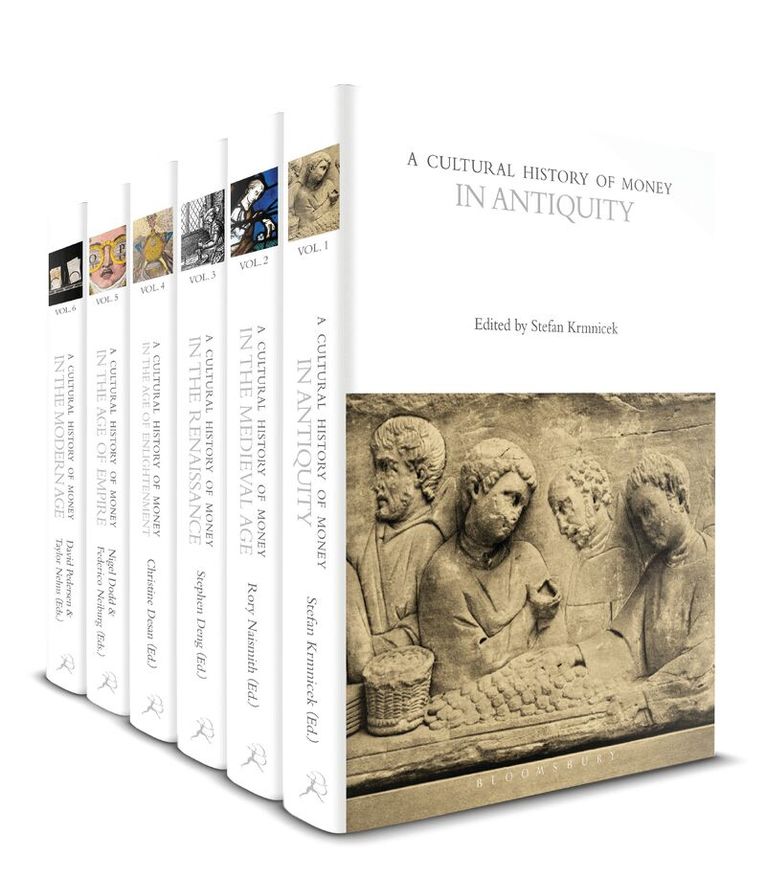
“Money is a matter of functions four: a medium, a measure, a standard, a store.” But money is always a medium of communication too, whether about price or about political conviction and authority, fealty, desire, or disdain.In a work that spans 4,500 years, 54 experts chart across six volumes how money has made "the world go round" and capture money's complexities in both substance and form. Individual volume editors ensure the cohesion of the whole and, to make it as easy as possible to use, chapter titles are identical across each of the volumes. This gives the choice of reading about a specific period in one of the volumes, or following a theme across history by reading the relevant chapter in each of the six.The six volumes cover: 1 - Antiquity (2500 BCE-500 CE); 2 - Medieval Age (500-1400); 3 - Renaissance (1400-1680); 4 - Age of Enlightenment (1680-1820); 5 - Age of Empire (1820-1920); 6 - Modern Age (1920-present).Themes (and chapter titles) are: Money and its Technologies; Money and its Ideas; Money, Ritual, and Religion; Money and the Everyday; Money, Art, and Representation; Money and its Interpretation; Money and the Issues of the AgeThe total extent of the pack is approximately 1,680 pages. Each volume opens with a Series Preface, an Introduction, and Notes on Contributors and concludes with Notes, Bibliography, and an Index.The Cultural Histories SeriesA Cultural History of Money is part of The Cultural Histories Series. Titles are available as hardcover sets for libraries needing just one subject or preferring a tangible reference for their shelves or as part of a fully-searchable digital library. The digital product is available to institutions by annual subscription or on perpetual access via www.bloomsburyculturalhistory.com.Individual volumes for academics and researchers interested in specific historical periods are also available in print or digitally via www.bloomsburycollections.com.
7 451 kr
Skickas inom 7-10 vardagar
“Money is a matter of functions four: a medium, a measure, a standard, a store.” But money is always a medium of communication too, whether about price or about political conviction and authority, fealty, desire, or disdain.In a work that spans 4,500 years, 54 experts chart across six volumes how money has made "the world go round" and capture money's complexities in both substance and form. Individual volume editors ensure the cohesion of the whole and, to make it as easy as possible to use, chapter titles are identical across each of the volumes. This gives the choice of reading about a specific period in one of the volumes, or following a theme across history by reading the relevant chapter in each of the six.The six volumes cover: 1 - Antiquity (2500 BCE-500 CE); 2 - Medieval Age (500-1400); 3 - Renaissance (1400-1680); 4 - Age of Enlightenment (1680-1820); 5 - Age of Empire (1820-1920); 6 - Modern Age (1920-present).Themes (and chapter titles) are: Money and its Technologies; Money and its Ideas; Money, Ritual, and Religion; Money and the Everyday; Money, Art, and Representation; Money and its Interpretation; Money and the Issues of the AgeThe total extent of the pack is approximately 1,680 pages. Each volume opens with a Series Preface, an Introduction, and Notes on Contributors and concludes with Notes, Bibliography, and an Index. The Cultural Histories SeriesA Cultural History of Money is part of The Cultural Histories Series. Titles are available as hardcover sets for libraries needing just one subject or preferring a tangible reference for their shelves or as part of a fully-searchable digital library. The digital product is available to institutions by annual subscription or on perpetual access via www.bloomsburyculturalhistory.com.Individual volumes for academics and researchers interested in specific historical periods are also available in print or digitally via www.bloomsburycollections.com.
Slavery, Smallholding and Tourism: Social Transformations in the British Virgin Islands
Häftad, Engelska
489 kr
Skickas inom 3-6 vardagar
489 kr
Skickas inom 3-6 vardagar
Del 6 - Human Economy
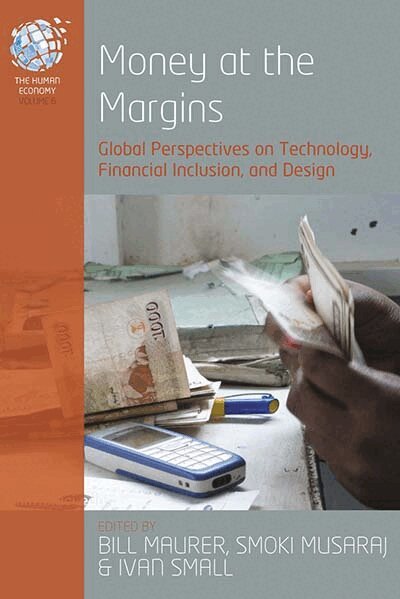
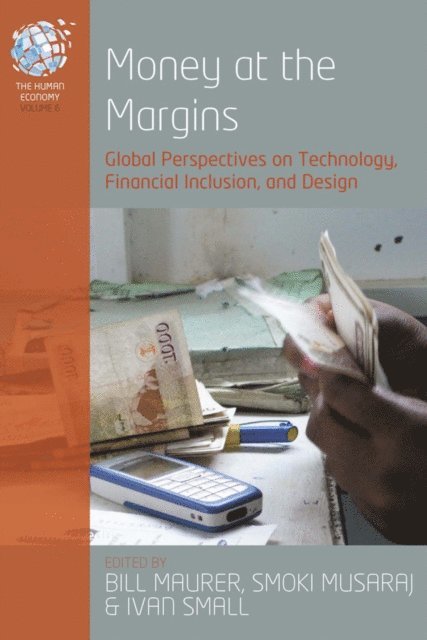
Money at the Margins
Global Perspectives on Technology, Financial Inclusion and Design
Inbunden, Engelska, 2018
1 956 kr
Skickas inom 3-6 vardagar
Mobile money, e-commerce, cash cards, retail credit cards, and more - as new monetary technologies become increasingly available, the global South has embraced these mediums as a simple solution to the issue of financial inclusion. How, if at all, do new forms of dematerialized money impact people's everyday financial lives? In what way do technologies interact with financial repertoires and other socio-cultural institutions? These questions are at the heart of Money at the Margins, a groundbreaking exploration of the uses and socio-cultural impact of new forms of money and financial services.
Money at the Margins
Global Perspectives on Technology, Financial Inclusion, and Design
Häftad, Engelska, 2019
496 kr
Skickas inom 3-6 vardagar
Mobile money, e-commerce, cash cards, retail credit cards, and more—as new monetary technologies become increasingly available, the global South has cautiously embraced these mediums as a potential solution to the issue of financial inclusion. How, if at all, do new forms of dematerialized money impact people’s everyday financial lives? In what way do technologies interact with financial repertoires and other socio-cultural institutions? How do these technologies of financial inclusion shape the global politics and geographies of difference and inequality? These questions are at the heart of Money at the Margins, a groundbreaking exploration of the uses and socio-cultural impact of new forms of money and financial services.