• Fri frakt över 249 kr
  • •
  • Snabba leveranser
  • •
  • Billiga böcker
Kundservice

Du är på sajten för privatpersoner.

Företag, bibliotek eller offentlig verksamhet?

Du handlar på classic.bokus.com, där alla dina funktioner finns intakta.
Till classic.bokus.com
Bokus logotyp. Gå till startsidan.
  • Erbjudanden
  • Nyheter
  • Student
  • Topplistor
  • Barn & ungdom
  • Bokus Play
  • E-böcker
  • Pocketböcker
  • Spel & pussel

10% rabatt på allt med kod NYSTART10 →

Sidfot

Mina sidor

    Hjälp

    • Kundservice
    • Vanliga frågor och svar
    • Frakt och leverans
    • Retur vid ångerrätt
    • Reklamera vara
    • Betalning
    • Köpvillkor
    • Allmänna villkor
    • Information om webbplatsens tillgänglighet

    Om Bokus

    • Om oss
    • Pressrum
    • För studenter
    • För företag
    • För bibliotek och offentlig verksamhet
    • För leverantörer
    • Hållbarhet

    Populärt

    • Aktuella erbjudanden
    • Presentkort
    • Studentlitteratur
    • Nya böcker
    • Topplistor
    • Signerade böcker
    • Engelska böcker

    Inspiration

    • Boktips
    • BookTok
    • Populära bokserier
    • Barnbokskaraktärer
    • Populära författare
    Logotyp för Bokus
    Följ oss på Facebook (extern länk)Följ oss på Instagram (extern länk)Följ oss på YouTube (extern länk)Följ oss på TikTok (extern länk)
    bokus @ CookiesAnpassa cookiesIntegritetspolicyKöpvillkor
    Till Citymail hemsida (extern länk)Till Budbee hemsida (extern länk)Till Postnord hemsida (extern länk)Till Schenker hemsida (extern länk)Till Early Bird hemsida (extern länk)Till Walleys hemsida (extern länk)
    1. Ekonomi och Ledarskap
    2. Nationalekonomi
    3. Mikroekonomi

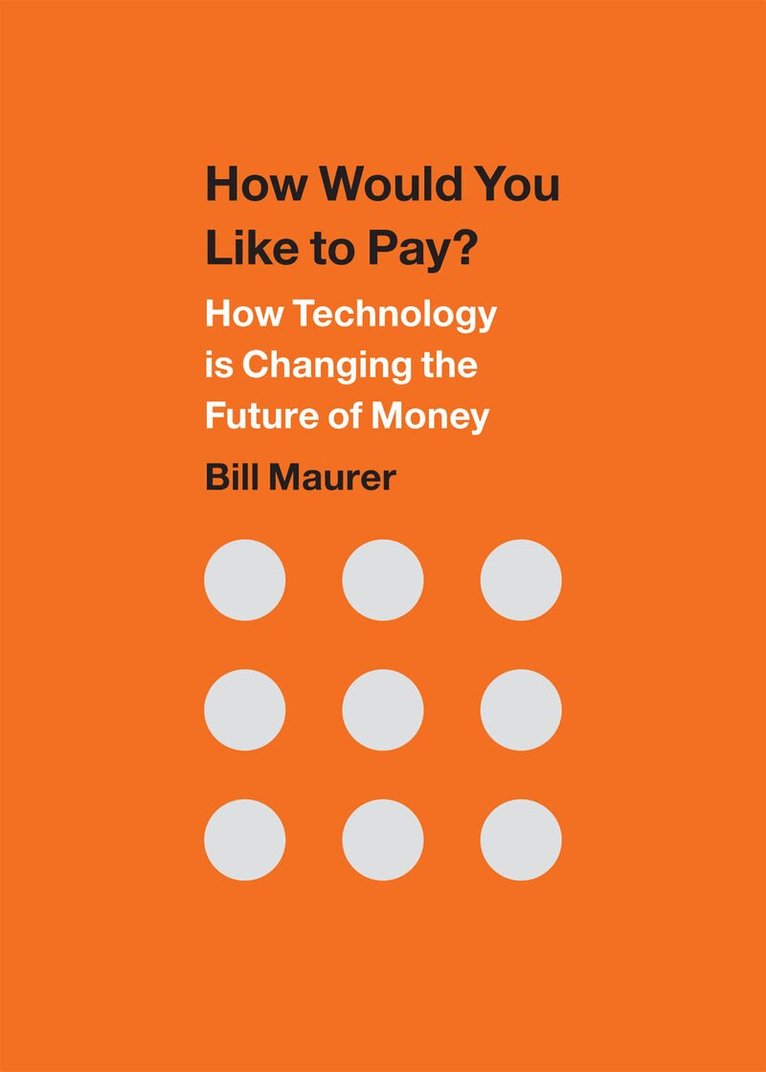
    How Would You Like to Pay?

    How Technology Is Changing the Future of Money

    AvBill Maurer

    Inbunden, Engelska, 2015

    1 157 kr

    Beställningsvara. Skickas inom 5-8 vardagar. Fri frakt över 249 kr.

    Fler format och utgåvor

    Häftad

    368 kr

    E-bok

    378 kr

    Beskrivning

    From Bitcoin to Apple Pay, big changes seem to be afoot in the world of money. Yet the use of coins and paper bills has persisted for 3,000 years. In How Would You Like to Pay?, leading anthropologist Bill Maurer narrates money's history, considers its role in everyday life, and discusses the implications of how new technologies are changing how we pay. These changes are especially important in the developing world, where people who lack access to banks are using cell phones in creative ways to send and save money. To truly understand money, Maurer explains, is to understand and appreciate the complex infrastructures and social relationships it relies on. Engaging and straightforward, How Would You Like to Pay? rethinks something so familiar and fundamental in new and exciting ways. Ultimately, considering how we would like to pay gives insights into determining how we would like to live.

    Produktinformation

    • Utgivningsdatum:2015-11-27
    • Mått:127 x 178 x 15 mm
    • Vikt:249 g
    • Format:Inbunden
    • Språk:Engelska
    • Antal sidor:176
    • Förlag:Duke University Press
    • ISBN:9780822359562

    Utforska kategorier

    • Mikroekonomi inom Ekonomi och Ledarskap
    • Antropologi inom Samhälle och politik
    • Sociologi inom Samhälle och politik

    Mer om författaren

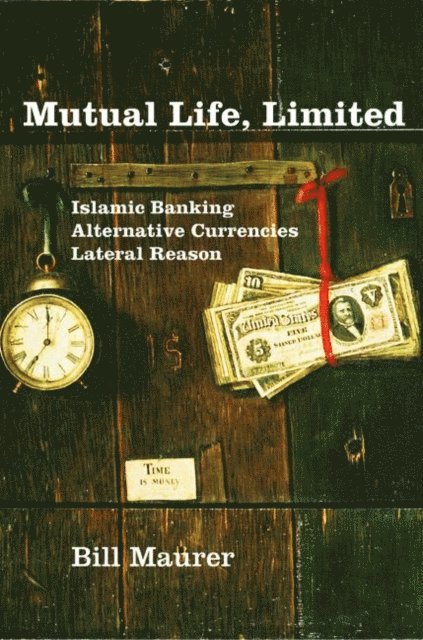
    Bill Maurer is Dean of the School of Social Sciences; Professor of Anthropology, Law and Criminology, Law and Society; and the Director of the Institute for Money, Technology, and Financial Inclusion at the University of California, Irvine. He is the author of Pious Property: Islamic Mortgages in the United States and Mutual Life, Limited: Islamic Banking, Alternative Currencies, Lateral Reason.

    Recensioner i media

    "In the end, How Would You Like to Pay? is of interest less for what it says about the future (the author makes no predictions -- which, given the Isis debacle, seems prudent) than for how it encourages the reader to pay attention to nuances of the present. It’s a primer of the anthropological imagination -- and a reminder that money is too important a matter to leave to the economists." - Scott McLemee (Inside Higher Ed) "This little book is the exact size it needed to be to explore the array of new payment methods, currencies and other money technology innovations that have erupted over the past decade, alongside with more accessible and cheaper smartphone, tablet and other communications and computing technologies.... Entering electronic money contracts without understanding the problems and solutions they represent is risky both for the isolated farmer in Kenya and for a Silicon Valley executive, so both would benefit from this book." - Anna Faktorovich (Pennsylvania Literary Journal) "As an anthropologist, Bill Maurer has spent the past two decades researching the cultural and social dynamics of money. In his latest book, he manages to condense his life’s research into one gripping, bite-sized read that is accessible to a diverse range of readers from the artist and software programmer to the financial regulator or economist." - Scott Burns (The Independent Review) "Maurer’s latest book is a . . . highly accessible introduction to the complex topic of payment systems. Written in an engagingly informal style accompanied by eye-catching photographs, it is an excellent teaching resource that will surely become a standard feature of reading lists in undergraduate courses in economic anthropology and the anthropology of finance and money."  - John Cox (Anthropological Forum) "Maurer’s volume is beautifully produced and pocket-sized, with lots of sharp illustrations in full colour and generous spacing.... Maurer’s book is for anyone interested in the future of money. That is a lot of people. It aims to surprise readers by approaching money in ways that are at once counter-intuitive and familiar." - Keith Hart (Journal of the Royal Anthropological Institute) "Bill Maurer’s short, pocket-sized, succinct, lively, and sharply clear book on a vast and varied topic-the history and practice of monetary payments, worldwide-works like a skillfully cut gemstone. Keep turning, keep noticing new facets of the complexly brilliant entity that is money, as perceived and crafted for accessible view by an expert in reaching a wide and varied audience." - Jane I. Guyer (Journal of Anthropological Research)

    Innehållsförteckning

    • Acknowledgments  viiIntroduction. Who This Book Is For  11. Disruptions in Money  172. What Is Money?  373. Two Scenarios: A Day in the Money Life  514. The Evolution of Money  635. Use Cases for Money  796. What's in Your Wallet?  957. What Can You Do with a Mobile Phone?  1078. Airtime  1199. Monetary Repertoires  129For Further Reading  145Index  153