Gaëlle Calvary – författare
Visar alla böcker från författaren Gaëlle Calvary. Handla med fri frakt och snabb leverans.
7 produkter
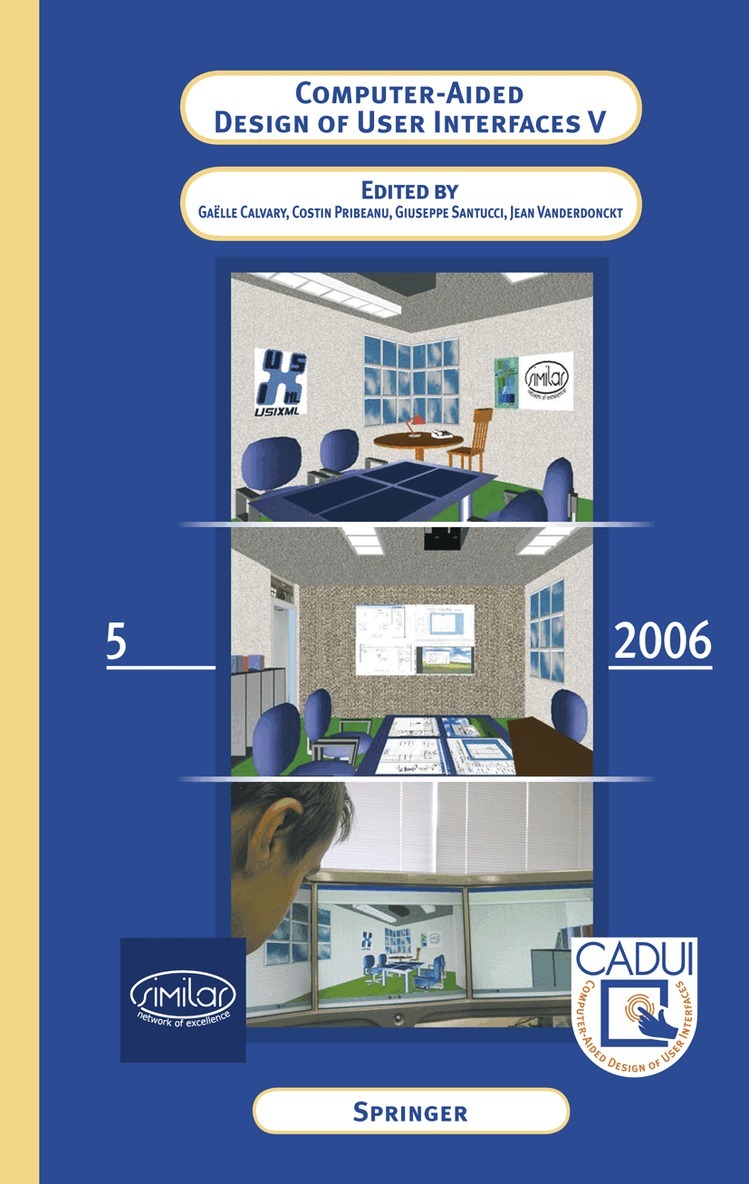
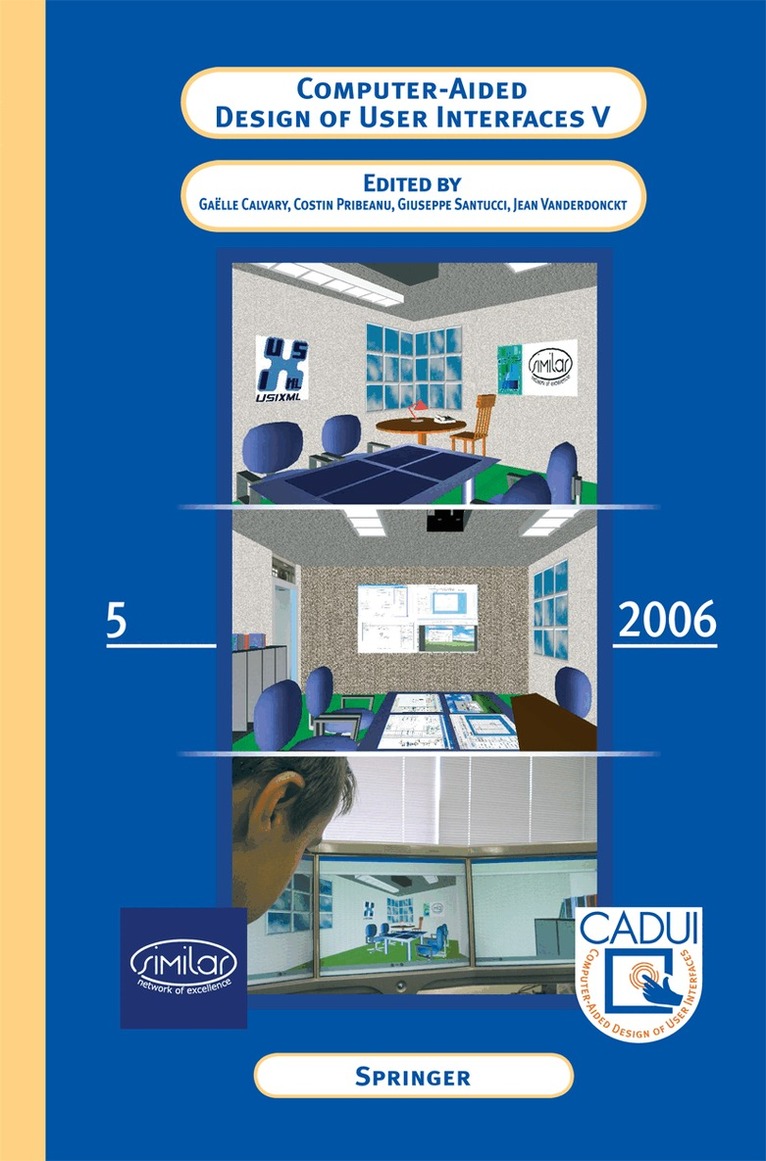
Computer-Aided Design of User Interfaces V
Proceedings of the Sixth International Conference on Computer-Aided Design of User Interfaces CADUI '06 (6-8 June 2006, Bucharest, Romania)
Av Gaëlle Calvary, Costin Pribeanu m. fl.
Inbunden, 2007
1128 kr
Lägg i varukorg
Today, the development life cycle of 3D User Interfaces (UIs) mostly remains an art more than a principled-based approach. Several methods [1,3,7,8,9,10,11,15,17,18,19] have been introduced to decompose this life cycle into steps and sub-steps, but these methods rarely provide the design knowledge …
Computer-Aided Design of User Interfaces V
Proceedings of the Sixth International Conference on Computer-Aided Design of User Interfaces CADUI ''06 (6-8 June 2006, Bucharest, Romania)
Av Jean Vanderdonckt, Giuseppe Santucci m. fl.
E-bok, 2007
1455 kr
Lägg i varukorg
Today, the development life cycle of 3D User Interfaces (UIs) mostly remains an art more than a principled-based approach. Several methods [1,3,7,8,9,10,11,15,17,18,19] have been introduced to decompose this life cycle into steps and sub-steps, but these methods rarely provide the design knowledge …
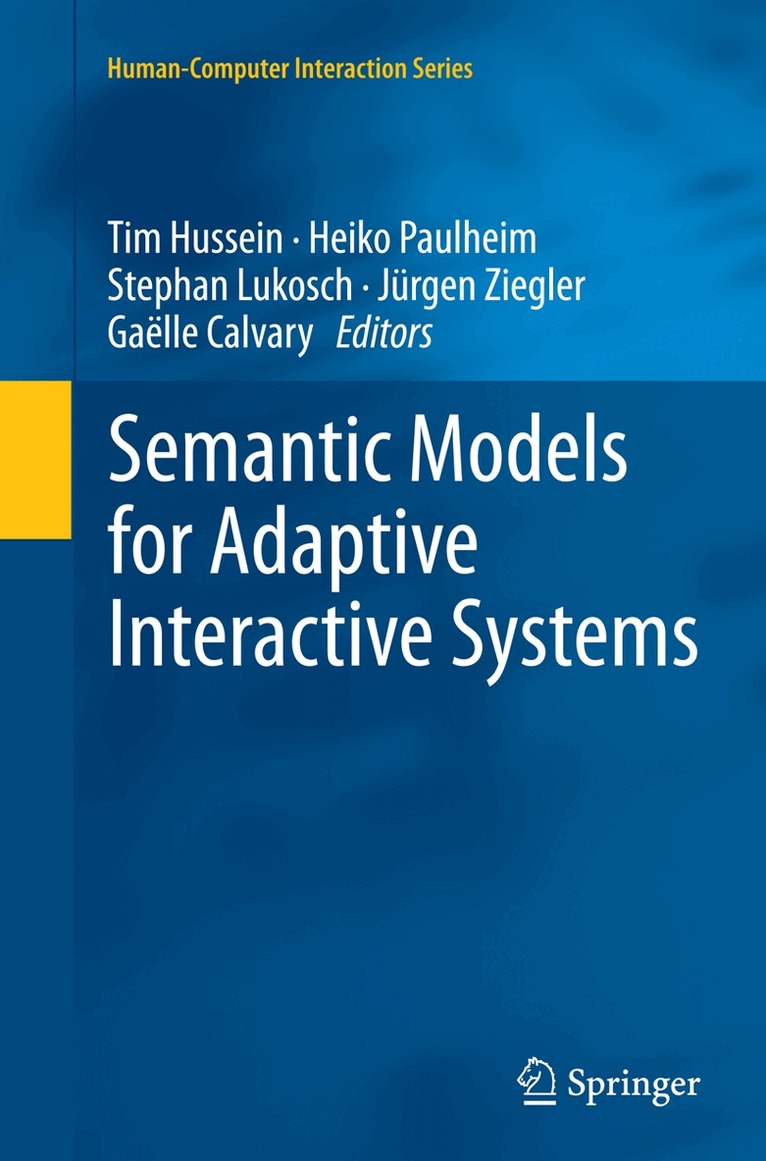
Semantic Models for Adaptive Interactive Systems
Av Tim Hussein, Heiko Paulheim m. fl.
Inbunden, 2013
567 kr
Lägg i varukorg
Providing insights into methodologies for designing adaptive systems based on semantic data, and introducing semantic models that can be used for building interactive systems, this book showcases many of the applications made possible by the use of semantic models.Ontologies may enhance the …
Semantic Models for Adaptive Interactive Systems
Av Gaelle Calvary, Jurgen Ziegler m. fl.
E-bok, 2013
755 kr
Lägg i varukorg
Providing insights into methodologies for designing adaptive systems based on semantic data, and introducing semantic models that can be used for building interactive systems, this book showcases many of the applications made possible by the use of semantic models. Ontologies may enhance the …
Semantic Models for Adaptive Interactive Systems
Av Tim Hussein, Heiko Paulheim m. fl.
Häftad, 2015
567 kr
Lägg i varukorg
Providing insights into methodologies for designing adaptive systems based on semantic data, and introducing semantic models that can be used for building interactive systems, this book showcases many of the applications made possible by the use of semantic models.Ontologies may enhance the …
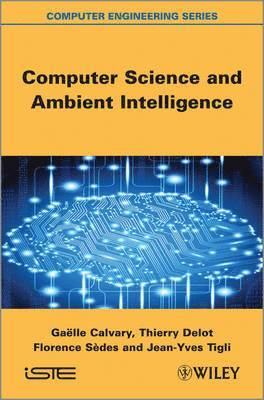
Computer Science and Ambient Intelligence
Av Gaëlle Calvary, Thierry Delot m. fl.
Inbunden, 2012
1959 kr
Lägg i varukorg
This book focuses on ambient intelligence and addresses various issues related to data management, networking and HCI in this context. Taking a holistic view, it covers various levels of abstraction, ranging from fundamental to advanced concepts and brings together the contributions of various …
Computer-Aided Design of User Interfaces V
Proceedings of the Sixth International Conference on Computer-Aided Design of User Interfaces CADUI '06 (6-8 June 2006, Bucharest, Romania)
Av Gaëlle Calvary, Costin Pribeanu m. fl.
Häftad, 2014
1128 kr
Lägg i varukorg
Today, the development life cycle of 3D User Interfaces (UIs) mostly remains an art more than a principled-based approach. Several methods [1,3,7,8,9,10,11,15,17,18,19] have been introduced to decompose this life cycle into steps and sub-steps, but these methods rarely provide the design knowledge …