
Galina Rogova – författare
Visar alla böcker från författaren . Handla med fri frakt och snabb leverans.
8 produkter
8 produkter
Inbunden, Engelska, 2008
2 365 kr
Skickas inom 10-15 vardagar
An Advanced Research Workshop (ARW) “Data Fusion Technologies for Harbour Protection” was held in Tallinn, Estonia 27 June–1 July, 2005. This workshop was organized by request of the NATO Security Through Science Programme and the Defence Investment Division. An ARW is one of many types of funded group support mechanisms established by the NATO Science Committee to contribute to the critical assessment of existing knowledge on new important topics, to identify directions for future research, and to promote close working relationships between scientists from different countries and with different professional experiences. The NATO Science Committee was approved at a meeting of the Heads of Government of the Alliance in December 1957, subsequent to the 1956 recommendation of “Three Wise Men” – Foreign Ministers Lange (Norway), Martino (Italy) and Pearson (Canada) on Non-Military Cooperation in NATO. The NATO Science Committee established the NATO Science Programme in 1958 to encourage and support scientific collaboration between individual scientists and to foster scientific development in its member states. In 1999, following the end of the Cold War, the Science Programme was transformed so that support is now devoted to collaboration between Partner-country and NATO-country scientists or to contributing towards research support in Partner countries. Since 2004, the Science Programme was further modified to focus exclusively on NATO Priority Research Topics (i. e. Defence Against Terrorism or Countering Other Threats to Security) and also preferably on a Partner country priority area.
Häftad, Engelska, 2008
2 365 kr
Skickas inom 10-15 vardagar
An Advanced Research Workshop (ARW) “Data Fusion Technologies for Harbour Protection” was held in Tallinn, Estonia 27 June–1 July, 2005. This workshop was organized by request of the NATO Security Through Science Programme and the Defence Investment Division. An ARW is one of many types of funded group support mechanisms established by the NATO Science Committee to contribute to the critical assessment of existing knowledge on new important topics, to identify directions for future research, and to promote close working relationships between scientists from different countries and with different professional experiences. The NATO Science Committee was approved at a meeting of the Heads of Government of the Alliance in December 1957, subsequent to the 1956 recommendation of “Three Wise Men” – Foreign Ministers Lange (Norway), Martino (Italy) and Pearson (Canada) on Non-Military Cooperation in NATO. The NATO Science Committee established the NATO Science Programme in 1958 to encourage and support scientific collaboration between individual scientists and to foster scientific development in its member states. In 1999, following the end of the Cold War, the Science Programme was transformed so that support is now devoted to collaboration between Partner-country and NATO-country scientists or to contributing towards research support in Partner countries. Since 2004, the Science Programme was further modified to focus exclusively on NATO Priority Research Topics (i. e. Defence Against Terrorism or Countering Other Threats to Security) and also preferably on a Partner country priority area.
E-bok
PDF, Engelska, 20083 054 kr
Läs direkt efter köp
An Advanced Research Workshop (ARW) “Data Fusion Technologies for Harbour Protection” was held in Tallinn, Estonia 27 June–1 July, 2005. This workshop was organized by request of the NATO Security Through Science Programme and the Defence Investment Division. An ARW is one of many types of funded group support mechanisms established by the NATO Science Committee to contribute to the critical assessment of existing knowledge on new important topics, to identify directions for future research, and to promote close working relationships between scientists from different countries and with different professional experiences. The NATO Science Committee was approved at a meeting of the Heads of Government of the Alliance in December 1957, subsequent to the 1956 recommendation of “Three Wise Men” – Foreign Ministers Lange (Norway), Martino (Italy) and Pearson (Canada) on Non-Military Cooperation in NATO. The NATO Science Committee established the NATO Science Programme in 1958 to encourage and support scientific collaboration between individual scientists and to foster scientific development in its member states. In 1999, following the end of the Cold War, the Science Programme was transformed so that support is now devoted to collaboration between Partner-country and NATO-country scientists or to contributing towards research support in Partner countries. Since 2004, the Science Programme was further modified to focus exclusively on NATO Priority Research Topics (i. e. Defence Against Terrorism or Countering Other Threats to Security) and also preferably on a Partner country priority area.
1 810 kr
Skickas
The sheer quantity of widely diverse data which now results from multiple sources presents a problem for decision-makers and analysts, who are finding it impossible to cope with the ever-increasing flow of material. This has potentially serious consequences for the quality of decisions and operational processes in areas such as counterterrorism and security.This book presents the papers delivered at the NATO Advanced Research Workshop (ARW) 'Meeting Security Challenges through Data Analytics and Decision Support’, held in Aghveran, Armenia, in June 2015. The aim of the conference was to promote and enhance cooperation and dialogue between NATO and Partner countries on the subject of effective decision support for security applications. The attendance of many leading scientists from a variety of backgrounds and disciplines provided the opportunity to improve mutual understanding, as well as cognizance of the specific requirements and issues of Cyber Physical Social Systems (CPPS) and the technical advances pertinent to all collaborative human-centric information support systems in a variety of applications. The book is divided into 3 sections: counter terrorism: methodology and applications; maritime and border security; and cyber security, and will be of interest to all those involved in decision-making processes based on the analysis of big data.
Inbunden, Engelska, 2016
1 615 kr
Skickas inom 10-15 vardagar
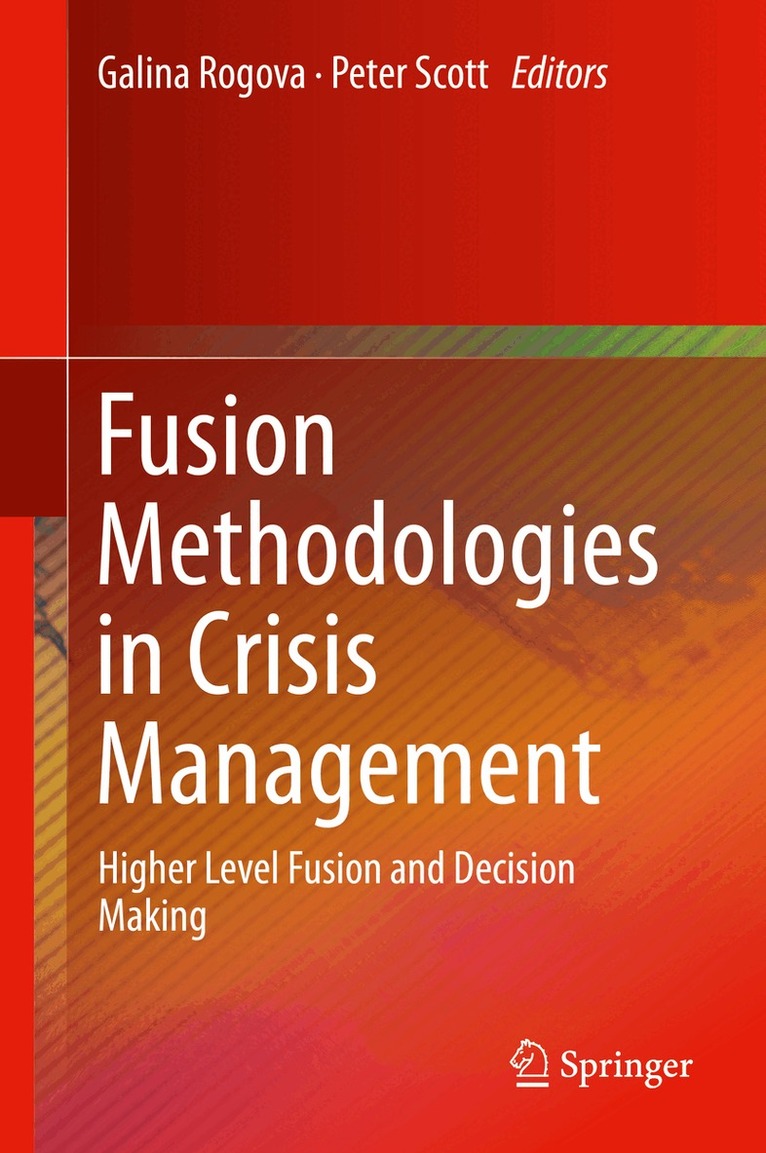
The book emphasizes a contemporary view on the role of higher level fusion in designing crisis management systems, and provide the formal foundations, architecture and implementation strategies required for building dynamic current and future situational pictures, challenges of, and the state of the art computational approaches to designing such processes. This book integrates recent advances in decision theory with those in fusion methodology to define an end-to-end framework for decision support in crisis management. The text discusses modern fusion and decision support methods for dealing with heterogeneous and often unreliable, low fidelity, contradictory, and redundant data and information, as well as rare, unknown, unconventional or even unimaginable critical situations. Also the book examines the role of context in situation management, cognitive aspects of decision making and situation management, approaches to domain representation, visualization, as well as the role and exploitation of the social media. The editors include examples and case studies from the field of disaster management.
E-bok
PDF, Engelska, 20162 049 kr
Läs direkt efter köp
The book emphasizes a contemporary view on the role of higher level fusion in designing crisis management systems, and provide the formal foundations, architecture and implementation strategies required for building dynamic current and future situational pictures, challenges of, and the state of the art computational approaches to designing such processes. This book integrates recent advances in decision theory with those in fusion methodology to define an end-to-end framework for decision support in crisis management. The text discusses modern fusion and decision support methods for dealing with heterogeneous and often unreliable, low fidelity, contradictory, and redundant data and information, as well as rare, unknown, unconventional or even unimaginable critical situations. Also the book examines the role of context in situation management, cognitive aspects of decision making and situation management, approaches to domain representation, visualization, as well as the role and exploitation of the social media. The editors include examples and case studies from the field of disaster management.
Häftad, Engelska, 2018
1 615 kr
Skickas inom 10-15 vardagar
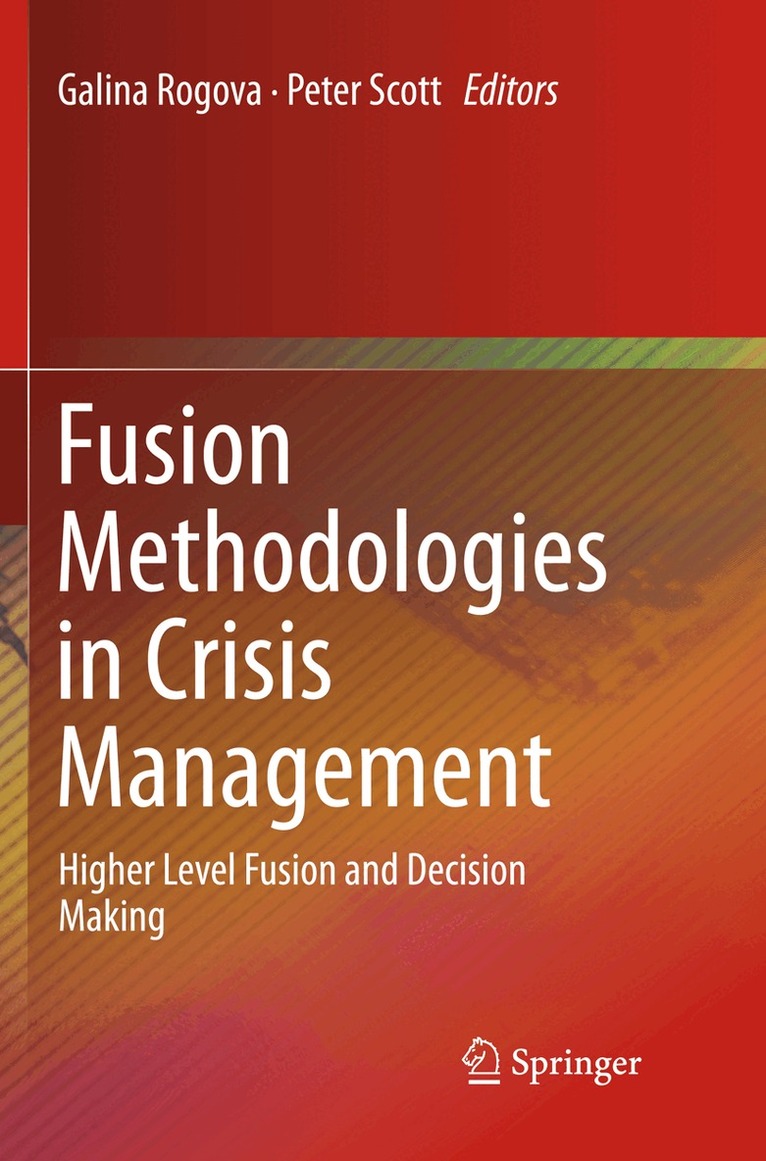
The book emphasizes a contemporary view on the role of higher level fusion in designing crisis management systems, and provide the formal foundations, architecture and implementation strategies required for building dynamic current and future situational pictures, challenges of, and the state of the art computational approaches to designing such processes. This book integrates recent advances in decision theory with those in fusion methodology to define an end-to-end framework for decision support in crisis management. The text discusses modern fusion and decision support methods for dealing with heterogeneous and often unreliable, low fidelity, contradictory, and redundant data and information, as well as rare, unknown, unconventional or even unimaginable critical situations. Also the book examines the role of context in situation management, cognitive aspects of decision making and situation management, approaches to domain representation, visualization, as well as the role and exploitation of the social media. The editors include examples and case studies from the field of disaster management.
Häftad, Ukrainska, 2017
96 kr
Tillfälligt slut
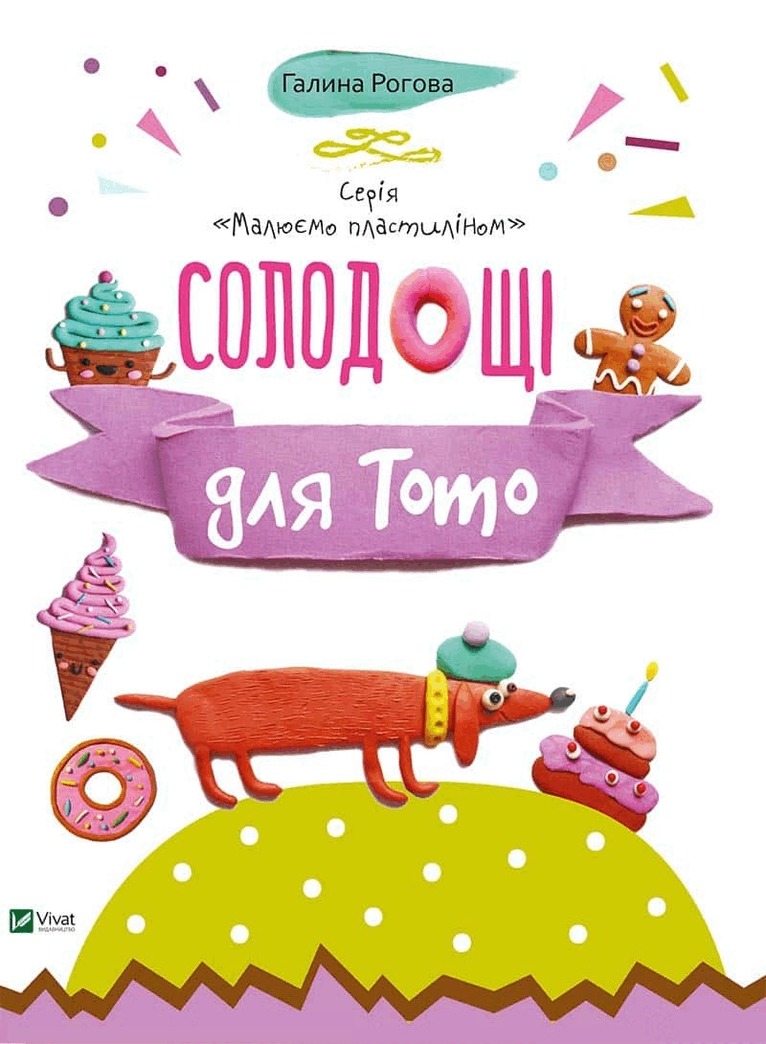
Alla vet vad lera är och hur man arbetar med den. Men det visar sig att med detta unika material kan du också rita! Denna typ av kreativitet är mycket fördelaktig för unga konstnärer, eftersom den främjar utvecklingen av finmotorik och fantasi. Dessutom är det mycket intressant att rita med lera!