Galit Shmueli – författare
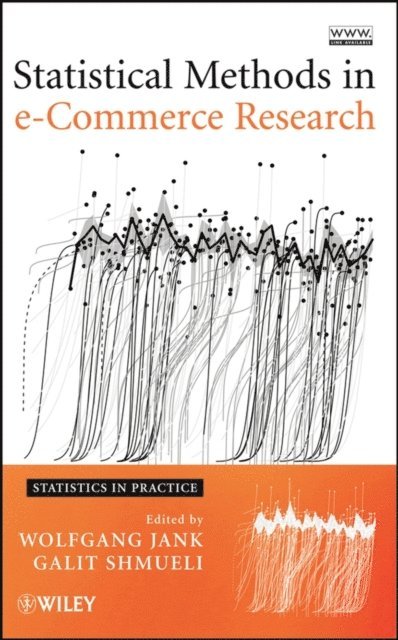
Statistical Methods in e-Commerce Research
1 627 kr
Skickas inom 5-8 vardagar
1 847 kr
Läs direkt efter köp
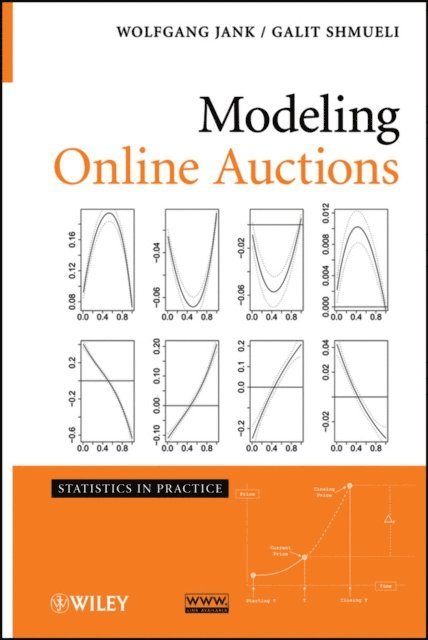
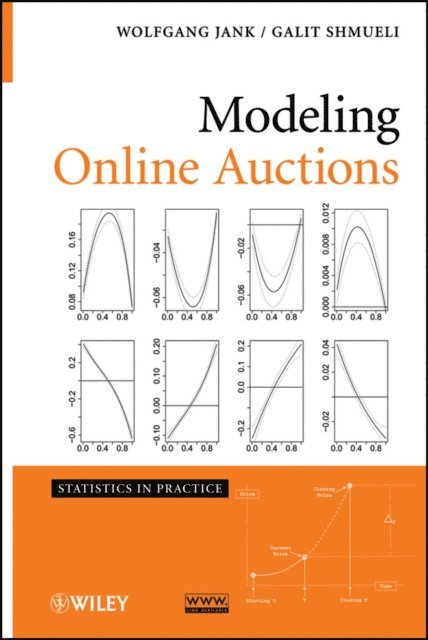
Modeling Online Auctions
1 596 kr
Skickas inom 11-20 vardagar
1 786 kr
Läs direkt efter köp
Online auctions are an increasingly important marketplace, as the new mechanisms and formats underlying these auctions have enabled the capturing and recording of large amounts of bidding data that are used to make important business decisions. As a result, new statistical ideas and innovation are needed to understand bidders, sellers, and prices. Combining methodologies from the fields of statistics, data mining, information systems, and economics, Modeling Online Auctions introduces a new approach to identifying obstacles and asking new questions using online auction data.
The authors draw upon their extensive experience to introduce the latest methods for extracting new knowledge from online auction data. Rather than approach the topic from the traditional game-theoretic perspective, the book treats the online auction mechanism as a data generator, outlining methods to collect, explore, model, and forecast data. Topics covered include:
Data collection methods for online auctions and related issues that arise in drawing data samples from a Web site Models for bidder and bid arrivals, treating the different approaches for exploring bidder-seller networks Data exploration, such as integration of time series and cross-sectional information; curve clustering; semi-continuous data structures; and data hierarchies The use of functional regression as well as functional differential equation models, spatial models, and stochastic models for capturing relationships in auction data Specialized methods and models for forecasting auction prices and their applications in automated bidding decision rule systemsThroughout the book, R and MATLAB software are used for illustrating the discussed techniques. In addition, a related Web site features many of the book''s datasets and R and MATLAB code that allow readers to replicate the analyses and learn new methods to apply to their own research.
Modeling Online Auctions is a valuable book for graduate-level courses on data mining and applied regression analysis. It is also a one-of-a-kind reference for researchers in the fields of statistics, information systems, business, and marketing who work with electronic data and are looking for new approaches for understanding online auctions and processes.
Visit this book''s companion website by clicking here
304 kr
Skickas inom 5-8 vardagar
313 kr
Skickas inom 5-8 vardagar
354 kr
Skickas inom 5-8 vardagar
373 kr
Skickas inom 5-8 vardagar
1 851 kr
Läs direkt efter köp
Online auctions are an increasingly important marketplace, as the new mechanisms and formats underlying these auctions have enabled the capturing and recording of large amounts of bidding data that are used to make important business decisions. As a result, new statistical ideas and innovation are needed to understand bidders, sellers, and prices. Combining methodologies from the fields of statistics, data mining, information systems, and economics, Modeling Online Auctions introduces a new approach to identifying obstacles and asking new questions using online auction data.
The authors draw upon their extensive experience to introduce the latest methods for extracting new knowledge from online auction data. Rather than approach the topic from the traditional game-theoretic perspective, the book treats the online auction mechanism as a data generator, outlining methods to collect, explore, model, and forecast data. Topics covered include:
Data collection methods for online auctions and related issues that arise in drawing data samples from a Web site Models for bidder and bid arrivals, treating the different approaches for exploring bidder-seller networks Data exploration, such as integration of time series and cross-sectional information; curve clustering; semi-continuous data structures; and data hierarchies The use of functional regression as well as functional differential equation models, spatial models, and stochastic models for capturing relationships in auction data Specialized methods and models for forecasting auction prices and their applications in automated bidding decision rule systemsThroughout the book, R and MATLAB software are used for illustrating the discussed techniques. In addition, a related Web site features many of the book''s datasets and R and MATLAB code that allow readers to replicate the analyses and learn new methods to apply to their own research.
Modeling Online Auctions is a valuable book for graduate-level courses on data mining and applied regression analysis. It is also a one-of-a-kind reference for researchers in the fields of statistics, information systems, business, and marketing who work with electronic data and are looking for new approaches for understanding online auctions and processes.
Visit this book''s companion website by clicking here
1 873 kr
Läs direkt efter köp
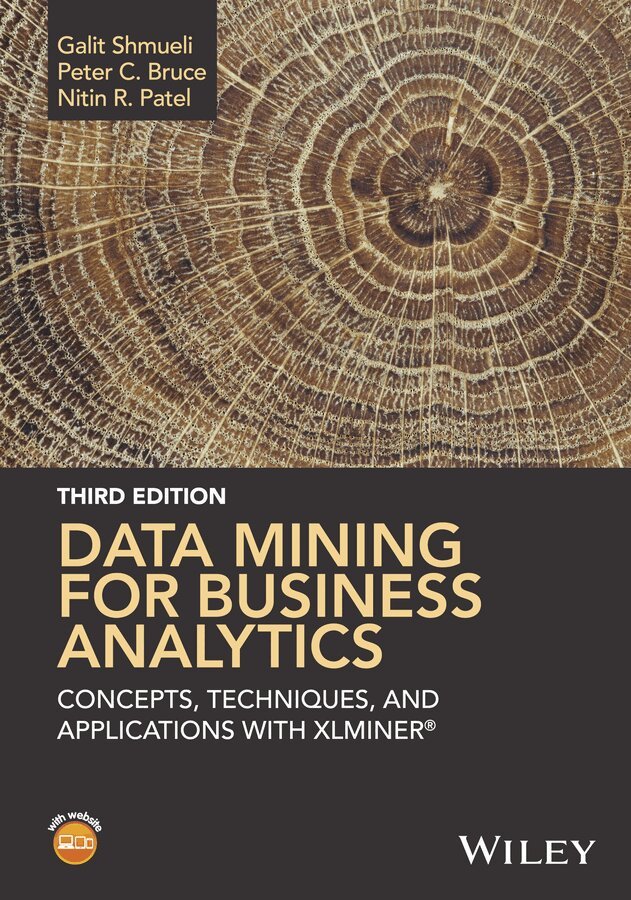
An applied approach to data mining and predictive analytics with clear exposition, hands-on exercises, and real-life case studies. Readers will work with all of the standard data mining methods using the Microsoft® Office Excel® add-in XLMiner® to develop predictive models and learn how to obtain business value from Big Data.
Featuring updated topical coverage on text mining, social network analysis, collaborative filtering, ensemble methods, uplift modeling and more, the Third Edition also includes:
Real-world examples to build a theoretical and practical understanding of key data mining methods End-of-chapter exercises that help readers better understand the presented material Data-rich case studies to illustrate various applications of data mining techniques Completely new chapters on social network analysis and text mining A companion site with additional data sets, instructors material that include solutions to exercises and case studies, and Microsoft PowerPoint® slides https://www.dataminingbook.com Free 140-day license to use XLMiner for Education softwareData Mining for Business Analytics: Concepts, Techniques, and Applications in XLMiner®, Third Edition is an ideal textbook for upper-undergraduate and graduate-level courses as well as professional programs on data mining, predictive modeling, and Big Data analytics. The new edition is also a unique reference for analysts, researchers, and practitioners working with predictive analytics in the fields of business, finance, marketing, computer science, and information technology.
Praise for the Second Edition
"…full of vivid and thought-provoking anecdotes... needs to be read by anyone with a serious interest in research and marketing."– Research Magazine
"Shmueli et al. have done a wonderful job in presenting the field of data mining - a welcome addition to the literature." – ComputingReviews.com"Excellent choice for business analysts...The book is a perfect fit for its intended audience." – Keith McCormick, Consultant and Author of SPSS Statistics For Dummies, Third Edition and SPSS Statistics for Data Analysis and Visualization
Galit Shmueli, PhD, is Distinguished Professor at National Tsing Hua University’s Institute of Service Science. She has designed and instructed data mining courses since 2004 at University of Maryland, Statistics.com, The Indian School of Business, and National Tsing Hua University, Taiwan. Professor Shmueli is known for her research and teaching in business analytics, with a focus on statistical and data mining methods in information systems and healthcare. She has authored over 70 journal articles, books, textbooks and book chapters.
Peter C. Bruce is President and Founder of the Institute for Statistics Education at www.statistics.com. He has written multiple journal articles and is the developer of Resampling Stats software. He is the author of Introductory Statistics and Analytics: A Resampling Perspective, also published by Wiley.
Nitin R. Patel, PhD, is Chairman and cofounder of Cytel, Inc., based in Cambridge, Massachusetts. A Fellow of the American Statistical Association, Dr. Patel has also served as a Visiting Professor at the Massachusetts Institute of Technology and at Harvard University. He is a Fellow of the Computer Society of India and was a professor at the Indian Institute of Management, Ahmedabad for 15 years.
1 755 kr
Läs direkt efter köp
An applied approach to data mining and predictive analytics with clear exposition, hands-on exercises, and real-life case studies. Readers will work with all of the standard data mining methods using the Microsoft® Office Excel® add-in XLMiner® to develop predictive models and learn how to obtain business value from Big Data.
Featuring updated topical coverage on text mining, social network analysis, collaborative filtering, ensemble methods, uplift modeling and more, the Third Edition also includes:
Real-world examples to build a theoretical and practical understanding of key data mining methods End-of-chapter exercises that help readers better understand the presented material Data-rich case studies to illustrate various applications of data mining techniques Completely new chapters on social network analysis and text mining A companion site with additional data sets, instructors material that include solutions to exercises and case studies, and Microsoft PowerPoint® slides https://www.dataminingbook.com Free 140-day license to use XLMiner for Education softwareData Mining for Business Analytics: Concepts, Techniques, and Applications in XLMiner®, Third Edition is an ideal textbook for upper-undergraduate and graduate-level courses as well as professional programs on data mining, predictive modeling, and Big Data analytics. The new edition is also a unique reference for analysts, researchers, and practitioners working with predictive analytics in the fields of business, finance, marketing, computer science, and information technology.
Praise for the Second Edition
"…full of vivid and thought-provoking anecdotes... needs to be read by anyone with a serious interest in research and marketing."– Research Magazine
"Shmueli et al. have done a wonderful job in presenting the field of data mining - a welcome addition to the literature." – ComputingReviews.com"Excellent choice for business analysts...The book is a perfect fit for its intended audience." – Keith McCormick, Consultant and Author of SPSS Statistics For Dummies, Third Edition and SPSS Statistics for Data Analysis and Visualization
Galit Shmueli, PhD, is Distinguished Professor at National Tsing Hua University’s Institute of Service Science. She has designed and instructed data mining courses since 2004 at University of Maryland, Statistics.com, The Indian School of Business, and National Tsing Hua University, Taiwan. Professor Shmueli is known for her research and teaching in business analytics, with a focus on statistical and data mining methods in information systems and healthcare. She has authored over 70 journal articles, books, textbooks and book chapters.
Peter C. Bruce is President and Founder of the Institute for Statistics Education at www.statistics.com. He has written multiple journal articles and is the developer of Resampling Stats software. He is the author of Introductory Statistics and Analytics: A Resampling Perspective, also published by Wiley.
Nitin R. Patel, PhD, is Chairman and cofounder of Cytel, Inc., based in Cambridge, Massachusetts. A Fellow of the American Statistical Association, Dr. Patel has also served as a Visiting Professor at the Massachusetts Institute of Technology and at Harvard University. He is a Fellow of the Computer Society of India and was a professor at the Indian Institute of Management, Ahmedabad for 15 years.
905 kr
Skickas inom 11-20 vardagar
1 660 kr
Läs direkt efter köp
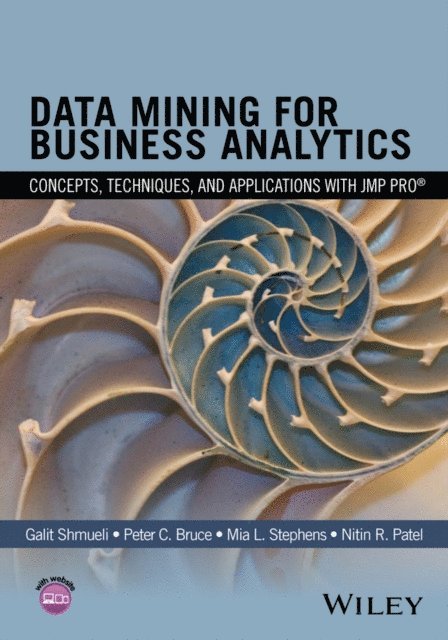
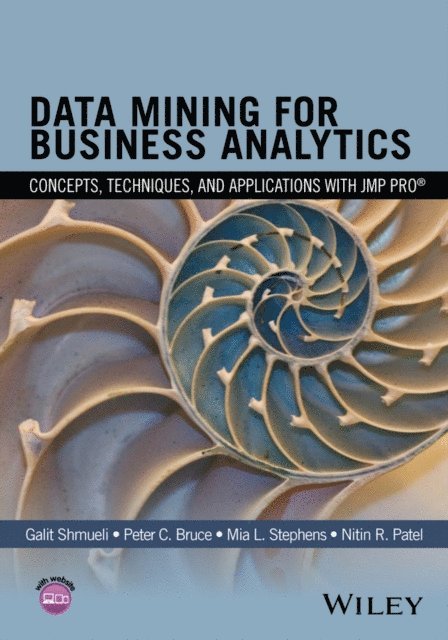
Data Mining for Business Analytics: Concepts, Techniques, and Applications with JMP Pro® presents an applied and interactive approach to data mining.
Featuring hands-on applications with JMP Pro®, a statistical package from the SAS Institute, the bookuses engaging, real-world examples to build a theoretical and practical understanding of key data mining methods, especially predictive models for classification and prediction. Topics include data visualization, dimension reduction techniques, clustering, linear and logistic regression, classification and regression trees, discriminant analysis, naive Bayes, neural networks, uplift modeling, ensemble models, and time series forecasting.
Data Mining for Business Analytics: Concepts, Techniques, and Applications with JMP Pro® also includes:
Detailed summaries that supply an outline of key topics at the beginning of each chapter End-of-chapter examples and exercises that allow readers to expand their comprehension of the presented material Data-rich case studies to illustrate various applications of data mining techniques A companion website with over two dozen data sets, exercises and case study solutions, and slides for instructors www.dataminingbook.comData Mining for Business Analytics: Concepts, Techniques, and Applications with JMP Pro® is an excellent textbook for advanced undergraduate and graduate-level courses on data mining, predictive analytics, and business analytics. The book is also a one-of-a-kind resource for data scientists, analysts, researchers, and practitioners working with analytics in the fields of management, finance, marketing, information technology, healthcare, education, and any other data-rich field.
1 028 kr
Läs direkt efter köp
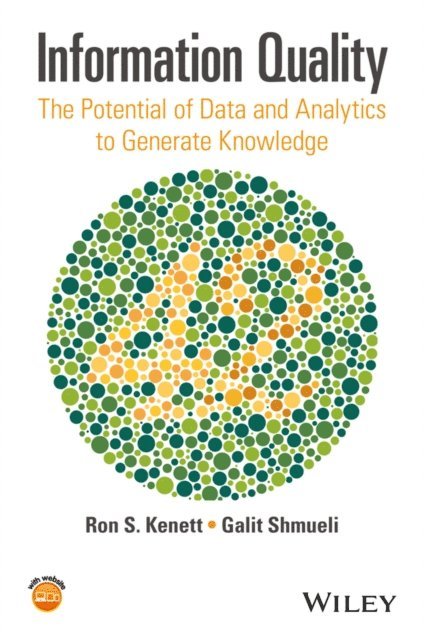
Provides an important framework for data analysts in assessing the quality of data and its potential to provide meaningful insights through analysis
Analytics and statistical analysis have become pervasive topics, mainly due to the growing availability of data and analytic tools. Technology, however, fails to deliver insights with added value if the quality of the information it generates is not assured. Information Quality (InfoQ) is a tool developed by the authors to assess the potential of a dataset to achieve a goal of interest, using data analysis. Whether the information quality of a dataset is sufficient is of practical importance at many stages of the data analytics journey, from the pre-data collection stage to the post-data collection and post-analysis stages. It is also critical to various stakeholders: data collection agencies, analysts, data scientists, and management.
This book:
Explains how to integrate the notions of goal, data, analysis and utility that are the main building blocks of data analysis within any domain. Presents a framework for integrating domain knowledge with data analysis. Provides a combination of both methodological and practical aspects of data analysis. Discusses issues surrounding the implementation and integration of InfoQ in both academic programmes and business / industrial projects. Showcases numerous case studies in a variety of application areas such as education, healthcare, official statistics, risk management and marketing surveys. Presents a review of software tools from the InfoQ perspective along with example datasets on an accompanying website.This book will be beneficial for researchers in academia and in industry, analysts, consultants, and agencies that collect and analyse data as well as undergraduate and postgraduate courses involving data analysis.
992 kr
Läs direkt efter köp
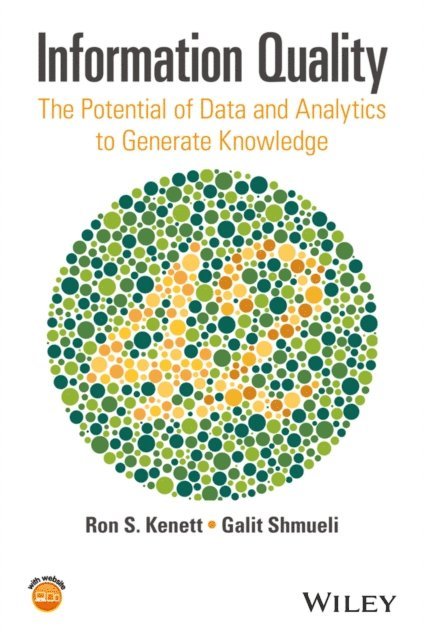
Provides an important framework for data analysts in assessing the quality of data and its potential to provide meaningful insights through analysis
Analytics and statistical analysis have become pervasive topics, mainly due to the growing availability of data and analytic tools. Technology, however, fails to deliver insights with added value if the quality of the information it generates is not assured. Information Quality (InfoQ) is a tool developed by the authors to assess the potential of a dataset to achieve a goal of interest, using data analysis. Whether the information quality of a dataset is sufficient is of practical importance at many stages of the data analytics journey, from the pre-data collection stage to the post-data collection and post-analysis stages. It is also critical to various stakeholders: data collection agencies, analysts, data scientists, and management.
This book:
Explains how to integrate the notions of goal, data, analysis and utility that are the main building blocks of data analysis within any domain. Presents a framework for integrating domain knowledge with data analysis. Provides a combination of both methodological and practical aspects of data analysis. Discusses issues surrounding the implementation and integration of InfoQ in both academic programmes and business / industrial projects. Showcases numerous case studies in a variety of application areas such as education, healthcare, official statistics, risk management and marketing surveys. Presents a review of software tools from the InfoQ perspective along with example datasets on an accompanying website.This book will be beneficial for researchers in academia and in industry, analysts, consultants, and agencies that collect and analyse data as well as undergraduate and postgraduate courses involving data analysis.
1 705 kr
Läs direkt efter köp
Data Mining for Business Analytics: Concepts, Techniques, and Applications with JMP Pro® presents an applied and interactive approach to data mining.
Featuring hands-on applications with JMP Pro®, a statistical package from the SAS Institute, the bookuses engaging, real-world examples to build a theoretical and practical understanding of key data mining methods, especially predictive models for classification and prediction. Topics include data visualization, dimension reduction techniques, clustering, linear and logistic regression, classification and regression trees, discriminant analysis, naive Bayes, neural networks, uplift modeling, ensemble models, and time series forecasting.
Data Mining for Business Analytics: Concepts, Techniques, and Applications with JMP Pro® also includes:
Detailed summaries that supply an outline of key topics at the beginning of each chapter End-of-chapter examples and exercises that allow readers to expand their comprehension of the presented material Data-rich case studies to illustrate various applications of data mining techniques A companion website with over two dozen data sets, exercises and case study solutions, and slides for instructors www.dataminingbook.comData Mining for Business Analytics: Concepts, Techniques, and Applications with JMP Pro® is an excellent textbook for advanced undergraduate and graduate-level courses on data mining, predictive analytics, and business analytics. The book is also a one-of-a-kind resource for data scientists, analysts, researchers, and practitioners working with analytics in the fields of management, finance, marketing, information technology, healthcare, education, and any other data-rich field.
1 631 kr
Läs direkt efter köp
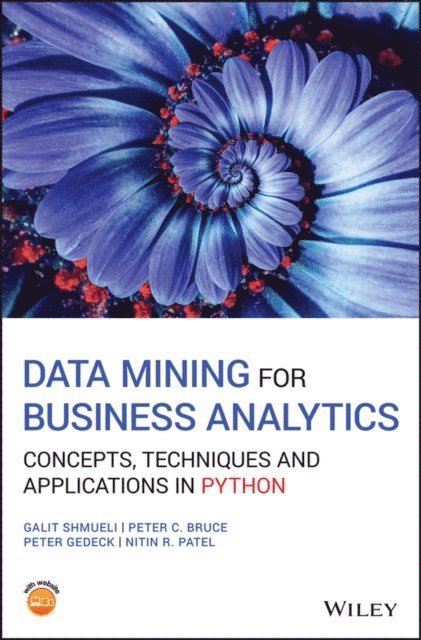
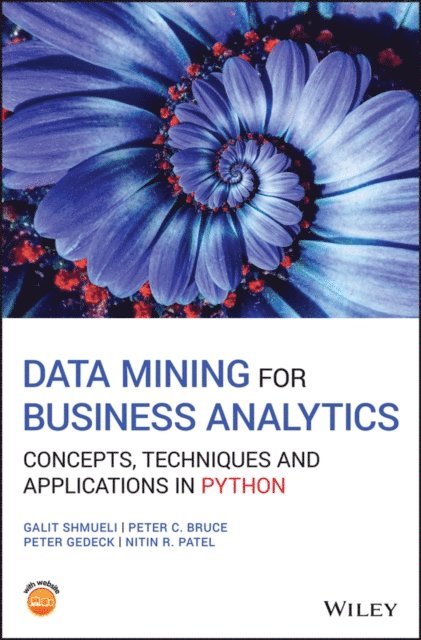
Data Mining for Business Analytics: Concepts, Techniques, and Applications in Python presents an applied approach to data mining concepts and methods, using Python software for illustration
Readers will learn how to implement a variety of popular data mining algorithms in Python (a free and open-source software) to tackle business problems and opportunities.
This is the sixth version of this successful text, and the first using Python. It covers both statistical and machine learning algorithms for prediction, classification, visualization, dimension reduction, recommender systems, clustering, text mining and network analysis. It also includes:
A new co-author, Peter Gedeck, who brings both experience teaching business analytics courses using Python, and expertise in the application of machine learning methods to the drug-discovery process A new section on ethical issues in data mining Updates and new material based on feedback from instructors teaching MBA, undergraduate, diploma and executive courses, and from their students More than a dozen case studies demonstrating applications for the data mining techniques described End-of-chapter exercises that help readers gauge and expand their comprehension and competency of the material presented A companion website with more than two dozen data sets, and instructor materials including exercise solutions, PowerPoint slides, and case solutionsData Mining for Business Analytics: Concepts, Techniques, and Applications in Python is an ideal textbook for graduate and upper-undergraduate level courses in data mining, predictive analytics, and business analytics. This new edition is also an excellent reference for analysts, researchers, and practitioners working with quantitative methods in the fields of business, finance, marketing, computer science, and information technology.
“This book has by far the most comprehensive review of business analytics methods that I have ever seen, covering everything from classical approaches such as linear and logistic regression, through to modern methods like neural networks, bagging and boosting, and even much more business specific procedures such as social network analysis and text mining. If not the bible, it is at the least a definitive manual on the subject.”
—Gareth M. James, University of Southern California and co-author (with Witten, Hastie and Tibshirani) of the best-selling book An Introduction to Statistical Learning, with Applications in R
1 588 kr
Läs direkt efter köp
Data Mining for Business Analytics: Concepts, Techniques, and Applications in Python presents an applied approach to data mining concepts and methods, using Python software for illustration
Readers will learn how to implement a variety of popular data mining algorithms in Python (a free and open-source software) to tackle business problems and opportunities.
This is the sixth version of this successful text, and the first using Python. It covers both statistical and machine learning algorithms for prediction, classification, visualization, dimension reduction, recommender systems, clustering, text mining and network analysis. It also includes:
A new co-author, Peter Gedeck, who brings both experience teaching business analytics courses using Python, and expertise in the application of machine learning methods to the drug-discovery process A new section on ethical issues in data mining Updates and new material based on feedback from instructors teaching MBA, undergraduate, diploma and executive courses, and from their students More than a dozen case studies demonstrating applications for the data mining techniques described End-of-chapter exercises that help readers gauge and expand their comprehension and competency of the material presented A companion website with more than two dozen data sets, and instructor materials including exercise solutions, PowerPoint slides, and case solutionsData Mining for Business Analytics: Concepts, Techniques, and Applications in Python is an ideal textbook for graduate and upper-undergraduate level courses in data mining, predictive analytics, and business analytics. This new edition is also an excellent reference for analysts, researchers, and practitioners working with quantitative methods in the fields of business, finance, marketing, computer science, and information technology.
“This book has by far the most comprehensive review of business analytics methods that I have ever seen, covering everything from classical approaches such as linear and logistic regression, through to modern methods like neural networks, bagging and boosting, and even much more business specific procedures such as social network analysis and text mining. If not the bible, it is at the least a definitive manual on the subject.”
—Gareth M. James, University of Southern California and co-author (with Witten, Hastie and Tibshirani) of the best-selling book An Introduction to Statistical Learning, with Applications in R
1 504 kr
Skickas inom 5-8 vardagar
1 665 kr
Läs direkt efter köp
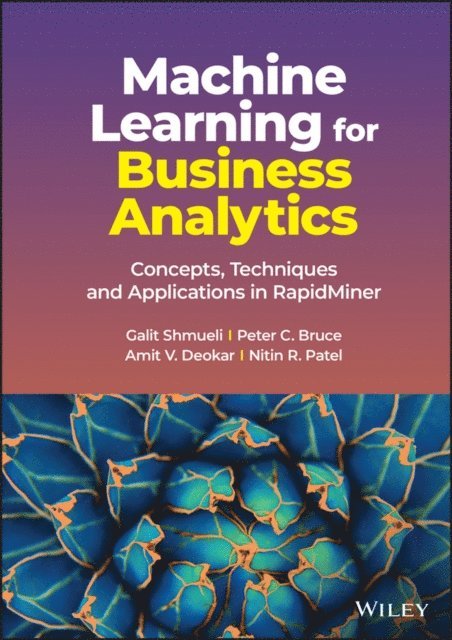
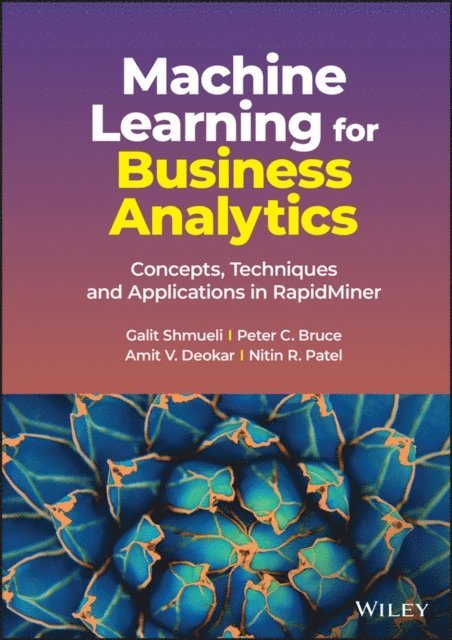
Machine learning—also known as data mining or data analytics—is a fundamental part of data science. It is used by organizations in a wide variety of arenas to turn raw data into actionable information.
Machine Learning for Business Analytics: Concepts, Techniques and Applications in RapidMiner provides a comprehensive introduction and an overview of this methodology. This best-selling textbook covers both statistical and machine learning algorithms for prediction, classification, visualization, dimension reduction, rule mining, recommendations, clustering, text mining, experimentation and network analytics. Along with hands-on exercises and real-life case studies, it also discusses managerial and ethical issues for responsible use of machine learning techniques.
This is the seventh edition of Machine Learning for Business Analytics, and the first using RapidMiner software. This edition also includes:
A new co-author, Amit Deokar, who brings experience teaching business analytics courses using RapidMiner Integrated use of RapidMiner, an open-source machine learning platform that has become commercially popular in recent years An expanded chapter focused on discussion of deep learning techniques A new chapter on experimental feedback techniques including A/B testing, uplift modeling, and reinforcement learning A new chapter on responsible data science Updates and new material based on feedback from instructors teaching MBA, Masters in Business Analytics and related programs, undergraduate, diploma and executive courses, and from their students A full chapter devoted to relevant case studies with more than a dozen cases demonstrating applications for the machine learning techniques End-of-chapter exercises that help readers gauge and expand their comprehension and competency of the material presented A companion website with more than two dozen data sets, and instructor materials including exercise solutions, slides, and case solutionsThis textbook is an ideal resource for upper-level undergraduate and graduate level courses in data science, predictive analytics, and business analytics. It is also an excellent reference for analysts, researchers, and data science practitioners working with quantitative data in management, finance, marketing, operations management, information systems, computer science, and information technology.
1 680 kr
Läs direkt efter köp
Machine learning—also known as data mining or data analytics—is a fundamental part of data science. It is used by organizations in a wide variety of arenas to turn raw data into actionable information.
Machine Learning for Business Analytics: Concepts, Techniques and Applications in RapidMiner provides a comprehensive introduction and an overview of this methodology. This best-selling textbook covers both statistical and machine learning algorithms for prediction, classification, visualization, dimension reduction, rule mining, recommendations, clustering, text mining, experimentation and network analytics. Along with hands-on exercises and real-life case studies, it also discusses managerial and ethical issues for responsible use of machine learning techniques.
This is the seventh edition of Machine Learning for Business Analytics, and the first using RapidMiner software. This edition also includes:
A new co-author, Amit Deokar, who brings experience teaching business analytics courses using RapidMiner Integrated use of RapidMiner, an open-source machine learning platform that has become commercially popular in recent years An expanded chapter focused on discussion of deep learning techniques A new chapter on experimental feedback techniques including A/B testing, uplift modeling, and reinforcement learning A new chapter on responsible data science Updates and new material based on feedback from instructors teaching MBA, Masters in Business Analytics and related programs, undergraduate, diploma and executive courses, and from their students A full chapter devoted to relevant case studies with more than a dozen cases demonstrating applications for the machine learning techniques End-of-chapter exercises that help readers gauge and expand their comprehension and competency of the material presented A companion website with more than two dozen data sets, and instructor materials including exercise solutions, slides, and case solutionsThis textbook is an ideal resource for upper-level undergraduate and graduate level courses in data science, predictive analytics, and business analytics. It is also an excellent reference for analysts, researchers, and data science practitioners working with quantitative data in management, finance, marketing, operations management, information systems, computer science, and information technology.
1 529 kr
Skickas
1 635 kr
Läs direkt efter köp
Machine learning—also known as data mining or predictive analytics—is a fundamental part of data science. It is used by organizations in a wide variety of arenas to turn raw data into actionable information.
Machine Learning for Business Analytics: Concepts, Techniques, and Applications with Analytic Solver® Data Mining provides a comprehensive introduction and an overview of this methodology. The fourth edition of this best-selling textbook covers both statistical and machine learning algorithms for prediction, classification, visualization, dimension reduction, rule mining, recommendations, clustering, text mining, experimentation, time series forecasting and network analytics. Along with hands-on exercises and real-life case studies, it also discusses managerial and ethical issues for responsible use of machine learning techniques.
This fourth edition of Machine Learning for Business Analytics also includes:
An expanded chapter on deep learning A new chapter on experimental feedback techniques, including A/B testing, uplift modeling, and reinforcement learning A new chapter on responsible data science Updates and new material based on feedback from instructors teaching MBA, Masters in Business Analytics and related programs, undergraduate, diploma and executive courses, and from their students A full chapter devoted to relevant case studies with more than a dozen cases demonstrating applications for the machine learning techniques End-of-chapter exercises that help readers gauge and expand their comprehension and competency of the material presented A companion website with more than two dozen data sets, and instructor materials including exercise solutions, slides, and case solutionsThis textbook is an ideal resource for upper-level undergraduate and graduate level courses in data science, predictive analytics, and business analytics. It is also an excellent reference for analysts, researchers, and data science practitioners working with quantitative data in management, finance, marketing, operations management, information systems, computer science, and information technology.
1 680 kr
Läs direkt efter köp
Machine learning—also known as data mining or predictive analytics—is a fundamental part of data science. It is used by organizations in a wide variety of arenas to turn raw data into actionable information.
Machine Learning for Business Analytics: Concepts, Techniques, and Applications with Analytic Solver® Data Mining provides a comprehensive introduction and an overview of this methodology. The fourth edition of this best-selling textbook covers both statistical and machine learning algorithms for prediction, classification, visualization, dimension reduction, rule mining, recommendations, clustering, text mining, experimentation, time series forecasting and network analytics. Along with hands-on exercises and real-life case studies, it also discusses managerial and ethical issues for responsible use of machine learning techniques.
This fourth edition of Machine Learning for Business Analytics also includes:
An expanded chapter on deep learning A new chapter on experimental feedback techniques, including A/B testing, uplift modeling, and reinforcement learning A new chapter on responsible data science Updates and new material based on feedback from instructors teaching MBA, Masters in Business Analytics and related programs, undergraduate, diploma and executive courses, and from their students A full chapter devoted to relevant case studies with more than a dozen cases demonstrating applications for the machine learning techniques End-of-chapter exercises that help readers gauge and expand their comprehension and competency of the material presented A companion website with more than two dozen data sets, and instructor materials including exercise solutions, slides, and case solutionsThis textbook is an ideal resource for upper-level undergraduate and graduate level courses in data science, predictive analytics, and business analytics. It is also an excellent reference for analysts, researchers, and data science practitioners working with quantitative data in management, finance, marketing, operations management, information systems, computer science, and information technology.
1 503 kr
Skickas inom 5-8 vardagar
1 574 kr
Läs direkt efter köp
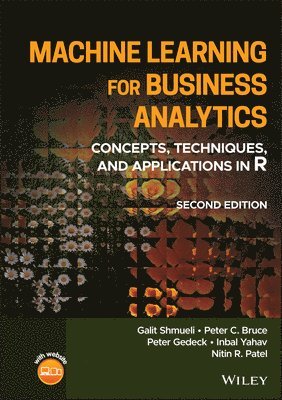
MACHINE LEARNING FOR BUSINESS ANALYTICS
Machine learning —also known as data mining or data analytics— is a fundamental part of data science. It is used by organizations in a wide variety of arenas to turn raw data into actionable information.
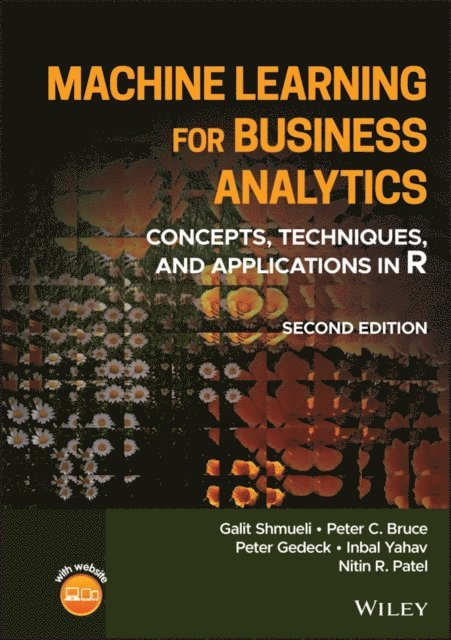
Machine Learning for Business Analytics: Concepts, Techniques, and Applications in R provides a comprehensive introduction and an overview of this methodology. This best-selling textbook covers both statistical and machine learning algorithms for prediction, classification, visualization, dimension reduction, rule mining, recommendations, clustering, text mining, experimentation, and network analytics. Along with hands-on exercises and real-life case studies, it also discusses managerial and ethical issues for responsible use of machine learning techniques.
This is the second R edition of Machine Learning for Business Analytics. This edition also includes:
A new co-author, Peter Gedeck, who brings over 20 years of experience in machine learning using R An expanded chapter focused on discussion of deep learning techniques A new chapter on experimental feedback techniques including A/B testing, uplift modeling, and reinforcement learning A new chapter on responsible data science Updates and new material based on feedback from instructors teaching MBA, Masters in Business Analytics and related programs, undergraduate, diploma and executive courses, and from their students A full chapter devoted to relevant case studies with more than a dozen cases demonstrating applications for the machine learning techniques End-of-chapter exercises that help readers gauge and expand their comprehension and competency of the material presented A companion website with more than two dozen data sets, and instructor materials including exercise solutions, slides, and case solutionsThis textbook is an ideal resource for upper-level undergraduate and graduate level courses in data science, predictive analytics, and business analytics. It is also an excellent reference for analysts, researchers, and data science practitioners working with quantitative data in management, finance, marketing, operations management, information systems, computer science, and information technology.
1 631 kr
Läs direkt efter köp
MACHINE LEARNING FOR BUSINESS ANALYTICS
Machine learning —also known as data mining or data analytics— is a fundamental part of data science. It is used by organizations in a wide variety of arenas to turn raw data into actionable information.
Machine Learning for Business Analytics: Concepts, Techniques, and Applications in R provides a comprehensive introduction and an overview of this methodology. This best-selling textbook covers both statistical and machine learning algorithms for prediction, classification, visualization, dimension reduction, rule mining, recommendations, clustering, text mining, experimentation, and network analytics. Along with hands-on exercises and real-life case studies, it also discusses managerial and ethical issues for responsible use of machine learning techniques.
This is the second R edition of Machine Learning for Business Analytics. This edition also includes:
A new co-author, Peter Gedeck, who brings over 20 years of experience in machine learning using R An expanded chapter focused on discussion of deep learning techniques A new chapter on experimental feedback techniques including A/B testing, uplift modeling, and reinforcement learning A new chapter on responsible data science Updates and new material based on feedback from instructors teaching MBA, Masters in Business Analytics and related programs, undergraduate, diploma and executive courses, and from their students A full chapter devoted to relevant case studies with more than a dozen cases demonstrating applications for the machine learning techniques End-of-chapter exercises that help readers gauge and expand their comprehension and competency of the material presented A companion website with more than two dozen data sets, and instructor materials including exercise solutions, slides, and case solutionsThis textbook is an ideal resource for upper-level undergraduate and graduate level courses in data science, predictive analytics, and business analytics. It is also an excellent reference for analysts, researchers, and data science practitioners working with quantitative data in management, finance, marketing, operations management, information systems, computer science, and information technology.
1 477 kr
Skickas inom 5-8 vardagar
1 648 kr
Läs direkt efter köp
An up-to-date introduction to a market-leading platform for data analysis and machine learning
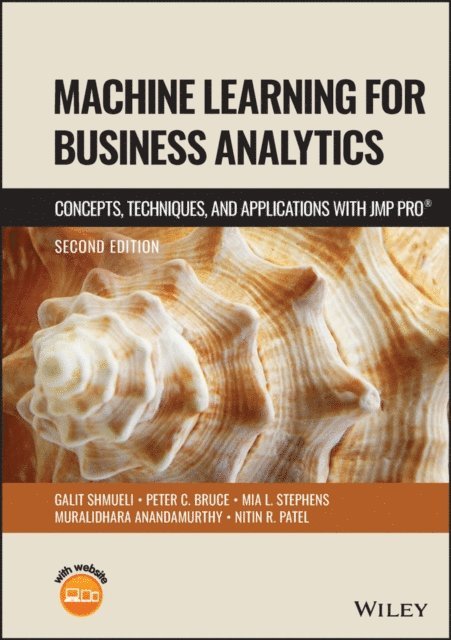
Machine Learning for Business Analytics: Concepts, Techniques, and Applications with JMP Pro, 2nd ed. offers an accessible and engaging introduction to machine learning. It provides concrete examples and case studies to educate new users and deepen existing users’ understanding of their data and their business. Fully updated to incorporate new topics and instructional material, this remains the only comprehensive introduction to this crucial set of analytical tools specifically tailored to the needs of businesses.
Machine Learning for Business Analytics: Concepts, Techniques, and Applications with JMP Pro, 2nd ed. readers will also find:
Updated material which improves the book’s usefulness as a reference for professionals beyond the classroom Four new chapters, covering topics including Text Mining and Responsible Data Science An updated companion website with data sets and other instructor resources: www.jmp.com/dataminingbook A guide to JMP Pro''s new features and enhanced functionalityMachine Learning for Business Analytics: Concepts, Techniques, and Applications with JMP Pro, 2nd ed. is ideal for students and instructors of business analytics and data mining classes, as well as data science practitioners and professionals in data-driven industries.
1 708 kr
Läs direkt efter köp
An up-to-date introduction to a market-leading platform for data analysis and machine learning
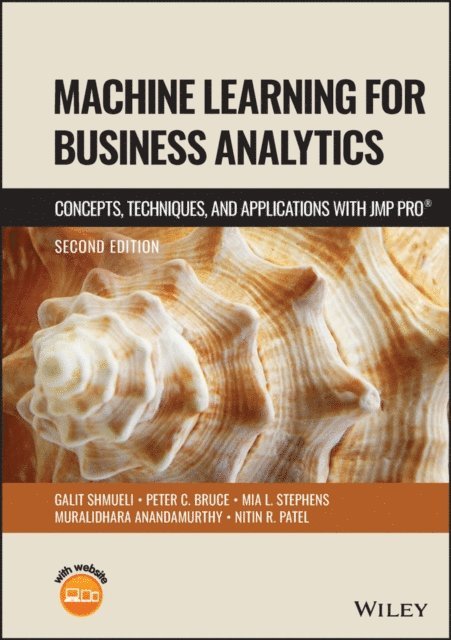
Machine Learning for Business Analytics: Concepts, Techniques, and Applications with JMP Pro, 2nd ed. offers an accessible and engaging introduction to machine learning. It provides concrete examples and case studies to educate new users and deepen existing users’ understanding of their data and their business. Fully updated to incorporate new topics and instructional material, this remains the only comprehensive introduction to this crucial set of analytical tools specifically tailored to the needs of businesses.
Machine Learning for Business Analytics: Concepts, Techniques, and Applications with JMP Pro, 2nd ed. readers will also find:
Updated material which improves the book’s usefulness as a reference for professionals beyond the classroom Four new chapters, covering topics including Text Mining and Responsible Data Science An updated companion website with data sets and other instructor resources: www.jmp.com/dataminingbook A guide to JMP Pro''s new features and enhanced functionalityMachine Learning for Business Analytics: Concepts, Techniques, and Applications with JMP Pro, 2nd ed. is ideal for students and instructors of business analytics and data mining classes, as well as data science practitioners and professionals in data-driven industries.