Gary Stacey – författare
Visar alla böcker från författaren Gary Stacey. Handla med fri frakt och snabb leverans.
13 produkter
13 produkter
Inbunden, Engelska, 2008
2 166 kr
Skickas inom 10-15 vardagar
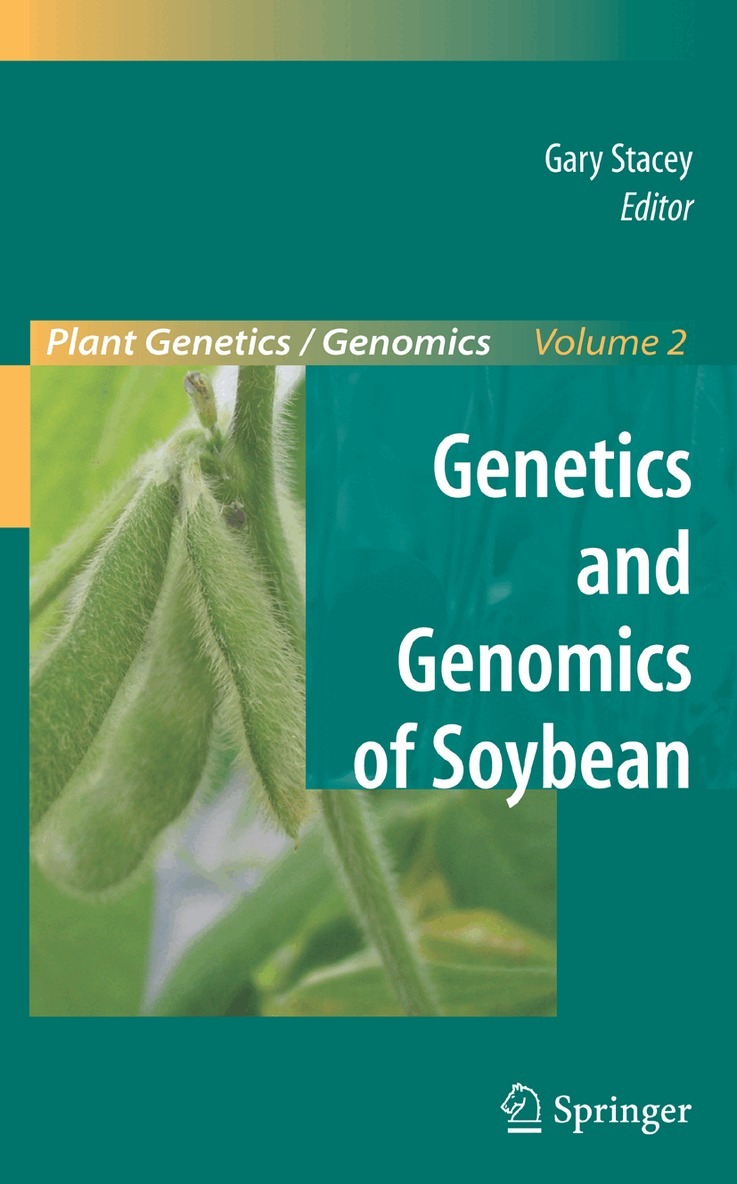
GeneticsandGenomicsofSoybean,EditedbyProfessorGaryStacey,isaremarkable collection of articles by internationally-recognized experts in the ?eld of soybean genomics – many of whom helped to develop the tools and resources necessary to establish soybean as a powerful crop to investigate important basic and applied questions of plant biology. This collection of articles provides a comprehensive up-to-date review of the ?eld of soybean genomics, and documents how far this ?eld has advanced in the last few years. From the vantage point of someone like myself who ?rst began investigatingthe organizationand expression of the soybean genome thirty years ago, the insights provided by the authors in this book in- cate that soybean has indeed “come of age,” and that decades-old mysteries of the soybean genome are now being illuminated. Genetics and Genomics of Soybean is divided into four sections: (1) soybean genome natural history and diversity – which includes chapters on the genetic variation of the soybean genome and its relationship to other legume genomes; (2) tools, resources, and approaches – which includes reviews of technological advances that are being used to study the s- bean genome – including the ?rst glimpse of how the soybean genome is being sequenced and assembled; (3) investigations of soybean biology – which contains chapters that review how genomics tools have been used to study important qu- tions – such as seed development, host-pathogen interactions, abiotic stress, and metabolic pathways; and (4) how Roundup Ready soybeans, generated by genetic engineering, have made an impact on global soybean agriculture.
E-bok
PDF, Engelska, 20082 741 kr
Läs direkt efter köp
GeneticsandGenomicsofSoybean,EditedbyProfessorGaryStacey,isaremarkable collection of articles by internationally-recognized experts in the ?eld of soybean genomics – many of whom helped to develop the tools and resources necessary to establish soybean as a powerful crop to investigate important basic and applied questions of plant biology. This collection of articles provides a comprehensive up-to-date review of the ?eld of soybean genomics, and documents how far this ?eld has advanced in the last few years. From the vantage point of someone like myself who ?rst began investigatingthe organizationand expression of the soybean genome thirty years ago, the insights provided by the authors in this book in- cate that soybean has indeed “come of age,” and that decades-old mysteries of the soybean genome are now being illuminated. Genetics and Genomics of Soybean is divided into four sections: (1) soybean genome natural history and diversity – which includes chapters on the genetic variation of the soybean genome and its relationship to other legume genomes; (2) tools, resources, and approaches – which includes reviews of technological advances that are being used to study the s- bean genome – including the ?rst glimpse of how the soybean genome is being sequenced and assembled; (3) investigations of soybean biology – which contains chapters that review how genomics tools have been used to study important qu- tions – such as seed development, host-pathogen interactions, abiotic stress, and metabolic pathways; and (4) how Roundup Ready soybeans, generated by genetic engineering, have made an impact on global soybean agriculture.
Inbunden, Engelska, 1992
4 864 kr
Skickas inom 10-15 vardagar
Nitrogen fixation is a key component of the nitrogen cycle, one of the most fundamental cycles in the biosphere. Conversion of atmospheric nitrogen into organic nitrogen compounds can be carried out only by certain bacteria and blue-green algae (cyanobacteria). Some nitrogen fixing bacteria live symbiotically with leguminous plants such as peas, beans, clover, and certain tropical trees in nodules on the plants' roots, while others live independently in the soil and aquatic habitats. By the activity of these microorganisms, the soil is enriched with the nitrogen required for plant growth and function. Thus the topic is of considerable practical as well as fundamental importance. In Biological Nitrogen Fixation, the leading researchers in nitrogen fixation from all over the world contribute up-to-the-minute general reviews on all aspects of the subject, from the molecular biology and genetics to the biochemistry, physiology, and ecology of nitrogen fixation. This compendium of current research is an indispensable reference for all involved in nitrogen fixation research, and of use to all who deal indirectly with the subject. It will also serve as a thoroughly up-to-date textbook for graduate students in microbiology, plant science, biochemistry, molecular biology, plant pathology, agronomy, and genetics.
Inbunden, Engelska, 1996
1 626 kr
Skickas inom 10-15 vardagar
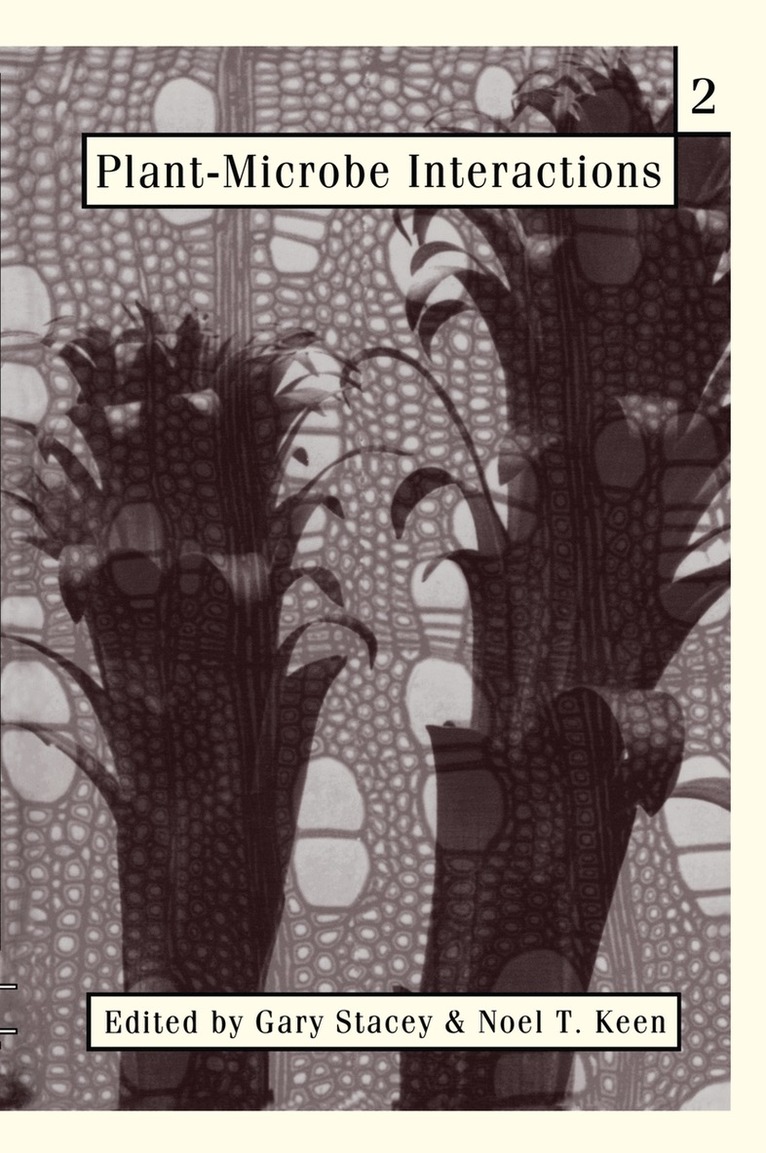
Plant-Microbe Interactions, Volume 2 Volume 1 of this series has made its appearance and dealt forcefully with impor tant current topics in the field of plant-microbe interactions. We believe that the quality of those chapters was high and should serve as a focal point for the state of the art as well as an enduring reference. Volume 2 builds upon these accom plishments. Chapter 1 discusses the fascinating lipo-chitin signal molecules from Rhizo bium, aspects regarding their biosynthesis, and the basis for host specificity. These molecules are a cardinal example of how microorganisms influence plant development and stimulate speculation that they have identified a previously un known aspect of plant hormone activity. Chapter 2 continues the discussion of Rhizobium by considering the trafficking of carbon and nitrogen in nodules. Al though the ostensible advantage of nodules to plants is the fixation of atmos pheric nitrogen, the actual process involved in supplying reduced nitrogen to the plant host is complex.
Inbunden, Engelska, 1997
1 626 kr
Skickas inom 10-15 vardagar
Scientists are continually making discoveries concerning the interactions between microbes and plants, interactions which may be damaging, in the case of plant pathogens, or beneficial, as in the case of nitrogen fixation. This volume provides a review of the work being done in this area. It should be of interest to plant scientists, microbiologists, plant pathologists, soil scientists, and mycologists.
Inbunden, Engelska, 1995
1 626 kr
Skickas inom 10-15 vardagar
Plant-Microbe Interactions, Volume 1 Many plant-microbe interactions have agronomic importance because of either beneficial (e.g., nitrogen fixation or biocontrol) or detrimental (e.g., pathogen esis) effects. Although these systems have been the subjects of scientific re search for many years, recently there has been a tremendous increase in our knowledge of them. The increases in this research have followed a similar general increase in plant science research. Classical plant science research disciplines (e.g., agronomy, breeding, plant physiology, systematics, etc.) have been affected by an increased focus on molecular biology. These new technologies, as well as advances in other areas, have the effect of blurring the traditional borders between research disciplines. Another factor influencing the development of this research is the increased attention given to environmental issues. These concerns have been brought about by debate over the release of genetically modified organisms and the general concern over environmental quality. Thus, research areas focused on plant-microbe interactions are presently in a period of great excitement and growth that shows every sign of continuing far into the future. As in most research areas, the rate of advance and breadth of disciplines involved in the study of plant-microbe interactions make it impossible for the average researcher or student to stay abreast of the primary scientific literature.
Häftad, Engelska, 2010
2 166 kr
Skickas inom 10-15 vardagar
GeneticsandGenomicsofSoybean,EditedbyProfessorGaryStacey,isaremarkable collection of articles by internationally-recognized experts in the ?eld of soybean genomics – many of whom helped to develop the tools and resources necessary to establish soybean as a powerful crop to investigate important basic and applied questions of plant biology. This collection of articles provides a comprehensive up-to-date review of the ?eld of soybean genomics, and documents how far this ?eld has advanced in the last few years. From the vantage point of someone like myself who ?rst began investigatingthe organizationand expression of the soybean genome thirty years ago, the insights provided by the authors in this book in- cate that soybean has indeed “come of age,” and that decades-old mysteries of the soybean genome are now being illuminated. Genetics and Genomics of Soybean is divided into four sections: (1) soybean genome natural history and diversity – which includes chapters on the genetic variation of the soybean genome and its relationship to other legume genomes; (2) tools, resources, and approaches – which includes reviews of technological advances that are being used to study the s- bean genome – including the ?rst glimpse of how the soybean genome is being sequenced and assembled; (3) investigations of soybean biology – which contains chapters that review how genomics tools have been used to study important qu- tions – such as seed development, host-pathogen interactions, abiotic stress, and metabolic pathways; and (4) how Roundup Ready soybeans, generated by genetic engineering, have made an impact on global soybean agriculture.
Häftad, Engelska, 2011
1 626 kr
Skickas inom 10-15 vardagar
Plant-Microbe Interactions, Volume 1 Many plant-microbe interactions have agronomic importance because of either beneficial (e.g., nitrogen fixation or biocontrol) or detrimental (e.g., pathogen esis) effects. The increases in this research have followed a similar general increase in plant science research.
E-bok
PDF, Engelska, 20121 995 kr
Läs direkt efter köp
Plant-Microbe Interactions, Volume 1 Many plant-microbe interactions have agronomic importance because of either beneficial (e.g., nitrogen fixation or biocontrol) or detrimental (e.g., pathogen esis) effects. Although these systems have been the subjects of scientific re search for many years, recently there has been a tremendous increase in our knowledge of them. The increases in this research have followed a similar general increase in plant science research. Classical plant science research disciplines (e.g., agronomy, breeding, plant physiology, systematics, etc.) have been affected by an increased focus on molecular biology. These new technologies, as well as advances in other areas, have the effect of blurring the traditional borders between research disciplines. Another factor influencing the development of this research is the increased attention given to environmental issues. These concerns have been brought about by debate over the release of genetically modified organisms and the general concern over environmental quality. Thus, research areas focused on plant-microbe interactions are presently in a period of great excitement and growth that shows every sign of continuing far into the future. As in most research areas, the rate of advance and breadth of disciplines involved in the study of plant-microbe interactions make it impossible for the average researcher or student to stay abreast of the primary scientific literature.
Häftad, Engelska, 2013
1 626 kr
Skickas inom 10-15 vardagar
Scientists are continually making exciting discoveries concerning the interactions between microbes and plants, interactions which may be damaging, in the case of plant pathogens, or beneficial, as in the case of nitrogen fixation. This new volume in the successful and well received Chapman & Hall Plant-Microbe Interaction series is an exciting and broad-ranging view of the outstanding work being done in this area.
Häftad, Engelska, 2012
1 626 kr
Skickas inom 10-15 vardagar
Plant-Microbe Interactions, Volume 2 Volume 1 of this series has made its appearance and dealt forcefully with impor tant current topics in the field of plant-microbe interactions. We believe that the quality of those chapters was high and should serve as a focal point for the state of the art as well as an enduring reference. Volume 2 builds upon these accom plishments. Chapter 1 discusses the fascinating lipo-chitin signal molecules from Rhizo bium, aspects regarding their biosynthesis, and the basis for host specificity. These molecules are a cardinal example of how microorganisms influence plant development and stimulate speculation that they have identified a previously un known aspect of plant hormone activity. Chapter 2 continues the discussion of Rhizobium by considering the trafficking of carbon and nitrogen in nodules. Al though the ostensible advantage of nodules to plants is the fixation of atmos pheric nitrogen, the actual process involved in supplying reduced nitrogen to the plant host is complex.
E-bok
PDF, Engelska, 20122 049 kr
Läs direkt efter köp
Scientists are continually making exciting discoveries concerning the interactions between microbes and plants, interactions which may be damaging, in the case of plant pathogens, or beneficial, as in the case of nitrogen fixation. This new volume in the successful and well received Chapman & Hall Plant-Microbe Interaction series is an exciting and broad-ranging view of the outstanding work being done in this area.
E-bok
PDF, Engelska, 20121 977 kr
Läs direkt efter köp
Plant-Microbe Interactions, Volume 2 Volume 1 of this series has made its appearance and dealt forcefully with impor tant current topics in the field of plant-microbe interactions. We believe that the quality of those chapters was high and should serve as a focal point for the state of the art as well as an enduring reference. Volume 2 builds upon these accom plishments. Chapter 1 discusses the fascinating lipo-chitin signal molecules from Rhizo bium, aspects regarding their biosynthesis, and the basis for host specificity. These molecules are a cardinal example of how microorganisms influence plant development and stimulate speculation that they have identified a previously un known aspect of plant hormone activity. Chapter 2 continues the discussion of Rhizobium by considering the trafficking of carbon and nitrogen in nodules. Al though the ostensible advantage of nodules to plants is the fixation of atmos pheric nitrogen, the actual process involved in supplying reduced nitrogen to the plant host is complex.