Gaurav Desai - Böcker
Visar alla böcker från författaren Gaurav Desai. Handla med fri frakt och snabb leverans.
13 produkter
13 produkter
857 kr
Skickas inom 7-10 vardagar
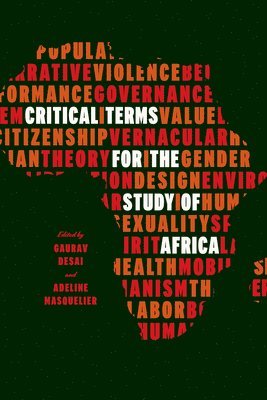
For far too long, the Western world viewed Africa as unmappable terrain—a repository for outsiders’ wildest imaginings. This problematic notion has had lingering effects not only on popular impressions of the region but also on the development of the academic study of Africa. Critical Terms for the Study of Africa considers the legacies that have shaped our understanding of the continent and its place within the conceptual grammar of contemporary world affairs. Written by a distinguished group of scholars, the essays compiled in this volume take stock of African studies today and look toward a future beyond its fraught intellectual and political past. Each essay discusses one of our most critical terms for talking about Africa, exploring the trajectory of its development while pushing its boundaries. Editors Gaurav Desai and Adeline Masquelier balance the choice of twenty-five terms between the expected and the unexpected, calling for nothing short of a new mapping of the scholarly field. The result is an essential reference that will challenge assumptions, stimulate lively debate, and make the past, present, and future of African Studies accessible to students and teachers alike.
290 kr
Skickas inom 7-10 vardagar
For far too long, the Western world viewed Africa as unmappable terrain—a repository for outsiders’ wildest imaginings. This problematic notion has had lingering effects not only on popular impressions of the region but also on the development of the academic study of Africa. Critical Terms for the Study of Africa considers the legacies that have shaped our understanding of the continent and its place within the conceptual grammar of contemporary world affairs. Written by a distinguished group of scholars, the essays compiled in this volume take stock of African studies today and look toward a future beyond its fraught intellectual and political past. Each essay discusses one of our most critical terms for talking about Africa, exploring the trajectory of its development while pushing its boundaries. Editors Gaurav Desai and Adeline Masquelier balance the choice of twenty-five terms between the expected and the unexpected, calling for nothing short of a new mapping of the scholarly field. The result is an essential reference that will challenge assumptions, stimulate lively debate, and make the past, present, and future of African Studies accessible to students and teachers alike.
1 273 kr
Skickas inom 7-10 vardagar
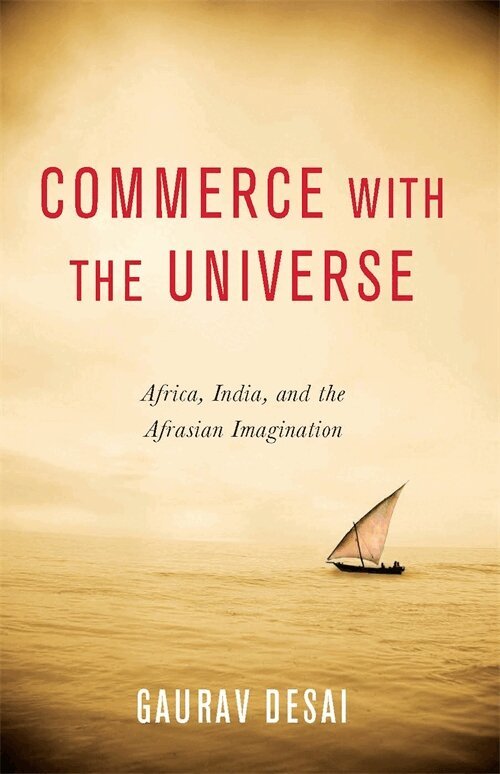
Reading the life narratives and literary texts of South Asians writing in and about East Africa, Gaurav Desai builds a surprising, alternative history of Africa's experience with slavery, migration, colonialism, nationalism, and globalization. Consulting Afrasian texts that are literary and nonfictional, political and private, he broadens the scope of African and South Asian scholarship and inspires a more nuanced understanding of the Indian Ocean's fertile routes of exchange. Desai shows how the Indian Ocean engendered a number of syncretic identities and shaped the medieval trade routes of the Islamicate empire, the early independence movements galvanized in part by Gandhi's southern African experiences, the invention of new ethnic nationalisms, and the rise of plural, multiethnic African nations. Calling attention to lives and literatures long neglected by traditional scholars, Desai introduces rich, interdisciplinary ways of thinking not only about this specific region but also about the very nature of ethnic history and identity.Traveling from the twelfth century to today, he concludes with a look at contemporary Asian populations in East Africa and their struggle to decide how best to participate in the development and modernization of their postcolonial nations without sacrificing their political autonomy.
324 kr
Skickas inom 7-10 vardagar
Reading the life narratives and literary texts of South Asians writing in and about East Africa, Gaurav Desai builds a surprising, alternative history of Africa's experience with slavery, migration, colonialism, nationalism, and globalization. Consulting Afrasian texts that are literary and nonfictional, political and private, he broadens the scope of African and South Asian scholarship and inspires a more nuanced understanding of the Indian Ocean's fertile routes of exchange. Desai shows how the Indian Ocean engendered a number of syncretic identities and shaped the medieval trade routes of the Islamicate empire, the early independence movements galvanized in part by Gandhi's southern African experiences, the invention of new ethnic nationalisms, and the rise of plural, multiethnic African nations. Calling attention to lives and literatures long neglected by traditional scholars, Desai introduces rich, interdisciplinary ways of thinking not only about this specific region but also about the very nature of ethnic history and identity.Traveling from the twelfth century to today, he concludes with a look at contemporary Asian populations in East Africa and their struggle to decide how best to participate in the development and modernization of their postcolonial nations without sacrificing their political autonomy.
2 155 kr
Skickas inom 10-15 vardagar
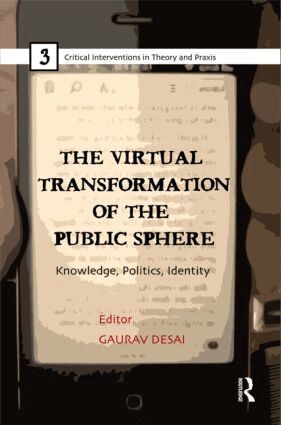
This book explores how new media technologies such as e-mails, online forums, blogs and social networking sites have helped shape new forms of public spheres. Offering new readings of Jürgen Habermas’s notion of the public sphere, scholars from diverse disciplines interrogate the power and possibilities of new media in creating and disseminating public information; changing human communication at the interpersonal, institutional and societal levels; and affecting our self-fashioning as private and public individuals. Beginning with philosophical approaches to the subject, the book goes on to explore the innovative deployment of new media in areas as diverse as politics, social activism, piracy, sexuality, ethnic identity and education. The book will immensely interest those in media, culture and gender studies, philosophy, political science, sociology and anthropology.
740 kr
Skickas inom 3-6 vardagar
1 091 kr
Skickas inom 7-10 vardagar
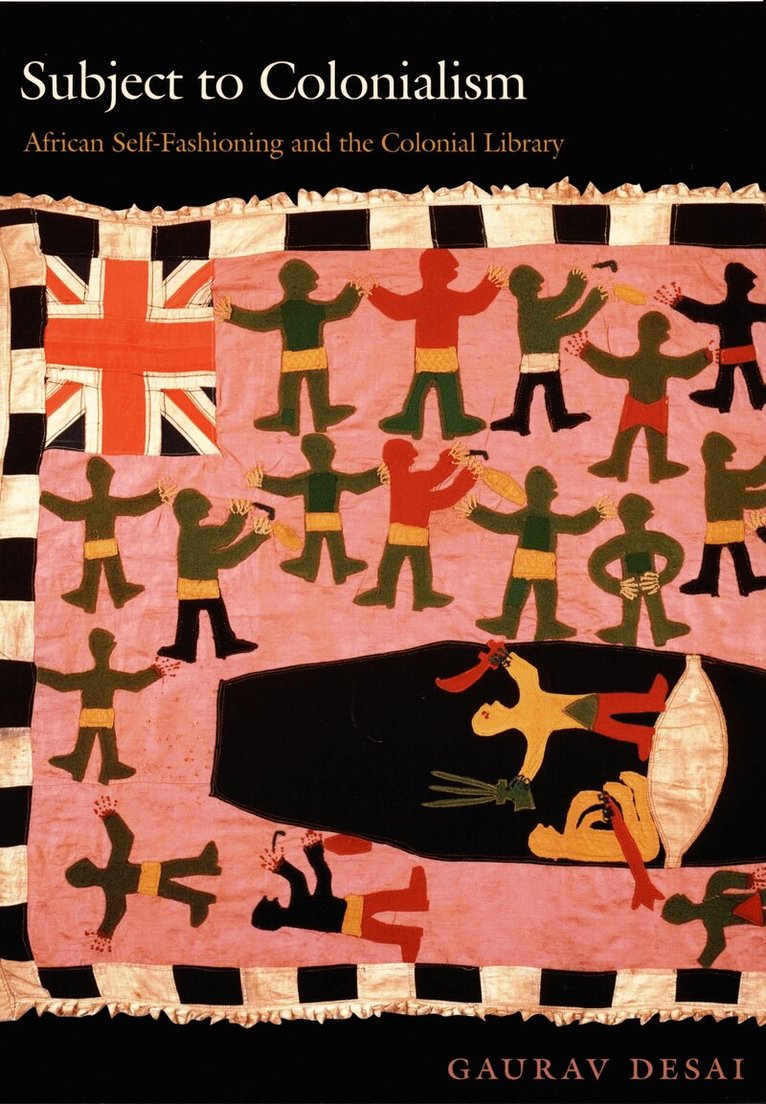
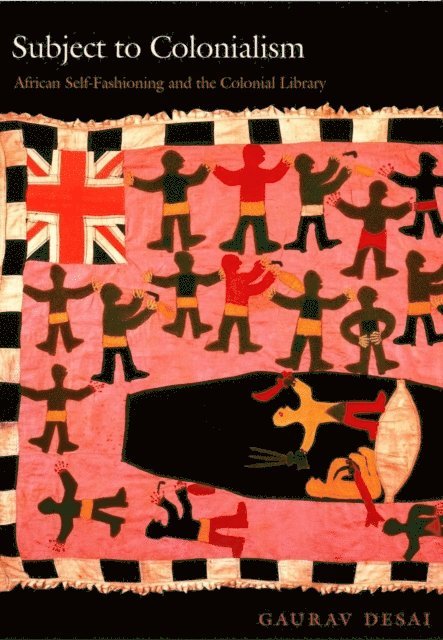
Subject to Colonialism provides a much needed revisionist perspective on the way twentieth-century Africa is viewed and analyzed among scholars. Employing literary, historical, and anthropological techniques, Gaurav Desai attempts to generate a new understanding of issues that permeate discussions of Africa by disrupting the centrality of postcolonial texts and focusing instead on the cultural and intellectual production of colonial Africans. In particular, Desai calls for a reevaluation of the “colonial library”-that set of representations and texts that have collectively “invented” Africa as a locus of difference and alterity. Presenting colonialism not as a singular, monolithic structure but rather as a practice frought with contradictions and tensions, Desai works to historicize the foundation of postcolonialism by decentering both canonical texts and privileged categories of analysis such as race, capitalism, empire, and nation. To achieve this, he focuses on texts that construct or reform-rather than merely reflect-colonialism, placing explicit emphasis on processes, performances, and the practices of everyday life. Reading these texts not merely for the content of their assertions but also for how they were created and received, Desai looks at works such as Jomo Kenyatta’s ethnography of the Gikuyu and Akiga Sai’s history of the Tiv and makes a particular plea for the canonical recuperation of African women’s writing.Scholars in African history, literature, and philosophy, postcolonial studies, literary criticism, and anthropology will welcome publication of this book.
435 kr
Skickas inom 3-6 vardagar
Subject to Colonialism provides a much needed revisionist perspective on the way twentieth-century Africa is viewed and analyzed among scholars. Employing literary, historical, and anthropological techniques, Gaurav Desai attempts to generate a new understanding of issues that permeate discussions of Africa by disrupting the centrality of postcolonial texts and focusing instead on the cultural and intellectual production of colonial Africans. In particular, Desai calls for a reevaluation of the “colonial library”-that set of representations and texts that have collectively “invented” Africa as a locus of difference and alterity. Presenting colonialism not as a singular, monolithic structure but rather as a practice frought with contradictions and tensions, Desai works to historicize the foundation of postcolonialism by decentering both canonical texts and privileged categories of analysis such as race, capitalism, empire, and nation. To achieve this, he focuses on texts that construct or reform-rather than merely reflect-colonialism, placing explicit emphasis on processes, performances, and the practices of everyday life. Reading these texts not merely for the content of their assertions but also for how they were created and received, Desai looks at works such as Jomo Kenyatta’s ethnography of the Gikuyu and Akiga Sai’s history of the Tiv and makes a particular plea for the canonical recuperation of African women’s writing.Scholars in African history, literature, and philosophy, postcolonial studies, literary criticism, and anthropology will welcome publication of this book.
725 kr
Skickas inom 10-15 vardagar
This book explores how new media technologies such as e-mails, online forums, blogs and social networking sites have helped shape new forms of public spheres. Offering new readings of Jürgen Habermas’s notion of the public sphere, scholars from diverse disciplines interrogate the power and possibilities of new media in creating and disseminating public information; changing human communication at the interpersonal, institutional and societal levels; and affecting our self-fashioning as private and public individuals. Beginning with philosophical approaches to the subject, the book goes on to explore the innovative deployment of new media in areas as diverse as politics, social activism, piracy, sexuality, ethnic identity and education. The book will immensely interest those in media, culture and gender studies, philosophy, political science, sociology and anthropology.
492 kr
Skickas inom 7-10 vardagar
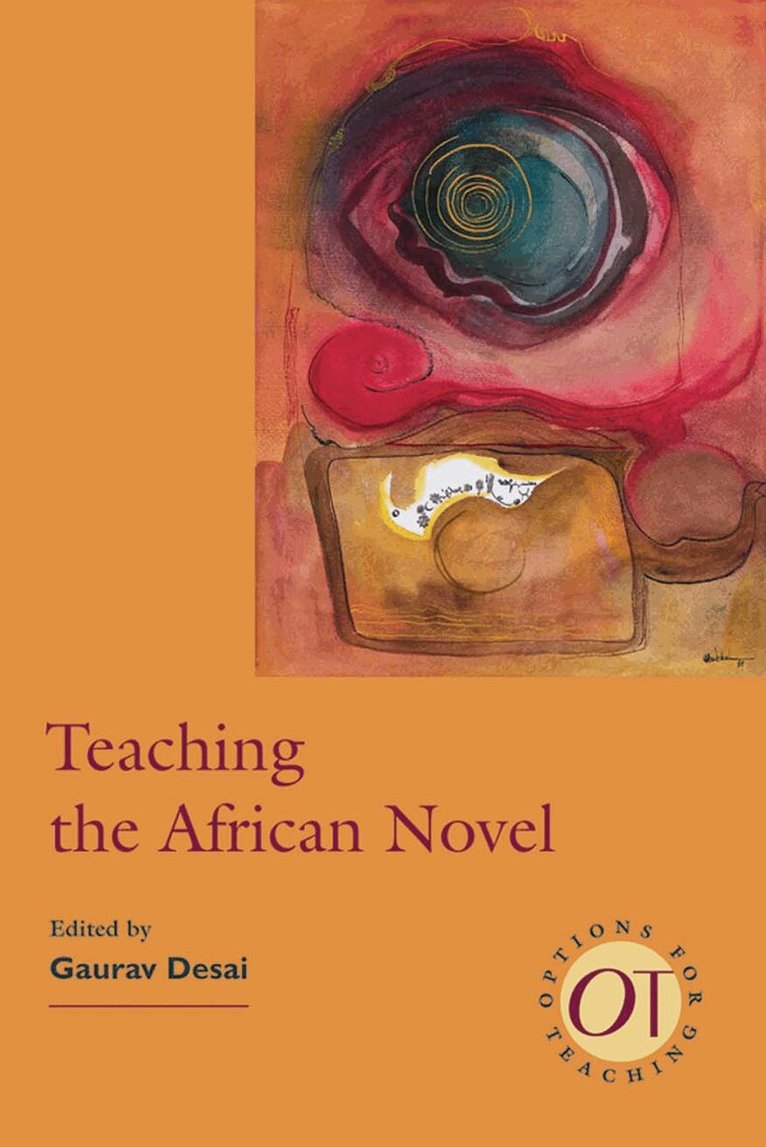
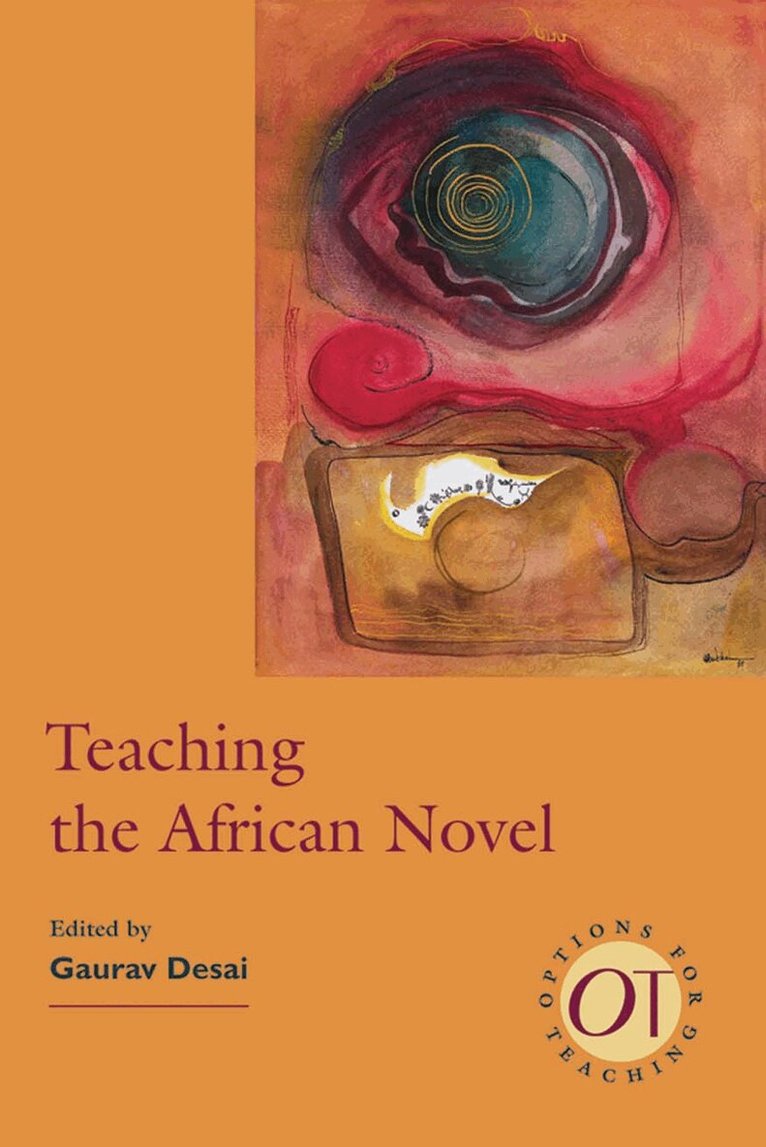
What is the African novel, and how should it be taught? The twenty-three essays of this volume address these two questions and in the process convey a wealth of information and ideas about the diverse regions, peoples, nations, languages, and writers of the African continent. Topics include Ngũgĩ wa Thiong'o's favoring of indigenous languages and literary traditions over European; the special place of Marxism in African letters;the influence of Frantz Fanon; women writers and the sub-Saharan novel;the Maghrebian novel;the novel and the griot epic in the Sahel;Islam in the West African novel;novels in Spanish from Equatorial Guinea;apartheid and postapartheid fiction;African writers in the diaspora;globalization in East African fiction; teaching Chinua Achebe's Things Fall Apart to students in different countries;the Onitsha market romance. The volume editor, Gaurav Desai, writes, "The point of the volume is to encourage a reading of Africa that is sensitive to its history of colonization but at the same time responsive to its present multiracial and multicultural condition.
477 kr
Skickas inom 7-10 vardagar
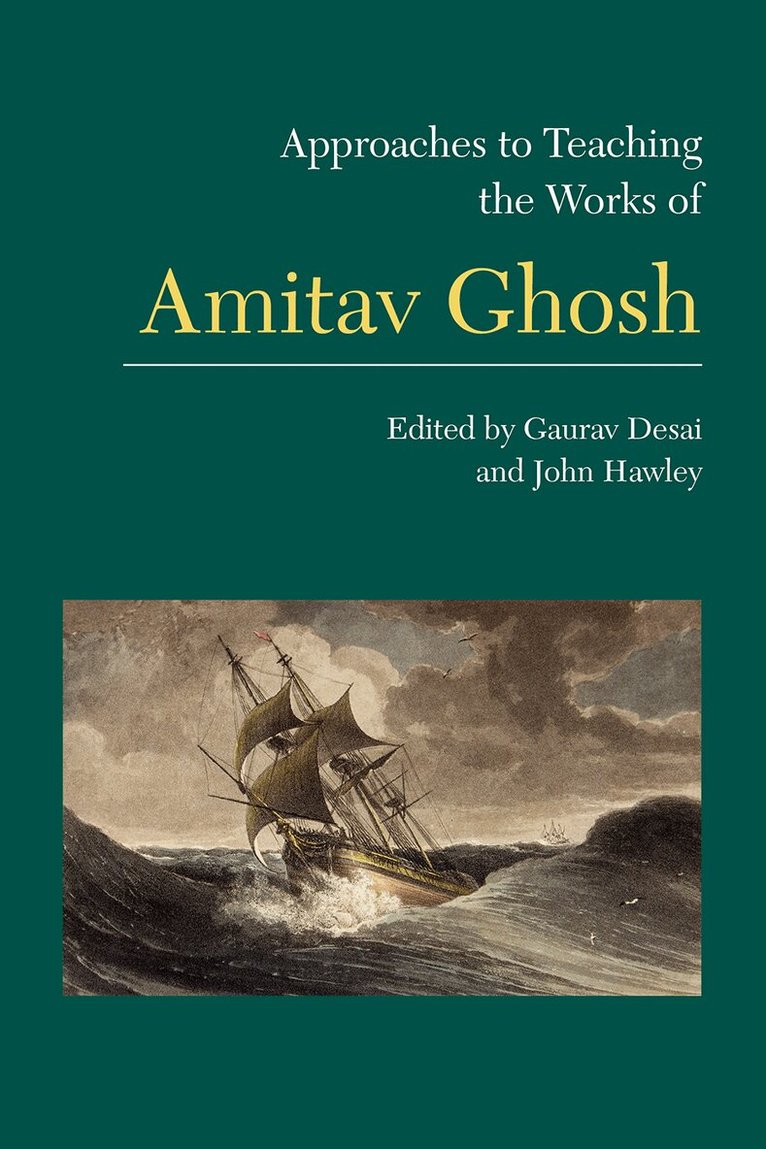
The prizewinning author of novels, nonfiction, and hybrid texts, Amitav Ghosh grew up in India and trained as an anthropologist. His works have been translated in over thirty languages. They cross and mix a number of genres, from science fiction to the historical novel, incorporating ethnohistory and travelogue and even recuperating dead languages. His subjects include climate change, postcolonial identities, translocation, migration, oceanic spaces, and the human interface with the environment.Part 1 of this volume discusses editions of Ghosh's works and major works of scholarship. The essays in part 2, ""Approaches,"" present ideas for teaching Ghosh's works through considerations of postcolonial feminism, historicity in the novels, environmentalism, language, sociopolitical conflict, genre, intersectional reading, and the ethics of colonized subjecthood. Guidance for teaching Ghosh in different contexts, such as general education, world literature, or single-author classes, is provided.
1 703 kr
Skickas inom 10-15 vardagar
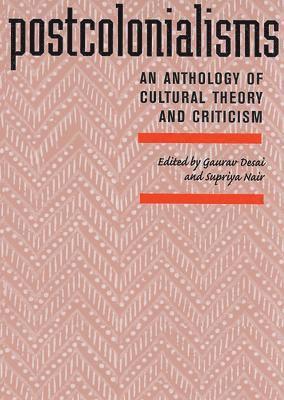
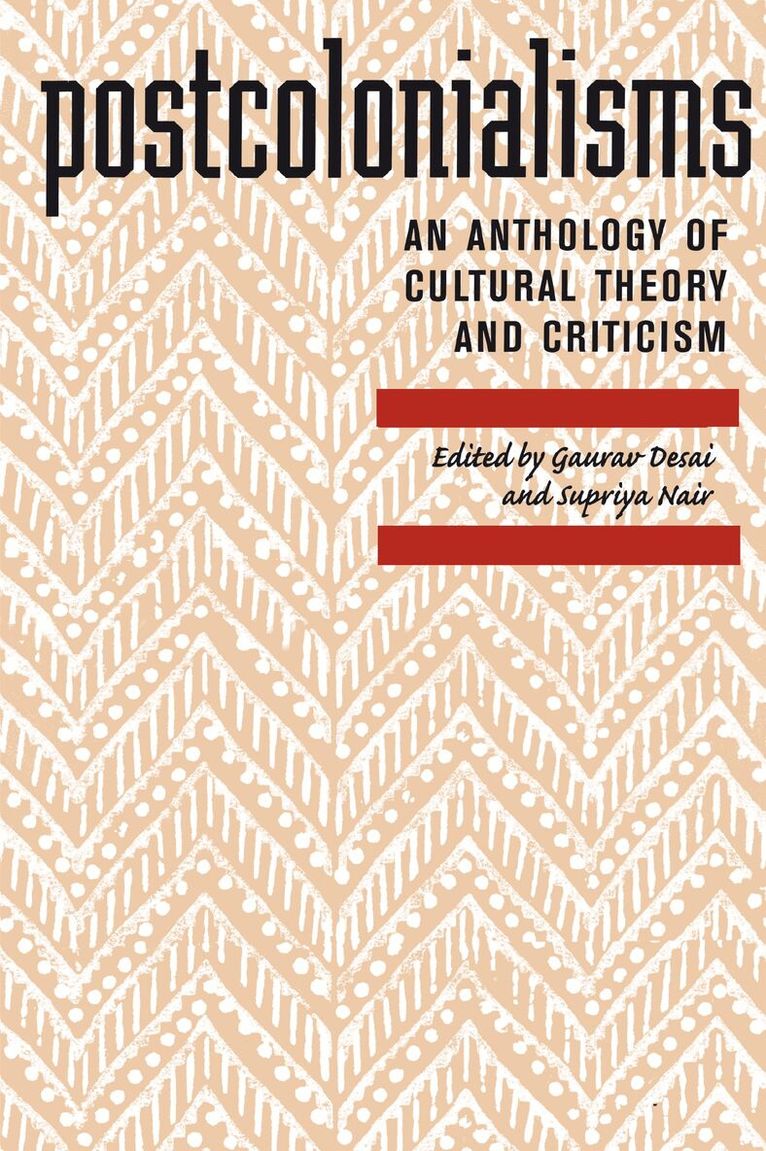
Postcolonialisms brings together the key texts which define the study of colonial and postcolonial cultures. This expansive and clearly organized anthology offers the most up-to-date and in-depth overview of this rapidly developing field. Canonical essays explore postcolonialism's key themes of power and knowledge whilst newer articles expand the analysis to include the discovery of the New World, English colonialism in Ireland, Native American and indigenous identities in Latin America and the Pacific, settler colonies in Africa and Australia, and feminism in Nigeria and Egypt. The inclusion of a broad sampling of histories and theories attests to multiple, even competing postcolonialisms.The careful organization of the volume provides a map of the field. Articles are grouped into sections. Detailed introductions to each section serve to develop key themes, encourage debate, and contextualize the wide-ranging voices intrinsic to the study of postcolonialism.
541 kr
Skickas inom 10-15 vardagar
Postcolonialisms brings together the key texts which define the study of colonial and postcolonial cultures. This expansive and clearly organized anthology offers the most up-to-date and in-depth overview of this rapidly developing field. Canonical essays explore postcolonialism's key themes of power and knowledge whilst newer articles expand the analysis to include the discovery of the New World, English colonialism in Ireland, Native American and indigenous identities in Latin America and the Pacific, settler colonies in Africa and Australia, and feminism in Nigeria and Egypt. The inclusion of a broad sampling of histories and theories attests to multiple, even competing postcolonialisms.The careful organization of the volume provides a map of the field. Articles are grouped into sections. Detailed introductions to each section serve to develop key themes, encourage debate, and contextualize the wide-ranging voices intrinsic to the study of postcolonialism.