Gavin Bridge - Böcker
Visar alla böcker från författaren Gavin Bridge. Handla med fri frakt och snabb leverans.
6 produkter
6 produkter
701 kr
Skickas inom 10-15 vardagar
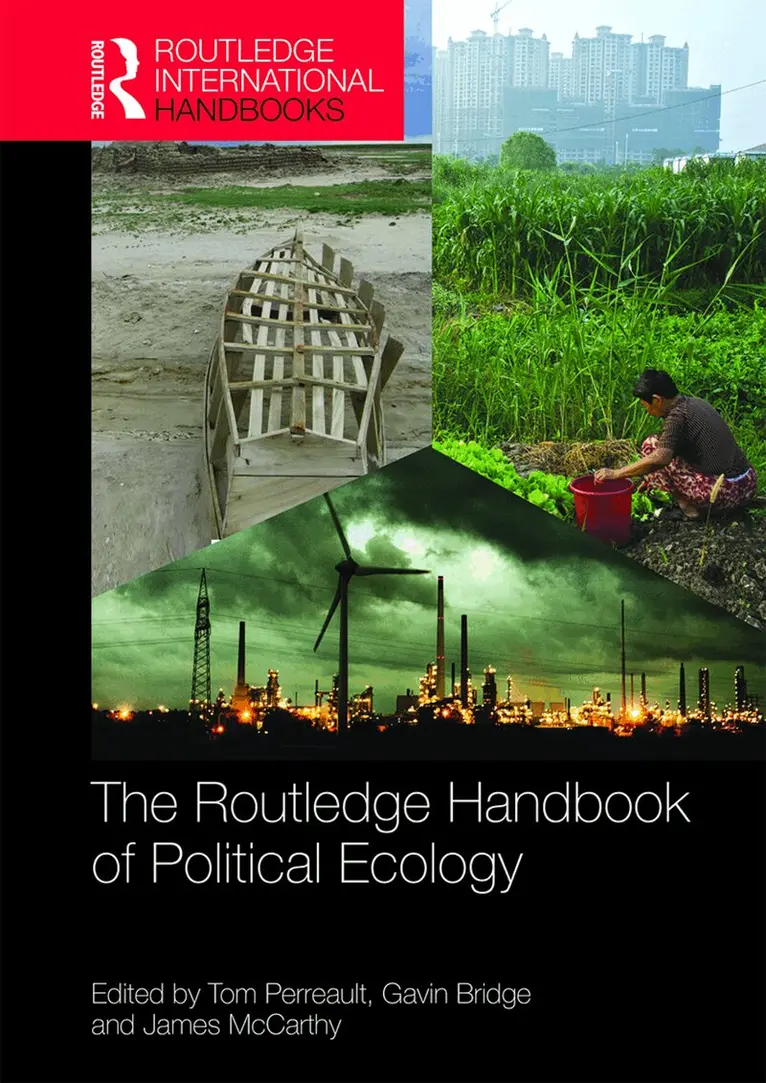
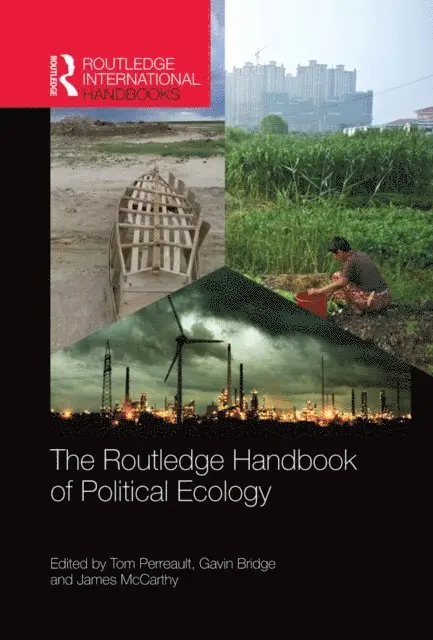
The Routledge Handbook of Political Ecology presents a comprehensive and authoritative examination of the rapidly growing field of political ecology. Located at the intersection of geography, anthropology, sociology, and environmental history, political ecology is one of the most vibrant and conceptually diverse fields of inquiry into nature–society relations within the social sciences. With contributions from over 50 leading scholars, the Handbook presents a systematic overview of political ecology’s origins, practices, and core concerns, and aims to advance both ongoing and emerging debates. While there are numerous edited volumes, textbooks, and monographs under the heading “political ecology” these have tended to be either collections of empirically based (mostly case study) research on a given theme, or broad overviews of the field aimed at undergraduate audiences. The Routledge Handbook of Political Ecology is the first systematic, comprehensive overview of the field. With authors from North and South America, Europe, Australia, and elsewhere, the Handbook provides a state-of-the-art examination of political ecology; addresses ongoing and emerging debates in this rapidly evolving field; and charts new agendas for research, policy, and activism.The Handbook opens with several chapters that critically reflect on political ecology and situate it within the broader scope of nature–society scholarship. These are followed by a section on the practice of political ecology: ethics, methods, activism, and policy. The remainder of the book comprises five sub-sections that examine fundamental concepts at the heart of political ecology: environmental knowledge, environmental change, environmental governance, environmental identities, and environmental politics.The Routledge Handbook of Political Ecology introduces political ecology as an interdisciplinary academic field. It will serve as an excellent resource for graduate and advanced undergraduate teaching, and as a key reference text for geographers, anthropologists, sociologists, environmental historians, and others working in and around the fields of political ecology, environmental politics, and the political economy of environmental change.
2 098 kr
Skickas inom 10-15 vardagar
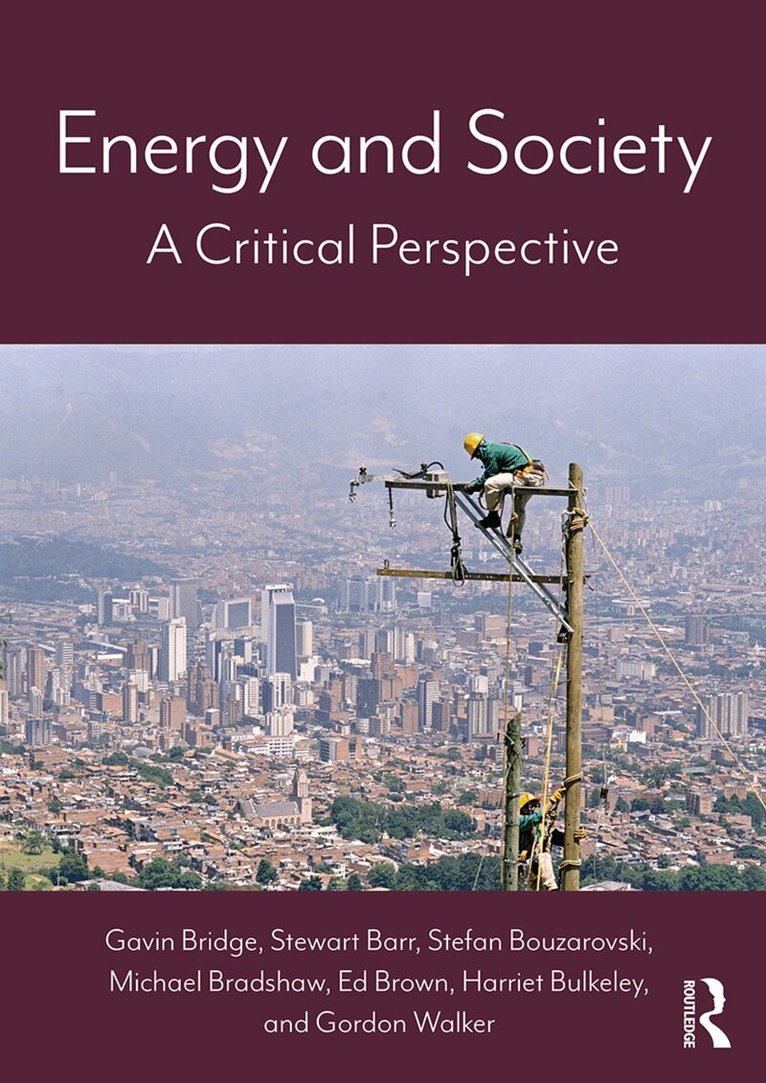
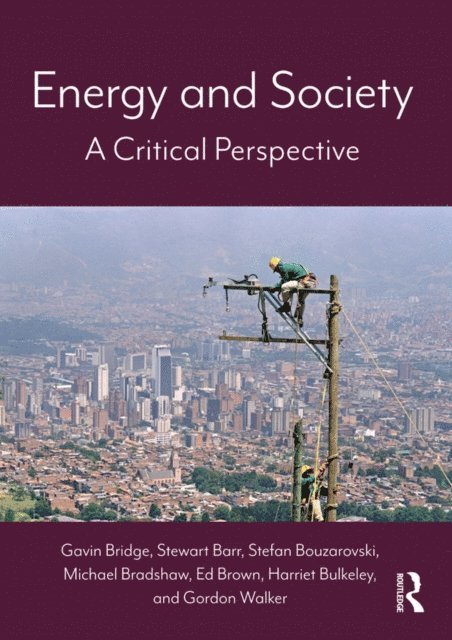
Energy and Society is the first major text to provide an extensive critical treatment of energy issues informed by recent research on energy in the social sciences. Written in an engaging and accessible style it draws new thinking on uneven development, consumption, vulnerability and transition together to illustrate the social significance of energy systems in the global North and South. The book features case studies, examples, discussion questions, activities, recommended reading and more, to facilitate its use in teaching. Energy and Society deploys contemporary geographical concepts and approaches but is not narrowly disciplinary. Its critical perspective highlights connections between energy and significant socio-economic and political processes, such as globalisation, urban isation, international development and social justice, and connects important issues that are often treated in isolation, such as resource availability, energy security, energy access and low-carbon transition.Co-authored by leading researchers and based on current research and thinking in the social sciences, Energy and Society presents a distinctive geographical approach to contemporary energy issues. It is an essential resource for upperlevel undergraduates and Master’s students in geography, environmental studies, urban studies, energy studies and related fields.
674 kr
Skickas inom 10-15 vardagar
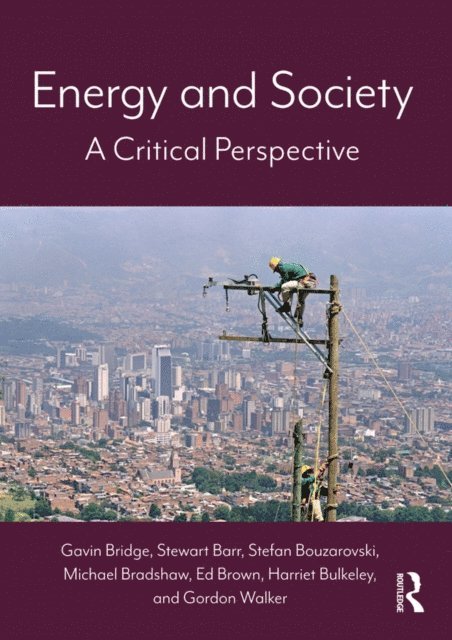
Energy and Society is the first major text to provide an extensive critical treatment of energy issues informed by recent research on energy in the social sciences. Written in an engaging and accessible style it draws new thinking on uneven development, consumption, vulnerability and transition together to illustrate the social significance of energy systems in the global North and South. The book features case studies, examples, discussion questions, activities, recommended reading and more, to facilitate its use in teaching. Energy and Society deploys contemporary geographical concepts and approaches but is not narrowly disciplinary. Its critical perspective highlights connections between energy and significant socio-economic and political processes, such as globalisation, urban isation, international development and social justice, and connects important issues that are often treated in isolation, such as resource availability, energy security, energy access and low-carbon transition.Co-authored by leading researchers and based on current research and thinking in the social sciences, Energy and Society presents a distinctive geographical approach to contemporary energy issues. It is an essential resource for upperlevel undergraduates and Master’s students in geography, environmental studies, urban studies, energy studies and related fields.
3 681 kr
Skickas inom 10-15 vardagar
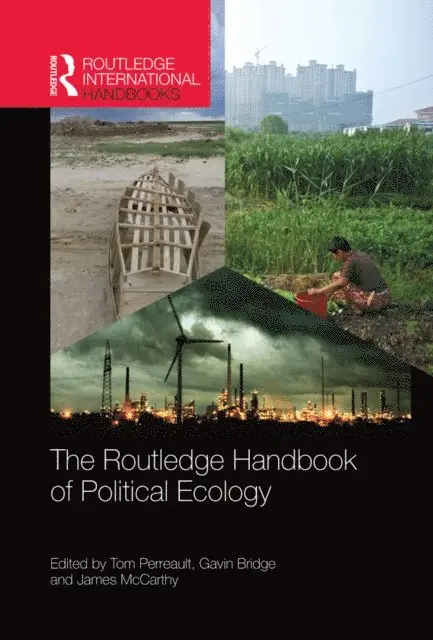
The Routledge Handbook of Political Ecology presents a comprehensive and authoritative examination of the rapidly growing field of political ecology. Located at the intersection of geography, anthropology, sociology, and environmental history, political ecology is one of the most vibrant and conceptually diverse fields of inquiry into nature-society relations within the social sciences. The Handbook serves as an essential guide to this rapidly evolving intellectual landscape. With contributions from over 50 leading authors, the Handbook presents a systematic overview of political ecology’s origins, practices and core concerns, and aims to advance both ongoing and emerging debates. While there are numerous edited volumes, textbooks, and monographs under the heading ‘political ecology,’ these have tended to be relatively narrow in scope, either as collections of empirically based (mostly case study) research on a given theme, or broad overviews of the field aimed at undergraduate audiences. The Routledge Handbook of Political Ecology is the first systematic, comprehensive overview of the field. With authors from North and South America, Europe, Australia and elsewhere, the Handbook of Political Ecology provides a state of the art examination of political ecology; addresses ongoing and emerging debates in this rapidly evolving field; and charts new agendas for research, policy, and activism. The Routledge Handbook of Political Ecology introduces political ecology as an interdisciplinary academic field. By presenting a ‘state of the art’ examination of the field, it will serve as an invaluable resource for students and scholars. It not only critically reviews the key debates in the field, but develops them. The Handbook will serve as an excellent resource for graduate and advanced undergraduate teaching, and is a key reference text for geographers, anthropologists, sociologists, environmental historians, and others working in and around political ecology.
770 kr
Skickas inom 7-10 vardagar
Oil pulses through our daily lives. It is the plastic we touch, the food we eat, and the way we move. Oil politics in the twentieth century was about the management of abundance, state power, and market growth. The legacy of this age of plenty includes declining conventional oil reserves, volatile prices, climate change, and enduring poverty in many oil-rich countries. The politics of oil are now at a turning point, and its future will not be like its past.In this in-depth primer to one of the world’s most significant industries, authors Gavin Bridge and Philippe Le Billon take a fresh look at the contemporary political economy of oil. Going beyond simple assertions of peak oil and an oil curse, they point to an industry reordered by global shifts in demand toward Asia, growing reliance on unconventional reserves, international commitments to reduce carbon emissions, a growing campaign for fossil fuel divestment, and violent political struggles in many producer states.As a new geopolitics of oil emerges, the need for effective global oil governance becomes imperative. Highlighting the growing influence of civil society and attentive to the efforts of firms and states to craft new institutions, this fully updated second edition identifies the challenges and opportunities to curtail price volatility, curb demand and the growth of dirty oil, decarbonize energy systems, and improve governance in oil-producing countries.
194 kr
Tillfälligt slut
Oil pulses through our daily lives. It is the plastic we touch, the food we eat, and the way we move. Oil politics in the twentieth century was about the management of abundance, state power, and market growth. The legacy of this age of plenty includes declining conventional oil reserves, volatile prices, climate change, and enduring poverty in many oil-rich countries. The politics of oil are now at a turning point, and its future will not be like its past.In this in-depth primer to one of the world’s most significant industries, authors Gavin Bridge and Philippe Le Billon take a fresh look at the contemporary political economy of oil. Going beyond simple assertions of peak oil and an oil curse, they point to an industry reordered by global shifts in demand toward Asia, growing reliance on unconventional reserves, international commitments to reduce carbon emissions, a growing campaign for fossil fuel divestment, and violent political struggles in many producer states.As a new geopolitics of oil emerges, the need for effective global oil governance becomes imperative. Highlighting the growing influence of civil society and attentive to the efforts of firms and states to craft new institutions, this fully updated second edition identifies the challenges and opportunities to curtail price volatility, curb demand and the growth of dirty oil, decarbonize energy systems, and improve governance in oil-producing countries.