Geneive Abdo – författare
Visar alla böcker från författaren . Handla med fri frakt och snabb leverans.
9 produkter
9 produkter
Inbunden, Engelska, 2017
533 kr
Skickas inom 3-6 vardagar
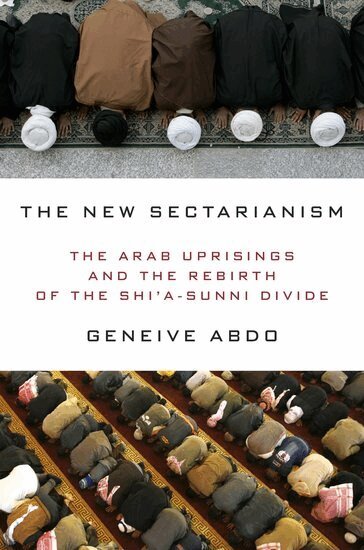
Nearly six years after the Arab uprisings began it is clear that any dream of a pan-Islamic awakening is now more elusive than ever. The wave of unrest has deepened ethnic and religious tensions between Sunni and Shi'a-largely contained in previous years-pushing them once again to the fore. Religious difference and how Muslims define themselves have emerged as salient characteristics within Arab society, displacing the broader conflict between Muslims and the West as the primary challenge facing Islamic societies of the Middle East. The conflict is also likely to replace the Palestinian-Israeli conflict as the key issue mobilizing Arab political life.The New Sectarianism considers the causes for growing Sunni-Shi'a animosity in key countries such as Iraq, Syria, Yemen, Iran, and Saudi Arabia. The book demonstrates how sectarian contestation, now recognized as one of the long-term effects of the Arab uprisings, presents the international community with new dilemmas and challenges. This new, renewed sectarianism is particularly corrosive in the face of the generally weak states and hapless state actors, which today characterize much of the region. It also illustrates how Shi'a and Sunni perceive one another after the Arab uprisings, and how these perceptions have affected Arab life. In doing so, the book argues that religion in Arab society matters, not only in how it is instrumentalized by extremists, moderate Islamists, and dictators alike for political purposes, but how it perpetually evolves and is perceived and practiced among the vast majority of Muslims in its own right.
E-bok
PDF, Engelska, 2016338 kr
Läs direkt efter köp
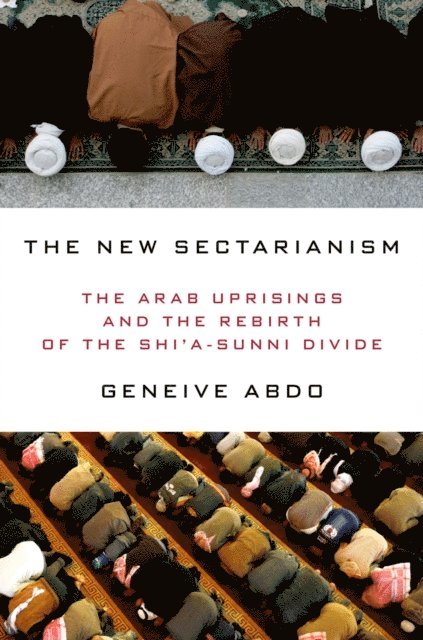
The Shi''a-Sunni conflict is one of the most significant outcomes arising from the Arab rebellions. Yet, there is little understanding of who is driving this tension and the underlying causes. By delving deeply into the historical factors leading up to the present-day conflict, The New Sectarianism sheds new light on how Shi''a and Sunni perceive one another after the Arab uprisings, how these perceptions have affected the Arab world, and why the dream of a pan-Islamic awakening was misplaced.Geneive Abdo describes a historical backdrop that serves as a counterpoint to Western media coverage of the so-called Arab Spring. Already by the 1970s, she says, Shi''a and Sunni communities had begun to associate their religious beliefs and practices with personal identity, replacing their fragile loyalty to the nation state. By the time the Arab risings erupted into their full fury in early 2011, there was fertile ground for instability. The ensuing clash-between Islamism and Nationalism, Shi''a and Sunni, and other factions within these communities-has resulted in unprecedented violence. So, Abdo asks, what does religion have to do with it? This sectarian conflict is often presented by the West as rivalry over land use, political power, or access to education. However, Abdo persuasively argues that it must be understood as flowing directly from religious difference and the associated identities that this difference has conferred on both Shi''a and Sunni.The New Sectarianism considers the causes for this conflict in key countries such as Iraq, Syria, Lebanon, and Bahrain and the development of regional trends. Abdo argues that in these regions religion matters, not only in how it is utilized by extremists, moderate Islamists, and dictators alike for political purposes, but how it perpetually evolves and is perceived and practiced among the vast majority of Muslims. Shi''a and Sunni today are not battling over territory alone; they are fighting for their claim to a true Islamic identity.
327 kr
Läs direkt efter köp
The Shi''a-Sunni conflict is one of the most significant outcomes arising from the Arab rebellions. Yet, there is little understanding of who is driving this tension and the underlying causes. By delving deeply into the historical factors leading up to the present-day conflict, The New Sectarianism sheds new light on how Shi''a and Sunni perceive one another after the Arab uprisings, how these perceptions have affected the Arab world, and why the dream of a pan-Islamic awakening was misplaced.Geneive Abdo describes a historical backdrop that serves as a counterpoint to Western media coverage of the so-called Arab Spring. Already by the 1970s, she says, Shi''a and Sunni communities had begun to associate their religious beliefs and practices with personal identity, replacing their fragile loyalty to the nation state. By the time the Arab risings erupted into their full fury in early 2011, there was fertile ground for instability. The ensuing clash-between Islamism and Nationalism, Shi''a and Sunni, and other factions within these communities-has resulted in unprecedented violence. So, Abdo asks, what does religion have to do with it? This sectarian conflict is often presented by the West as rivalry over land use, political power, or access to education. However, Abdo persuasively argues that it must be understood as flowing directly from religious difference and the associated identities that this difference has conferred on both Shi''a and Sunni.The New Sectarianism considers the causes for this conflict in key countries such as Iraq, Syria, Lebanon, and Bahrain and the development of regional trends. Abdo argues that in these regions religion matters, not only in how it is utilized by extremists, moderate Islamists, and dictators alike for political purposes, but how it perpetually evolves and is perceived and practiced among the vast majority of Muslims. Shi''a and Sunni today are not battling over territory alone; they are fighting for their claim to a true Islamic identity.
E-bok
Engelska, 2002158 kr
Läs direkt efter köp
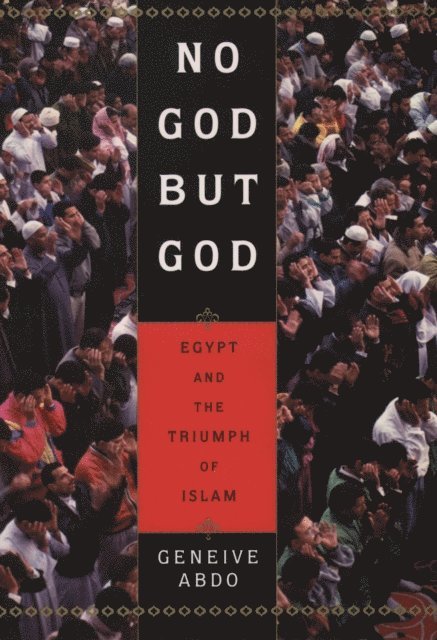
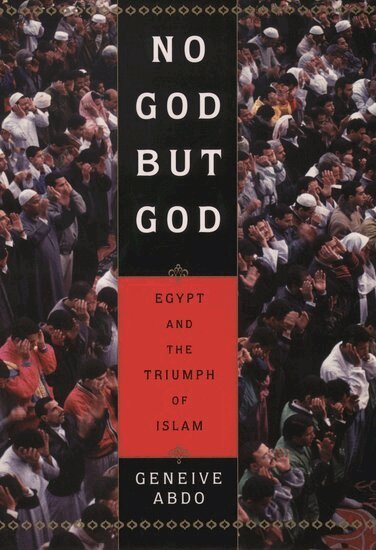
Shrouded in mystery, the Islamic presence in the Middle East evokes longstanding Western fears of terrorism and holy war. Our media have consistently focused on these extremes of Islam, overlooking a quiet yet pervasive religious movement that is now transforming the nation of Egypt. Drawing on hundreds of interviews, No God But God opens up previously inaccessible segments of Egyptian society--from the universities and professional sectors to the streets--to illustrate the deep penetration of "Popular Islamic" influence. Abdo provides a firsthand account of this peaceful movement, allowing its moderate leaders, street preachers, scholars, doctors, lawyers, men and women of all social classes to speak for themselves. Challenging Western stereotypes, she finds that this growing number of Islamists do not seek the violent overthrow of the government or a return to a medieval age. Instead, they believe their religious values are compatible with the demands of the modern world. They are working within and beyond the secular framework of the nation to gradually create a new society based on Islamic principles. Abdo narrates fascinating accounts of their methods and successes. Today, for example, university students meet in underground unions, despite a state ban. In addition, sheikhs have recently used their new legislative power to censor books and movies deemed to violate religious values. Both fascinating and unsettling, Abdo''s findings identify a grassroots model for transforming a secular nation-state to an Islamic social order that will likely inspire other Muslim nations. This model cannot be ignored, for it will soon help organized Islamists to undermine secular control of Egypt and potentially jeopardize Western interests in the Arab world.
Häftad, Engelska, 2004
299 kr
Skickas inom 5-8 vardagar
Western media has consistently focused on the extremes of Islam, overlooking a quiet yet pervasive moderate religious movement that is currently transforming the nation of Egypt. Drawing on hundreds of interviews, No God But God opens up previously inaccessible segments of Egyptian society to illustrate the deep penetration of "Popular Islamic" influence. Geneive Abdo provides a firsthand account of this movement, allowing its leaders, street preachers, scholars, doctors, lawyers, men and women of all social classes to speak for themselves. Challenging Western stereotypes, she finds that this growing number of Islamists do not seek the violent overthrow of the government or a return to a medieval age. Instead, they believe their religious values are compatible with the demands of the modern world. They are working within and beyond the secular framework of the nation to gradually create a new society based on Islamic principles.Both fascinating and unsettling, Abdo's findings identify a grassroots model for transforming a secular nation-state to an Islamic social order that will likely inspire other Muslim nations.
Häftad, Engelska, 2007
359 kr
Skickas inom 3-6 vardagar
E-bok
PDF, Engelska, 2002178 kr
Läs direkt efter köp
Shrouded in mystery, the Islamic presence in the Middle East evokes longstanding Western fears of terrorism and holy war. Our media have consistently focused on these extremes of Islam, overlooking a quiet yet pervasive religious movement that is now transforming the nation of Egypt. Drawing on hundreds of interviews, No God But God opens up previously inaccessible segments of Egyptian society--from the universities and professional sectors to the streets--to illustrate the deep penetration of "Popular Islamic" influence. Abdo provides a firsthand account of this peaceful movement, allowing its moderate leaders, street preachers, scholars, doctors, lawyers, men and women of all social classes to speak for themselves. Challenging Western stereotypes, she finds that this growing number of Islamists do not seek the violent overthrow of the government or a return to a medieval age. Instead, they believe their religious values are compatible with the demands of the modern world. They are working within and beyond the secular framework of the nation to gradually create a new society based on Islamic principles. Abdo narrates fascinating accounts of their methods and successes. Today, for example, university students meet in underground unions, despite a state ban. In addition, sheikhs have recently used their new legislative power to censor books and movies deemed to violate religious values. Both fascinating and unsettling, Abdo''s findings identify a grassroots model for transforming a secular nation-state to an Islamic social order that will likely inspire other Muslim nations. This model cannot be ignored, for it will soon help organized Islamists to undermine secular control of Egypt and potentially jeopardize Western interests in the Arab world.
Häftad, Engelska
284 kr
Skickas inom 3-6 vardagar
Inbunden, Engelska, 2026
933 kr
Kommande
How the Arab Sh‘ia are claiming their autonomy from both Sunni marginalization and Iranian influence"A significant contribution to Shi‘a studies and contemporary Islamic studies."—Hassan Abbas, author of The Prophet's HeirThe Arab Shi‘a have long been overlooked, marginalized, or reduced simply to political pawns of the Iranian regime. Based upon extensive work on the ground in the region, The Shi‘a in the Modern Arab World reveals the untold stories and unheard voices behind the latest Shi‘a drive for independence and hard-fought political agency. In doing so, it also challenges the conventional wisdom among Western policymakers who have tended to group what is in fact a diverse community of believers into an undifferentiated “Shi‘a Crescent,” seen as a transnational source of global instability.Organized into five country-specific chapters, dedicated to different Arab Twelver Shi‘a communities in Lebanon, Iraq, Bahrain, Saudi Arabia, and Yemen respectively, this book chronicles their past marginalization and new-found autonomy, their changing relations with their respective governments, and their shifting religious alliances. It also documents their efforts to integrate into their respective societies and form national identities apart from their religious sect. The book also presents the view from Tehran, explaining how Iran has tried and failed to deal with a loss of allegiance from other Shi‘a in the region. This trend is likely to evolve further as the Iranian regime faces the greatest challenge to its survival since the 1979 Islamic Revolution.Contributors:Akeel Abbas non-resident researcher, Emirates Policy Center, Abu Dhabi, UAEMohanad Hage Ali Malcolm H. Kerr Carnegie Middle East Center, Beirut, LebanonAndrew Hammond The Australian National University, Canberra, AustraliaBader Al-Ibrahim writer and researcher, Virginia, USABanafsheh Keynoush University of Notre Dame, Indiana, USAAndrew McIntosh Salam for Democracy and Human Rights, Essex, UK