Genevieve Yue - Böcker
Visar alla böcker från författaren Genevieve Yue. Handla med fri frakt och snabb leverans.
5 produkter
5 produkter
174 kr
Skickas inom 7-10 vardagar
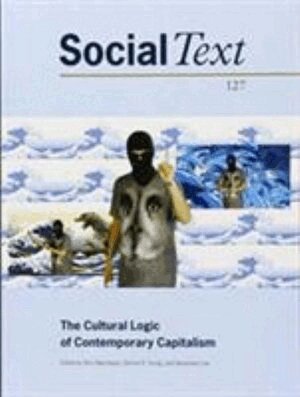
In 1984 Fredric Jameson wrote that “everything in our social life-from economic value and state power to practices and to the very structure of the psyche itself-can be said to have become ‘cultural’ in some original and yet untheorized sense.” The essays in this special issue track the status of this claim some thirty years later, inquiring into the relationship of art, aesthetics, and cultural production to political economy today. At a moment when interpretation (including “ideology critique” and “symptomatic reading”) has been variously supplanted by descriptivism, empiricism, and the return of metaphysics, contributors here pursue the possibilities for an engaged cultural criticism that is attentive to form while rejecting a depoliticized formalism. Spanning a wide range of cultural sites-from recent Hollywood cinema to post-broadcast television, manufactured landscape photography, contemporary West African art, and “new materialism” in philosophy-they ask what the “formal tendencies” of contemporary cultural production (including theory itself) can tell us about the cultural logic of contemporary capitalism. The collection includes a new interview with Jameson conducted by the editors.Contributors: Jennifer Bajorek, Nico Baumbach, Jonathan Beller, Alexander R. Galloway, Fredric Jameson, Sulgi Lie, Alberto Toscano, Amy Villarejo, Damon R. Young, Genevieve Yue
1 216 kr
Skickas inom 10-15 vardagar
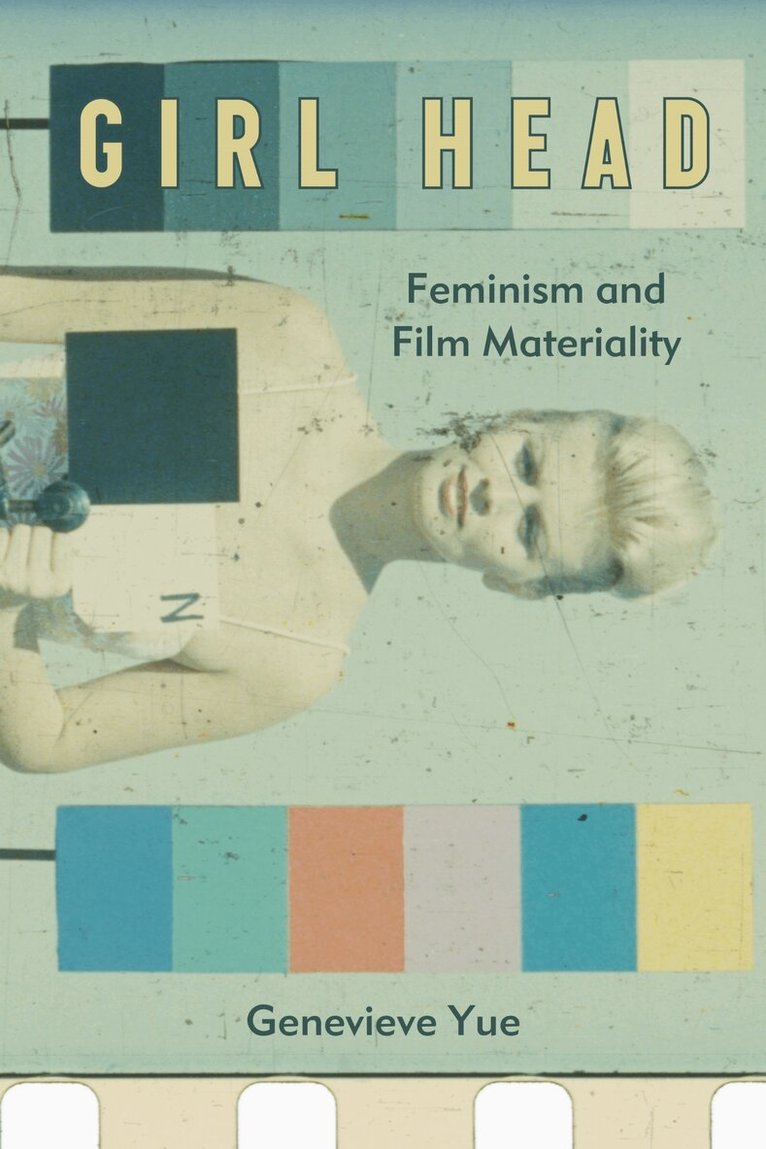
Girl Head shows how gender has had a surprising and persistent role in film production processes, well before the image ever appears onscreen.For decades, feminist film criticism has focused on issues of representation: images of women in film. But what are the feminist implications of the material object underlying that image, the filmstrip itself? What does feminist analysis have to offer in understanding the film image before it enters the realm of representation?Girl Head explores how gender and sexual difference have been deeply embedded within film materiality. In rich archival and technical detail, Yue examines three sites of technical film production: the film laboratory, editing practices, and the film archive. Within each site, she locates a common motif, the vanishing female body, which is transformed into material to be used in the making of a film. The book develops a theory of gender and film materiality through readings of narrative film, early cinema, experimental film, and moving image art.This original work of feminist media history shows how gender has had a persistent role in film production processes, well before the image ever appears onscreen.
370 kr
Skickas
Girl Head shows how gender has had a surprising and persistent role in film production processes, well before the image ever appears onscreen.For decades, feminist film criticism has focused on issues of representation: images of women in film. But what are the feminist implications of the material object underlying that image, the filmstrip itself? What does feminist analysis have to offer in understanding the film image before it enters the realm of representation?Girl Head explores how gender and sexual difference have been deeply embedded within film materiality. In rich archival and technical detail, Yue examines three sites of technical film production: the film laboratory, editing practices, and the film archive. Within each site, she locates a common motif, the vanishing female body, which is transformed into material to be used in the making of a film. The book develops a theory of gender and film materiality through readings of narrative film, early cinema, experimental film, and moving image art.This original work of feminist media history shows how gender has had a persistent role in film production processes, well before the image ever appears onscreen.
1 003 kr
Kommande
From the Lumière brothers’ legendary locomotive to today, trains have shaped the language and imagination of film. In this book, Genevieve Yue offers an original and evocative meditation on this enduring cinematic motif, charting how railways have served not only as engines of narrative momentum but as spaces of reflection and quiet transformation.Across a range of filmic genres and geographies, Yue traces the many ways trains structure cinematic experience. Rather than focusing solely on the spectacle and technological wonder traditionally associated with railways on screen, she considers departures and reunions, romances, reveries, and encounters with strangers. With a feminist politics in mind, Trains explores how movement through space becomes movement through memory, fantasy, and thought.Central to Yue’s exploration is the experience of being a woman on a train. In such instances, trains become places where desire, vulnerability, and possibility coincide. The book also reflects on broader questions of infrastructure, ecology, and state power, revealing how railways shape both collective histories and individual lives.Written with clarity and wit, Trains invites readers aboard a richly idiosyncratic itinerary through film history. At once critical and personal, it offers a fresh way of seeing the moving image – through the sensations and stories of travel by rail.
250 kr
Kommande
From the Lumière brothers’ legendary locomotive to today, trains have shaped the language and imagination of film. In this book, Genevieve Yue offers an original and evocative meditation on this enduring cinematic motif, charting how railways have served not only as engines of narrative momentum but as spaces of reflection and quiet transformation.Across a range of filmic genres and geographies, Yue traces the many ways trains structure cinematic experience. Rather than focusing solely on the spectacle and technological wonder traditionally associated with railways on screen, she considers departures and reunions, romances, reveries, and encounters with strangers. With a feminist politics in mind, Trains explores how movement through space becomes movement through memory, fantasy, and thought.Central to Yue’s exploration is the experience of being a woman on a train. In such instances, trains become places where desire, vulnerability, and possibility coincide. The book also reflects on broader questions of infrastructure, ecology, and state power, revealing how railways shape both collective histories and individual lives.Written with clarity and wit, Trains invites readers aboard a richly idiosyncratic itinerary through film history. At once critical and personal, it offers a fresh way of seeing the moving image – through the sensations and stories of travel by rail.