Georg Dorffner – författare
Visar alla böcker från författaren Georg Dorffner. Handla med fri frakt och snabb leverans.
8 produkter
8 produkter
E-bok
PDF, Tyska, 2013433 kr
Läs direkt efter köp
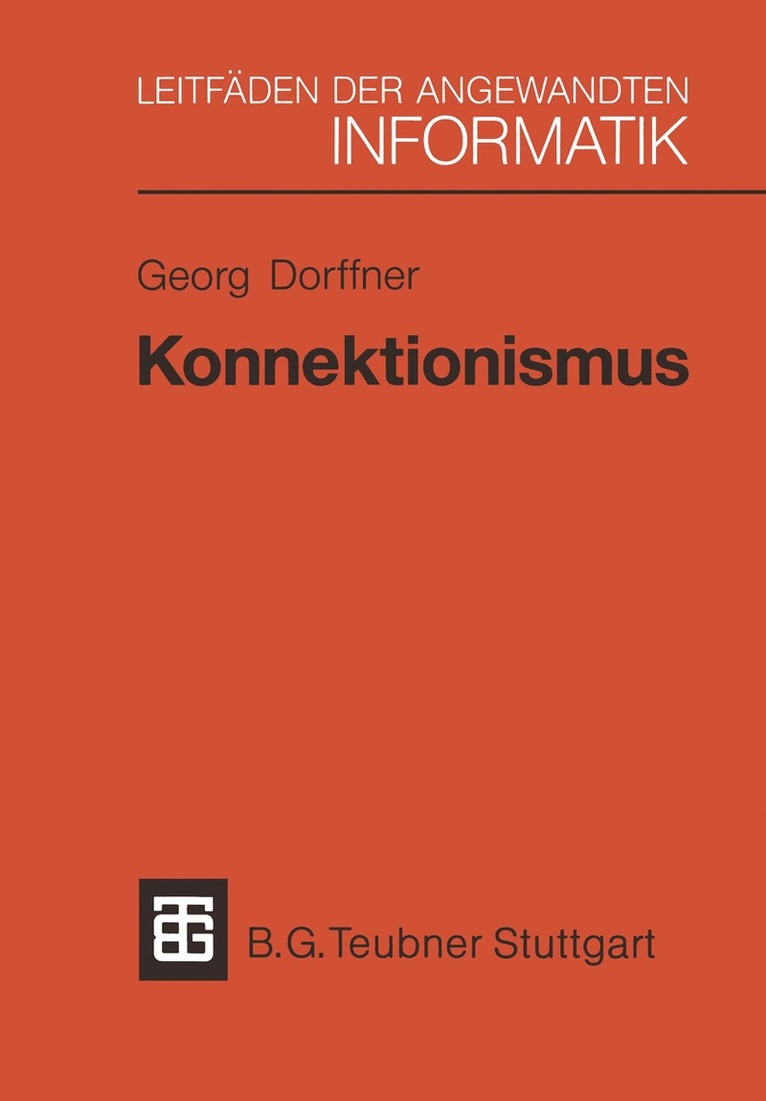
Häftad, Tyska, 1991
509 kr
Skickas inom 10-15 vardagar
Häftad, Engelska, 2001
1 557 kr
Skickas inom 10-15 vardagar
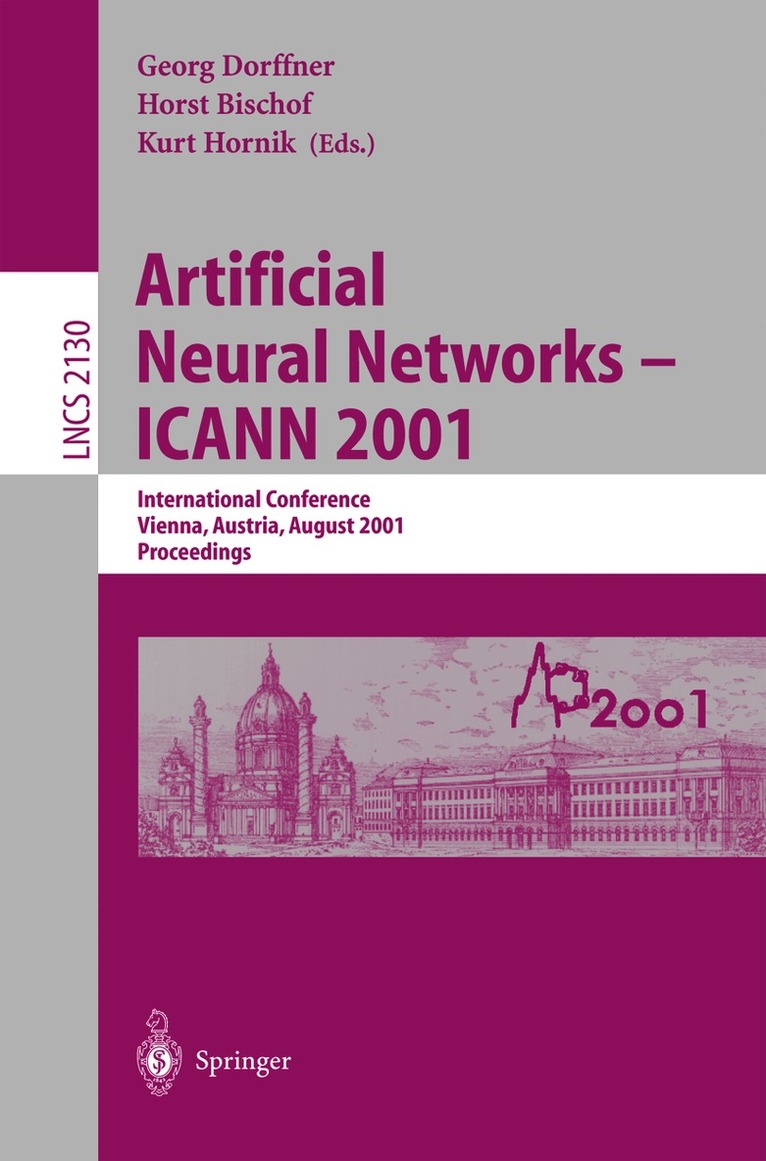
This book constitutes the refereed proceedings of the International Conference on Artificial Neural Networks,ICANN 2001, held in Vienna, Austria in August 2001. The 171 revised papers presented together with three invited contributions were carefully reviewed and selected from around 300 submissions. The papers are organized in topical sections on data analysis and pattern recognition, theory, kernel methods, topographic mapping, independent component analysis, signal processing, time series processing, agent-based economic modeling, selforganization and dynamical systems, robotics and control, vision and image processing, computational neuroscience, and connectionist and cognitive science.
E-bok
PDF, Engelska, 20031 924 kr
Läs direkt efter köp
This book is based on the papers presented at the International Conference on Arti?cial Neural Networks, ICANN 2001, from August 21–25, 2001 at the - enna University of Technology, Austria. The conference is organized by the A- trian Research Institute for Arti?cal Intelligence in cooperation with the Pattern Recognition and Image Processing Group and the Center for Computational - telligence at the Vienna University of Technology. The ICANN conferences were initiated in 1991 and have become the major European meeting in the ?eld of neural networks. From about 300 submitted papers, the program committee selected 171 for publication. Each paper has been reviewed by three program committee m- bers/reviewers. We would like to thank all the members of the program comm- tee and the reviewers for their great e?ort in the reviewing process and helping us to set up a scienti?c program of high quality. In addition, we have invited eight speakers; three of their papers are also included in the proceedings. We would like to thank the European Neural Network Society (ENNS) for their support. We acknowledge the ?nancial support of Austrian Airlines, A- trian Science Foundation (FWF) under the contract SFB 010, Austrian Society ¨ for Arti?cial Intelligence (OGAI), Bank Austria, and the Vienna Convention Bureau. We would like to express our sincere thanks to A. Flexer, W. Horn, K. Hraby, F. Leisch, C. Schittenkopf, and A. Weingessel. The conference and the proceedings would not have been possible without their enormous contri- tion.
576 kr
Skickas inom 10-15 vardagar
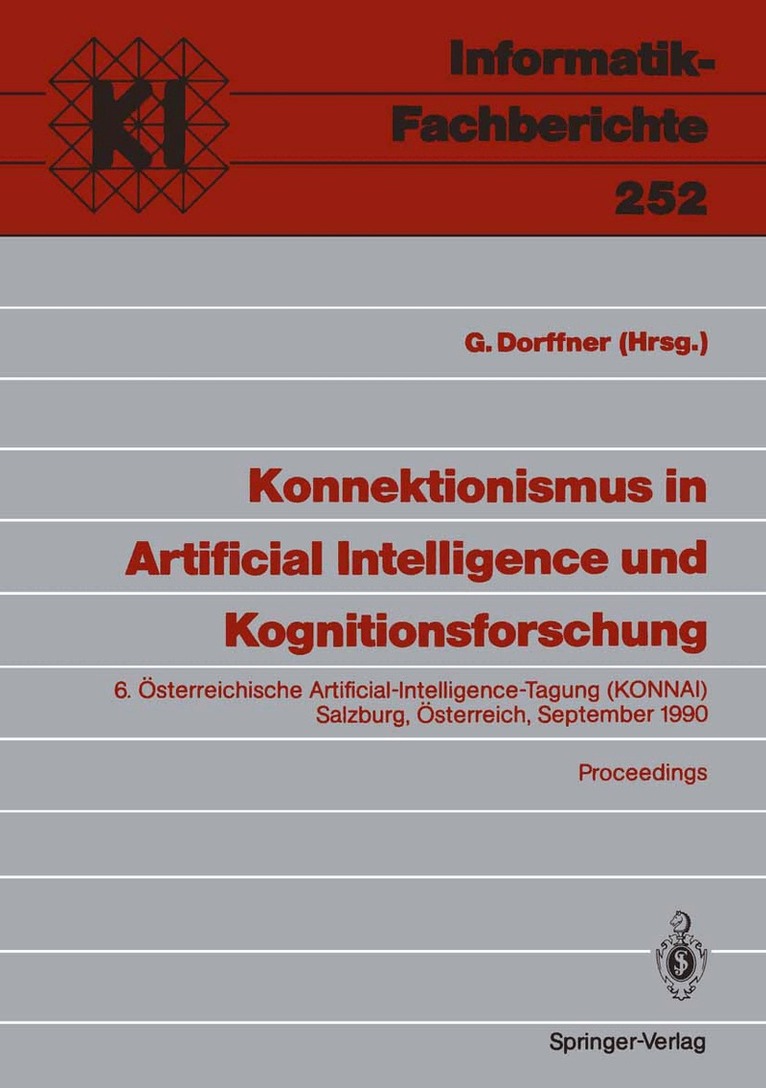
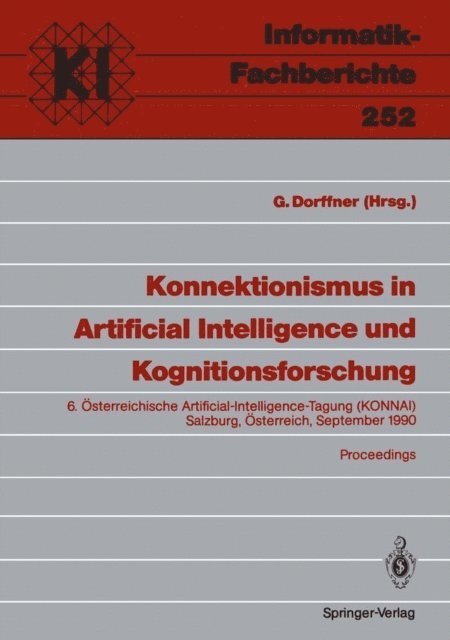
Konnektionismus als Methode, Modellvorstellung, aber auch als Weltbild dringt immer mehr in die Domänen der AI (KI) und Kognitionsforschung vor. Obwohl es eine Reihe von Konferenzen gibt, die künstliche neuronale Netzwerke - die Basis des Konnektionismus - zum Inhalt haben, scheint dem Bereich der Intelligenzforschung und -modellierung mit Hilfe solcher Netzwerke vergleichsweise noch wenig Raum geboten zu werden. Die Konferenz, die vom 18. bis 21. September 1990 in Salzburg stattgefunden hat und deren Proceedings in diesem Band vorliegen, sollte diese Lücke schließen. Sie hat in Form von Vorträgen, Workshops und Panels Arbeiten zusammengebracht, die sich mit Anwendungen neuronaler Netzwerke auf Probleme der AI, mit grundlegenden Aspekten von massivem Parallelismus und Netzwerkverarbeitung in der AI sowie mit theoretischen Implikationen der Modelle auf die AI und die Kognitionsforschung im allgemeinen beschäftigen. Die vorliegenden Beiträge geben einen guten Einblick in den Stand der Forschung - besonders im deutschsprachigen Raum, aber auch darüber hinausgehend.
Häftad, Engelska, 2008
561 kr
Skickas inom 10-15 vardagar
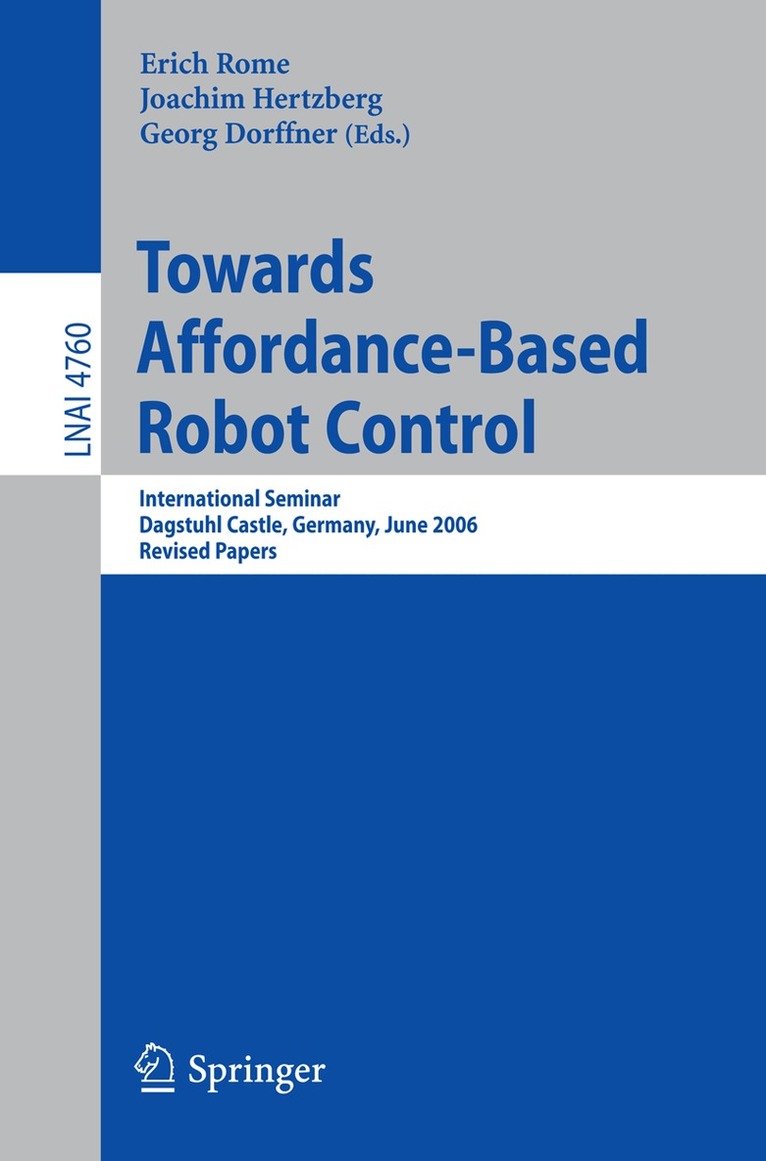
Today's mobile robot perception is insu?cient for acting goal-directedly in - constrained, dynamic everyday environments like a home, a factory, or a city. Subject to restrictions in bandwidth, computer power, and computation time, a robot has to react to a wealth of dynamically changing stimuli in such - vironments, requiring rapid, selective attention to decisive, action-relevant - formation of high current utility. Robust and general engineering methods for e?ectively and e?ciently coupling perception, action, and reasoning are unava- able. Interesting performance, if any, is currently only achieved by sophisticated robot programming exploiting domain features and specialties, which leaves - dinary users no chance of changing how the robot acts. The latter facts are high barriers for introducing, for example, service robots into human living or work environments. In order to overcome these barriers, additonal R&D e?orts are required. The European Commission is undert- ing a determined e?ort to fund related basic, inter-disciplinary research in a line of Strategic Objectives, including the Cognitive Systems calls in their 6th Framework Programme (FP6, [1]), and continuing in the 7th Framework P- gramme.OneofthefundedCognitiveSystemsprojectsisMACS("multi-sensory autonomous cognitive systems interacting with dynamic environments for p- ceiving and using a?ordances").
E-bok
PDF, Engelska, 2008708 kr
Läs direkt efter köp
E-bok
PDF, Tyska, 2013582 kr
Läs direkt efter köp
Konnektionismus als Methode, Modellvorstellung, aber auch als Weltbild dringt immer mehr in die Domänen der AI (KI) und Kognitionsforschung vor. Obwohl es eine Reihe von Konferenzen gibt, die künstliche neuronale Netzwerke - die Basis des Konnektionismus - zum Inhalt haben, scheint dem Bereich der Intelligenzforschung und -modellierung mit Hilfe solcher Netzwerke vergleichsweise noch wenig Raum geboten zu werden. Die Konferenz, die vom 18. bis 21. September 1990 in Salzburg stattgefunden hat und deren Proceedings in diesem Band vorliegen, sollte diese Lücke schließen. Sie hat in Form von Vorträgen, Workshops und Panels Arbeiten zusammengebracht, die sich mit Anwendungen neuronaler Netzwerke auf Probleme der AI, mit grundlegenden Aspekten von massivem Parallelismus und Netzwerkverarbeitung in der AI sowie mit theoretischen Implikationen der Modelle auf die AI und die Kognitionsforschung im allgemeinen beschäftigen. Die vorliegenden Beiträge geben einen guten Einblick in den Stand der Forschung - besonders im deutschsprachigen Raum, aber auch darüber hinausgehend.