George A. Bekey - Böcker
Visar alla böcker från författaren George A. Bekey. Handla med fri frakt och snabb leverans.
12 produkter
12 produkter
328 kr
Tillfälligt slut
975 kr
Skickas inom 5-8 vardagar
1 064 kr
Skickas inom 10-15 vardagar
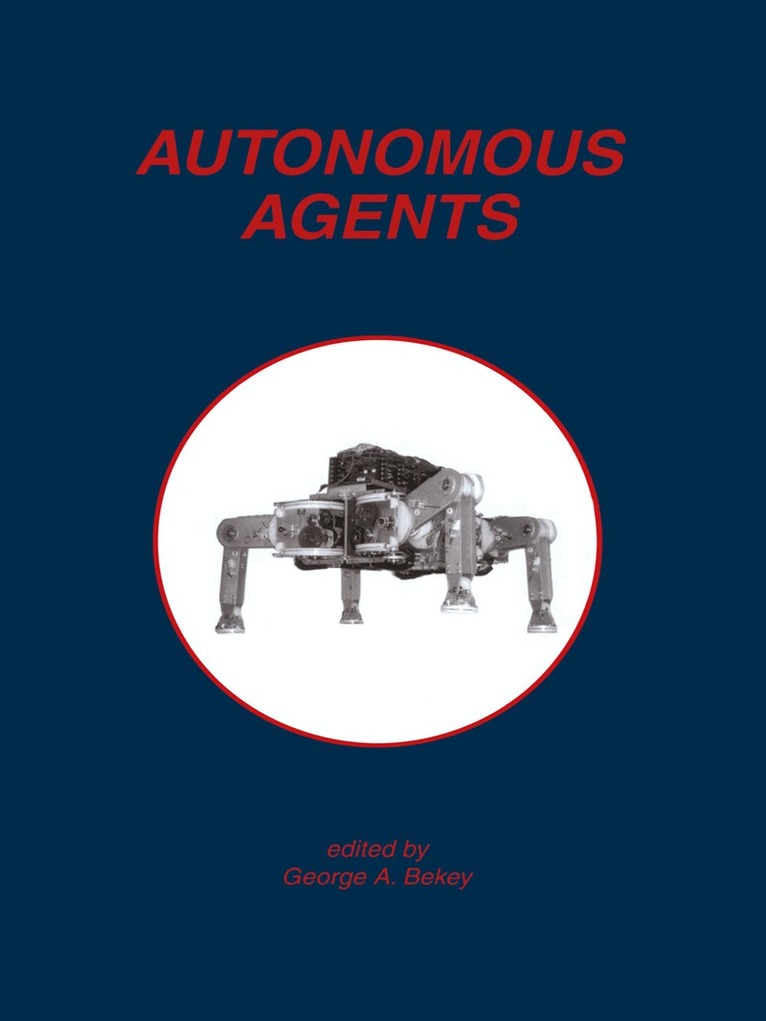
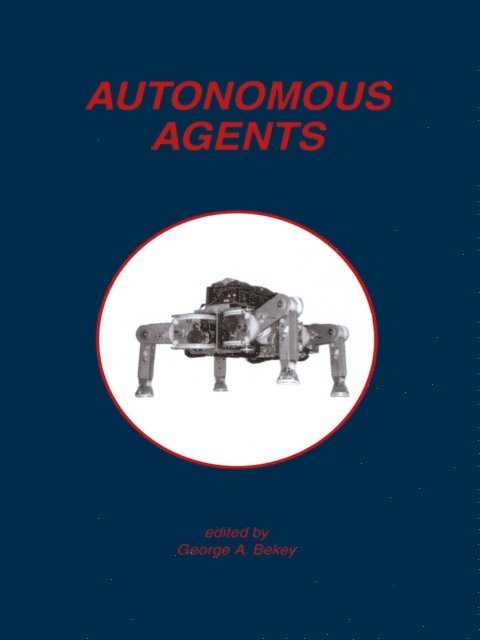
An agent is a system capable of perceiving the environment, reasoning with the percepts and then acting upon the world. Agents can be purely software systems, in which case their percepts and output "actions" are encoded binary strings. However, agents can also be realized in hardware, and then they are robots. The artificial intelligence community frequently views robots as embodied intelligent agents. The First International Conference on Autonomous Agents was held in Santa Monica, California, in February 1997. This conference brought together researchers from around the world with interests in agents, whether implemented purely in software or in hardware. The conference featured such topics as intelligent software agents, agents in virtual environments, agents in the entertainment industry, and robotic agents. Papers on robotic agents were selected for this volume. This text should be of interest to researchers and students in the area of artificial intelligence and robotics.
Del 202 - Springer International Series in Engineering and Computer Science
Neural Networks in Robotics
Inbunden, Engelska, 1992
2 100 kr
Skickas inom 10-15 vardagar
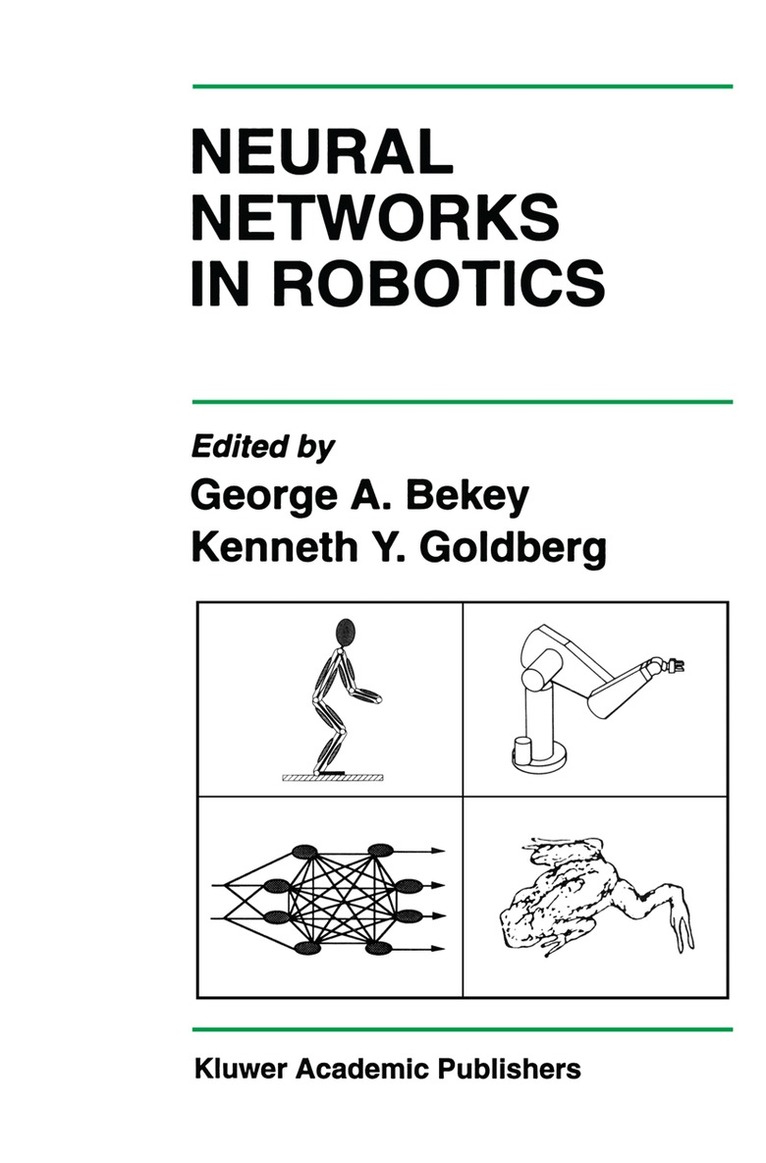
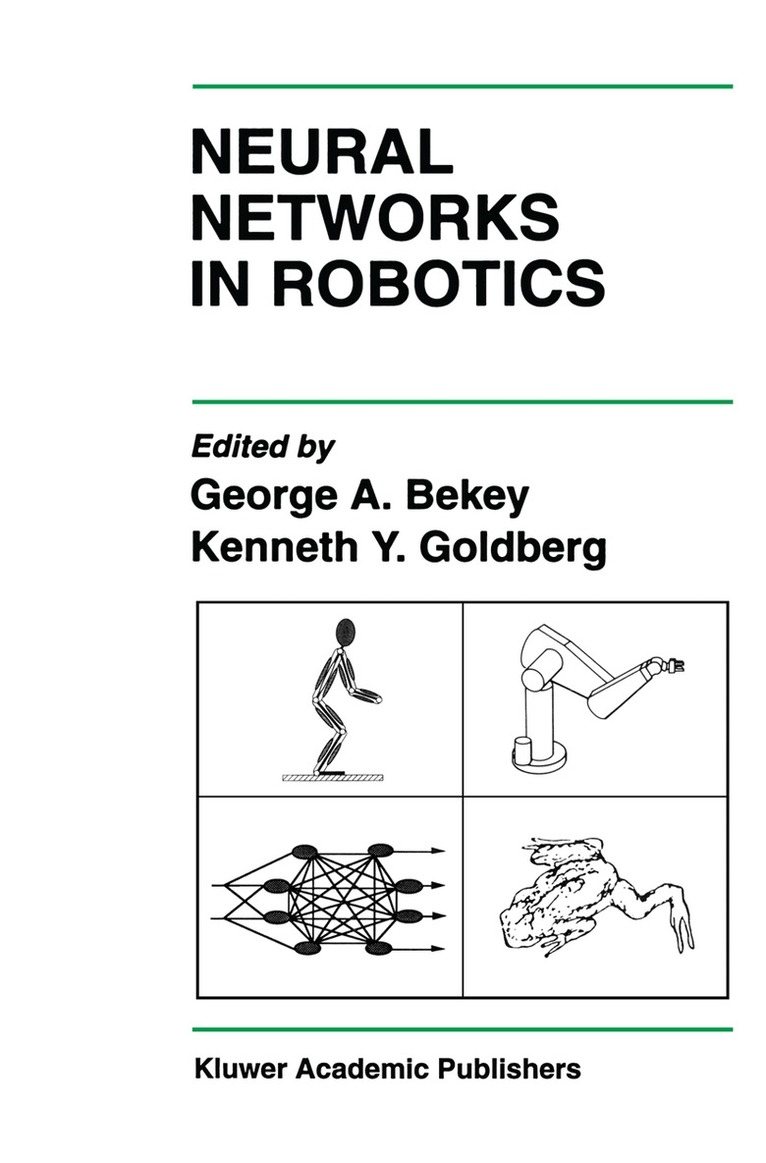
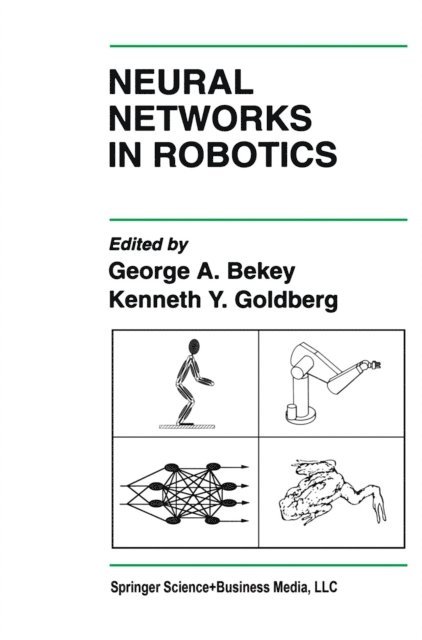
Neural Networks in Robotics is the first book to present an integrated view of both the application of artificial neural networks to robot control and the neuromuscular models from which robots were created. The behavior of biological systems provides both the inspiration and the challenge for robotics. The goal is to build robots which can emulate the ability of living organisms to integrate perceptual inputs smoothly with motor responses, even in the presence of novel stimuli and changes in the environment. The ability of living systems to learn and to adapt provides the standard against which robotic systems are judged. In order to emulate these abilities, a number of investigators have attempted to create robot controllers which are modelled on known processes in the brain and musculo-skeletal system. Several of these models are described in this book. On the other hand, connectionist (artificial neural network) formulations are attractive for the computation of inverse kinematics and dynamics of robots, because they can be trained for this purpose without explicit programming. Some of the computational advantages and problems of this approach are also presented.For any serious student of robotics, Neural Networks in Robotics provides an indispensable reference to the work of major researchers in the field. Similarly, since robotics is an outstanding application area for artificial neural networks, Neural Networks in Robotics is equally important to workers in connectionism and to students for sensormonitor control in living systems.
3 428 kr
Skickas inom 10-15 vardagar
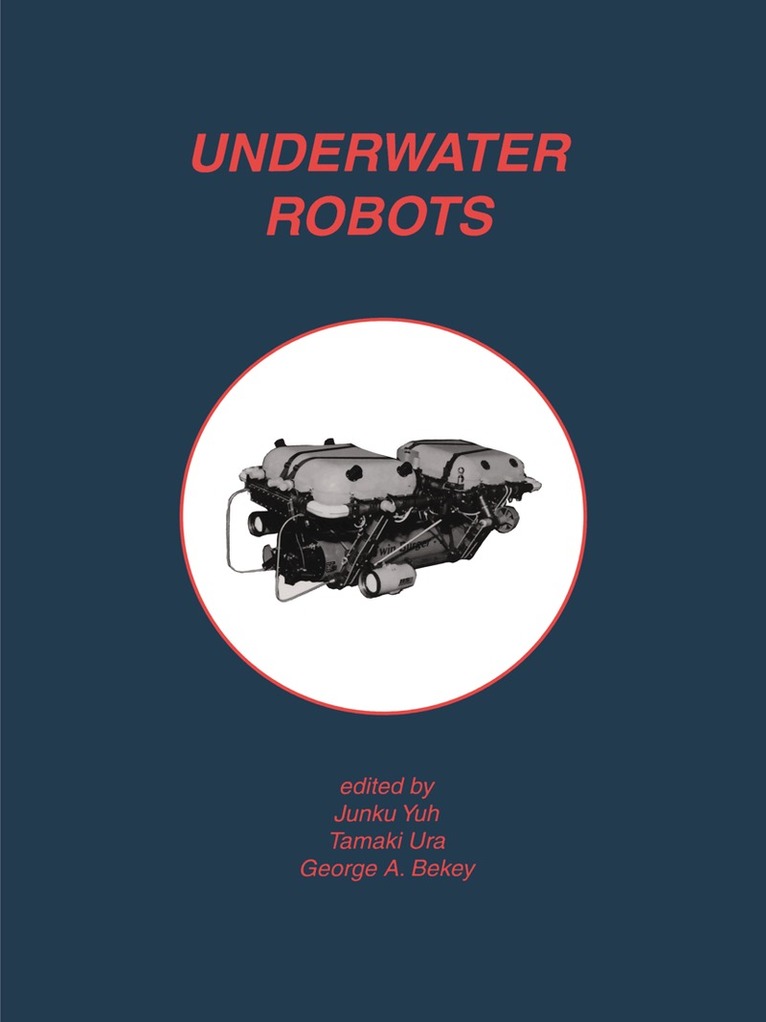
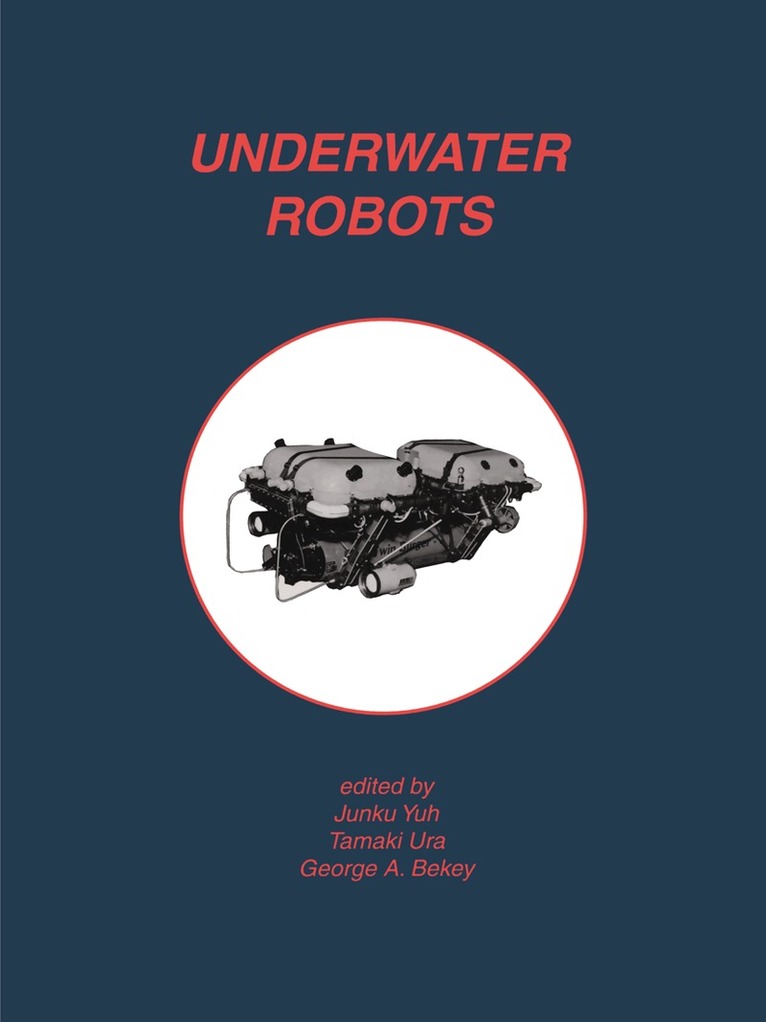
This text reports on the latest progress in underwater robotics. The deep oceans range between 19000 to 36000 feet. At a mere 33-foot depth, the pressure is twice the normal atmospheric pressure of 29.4 psi. This obstacle, compounded with other complex issues due to the unstructured and hazardous environment, makes it difficult to travel in the ocean even though today's technologies allow humans to land on the moon. Only recently, by using manned submersibles, it has been discovered that a large amount of carbon dioxide comes from the sea-floor and that extraordinary groups of organisms live in hydrothermal vent areas. On March 24, 1995 Kaiko (a remotely operated vehicle) navigated the deepest region of the ocean, the Mariana Trough. This vehicle successfully dived to a depth of 33000 feet and instantly showed scenes from the trench through a video camera. New tools like this enable us to gain knowledge of mysterious places. However, extensive use of manned submersibles and remotely operated vehicles is limited to a few applications because of very high operational costs, operator fatigue and safety issues.In spite of these hindrances, the demand for advanced underwater robot technologies is growing and will eventually arrive at fully autonomous, specialized, reliable underwater robotic vehicles. This text is an edited volume of research comprising thirteen invited contributions by leading researchers.
1 577 kr
Skickas inom 10-15 vardagar
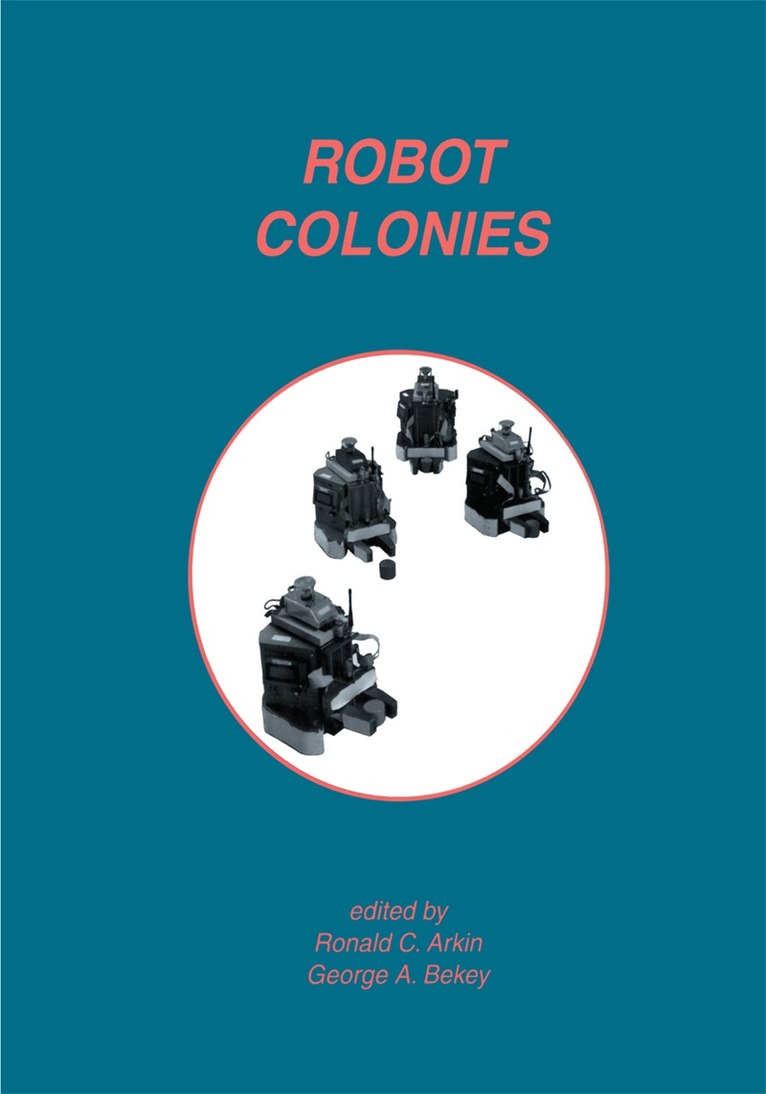
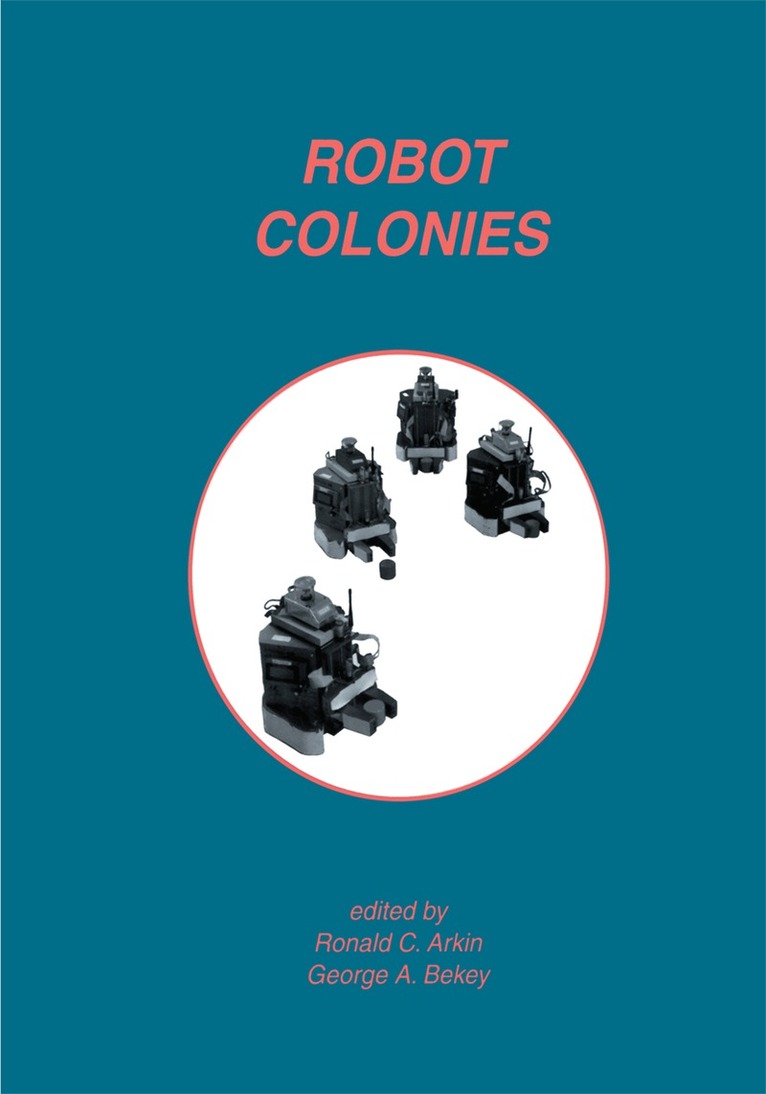
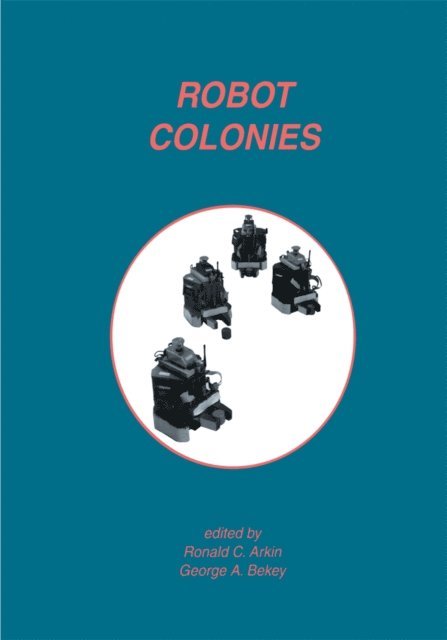
Robots in groups or colonies can exhibit an enormous variety and richness of behaviors which cannot be observed with singly autonomous systems. Of course, this is analogous to the amazing variety of group animal behaviors which can be observed in nature. In recent years more and more investigators have started to study these behaviors. The studies range from classifications and taxonomies of behaviors, to development of architectures which cause such group activities as flocking or swarming, and from emphasis on the role of intelligent agents in such groups to studies of learning and obstacle avoidance. There used to be a time when many robotics researchers would question those who were interested in working with teams of robots: `Why are you worried about robotic teams when it's hard enough to just get one to work?'. This issue responds to that question. Robot Colonies provides a new approach to task problem-solving that is similar in many ways to distributed computing. Multiagent robotic teams offer the possibility of spatially distributed parallel and concurrent perception and action. A paradigm shift results when using multiple robots, providing a different perspective on how to carry out complex tasks. New issues such as interagent communications, spatial task distribution, heterogeneous or homogeneous societies, and interference management are now central to achieving coordinated and productive activity within a colony. Fortunately mobile robot hardware has evolved sufficiently in terms of both cost and robustness to enable these issues to be studied on actual robots and not merely in simulation. Robot Colonies presents a sampling of the research in this field. While capturing a reasonable representation of the most important work within this area, its objective is not to be a comprehensive survey, but rather to stimulate new research by exposing readers to the principles of robot group behaviors, architectures and theories. Robot Colonies is an edited volume of peer-reviewed original research comprising eight invited contributions by leading researchers. This research work has also been published as a special issue of Autonomous Robots (Volume 4, Number 1).
Modeling and Simulation: Theory and Practice
A Memorial Volume for Professor Walter J. Karplus (1927–2001)
Inbunden, Engelska, 2003
1 624 kr
Skickas inom 10-15 vardagar
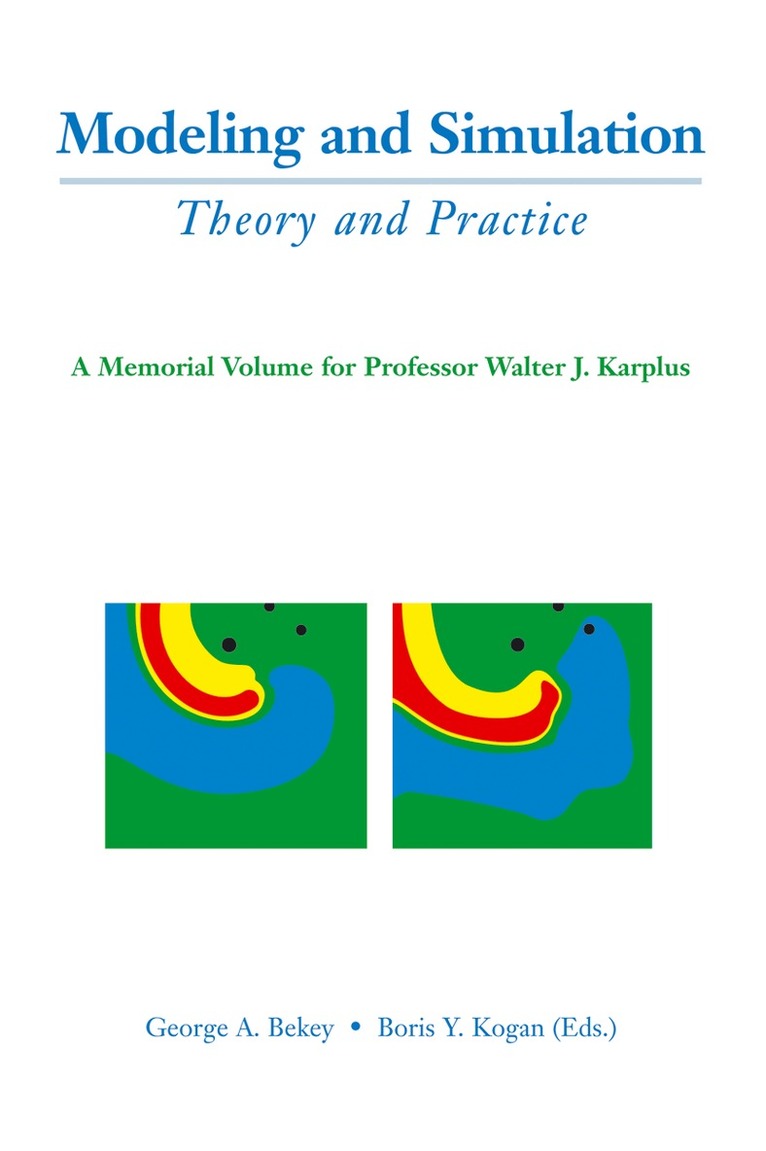
This text provides a comprehensive review of the methodologies and applications of simulation and modelling. The methodology section includes such topics as: the philosophy of simulation; inverse problems in simulation; simulation model compilers; treatment of ill-defined systems; and a survey of simulation languages. The application section covers a wide range of topics, including applications to environmental management, biology and medicine, neural networks, collaborative visualization and intelligent interfaces. The book consists of 13 invited chapters written by former colleagues and students of Professor Karplus. Also included are several short "reminiscences" describing Professor Karplus impact on the professional careers of former colleagues and students who worked closely with him over the years.
1 577 kr
Skickas inom 10-15 vardagar
Robots in groups or colonies can exhibit an enormous variety and richness of behaviors which cannot be observed with singly autonomous systems. Of course, this is analogous to the amazing variety of group animal behaviors which can be observed in nature. In recent years more and more investigators have started to study these behaviors. The studies range from classifications and taxonomies of behaviors, to development of architectures which cause such group activities as flocking or swarming, and from emphasis on the role of intelligent agents in such groups to studies of learning and obstacle avoidance. There used to be a time when many robotics researchers would question those who were interested in working with teams of robots: `Why are you worried about robotic teams when it's hard enough to just get one to work?'. This issue responds to that question. Robot Colonies provides a new approach to task problem-solving that is similar in many ways to distributed computing. Multiagent robotic teams offer the possibility of spatially distributed parallel and concurrent perception and action. A paradigm shift results when using multiple robots, providing a different perspective on how to carry out complex tasks. New issues such as interagent communications, spatial task distribution, heterogeneous or homogeneous societies, and interference management are now central to achieving coordinated and productive activity within a colony. Fortunately mobile robot hardware has evolved sufficiently in terms of both cost and robustness to enable these issues to be studied on actual robots and not merely in simulation. Robot Colonies presents a sampling of the research in this field. While capturing a reasonable representation of the most important work within this area, its objective is not to be a comprehensive survey, but rather to stimulate new research by exposing readers to the principles of robot group behaviors, architectures and theories. Robot Colonies is an edited volume of peer-reviewed original research comprising eight invited contributions by leading researchers. This research work has also been published as a special issue of Autonomous Robots (Volume 4, Number 1).
3 428 kr
Skickas inom 10-15 vardagar
All life came from sea but all robots were born on land. The vast majority of both industrial and mobile robots operate on land, since the technology to allow them to operate in and under the ocean has only become available in recent years. A number of complex issues due to the unstructured, hazardous undersea environment, makes it difficult to travel in the ocean while today's technologies allow humans to land on the moon and robots to travel to Mars . . Clearly, the obstacles to allowing robots to operate in a saline, aqueous, and pressurized environment are formidable. Mobile robots operating on land work under nearly constant atmospheric pressure; their legs (or wheels or tracks) can operate on a firm footing; their bearings are not subjected to moisture and corrosion; they can use simple visual sensing and be observed by their creators working in simple environments. In contrast, consider the environment where undersea robots must operate. The pressure they are subjected to can be enormous, thus requiring extremely rugged designs. The deep oceans range between 19,000 to 36,000 ft. At a mere 33-foot depth, the pressure will be twice the normal one atmosphere pressure of 29. 4 psi. The chemical environment of the sea is highly corrosive, thus requiring the use of special materials. Lubrication of moving parts in water is also difficult, and may require special sealed, waterproof joints.
Modeling and Simulation: Theory and Practice
A Memorial Volume for Professor Walter J. Karplus (1927–2001)
Häftad, Engelska, 2012
1 624 kr
Skickas inom 10-15 vardagar
Modeling and Simulation: Theory and Practice provides a comprehensive review of both methodologies and applications of simulation and modeling. The methodology section includes such topics as the philosophy of simulation, inverse problems in simulation, simulation model compilers, treatment of ill-defined systems, and a survey of simulation languages. The application section covers a wide range of topics, including applications to environmental management, biology and medicine, neural networks, collaborative visualization and intelligent interfaces. The book consists of 13 invited chapters written by former colleagues and students of Professor Karplus. Also included are several short 'reminiscences' describing Professor Karplus' impact on the professional careers of former colleagues and students who worked closely with him over the years.
Del 202 - Springer International Series in Engineering and Computer Science
Neural Networks in Robotics
Häftad, Engelska, 2012
2 100 kr
Skickas inom 10-15 vardagar
Neural Networks in Robotics is the first book to present an integrated view of both the application of artificial neural networks to robot control and the neuromuscular models from which robots were created. The behavior of biological systems provides both the inspiration and the challenge for robotics. The goal is to build robots which can emulate the ability of living organisms to integrate perceptual inputs smoothly with motor responses, even in the presence of novel stimuli and changes in the environment. The ability of living systems to learn and to adapt provides the standard against which robotic systems are judged. In order to emulate these abilities, a number of investigators have attempted to create robot controllers which are modelled on known processes in the brain and musculo-skeletal system. Several of these models are described in this book. On the other hand, connectionist (artificial neural network) formulations are attractive for the computation of inverse kinematics and dynamics of robots, because they can be trained for this purpose without explicit programming. Some of the computational advantages and problems of this approach are also presented. For any serious student of robotics, Neural Networks in Robotics provides an indispensable reference to the work of major researchers in the field. Similarly, since robotics is an outstanding application area for artificial neural networks, Neural Networks in Robotics is equally important to workers in connectionism and to students for sensormonitor control in living systems.
1 064 kr
Skickas inom 10-15 vardagar
An agent is a system capable of perceiving the environment, reasoning with the percepts and then acting upon the world. Agents can be purely software systems, in which case their percepts and output `actions' are encoded binary strings. However, agents can also be realized in hardware, and then they are robots. The Artificial Intelligence community frequently views robots as embodied intelligent agents. The First International Conference on Autonomous Agents was held in Santa Monica, California, in February 1997. This conference brought together researchers from around the world with interests in agents, whether implemented purely in software or in hardware. The conference featured such topics as intelligent software agents, agents in virtual environments, agents in the entertainment industry, and robotic agents. Papers on robotic agents were selected for this volume. Autonomous Agents will be of interest to researchers and students in the area of artificial intelligence and robotics.