George A. Morgan - Böcker
Visar alla böcker från författaren George A. Morgan. Handla med fri frakt och snabb leverans.
14 produkter
14 produkter
929 kr
Skickas inom 10-15 vardagar
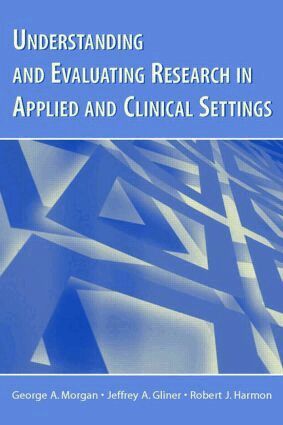
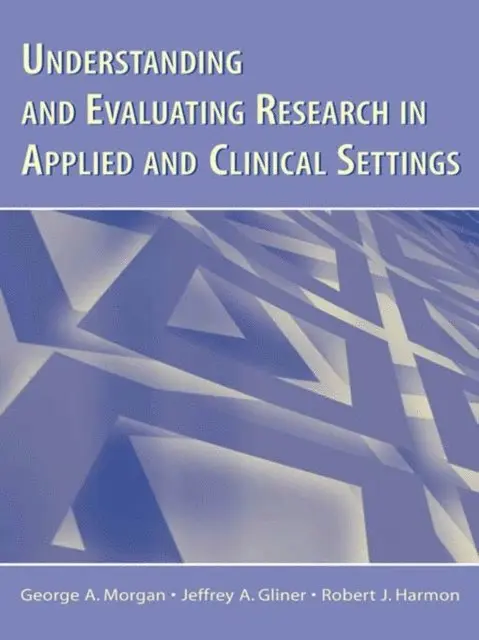
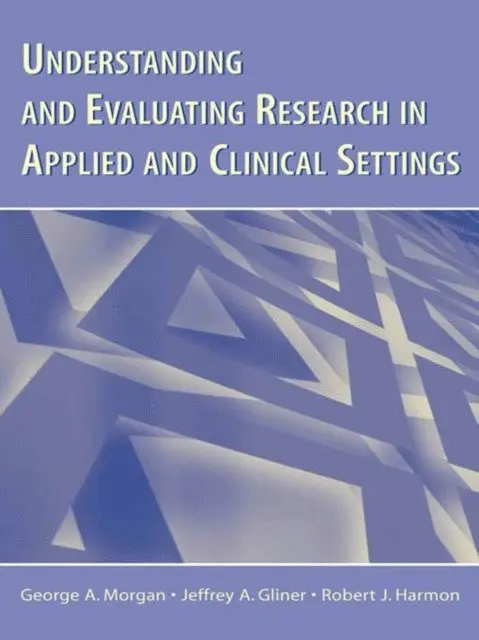
Clinically oriented professionals and students need to understand and evaluate the research and statistics in professional articles, especially given today's emphasis on evidence-based practice. This book demonstrates how the research approach and design help determine the appropriate statistical analysis. Understanding and Evaluating Research in Applied and Clinical Settings features:*short, independent, chapters that do not have to be read in order;*a guide to understanding why a particular statistic was selected;*an emphasis on effects sizes including measures of risk potency;*numerous cross-disciplinary examples to illustrate the material; and*methods to help determine practical and clinical significance and their relation to meta-analysis and evidence-based practice.This book is intended for practitioners and students in psychology, education, counseling, mental and allied health, nursing, and medicine, and as a text for courses on understanding research methods and statistics.
639 kr
Skickas inom 10-15 vardagar
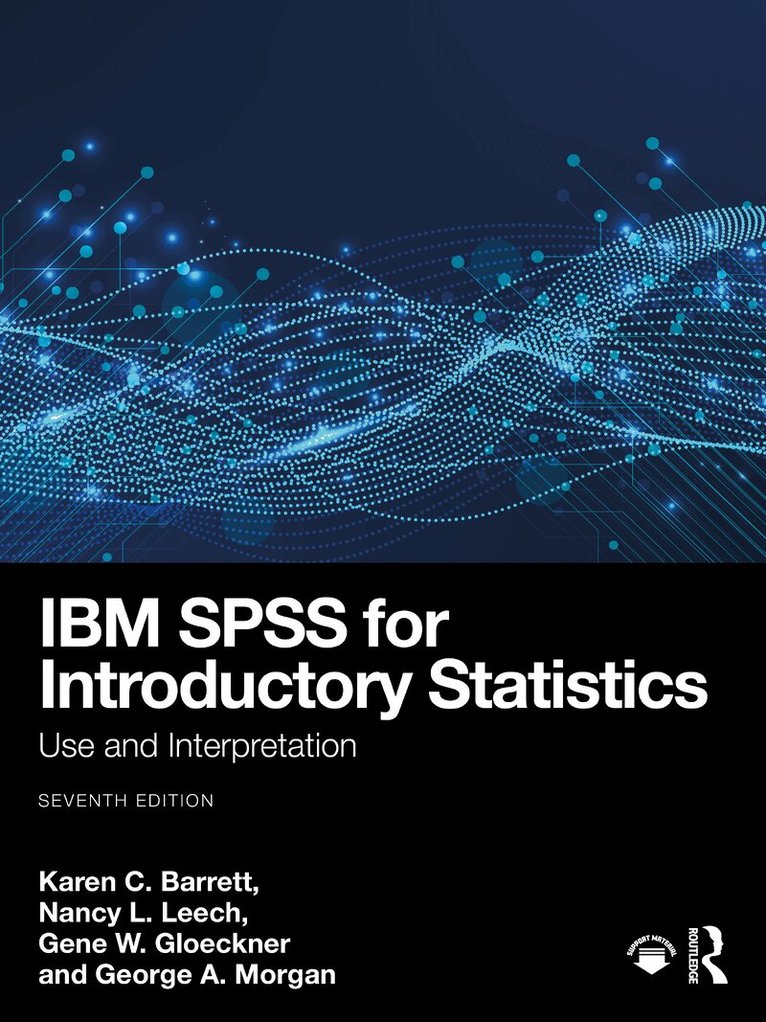
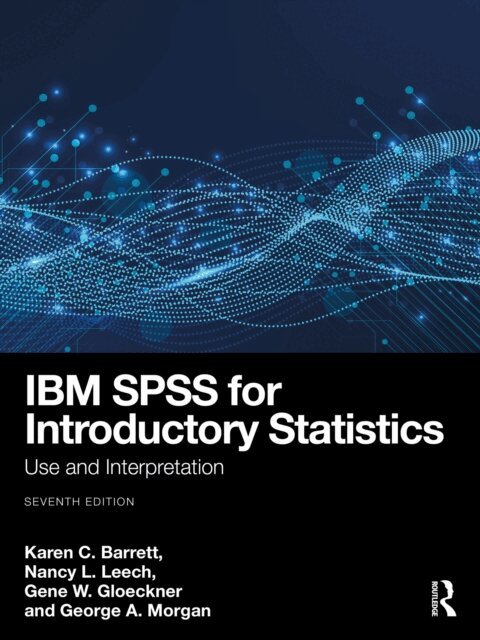
IBM SPSS for Introductory Statistics is designed to help students learn how to analyze and interpret research. In easy-to-understand language, the authors show readers how to choose the appropriate statistic based on the design, and to interpret outputs appropriately. There is such a wide variety of options and statistics in SPSS that knowing which ones to use and how to interpret the outputs can be difficult. This book assists students with these challenges.Comprehensive and user-friendly, this book prepares readers for each step in the research process: design, entering and checking data, testing assumptions, assessing reliability and validity, computing descriptive and inferential parametric and nonparametric statistics, and writing about results. Dialog windows and SPSS syntax, along with the output, are provided. Several realistic data sets are used to solve the chapter problems and are available as an online resource.This edition includes the following:• Updated chapters and screenshots• Additional SPSS work problems• Callout boxes for each chapter, indicating crucial elements of APA style and referencing outputsIBM SPSS for Introductory Statistics is an invaluable supplemental (or lab text) book for students. In addition, this book and its companion, IBM SPSS for Intermediate Statistics, are useful as guides/reminders to faculty and professionals regarding the specific steps to take to use SPSS and/or how to use and interpret parts of SPSS with which they are unfamiliar.
2 030 kr
Skickas inom 10-15 vardagar
IBM SPSS for Introductory Statistics is designed to help students learn how to analyze and interpret research. In easy-to-understand language, the authors show readers how to choose the appropriate statistic based on the design, and to interpret outputs appropriately. There is such a wide variety of options and statistics in SPSS that knowing which ones to use and how to interpret the outputs can be difficult. This book assists students with these challenges.Comprehensive and user-friendly, this book prepares readers for each step in the research process: design, entering and checking data, testing assumptions, assessing reliability and validity, computing descriptive and inferential parametric and nonparametric statistics, and writing about results. Dialog windows and SPSS syntax, along with the output, are provided. Several realistic data sets are used to solve the chapter problems and are available as an online resource.This edition includes the following:• Updated chapters and screenshots• Additional SPSS work problems• Callout boxes for each chapter, indicating crucial elements of APA style and referencing outputsIBM SPSS for Introductory Statistics is an invaluable supplemental (or lab text) book for students. In addition, this book and its companion, IBM SPSS for Intermediate Statistics, are useful as guides/reminders to faculty and professionals regarding the specific steps to take to use SPSS and/or how to use and interpret parts of SPSS with which they are unfamiliar.
692 kr
Skickas inom 10-15 vardagar
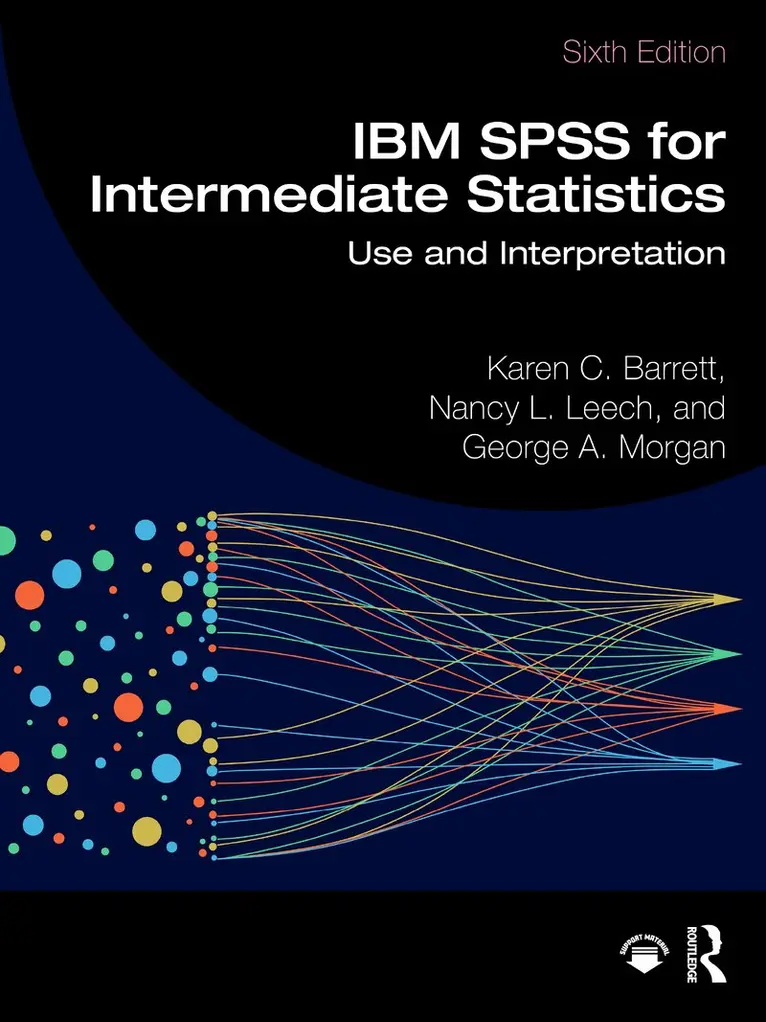
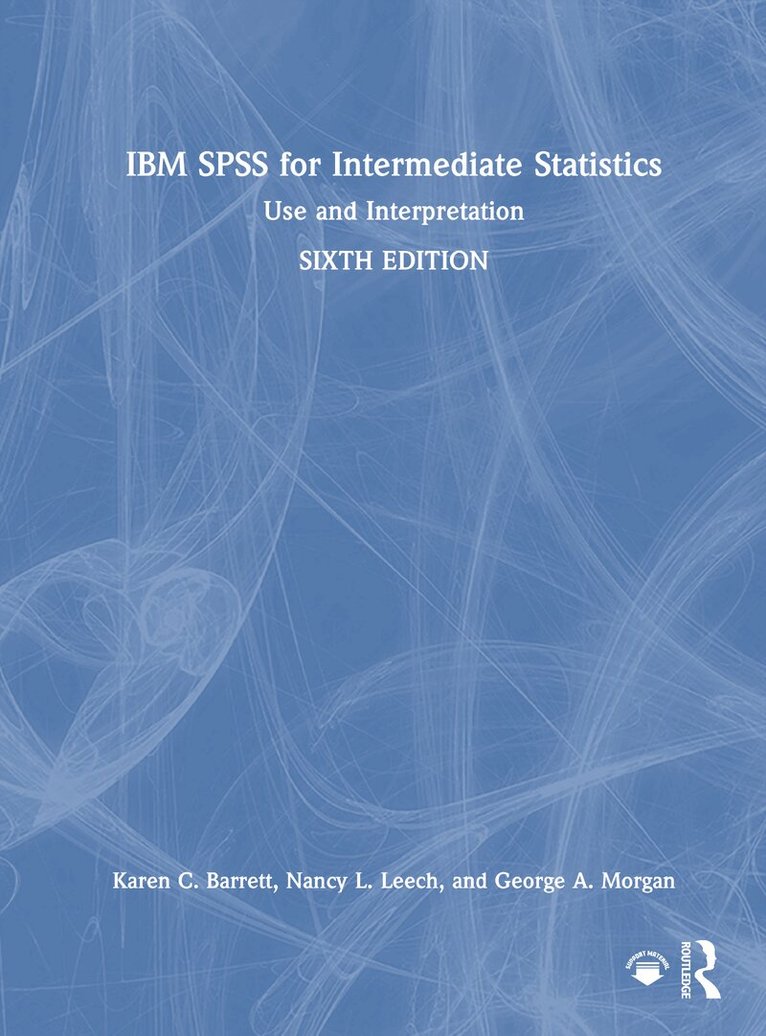
IBM SPSS for Intermediate Statistics, Sixth Edition, is designed to help readers analyze and interpret research data using IBM SPSS.This user-friendly book shows readers how to choose the appropriate statistic based on the design; perform intermediate statistics, including multivariate statistics; interpret output; and write about the results. The book reviews research designs and how to assess the accuracy and reliability of data; how to determine whether data meets the assumptions of statistical tests; how to calculate and interpret effect sizes for intermediate statistics; how to compute and interpret post-hoc power; and includes an overview of basic statistics for those who need a review. Unique chapters on multilevel linear modeling; multivariate analysis of variance (MANOVA); assessing reliability of data; multiple imputation; mediation, moderation, and canonical correlation; discriminant analyses; logistic regression; and factor analysis are provided. SPSS syntax is included for those who prefer this format. Pedagogical features include call-out boxes to highlight key points, interpretation sections and questions, realistic datasets for practice, and information on how to get started with SPSS, as well as appendices reviewing basic statistics, discussing how to write research questions, providing answers to the odd-numbered interpretation questions, and providing references for further reading.An ideal supplement for courses in either intermediate/advanced statistics or research methods taught in departments of psychology, education, and other social and health sciences, this book is also appreciated by researchers in these areas looking for a handy reference for SPSS commands and how to interpret SPSS outputs.The new edition features: Updated for IBM SPSS version 29, but the book can be used with most other versions.More information on how to get started in SPSS (Chapter 1).Updated discussion of which effect sizes can be calculated for various programs in SPSS.Updated information on multiple regression methods (Chapter 7).Updated chapter on how to use a variable as a mediator or a moderator, using only SPSS (Chapter 8).All chapters updated to include effect sizes that are available.Updated screens and outputs.Updated web resources for instructors, including PowerPoint slides, interpretation questions, and extra SPSS problem answers; and for students: datasets, chapter outlines, and study guides.
1 964 kr
Skickas inom 10-15 vardagar
IBM SPSS for Intermediate Statistics, Sixth Edition, is designed to help readers analyze and interpret research data using IBM SPSS.This user-friendly book shows readers how to choose the appropriate statistic based on the design; perform intermediate statistics, including multivariate statistics; interpret output; and write about the results. The book reviews research designs and how to assess the accuracy and reliability of data; how to determine whether data meets the assumptions of statistical tests; how to calculate and interpret effect sizes for intermediate statistics; how to compute and interpret post-hoc power; and includes an overview of basic statistics for those who need a review. Unique chapters on multilevel linear modeling; multivariate analysis of variance (MANOVA); assessing reliability of data; multiple imputation; mediation, moderation, and canonical correlation; discriminant analyses; logistic regression; and factor analysis are provided. SPSS syntax is included for those who prefer this format. Pedagogical features include call-out boxes to highlight key points, interpretation sections and questions, realistic datasets for practice, and information on how to get started with SPSS, as well as appendices reviewing basic statistics, discussing how to write research questions, providing answers to the odd-numbered interpretation questions, and providing references for further reading.An ideal supplement for courses in either intermediate/advanced statistics or research methods taught in departments of psychology, education, and other social and health sciences, this book is also appreciated by researchers in these areas looking for a handy reference for SPSS commands and how to interpret SPSS outputs.The new edition features: Updated for IBM SPSS version 29, but the book can be used with most other versions.More information on how to get started in SPSS (Chapter 1).Updated discussion of which effect sizes can be calculated for various programs in SPSS.Updated information on multiple regression methods (Chapter 7).Updated chapter on how to use a variable as a mediator or a moderator, using only SPSS (Chapter 8).All chapters updated to include effect sizes that are available.Updated screens and outputs.Updated web resources for instructors, including PowerPoint slides, interpretation questions, and extra SPSS problem answers; and for students: datasets, chapter outlines, and study guides.
481 kr
Tillfälligt slut
IBM SPSS for Introductory Statistics is designed to help students learn how to analyze and interpret research. In easy-to-understand language, the authors show readers how to choose the appropriate statistic based on the design, and to interpret outputs appropriately. There is such a wide variety of options and statistics in SPSS, that knowing which ones to use and how to interpret the outputs can be difficult. This book assists students with these challenges. Comprehensive and user-friendly, the book prepares readers for each step in the research process: design, entering and checking data, testing assumptions, assessing reliability and validity, computing descriptive and inferential parametric and nonparametric statistics, and writing about results. Dialog windows and SPSS syntax, along with the output, are provided. Several realistic data sets, available online, are used to solve the chapter problems. This new edition includes updated screenshots and instructions for IBM SPSS 25, as well as updated pedagogy, such as callout boxes for each chapter indicating crucial elements of APA style and referencing outputs.IBM SPSS for Introductory Statistics is an invaluable supplemental (or lab text) book for students. In addition, this book and its companion, IBM SPSS for Intermediate Statistics, are useful as guides/reminders to faculty and professionals regarding the specific steps to take to use SPSS and/or how to use and interpret parts of SPSS with which they are unfamiliar.
1 723 kr
Tillfälligt slut
IBM SPSS for Introductory Statistics is designed to help students learn how to analyze and interpret research. In easy-to-understand language, the authors show readers how to choose the appropriate statistic based on the design, and to interpret outputs appropriately. There is such a wide variety of options and statistics in SPSS, that knowing which ones to use and how to interpret the outputs can be difficult. This book assists students with these challenges. Comprehensive and user-friendly, the book prepares readers for each step in the research process: design, entering and checking data, testing assumptions, assessing reliability and validity, computing descriptive and inferential parametric and nonparametric statistics, and writing about results. Dialog windows and SPSS syntax, along with the output, are provided. Several realistic data sets, available online, are used to solve the chapter problems. This new edition includes updated screenshots and instructions for IBM SPSS 25, as well as updated pedagogy, such as callout boxes for each chapter indicating crucial elements of APA style and referencing outputs.IBM SPSS for Introductory Statistics is an invaluable supplemental (or lab text) book for students. In addition, this book and its companion, IBM SPSS for Intermediate Statistics, are useful as guides/reminders to faculty and professionals regarding the specific steps to take to use SPSS and/or how to use and interpret parts of SPSS with which they are unfamiliar.
1 706 kr
Tillfälligt slut
Designed to help readers analyze and interpret research data using IBM SPSS, this user-friendly book shows readers how to choose the appropriate statistic based on the design; perform intermediate statistics, including multivariate statistics; interpret output; and write about the results. The book reviews research designs and how to assess the accuracy and reliability of data; how to determine whether data meet the assumptions of statistical tests; how to calculate and interpret effect sizes for intermediate statistics, including odds ratios for logistic analysis; how to compute and interpret post-hoc power; and an overview of basic statistics for those who need a review. Unique chapters on multilevel linear modeling; multivariate analysis of variance (MANOVA); assessing reliability of data; multiple imputation; mediation, moderation, and canonical correlation; and factor analysis are provided. SPSS syntax with output is included for those who prefer this format. The new edition features: • IBM SPSS version 22; although the book can be used with most older and newer versions • New discusiion of intraclass correlations (Ch. 3)• Expanded discussion of effect sizes that includes confidence intervals of effect sizes (ch.5) • New information on part and partial correlations and how they are interpreted and a new discussion on backward elimination, another useful multiple regression method (Ch. 6) • New chapter on how to use a variable as a mediator or a moderator (ch. 7)• Revised chapter on multilevel and hierarchical linear modeling (ch. 12) • A new chapter (ch. 13) on multiple imputation that demonstrates how to deal with missing data • Updated web resources for instructors including PowerPoint slides and answers to interpretation questions and extra problems and for students, data sets, chapter outlines, and study guides. IBM SPSS for Intermediate Statistics, Fifth Edition provides helpful teaching tools: • all of the key SPSS windows needed to perform the analyses • outputs with call-out boxes to highlight key points • interpretation sections and questions to help students better understand and interpret the output • extra problems with realistic data sets for practice using intermediate statistics • Appendices on how to get started with SPSS, write research questions, and basic statistics. An ideal supplement for courses in either intermediate/advanced statistics or research methods taught in departments of psychology, education, and other social, behavioral, and health sciences. This book is also appreciated by researchers in these areas looking for a handy reference for SPSS
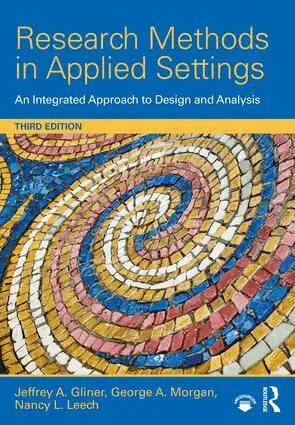
Research Methods in Applied Settings
An Integrated Approach to Design and Analysis, Third Edition
Inbunden, Engelska, 2016
1 703 kr
Skickas inom 10-15 vardagar
This text teaches readers how to plan, conduct, and write a research project and select and interpret data through its integrated approach to quantitative research methods. Although not a statistics book, students learn to master which technique to use when and how to analyze and interpret results, making them better consumers of research. Organized around the steps of conducting a research project, this book is ideal for those who need to analyze journal articles. With teaching experience in various departments, the authors know how to address the research problems faced by behavioral and social sciences students. Independent sections and chapters can be read in any order allowing for flexibility in assigning topics.Adopters applaud the book’s clarity and applied interdependent approach to research. The book emphasizes five research approaches: randomized experimental, quasi-experimental, comparative, associational, and descriptive. These five approaches lead to three kinds of research designs which lead to three groups of statistics with the same names. This consistent framework increases comprehension while avoiding confusion caused by inconsistent terminology. Numerous examples, diagrams, tables, key terms, key distinctions, summaries, applied problems, interpretation questions, and suggested readings further promote understanding. This extensively revised edition features: More examples from published research articles to help readers better understand the research process. New Research in the Real World boxes that highlight actual research projects from various disciplines. Defined key terms in the margins and interpretation questions that help readers review the material. More detailed explanations of key concepts including reliability, validity, estimation, ethical and bias concerns, data security and assumptions, power analysis , and multiple and logistic regression. New sections on mediation and moderation analysis to address the latest techniques. More coverage of quasi-experimental design and qualitative research to reflect changing practices. A new appendix on how to write about results using APA guidelines to help new researchers. Online resources available at www.routledge.com/9781138852976 that provide instructors with PowerPoints, test questions, critical thinking exercises, a conversion guide, and answers to all of the book’s problems and questions. Students will find learning objectives, annotated links to further readings and key concepts, and key terms with links to definitions.Intended for graduate research methods or design or quantitative/experimental research methods courses in psychology, education, human development, family studies, and other behavioral, social, and health sciences, some exposure to statistics and research methods is recommended.
980 kr
Skickas inom 10-15 vardagar
552 kr
Skickas inom 10-15 vardagar
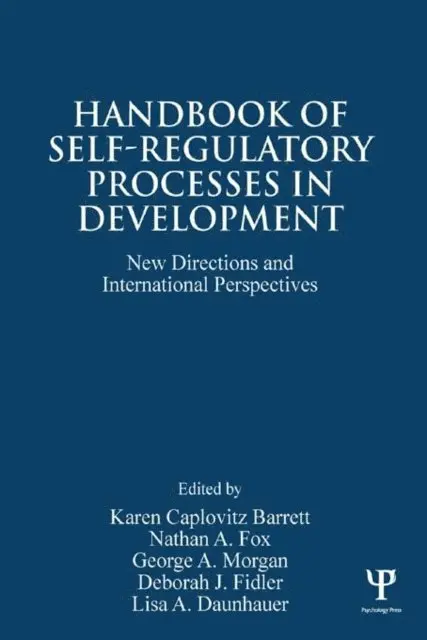
Handbook of Self-Regulatory Processes in Development
New Directions and International Perspectives
Häftad, Engelska, 2012
1 834 kr
Skickas inom 10-15 vardagar
The development of self- and emotional regulatory processes helps children to regulate their behavior based on their cultural context and to develop positive social relationships. This handbook brings together heretofore disparate literatures on self- and emotional regulation, brain and physiological processes, mastery motivation, and atypical development to highlight how mastery motivation is related to self-regulation and to clarify the relation between these various processes. Authors from a variety of countries and backgrounds provide an integrated, up-to-date review of the research and the key theoretical models to demonstrate how these processes relate to cultural and individual differences in both typical and atypical development. The renowned editors, all experts in a particular domain of self-regulation, provide section opening chapters that review the literature, provide a perspective that explains the findings, and suggest directions for future research. Although the focus is on quantitative studies, some qualitative findings and research using brain imaging methodologies are included. Outstanding features include: Reviews the development of self and emotional regulation from infancy through adolescence. Contributors from various countries and backgrounds provide an integrative review of the literature to guide the direction of future research. Features contributions from those who have had a strong impact on self-regulation research. Reviews research on developmental disorders that have implications for self-regulation. There are four sections. Section one introduces the development of self- and emotional regulation. This section reviews how self-regulation adapts based on personal and culturally-based goals and how individual differences predispose some to behavior disorders. Socialization influences are examined including a look at when typical regulation processes go awry. Section 2 examines physiological and brain processes as they relate to the development of typical and atypical processes, along with neurocognitive development of performance monitoring and how these processes change over time, cortical activation differences, and behavioral and electrocortical measures of attentional bias. Section 3 reviews the development of self-regulation and mastery motivation including a review of the Dimensions of Mastery Questionnaire (DMQ), cross-national comparisons, and what the DMQ can tell us about self-regulation. The section concludes with a look at the development of self-regulation and mastery motivation in individuals with a developmental disability. Section 4 examines self-regulation in atypical development and evidence-based treatment approaches in children with ADHD, autism, and Down syndrome. This book is intended for researchers, graduate students, and practitioners in psychology, neuroscience, human development, and education interested in the development of self and emotional regulatory processes.
Handbook of Self-Regulatory Processes in Development
New Directions and International Perspectives
Inbunden, Engelska, 2012
3 949 kr
Skickas inom 10-15 vardagar
The development of self- and emotional regulatory processes helps children to regulate their behavior based on their cultural context and to develop positive social relationships. This handbook brings together heretofore disparate literatures on self- and emotional regulation, brain and physiological processes, mastery motivation, and atypical development to highlight how mastery motivation is related to self-regulation and to clarify the relation between these various processes. Authors from a variety of countries and backgrounds provide an integrated, up-to-date review of the research and the key theoretical models to demonstrate how these processes relate to cultural and individual differences in both typical and atypical development. The renowned editors, all experts in a particular domain of self-regulation, provide section opening chapters that review the literature, provide a perspective that explains the findings, and suggest directions for future research. Although the focus is on quantitative studies, some qualitative findings and research using brain imaging methodologies are included. Outstanding features include: Reviews the development of self and emotional regulation from infancy through adolescence. Contributors from various countries and backgrounds provide an integrative review of the literature to guide the direction of future research. Features contributions from those who have had a strong impact on self-regulation research. Reviews research on developmental disorders that have implications for self-regulation. There are four sections. Section one introduces the development of self- and emotional regulation. This section reviews how self-regulation adapts based on personal and culturally-based goals and how individual differences predispose some to behavior disorders. Socialization influences are examined including a look at when typical regulation processes go awry. Section 2 examines physiological and brain processes as they relate to the development of typical and atypical processes, along with neurocognitive development of performance monitoring and how these processes change over time, cortical activation differences, and behavioral and electrocortical measures of attentional bias. Section 3 reviews the development of self-regulation and mastery motivation including a review of the Dimensions of Mastery Questionnaire (DMQ), cross-national comparisons, and what the DMQ can tell us about self-regulation. The section concludes with a look at the development of self-regulation and mastery motivation in individuals with a developmental disability. Section 4 examines self-regulation in atypical development and evidence-based treatment approaches in children with ADHD, autism, and Down syndrome. This book is intended for researchers, graduate students, and practitioners in psychology, neuroscience, human development, and education interested in the development of self and emotional regulatory processes.
605 kr
Tillfälligt slut
Designed to help readers analyze and interpret research data using IBM SPSS, this user-friendly book shows readers how to choose the appropriate statistic based on the design; perform intermediate statistics, including multivariate statistics; interpret output; and write about the results. The book reviews research designs and how to assess the accuracy and reliability of data; how to determine whether data meet the assumptions of statistical tests; how to calculate and interpret effect sizes for intermediate statistics, including odds ratios for logistic analysis; how to compute and interpret post-hoc power; and an overview of basic statistics for those who need a review. Unique chapters on multilevel linear modeling; multivariate analysis of variance (MANOVA); assessing reliability of data; multiple imputation; mediation, moderation, and canonical correlation; and factor analysis are provided. SPSS syntax with output is included for those who prefer this format. The new edition features: • IBM SPSS version 22; although the book can be used with most older and newer versions • New discusiion of intraclass correlations (Ch. 3)• Expanded discussion of effect sizes that includes confidence intervals of effect sizes (ch.5) • New information on part and partial correlations and how they are interpreted and a new discussion on backward elimination, another useful multiple regression method (Ch. 6) • New chapter on how to use a variable as a mediator or a moderator (ch. 7)• Revised chapter on multilevel and hierarchical linear modeling (ch. 12) • A new chapter (ch. 13) on multiple imputation that demonstrates how to deal with missing data • Updated web resources for instructors including PowerPoint slides and answers to interpretation questions and extra problems and for students, data sets, chapter outlines, and study guides. IBM SPSS for Intermediate Statistics, Fifth Edition provides helpful teaching tools: • all of the key SPSS windows needed to perform the analyses • outputs with call-out boxes to highlight key points • interpretation sections and questions to help students better understand and interpret the output • extra problems with realistic data sets for practice using intermediate statistics • Appendices on how to get started with SPSS, write research questions, and basic statistics. An ideal supplement for courses in either intermediate/advanced statistics or research methods taught in departments of psychology, education, and other social, behavioral, and health sciences. This book is also appreciated by researchers in these areas looking for a handy reference for SPSS