Karen C. Barrett - Böcker
Visar alla böcker från författaren Karen C. Barrett. Handla med fri frakt och snabb leverans.
8 produkter
8 produkter
642 kr
Skickas inom 10-15 vardagar
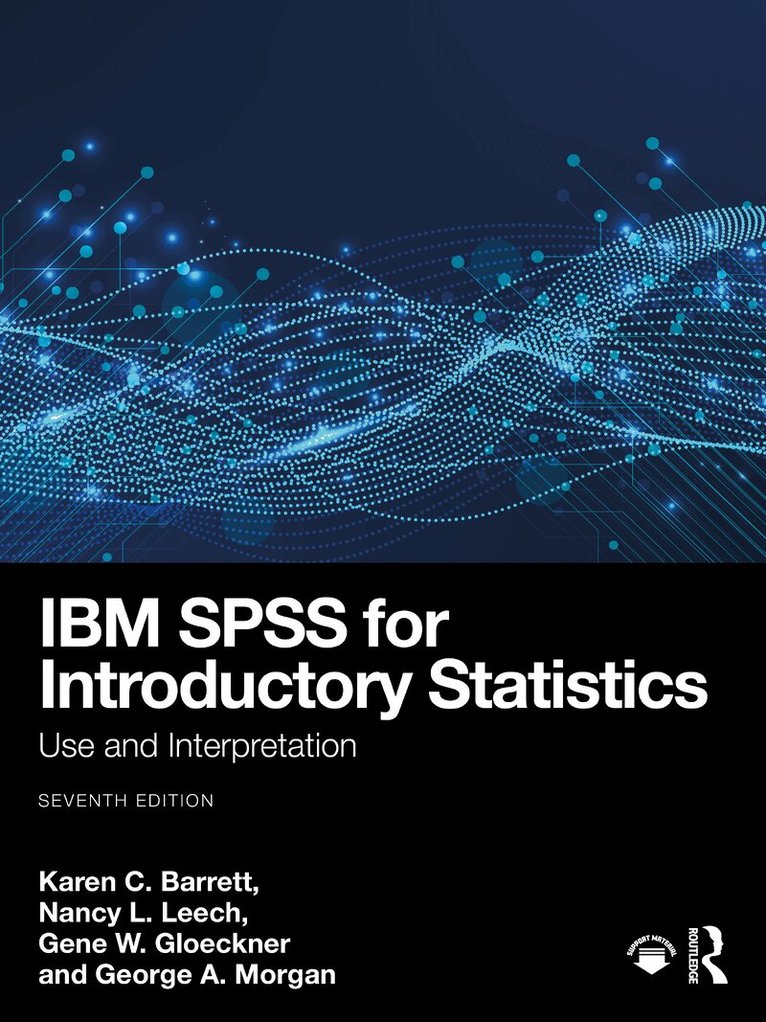
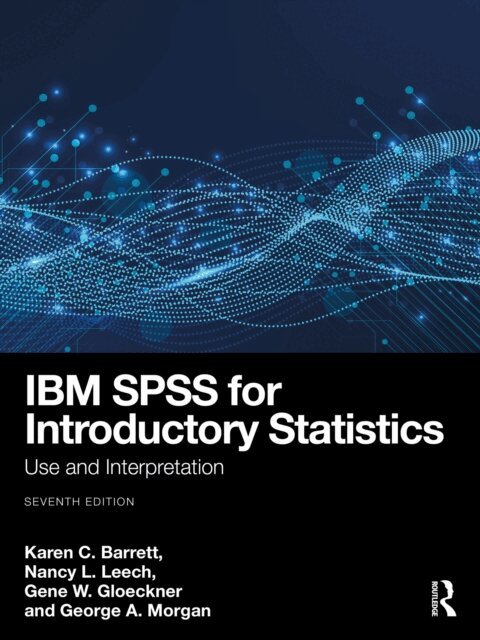
IBM SPSS for Introductory Statistics is designed to help students learn how to analyze and interpret research. In easy-to-understand language, the authors show readers how to choose the appropriate statistic based on the design, and to interpret outputs appropriately. There is such a wide variety of options and statistics in SPSS that knowing which ones to use and how to interpret the outputs can be difficult. This book assists students with these challenges.Comprehensive and user-friendly, this book prepares readers for each step in the research process: design, entering and checking data, testing assumptions, assessing reliability and validity, computing descriptive and inferential parametric and nonparametric statistics, and writing about results. Dialog windows and SPSS syntax, along with the output, are provided. Several realistic data sets are used to solve the chapter problems and are available as an online resource.This edition includes the following:• Updated chapters and screenshots• Additional SPSS work problems• Callout boxes for each chapter, indicating crucial elements of APA style and referencing outputsIBM SPSS for Introductory Statistics is an invaluable supplemental (or lab text) book for students. In addition, this book and its companion, IBM SPSS for Intermediate Statistics, are useful as guides/reminders to faculty and professionals regarding the specific steps to take to use SPSS and/or how to use and interpret parts of SPSS with which they are unfamiliar.
2 039 kr
Skickas inom 10-15 vardagar
IBM SPSS for Introductory Statistics is designed to help students learn how to analyze and interpret research. In easy-to-understand language, the authors show readers how to choose the appropriate statistic based on the design, and to interpret outputs appropriately. There is such a wide variety of options and statistics in SPSS that knowing which ones to use and how to interpret the outputs can be difficult. This book assists students with these challenges.Comprehensive and user-friendly, this book prepares readers for each step in the research process: design, entering and checking data, testing assumptions, assessing reliability and validity, computing descriptive and inferential parametric and nonparametric statistics, and writing about results. Dialog windows and SPSS syntax, along with the output, are provided. Several realistic data sets are used to solve the chapter problems and are available as an online resource.This edition includes the following:• Updated chapters and screenshots• Additional SPSS work problems• Callout boxes for each chapter, indicating crucial elements of APA style and referencing outputsIBM SPSS for Introductory Statistics is an invaluable supplemental (or lab text) book for students. In addition, this book and its companion, IBM SPSS for Intermediate Statistics, are useful as guides/reminders to faculty and professionals regarding the specific steps to take to use SPSS and/or how to use and interpret parts of SPSS with which they are unfamiliar.
692 kr
Skickas inom 10-15 vardagar
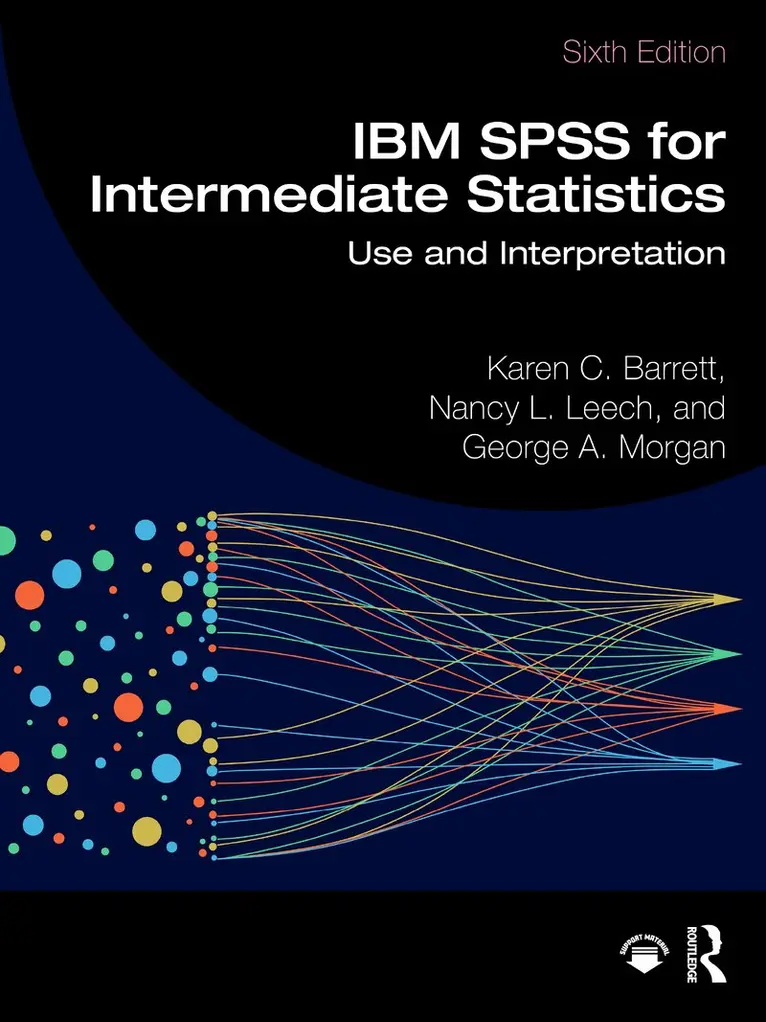
IBM SPSS for Intermediate Statistics, Sixth Edition, is designed to help readers analyze and interpret research data using IBM SPSS.This user-friendly book shows readers how to choose the appropriate statistic based on the design; perform intermediate statistics, including multivariate statistics; interpret output; and write about the results. The book reviews research designs and how to assess the accuracy and reliability of data; how to determine whether data meets the assumptions of statistical tests; how to calculate and interpret effect sizes for intermediate statistics; how to compute and interpret post-hoc power; and includes an overview of basic statistics for those who need a review. Unique chapters on multilevel linear modeling; multivariate analysis of variance (MANOVA); assessing reliability of data; multiple imputation; mediation, moderation, and canonical correlation; discriminant analyses; logistic regression; and factor analysis are provided. SPSS syntax is included for those who prefer this format. Pedagogical features include call-out boxes to highlight key points, interpretation sections and questions, realistic datasets for practice, and information on how to get started with SPSS, as well as appendices reviewing basic statistics, discussing how to write research questions, providing answers to the odd-numbered interpretation questions, and providing references for further reading.An ideal supplement for courses in either intermediate/advanced statistics or research methods taught in departments of psychology, education, and other social and health sciences, this book is also appreciated by researchers in these areas looking for a handy reference for SPSS commands and how to interpret SPSS outputs.The new edition features: Updated for IBM SPSS version 29, but the book can be used with most other versions.More information on how to get started in SPSS (Chapter 1).Updated discussion of which effect sizes can be calculated for various programs in SPSS.Updated information on multiple regression methods (Chapter 7).Updated chapter on how to use a variable as a mediator or a moderator, using only SPSS (Chapter 8).All chapters updated to include effect sizes that are available.Updated screens and outputs.Updated web resources for instructors, including PowerPoint slides, interpretation questions, and extra SPSS problem answers; and for students: datasets, chapter outlines, and study guides.
1 973 kr
Skickas inom 10-15 vardagar
IBM SPSS for Intermediate Statistics, Sixth Edition, is designed to help readers analyze and interpret research data using IBM SPSS.This user-friendly book shows readers how to choose the appropriate statistic based on the design; perform intermediate statistics, including multivariate statistics; interpret output; and write about the results. The book reviews research designs and how to assess the accuracy and reliability of data; how to determine whether data meets the assumptions of statistical tests; how to calculate and interpret effect sizes for intermediate statistics; how to compute and interpret post-hoc power; and includes an overview of basic statistics for those who need a review. Unique chapters on multilevel linear modeling; multivariate analysis of variance (MANOVA); assessing reliability of data; multiple imputation; mediation, moderation, and canonical correlation; discriminant analyses; logistic regression; and factor analysis are provided. SPSS syntax is included for those who prefer this format. Pedagogical features include call-out boxes to highlight key points, interpretation sections and questions, realistic datasets for practice, and information on how to get started with SPSS, as well as appendices reviewing basic statistics, discussing how to write research questions, providing answers to the odd-numbered interpretation questions, and providing references for further reading.An ideal supplement for courses in either intermediate/advanced statistics or research methods taught in departments of psychology, education, and other social and health sciences, this book is also appreciated by researchers in these areas looking for a handy reference for SPSS commands and how to interpret SPSS outputs.The new edition features: Updated for IBM SPSS version 29, but the book can be used with most other versions.More information on how to get started in SPSS (Chapter 1).Updated discussion of which effect sizes can be calculated for various programs in SPSS.Updated information on multiple regression methods (Chapter 7).Updated chapter on how to use a variable as a mediator or a moderator, using only SPSS (Chapter 8).All chapters updated to include effect sizes that are available.Updated screens and outputs.Updated web resources for instructors, including PowerPoint slides, interpretation questions, and extra SPSS problem answers; and for students: datasets, chapter outlines, and study guides.
481 kr
Tillfälligt slut
IBM SPSS for Introductory Statistics is designed to help students learn how to analyze and interpret research. In easy-to-understand language, the authors show readers how to choose the appropriate statistic based on the design, and to interpret outputs appropriately. There is such a wide variety of options and statistics in SPSS, that knowing which ones to use and how to interpret the outputs can be difficult. This book assists students with these challenges. Comprehensive and user-friendly, the book prepares readers for each step in the research process: design, entering and checking data, testing assumptions, assessing reliability and validity, computing descriptive and inferential parametric and nonparametric statistics, and writing about results. Dialog windows and SPSS syntax, along with the output, are provided. Several realistic data sets, available online, are used to solve the chapter problems. This new edition includes updated screenshots and instructions for IBM SPSS 25, as well as updated pedagogy, such as callout boxes for each chapter indicating crucial elements of APA style and referencing outputs.IBM SPSS for Introductory Statistics is an invaluable supplemental (or lab text) book for students. In addition, this book and its companion, IBM SPSS for Intermediate Statistics, are useful as guides/reminders to faculty and professionals regarding the specific steps to take to use SPSS and/or how to use and interpret parts of SPSS with which they are unfamiliar.
1 723 kr
Tillfälligt slut
IBM SPSS for Introductory Statistics is designed to help students learn how to analyze and interpret research. In easy-to-understand language, the authors show readers how to choose the appropriate statistic based on the design, and to interpret outputs appropriately. There is such a wide variety of options and statistics in SPSS, that knowing which ones to use and how to interpret the outputs can be difficult. This book assists students with these challenges. Comprehensive and user-friendly, the book prepares readers for each step in the research process: design, entering and checking data, testing assumptions, assessing reliability and validity, computing descriptive and inferential parametric and nonparametric statistics, and writing about results. Dialog windows and SPSS syntax, along with the output, are provided. Several realistic data sets, available online, are used to solve the chapter problems. This new edition includes updated screenshots and instructions for IBM SPSS 25, as well as updated pedagogy, such as callout boxes for each chapter indicating crucial elements of APA style and referencing outputs.IBM SPSS for Introductory Statistics is an invaluable supplemental (or lab text) book for students. In addition, this book and its companion, IBM SPSS for Intermediate Statistics, are useful as guides/reminders to faculty and professionals regarding the specific steps to take to use SPSS and/or how to use and interpret parts of SPSS with which they are unfamiliar.
1 706 kr
Tillfälligt slut
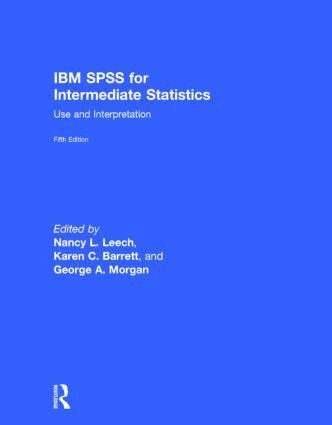
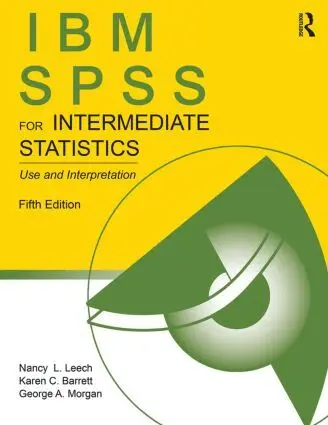
Designed to help readers analyze and interpret research data using IBM SPSS, this user-friendly book shows readers how to choose the appropriate statistic based on the design; perform intermediate statistics, including multivariate statistics; interpret output; and write about the results. The book reviews research designs and how to assess the accuracy and reliability of data; how to determine whether data meet the assumptions of statistical tests; how to calculate and interpret effect sizes for intermediate statistics, including odds ratios for logistic analysis; how to compute and interpret post-hoc power; and an overview of basic statistics for those who need a review. Unique chapters on multilevel linear modeling; multivariate analysis of variance (MANOVA); assessing reliability of data; multiple imputation; mediation, moderation, and canonical correlation; and factor analysis are provided. SPSS syntax with output is included for those who prefer this format. The new edition features: • IBM SPSS version 22; although the book can be used with most older and newer versions • New discusiion of intraclass correlations (Ch. 3)• Expanded discussion of effect sizes that includes confidence intervals of effect sizes (ch.5) • New information on part and partial correlations and how they are interpreted and a new discussion on backward elimination, another useful multiple regression method (Ch. 6) • New chapter on how to use a variable as a mediator or a moderator (ch. 7)• Revised chapter on multilevel and hierarchical linear modeling (ch. 12) • A new chapter (ch. 13) on multiple imputation that demonstrates how to deal with missing data • Updated web resources for instructors including PowerPoint slides and answers to interpretation questions and extra problems and for students, data sets, chapter outlines, and study guides. IBM SPSS for Intermediate Statistics, Fifth Edition provides helpful teaching tools: • all of the key SPSS windows needed to perform the analyses • outputs with call-out boxes to highlight key points • interpretation sections and questions to help students better understand and interpret the output • extra problems with realistic data sets for practice using intermediate statistics • Appendices on how to get started with SPSS, write research questions, and basic statistics. An ideal supplement for courses in either intermediate/advanced statistics or research methods taught in departments of psychology, education, and other social, behavioral, and health sciences. This book is also appreciated by researchers in these areas looking for a handy reference for SPSS
605 kr
Tillfälligt slut
Designed to help readers analyze and interpret research data using IBM SPSS, this user-friendly book shows readers how to choose the appropriate statistic based on the design; perform intermediate statistics, including multivariate statistics; interpret output; and write about the results. The book reviews research designs and how to assess the accuracy and reliability of data; how to determine whether data meet the assumptions of statistical tests; how to calculate and interpret effect sizes for intermediate statistics, including odds ratios for logistic analysis; how to compute and interpret post-hoc power; and an overview of basic statistics for those who need a review. Unique chapters on multilevel linear modeling; multivariate analysis of variance (MANOVA); assessing reliability of data; multiple imputation; mediation, moderation, and canonical correlation; and factor analysis are provided. SPSS syntax with output is included for those who prefer this format. The new edition features: • IBM SPSS version 22; although the book can be used with most older and newer versions • New discusiion of intraclass correlations (Ch. 3)• Expanded discussion of effect sizes that includes confidence intervals of effect sizes (ch.5) • New information on part and partial correlations and how they are interpreted and a new discussion on backward elimination, another useful multiple regression method (Ch. 6) • New chapter on how to use a variable as a mediator or a moderator (ch. 7)• Revised chapter on multilevel and hierarchical linear modeling (ch. 12) • A new chapter (ch. 13) on multiple imputation that demonstrates how to deal with missing data • Updated web resources for instructors including PowerPoint slides and answers to interpretation questions and extra problems and for students, data sets, chapter outlines, and study guides. IBM SPSS for Intermediate Statistics, Fifth Edition provides helpful teaching tools: • all of the key SPSS windows needed to perform the analyses • outputs with call-out boxes to highlight key points • interpretation sections and questions to help students better understand and interpret the output • extra problems with realistic data sets for practice using intermediate statistics • Appendices on how to get started with SPSS, write research questions, and basic statistics. An ideal supplement for courses in either intermediate/advanced statistics or research methods taught in departments of psychology, education, and other social, behavioral, and health sciences. This book is also appreciated by researchers in these areas looking for a handy reference for SPSS