George Frost Kennan – författare
505 kr
Skickas inom 5-8 vardagar
574 kr
Skickas inom 5-8 vardagar
591 kr
Skickas inom 5-8 vardagar
264 kr
Skickas inom 5-8 vardagar
344 kr
Läs direkt efter köp
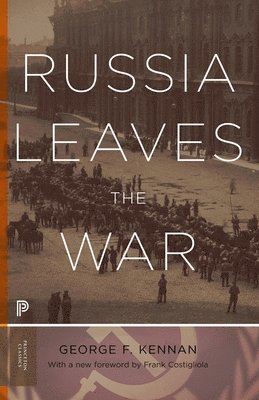
Winner of the Pulitzer Prize, the National Book Award, the Bancroft Prize, and the Parkman PrizeFrom acclaimed diplomat and historian George Kennan, a landmark history of the crucial months in 1917–1918 that forged the pattern of Soviet-American relationsWhen the Bolsheviks seized power in November 1917, American diplomats in St. Petersburg and Moscow were thrown into a bewildering situation. Should the new regime be recognized? What was its true nature? And was there any way to keep Russia fighting against Germany in the Great War? In vivid detail, George Kennan’s classic history tells the gripping story of the Americans’ furious, and ultimately failed, efforts to strike a deal to keep the Soviets in the war—and how these events set the pattern of future relations between the two emerging superpowers. In a new foreword, Kennan biographer Frank Costigliola puts the book in the context of its Cold War publication and Kennan’s life.
661 kr
Läs direkt efter köp
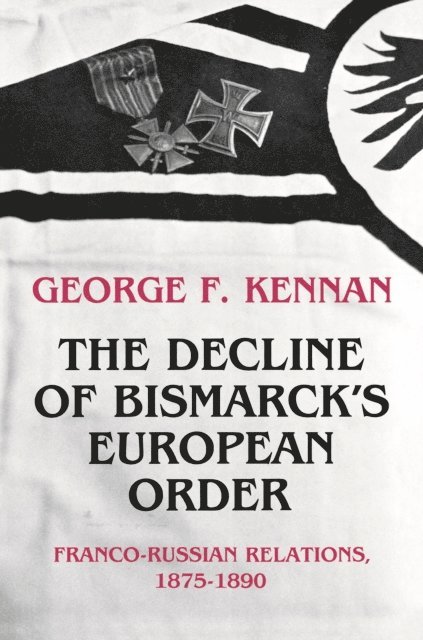
In an attempt to discover some of the underlying origins of World War I, the eminent diplomat and writer George Kennan focuses on a small sector of offstage events to show how they affected the drama at large long before the war even began. In the introduction to his book George Kennan tells us, "I came to see World War I . . . as the great seminal catastrophe of this century--the event which . . . lay at the heart of the failure and decline of this Western civilization." But, he asks, who could help being struck by the contrast between this apocalyptic result and the "delirious euphoria" of the crowds on the streets of Europe at the outbreak of war in 1914! "Were we not," he suggests, "in the face of some monstrous miscalculation--some pervasive failure to read correctly the outward indicators of one''s own situation?" It is from this perspective that Mr. Kennan launches a "micro-history" of the Franco-Russian relationship as far back as the 1870s in an effort to determine the motives that led people "to wander so blindly" into the horrors of the First World War.
1 612 kr
Skickas inom 3-6 vardagar
471 kr
Skickas inom 5-8 vardagar
1 362 kr
Skickas inom 3-6 vardagar
3 670 kr
Skickas inom 3-6 vardagar
1 140 kr
Skickas inom 5-8 vardagar
3 517 kr
Skickas inom 3-6 vardagar
798 kr
Läs direkt efter köp
Winner of the Pulitzer Prize in History, the National Book Award for Nonfiction, the George Bancroft Prize, and the Francis Parkman Prize, this absorbing volume explores the complexities of the Soviet-American relationship between the November Revolution of 1917 and Russia''s final departure in March 1918 from the ranks of the warring powers.These four months, which witnessed the Bolshevik Revolution and Russia''s departure from the warring powers, set the stage for future relations between the two emerging superpowers. Volume 2 of Soviet American Relations, entitled The Decision to Intervene (Princeton, 1958), explored U.S. intervention in northern Russia and Siberia between 1918 and 1920.The distinguished scholar and public servant George F. Kennan opens the way to an understanding not only of these events but of the subsequent pattern of Soviet-American relations and the complex process of international diplomacy generally. Kennan became the U.S. government''s key analyst of the Soviet Union after a two-year stint in the Foreign Service there (1944-1946), which had been preceded by service in the American embassy in Moscow before World War II. His "long telegram" to his superiors at the State Department, written in 1946 and published a year later in revised form in Foreign Affairs as the famous "X" article, was perhaps the most influential statement in the early years of the Cold War. After leaving the Foreign Service, Kennan joined the faculty at the School for Historical Studies at the Institute for Advanced Study in Princeton, where he wrote Russia Leaves the War and subsequent books.
798 kr
Läs direkt efter köp
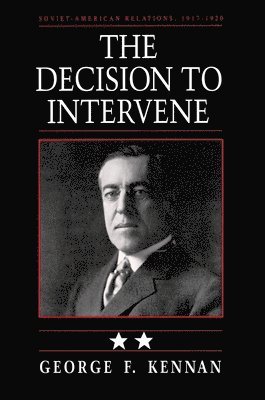
In 1918 the U.S. government decided to involve itself with the Russian Revolution by sending troops to Siberia. This book re-creates that unhappily memorable storythe arrival of British marines at Murmansk, the diplomatic maneuvering, the growing Russian hostility, the uprising of Czechoslovak troops in central Siberia which threatened to overturn the Bolsheviks, the acquisitive ambitions of the Japanese in Manchuria, and finally the decision by President Wilson to intervene with American troops. Of this period Kennan writes, "Never, surely, in the history of American diplomacy, has so much been paid for so little."
620 kr
Läs direkt efter köp
In August 1938 George F. Kennan was assigned as Secretary of Legation in Prague. After the Germans occupied Czechoslovakia in March 1939, he stayed on in that country when most other Western observers had left. These diplomatic papers, letters, and notes are on-the-spot observations by a skilled and sensitive historian and diplomat. They offer a unique record of one of the tragic events in modern European history. Depicted here are the attempts at Germanization of Czech life, the cynical exploitation of various native organizations, the German insistence on a program of anti-Semitism, the take-over of Czech business and industry, the problems of currency and inflation.Originally published in 1968.The Princeton Legacy Library uses the latest print-on-demand technology to again make available previously out-of-print books from the distinguished backlist of Princeton University Press. These editions preserve the original texts of these important books while presenting them in durable paperback and hardcover editions. The goal of the Princeton Legacy Library is to vastly increase access to the rich scholarly heritage found in the thousands of books published by Princeton University Press since its founding in 1905.
426 kr
Läs direkt efter köp
Edwin H. Harriman, railroad czar, was a nineteenth century turnaround specialist. He bought his first railroad at age 33, a foundering company that he reorganized and sold for a tidy profit. At the turn of the century he became Director of the Union Pacific, a property in receivership and near collapse. He resuscitated it and then acquired Central Pacific, which brought Southern Pacific with it.