George K. Tanham – författare
Visar alla böcker från författaren . Handla med fri frakt och snabb leverans.
10 produkter
10 produkter
Inbunden, Engelska, 2006
1 040 kr
Skickas inom 10-15 vardagar
This volume in the Praeger Security International (PSI) series Classics of the Counterinsurgency Era was among the first major published analyses by an American expert on the insurgency in Indochina. In addition to tracing the Chinese influence on the Vietminh cadres and the French military response, the book describes the organization, logistics, and tactics of the communist movement. The author, George Tanham, managed the U.S. rural development program in South Vietnam and later served as special assistant for counterinsurgency at the U.S. Embassy in Thailand during the mid-1960s. With a new foreword by Richard A. Shultz Jr.
Häftad, Engelska, 2006
393 kr
Skickas inom 10-15 vardagar
This volume in the Praeger Security International (PSI) series Classics of the Counterinsurgency Era was among the first major published analyses by an American expert on the insurgency in Indochina. In addition to tracing the Chinese influence on the Vietminh cadres and the French military response, the book describes the organization, logistics, and tactics of the communist movement. The author, George Tanham, managed the U.S. rural development program in South Vietnam and later served as special assistant for counterinsurgency at the U.S. Embassy in Thailand during the mid-1960s. With a new foreword by Richard A. Shultz Jr.
E-bok
PDF, Engelska, 2006423 kr
Läs direkt efter köp
This volume in the Praeger Security International (PSI) series Classics of the Counterinsurgency Era was among the first major published analyses by an American expert on the insurgency in Indochina. In addition to tracing the Chinese influence on the Vietminh cadres and the French military response, the book describes the organization, logistics, and tactics of the communist movement. The author, George Tanham, managed the U.S. rural development program in South Vietnam and later served as special assistant for counterinsurgency at the U.S. Embassy in Thailand during the mid-1960s. With a new foreword by Richard A. Shultz Jr.
Inbunden, Engelska, 2019
2 404 kr
Skickas inom 10-15 vardagar
Even today few Americans understand the strategy, doctrine, and tactics of communist guerrilla warfare. Back in the early 1950s, the Rand Corporation conducted com· puter·simulated war games focused on Southeast Asia. The French agony in Indochina had attracted the attention of a few Rand researchers who had begun to wonder whether other wars might occur in this area and how the United States might fight if it became involved. The Rand scenarios ranged from atomic war to guerrilla conflict. WhUe a professor at the California Institute of Technology, I was asked to comment on some of these games. One thing struck me almost immediately-the communist enemy, or red forces, behaved and fought exactly like the Americans, or blue forces. From my limited knowledge of the French Indochina war, I did not think this was the case. The director of the war games, the late Dr. Edwin Paxson, agreed with my comment, but plaintively asked, "How do they behave and fight?" I offered to write a handbook for the red side, based on the Viet Minh operations against the French in Indochina. After research in Paris with the French army and air force, I duly completed my handbook in 1958, but by then it was of interest to no one. However, when John F. Kennedy became president, he stirred up great interest in Indochina and guerrilla warfare. My red team handbook, gathering dust, was quickly revised and declassified. It was published in 1961 as the first edition of this book.
Häftad, Engelska, 2021
662 kr
Skickas inom 10-15 vardagar
This book focuses on military aspects of the war and attempts to provide insight by means of an analysis of Vietminh military doctrine, tactics, and organization as revealed during the 1945-1954 war in Indochina. It reveals the core of Communist revolutionary warfare.
E-bok
PDF, Engelska, 2019814 kr
Läs direkt efter köp
Even today few Americans understand the strategy, doctrine, and tactics of communist guerrilla warfare. Back in the early 1950s, the Rand Corporation conducted com· puter·simulated war games focused on Southeast Asia. The French agony in Indochina had attracted the attention of a few Rand researchers who had begun to wonder whether other wars might occur in this area and how the United States might fight if it became involved. The Rand scenarios ranged from atomic war to guerrilla conflict. WhUe a professor at the California Institute of Technology, I was asked to comment on some of these games. One thing struck me almost immediately-the communist enemy, or red forces, behaved and fought exactly like the Americans, or blue forces. From my limited knowledge of the French Indochina war, I did not think this was the case. The director of the war games, the late Dr. Edwin Paxson, agreed with my comment, but plaintively asked, "How do they behave and fight?" I offered to write a handbook for the red side, based on the Viet Minh operations against the French in Indochina. After research in Paris with the French army and air force, I duly completed my handbook in 1958, but by then it was of interest to no one. However, when John F. Kennedy became president, he stirred up great interest in Indochina and guerrilla warfare. My red team handbook, gathering dust, was quickly revised and declassified. It was published in 1961 as the first edition of this book.
E-bok
Engelska, 2019812 kr
Läs direkt efter köp
Even today few Americans understand the strategy, doctrine, and tactics of communist guerrilla warfare. Back in the early 1950s, the Rand Corporation conducted com· puter·simulated war games focused on Southeast Asia. The French agony in Indochina had attracted the attention of a few Rand researchers who had begun to wonder whether other wars might occur in this area and how the United States might fight if it became involved. The Rand scenarios ranged from atomic war to guerrilla conflict. WhUe a professor at the California Institute of Technology, I was asked to comment on some of these games. One thing struck me almost immediately-the communist enemy, or red forces, behaved and fought exactly like the Americans, or blue forces. From my limited knowledge of the French Indochina war, I did not think this was the case. The director of the war games, the late Dr. Edwin Paxson, agreed with my comment, but plaintively asked, "How do they behave and fight?" I offered to write a handbook for the red side, based on the Viet Minh operations against the French in Indochina. After research in Paris with the French army and air force, I duly completed my handbook in 1958, but by then it was of interest to no one. However, when John F. Kennedy became president, he stirred up great interest in Indochina and guerrilla warfare. My red team handbook, gathering dust, was quickly revised and declassified. It was published in 1961 as the first edition of this book.
Häftad, Engelska, 1998
903 kr
Skickas inom 10-15 vardagar
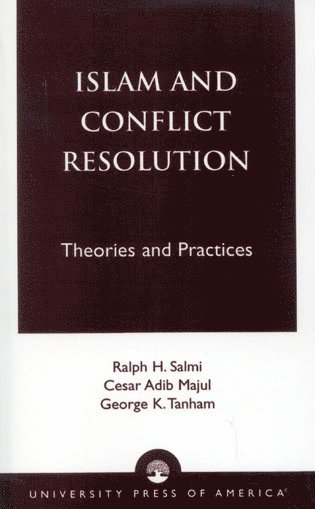
Islam and Conflict Resolution investigates and analyzes those aspects of Islam that deal with international law and peaceful resolution of conflict in an attempt to bridge the gap between the Western and Islamic worlds. The authors seek to expose the common ground that exists between the beliefs of Islam and those of the Judeo-Christian religions that influence action in the modern world. Most importantly, they seek to clarify the Muslim belief that conflict is not permanent or unavoidable, pointing out that Islam offers many recommendations for reducing conflict at various levels of personal and interstate relations. The book encourages an intellectual effort on both sides for education that will lead to a definite understanding of each other's world so as to lead to fair treatment in policymaking and journalism as well as an end to hostility between the Muslim and Judeo-Christian worlds.
Inbunden, Engelska, 1998
913 kr
Tillfälligt slut
Islam and Conflict Resolution investigates and analyzes those aspects of Islam that deal with international law and peaceful resolution of conflict in an attempt to bridge the gap between the Western and Islamic worlds. The authors seek to expose the common ground that exists between the beliefs of Islam and those of the Judeo-Christian religions that influence action in the modern world. Most importantly, they seek to clarify the Muslim belief that conflict is not permanent or unavoidable, pointing out that Islam offers many recommendations for reducing conflict at various levels of personal and interstate relations. The book encourages an intellectual effort on both sides for education that will lead to a definite understanding of each other's world so as to lead to fair treatment in policymaking and journalism as well as an end to hostility between the Muslim and Judeo-Christian worlds.
Inbunden, Engelska, 2026
727 kr
Tillfälligt slut
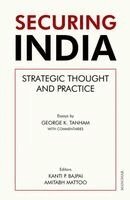
This volume brings together George K. Tanham's much-quoted RAND essay, Indian Strategic Thought', his sequel essay, Indian Strategy in Flux?' and specially commissioned commentaries by five Indian scholars. Most of our understanding about strategy is coloured by information from the West and the former Soviet Union. While this may have been acceptable during the Cold War, it is no longer so. In the coming three decades a range of powers, including India, will come to matter greatly. Hence the need to give a critical look to Indian strategy, a much-neglected subject, as also to undertake a comparative study of strategy. Indian Strategic Thought' argues that various influences have combined to make India more concerned with internal than external security; to prefer defence to offence; to be a land rather than a sea power; to seek outright independence and great power status over any form of dependence and middle power status; to rely principally on hard' (military) not soft' (economic, cultural) power as well as to produce a strategic culture of ad hocism. Tanham's new essay, Indian Strategy in Flux?' charts Indian policies since 1991. A variety of domestic and external developments, Tanham suggests, combined to shock the system in that year into at least two major strategic changes; dramatic economic reforms and a wide-ranging partnership with the United States and the market economies of East and South-East Asia.